
TL;DR

Get the latest gadgets delivered free — and shop member deals
- Fast, free delivery on millions of items
- Access to Prime Big Deal Days deals on October 6–7
- Prime Video, Amazon Music and more included
Fitness trackers often struggle to accurately monitor heart rate over tattoos due to sensor interference. Some devices perform better than others, but solutions are still evolving.
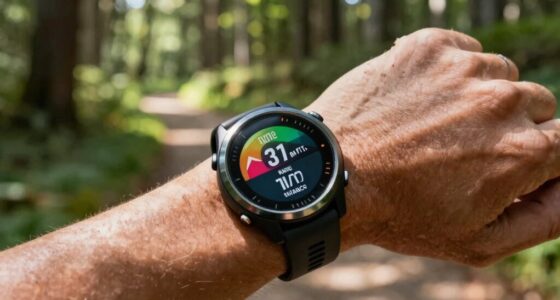
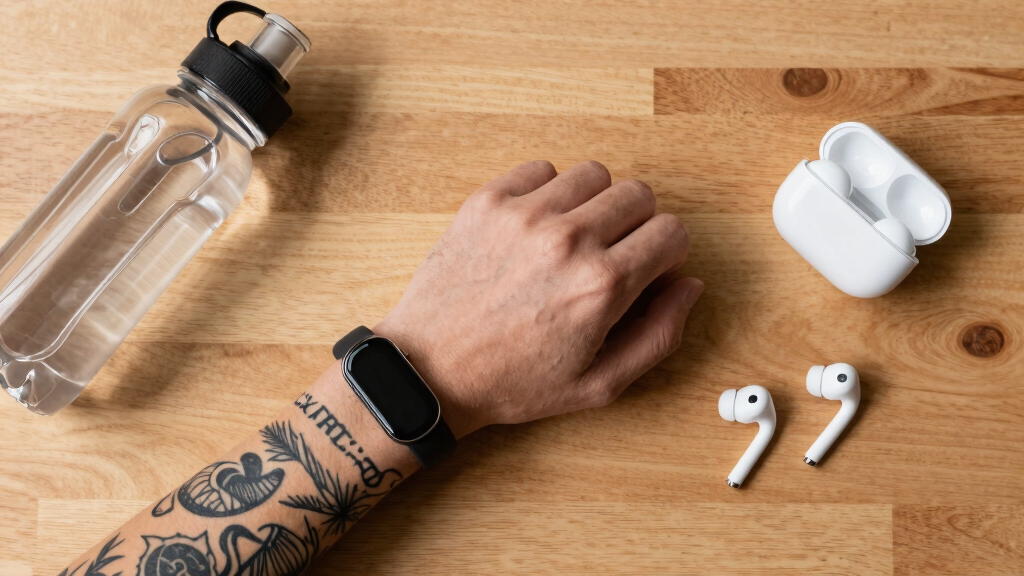
Fitness trackers and smartwatches can have reduced accuracy when worn over tattoos, due to the way their sensors detect heart rate. Multiple brands, including Apple and Garmin, acknowledge this issue, which affects many users with heavily inked skin. While some workarounds exist, the problem remains a concern for consumers relying on these devices for health monitoring.
Many fitness trackers use photoplethysmography (PPG), a light-based sensor that measures blood flow to determine heart rate. Tattoos can block or distort this light, leading to inaccurate readings or device malfunctions. Garmin explicitly states that tattoos can interfere with sensor performance, advising users to wear devices on skin free of tattoos when possible. Apple has issued similar guidance since the first Apple Watch.
To mitigate the issue, users often reposition their devices on less inked parts of the wrist or switch wrists entirely. Some have experimented with tape or stickers over sensors, but these are temporary fixes. Chest straps offer more accurate heart rate data but are less convenient for daily wear. Device improvements are limited, but some newer models, like Google’s Pixel Watch 4, reportedly handle tattooed skin better. Research from 2025 indicates that tattoo ink can impact readings, especially at rest, but results vary depending on ink color, saturation, and activity level.
Impact of Tattoos on Fitness Tracker Accuracy
This issue affects millions of users with tattoos who depend on fitness trackers for health and activity monitoring. Inaccurate data can lead to misinterpretation of health metrics, potentially impacting fitness goals or medical decisions. The problem highlights the need for more advanced sensor technology that can reliably work over diverse skin types and ink patterns.
fitness tracker for tattooed skin
As an affiliate, we earn on qualifying purchases.
As an affiliate, we earn on qualifying purchases.
Background on Sensor Limitations and Tattoo Interference
Since their rise in popularity, fitness trackers have relied on optical sensors to monitor vital signs. The technology was not initially designed with tattooed skin in mind. Manufacturers like Apple and Garmin have acknowledged the issue publicly, advising users to avoid placing devices over tattoos for optimal performance. Recent studies, including a 2025 investigation, have begun to quantify the extent of interference, revealing that tattoo ink can affect sensor accuracy, especially at rest or low activity levels. However, variability in ink types and skin characteristics makes it difficult to develop a universal solution.
“Tattoos can block the heart rate sensor’s light, causing inaccurate or missing readings.”
— an anonymous researcher
heart rate monitor for tattooed wrists
As an affiliate, we earn on qualifying purchases.
As an affiliate, we earn on qualifying purchases.
Extent and Consistency of Tattoo Interference
It remains unclear how different tattoo inks, colors, and saturation levels universally affect sensor accuracy across various devices. The variability in individual tattoos and activity levels makes it difficult to determine a definitive impact or develop standardized solutions. More detailed research is needed to understand the full scope of the problem and potential technological fixes.
wearable fitness device with accurate sensors over tattoos
As an affiliate, we earn on qualifying purchases.
As an affiliate, we earn on qualifying purchases.
Future Improvements and Research Directions
Manufacturers are expected to continue refining sensor technology to better accommodate tattooed skin, possibly through alternative sensing methods or enhanced algorithms. Ongoing research aims to quantify interference levels more precisely and develop hardware or software solutions. Consumers should watch for updates from device makers and new model releases that may address these issues more effectively.
As an affiliate, we earn on qualifying purchases.
Key Questions
Can I still use my fitness tracker if I have tattoos?
Yes, but accuracy may be compromised, especially for heart rate measurements. Repositioning the device or trying alternative methods can help improve readings.
Are some devices better suited for tattooed skin?
Some newer models, like Google’s Pixel Watch 4, reportedly handle tattooed skin better, but results can vary based on individual tattoos and activity levels.
What are the best workarounds for tracking over tattoos?
Wearing the device on less inked parts of the wrist, switching wrists, or using chest straps are common workarounds, though they may be less convenient.
Will future devices eliminate this issue?
Manufacturers are researching new sensor technologies and algorithms, so future devices may better accommodate tattoos, but no definitive solution is available yet.
Does tattoo ink color affect sensor accuracy?
Yes, darker inks and higher saturation levels tend to cause more interference, but the exact impact varies across devices and tattoo types.
Source: Engadget
Fall Picks
fall essentials
As an affiliate, we earn on qualifying purchases.