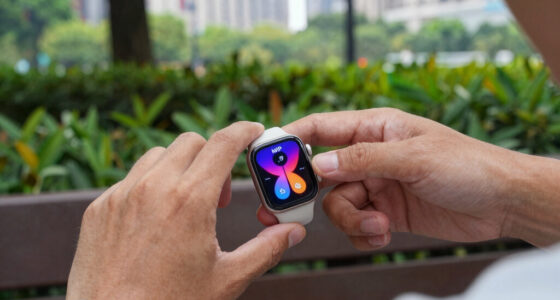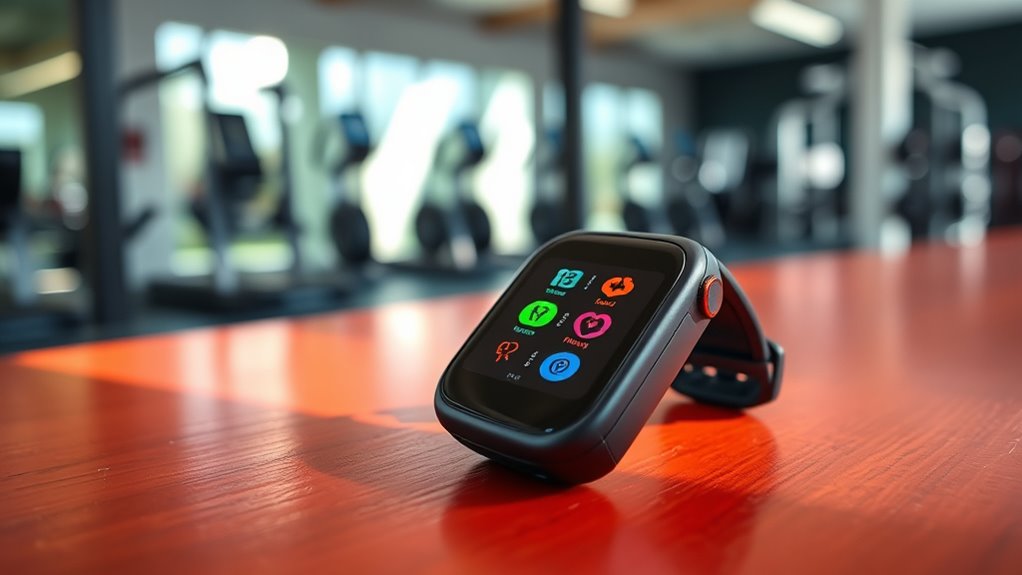
Fitness trackers can be quite accurate but depend on several factors like calibration, how you wear them, and your activity patterns. If you wear your device loosely or don’t calibrate properly, step counts and calorie estimates may be off. Sensor quality and firmware updates also influence their precision. External factors like temperature or gestures can further affect accuracy. Keep these in mind, and you’ll better understand how trustworthy your tracker really is as you explore more.
Listen free for 30 days with Audible
Thousands of audiobooks and originals — cancel anytime.
As an affiliate, we earn on qualifying purchases.
Key Takeaways
- Fitness trackers vary in accuracy due to sensor quality, calibration, and device placement, affecting step and calorie counts.
- Proper calibration and consistent wearing habits significantly improve the reliability of tracking data.
- Firmware updates and newer sensor technology enhance measurement precision over time.
- Movement patterns, activity type, and environmental factors can cause discrepancies in recorded metrics.
- Overall, fitness trackers provide useful estimates but may not be perfectly precise for all individuals or activities.
Understanding Factors That Affect Fitness Tracker Accuracy
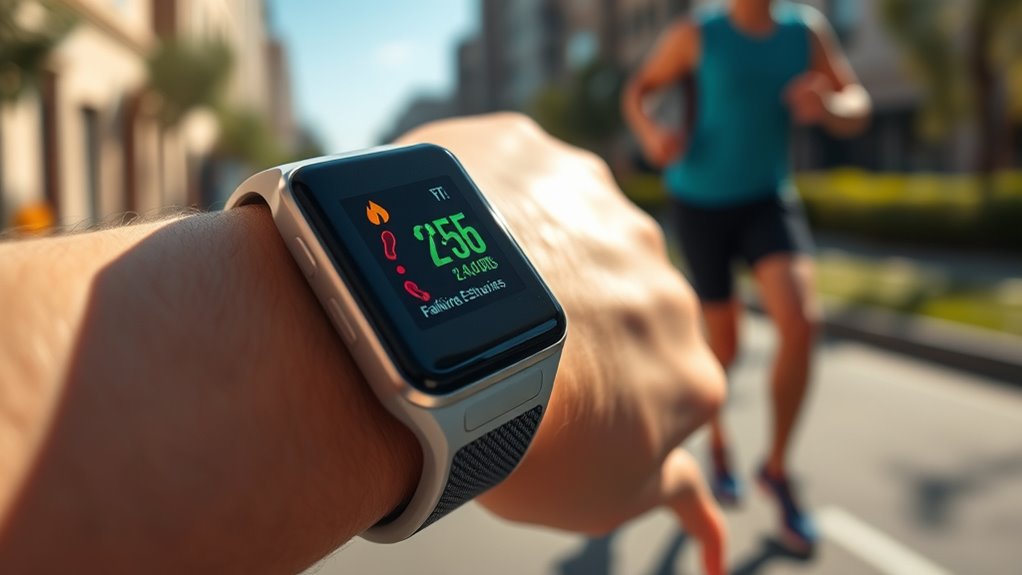
Have you ever wondered how accurate your fitness tracker really is? It’s a common question, especially when you’re relying on it to monitor your progress or set daily goals. The truth is, the accuracy of your device depends on several factors, including device calibration and your user behavior. Fitness trackers use sensors and algorithms to estimate steps, calories burned, heart rate, and other metrics, but these estimations aren’t always perfect. Small differences in device calibration can lead to notable discrepancies, especially if the device isn’t properly adjusted for your body or activity level. Many trackers require initial calibration or user input, like height, weight, and stride length, to improve accuracy. If you skip or incorrectly set these parameters, the device’s estimations will be off. For example, if your stride length isn’t accurately entered, your step count might be inflated or undercounted, skewing your overall activity assessment. Similarly, some devices automatically calibrate based on your movement patterns, but others depend on manual input, which introduces room for user error. Your behavior also plays a significant role. If you tend to wear your tracker loosely or inconsistently, it might misinterpret movements or fail to track steps altogether. The angle at which you wear the device can influence sensor readings—wrist-based trackers, for instance, may undercount steps if they’re too loose or not worn on the dominant hand. Additionally, how often you sync your device and keep its firmware updated can impact accuracy. Outdated software may not interpret sensor data effectively, leading to less reliable readings. Regularly updating firmware can help ensure your device benefits from the latest improvements and bug fixes in sensor technology. Proper device placement and wearing habits can also significantly influence the accuracy of your data. Activities like typing, gesturing, or even driving can sometimes be misclassified as steps or physical activity, affecting calorie estimates and activity levels. High-intensity workouts or activities involving unusual movements might also not be tracked accurately, because the device’s algorithms are often optimized for everyday movement rather than specialized sports. It’s also worth noting that individual differences such as gait and movement style can lead to variations in tracking accuracy across different users. Furthermore, environmental factors such as temperature and humidity can influence sensor performance and data accuracy. To improve accuracy, ensure your device is properly calibrated, wear it consistently, and input your correct personal data. Keep it updated and be mindful of how your movement and behavior might influence the readings. An awareness of device limitations can help set realistic expectations and prevent over-reliance on potentially flawed data. This way, you’ll get the most reliable insights from your fitness tracker, helping you stay motivated and informed without over-relying on imperfect data.
Frequently Asked Questions
Do Different Brands Have Varying Levels of Accuracy?
Yes, different brands have varying levels of accuracy due to feature differences and technology. When doing a brand comparison, you’ll notice some trackers excel at counting steps, while others better estimate calories burned. Factors like sensor quality and algorithms play a role. So, if accuracy matters most to you, research specific models and compare their feature differences to find the best fit for your needs.
How Does Skin Tone Affect Tracker Readings?
Like a painter’s palette, skin tone influences how your fitness tracker interprets signals, revealing skin tone bias rooted in sensor limitations. Darker skin can challenge optical sensors, causing less accurate readings, while lighter skin often yields more precise data. This variability highlights that your device’s accuracy isn’t just about technology but also how it interacts with your unique skin tone, making it essential to take into account these biases when trusting your tracker’s insights.
Can Fitness Trackers Accurately Measure Indoor Activities?
Fitness trackers can accurately measure indoor activities if they have well-calibrated sensors and a clear user interface. You need to guarantee your device is properly calibrated for your specific movements, as this improves accuracy. The user interface helps you easily review your activity data, making it simpler to track progress. While they’re generally reliable indoors, some activities like weightlifting or cycling may still pose challenges without proper sensor calibration.
Do Age and Fitness Level Impact Device Accuracy?
Age and fitness level do influence your device’s accuracy. As you age, your movement patterns may change, making step counts less precise. Similarly, your fitness impact can affect how well the tracker detects activity; fitter individuals might have more subtle movements that are harder to register. So, while these devices are generally reliable, your personal age and fitness level can slightly impact their accuracy during daily activities.
Are There Specific Activities That Trackers Can’t Measure Well?
Certain activities, like swimming or cycling, challenge your fitness tracker’s sensor limitations and activity detection. Water can interfere with sensors, making swim tracking less accurate, while cycling often confuses step counters. You might find your device missing or miscounting movements during these activities. So, for precise performance, be aware that trackers sometimes stumble with specific sports, especially those involving minimal wrist movement or water exposure.
Conclusion
While fitness trackers offer useful insights, they aren’t perfect. Factors like device placement and activity type can impact accuracy. Notably, studies show that step counts can vary by up to 20% between devices, highlighting their limitations. So, use your fitness tracker as a helpful guide, but don’t rely on it entirely. Keep in mind, it’s best to combine data with personal awareness for a more complete picture of your health journey.
Flea & tick season Picks
flea and tick prevention
As an affiliate, we earn on qualifying purchases.