
🔍 Read the full analysis: 10 AI Platforms To Explore For Versatility In 2027 on ThorstenMeyerAI.com

Get the latest gadgets delivered free with Prime
- Fast, free delivery on millions of items
- Prime Video, Amazon Music and more included
- Member-only deals all year
TL;DR
The supplied guide ranks 10 camera lenses by optical performance, autofocus reliability and value, placing the Tamron 28-75mm F/2.8 Di III VXD G2 first overall and the Sony FE 24-70mm F2.8 GM II ahead for maximum optical performance. This is a shopping guide, not a report of a new 2027 product launch; prices, current availability and independent test results are not provided.
A camera-lens buying guide from ThorstenMeyerAI.com, the original analysis, names the Tamron 28-75mm F/2.8 Di III VXD G2 its best overall option for versatile shooting, while identifying the Sony FE 24-70mm F2.8 GM II as the stronger choice for photographers prioritizing optical performance over weight and cost. The list compares 10 lenses across sharpness, autofocus and value, but it is not an announcement of new products or a report of independent testing published for 2027.
The guide says it ranked lenses using optical performance, autofocus reliability and value. Its optical criteria include center and edge sharpness, chromatic aberration control and bokeh; it says autofocus was judged for speed and accuracy, including in low light and with moving subjects. Value also accounts for price and weight relative to performance. The source does not provide test measurements, a scoring table or dated prices, so readers cannot reproduce its ranking from the information supplied.
Its central recommendation is a tradeoff: the Tamron 28-75mm G2 is presented as a lighter, competitively priced standard zoom, while the Sony GM II is described as a more costly and heavier premium alternative. Other named choices cover different needs: the Canon RF 24-70mm is cited as a constant-aperture professional zoom; the Tamron 17-70mm as an APS-C option; the Nikon 28-400mm as a broad-range travel convenience; and the Canon RF 85mm as a portrait prime. The source also mentions the Canon RF 24-105mm f/4L as an option for photographers who value lower weight and cost over a wider maximum aperture, alongside other mirrorless camera options.
Although the title promises 10 models, the supplied material names only six distinct lenses. It does not identify the other four or provide a complete, numbered ranking. The article below therefore covers the named models without inventing missing picks.
The 10 picks
- 1
 Canon RF 24-70mm F2.8 L IS USM LensView on Amazon →
- 2
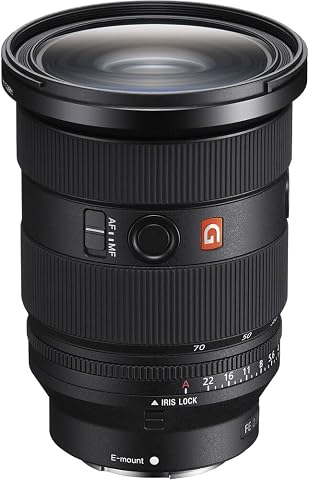 Sony FE 24-70mm F2.8 GM II Full-Frame Zoom LensView on Amazon →
- 3
 Canon RF200-800mm F6.3-9 IS USM LensView on Amazon →
- 4
 Canon RF 24-105mm f/4L IS USM LensView on Amazon →
- 5
 Canon RF 28-70mm f/2.8 IS STM Zoom LensView on Amazon →
- 6
 Nikon NIKKOR Z 28-400mm f/4-8 VR Mirrorless LensView on Amazon →
- 7
 Tamron 28-75mm F/2.8 Di III VXD G2 Zoom Lens for Sony E-MountView on Amazon →
- 8
 Tamron 17-70mm f/2.8 Di III-A VC RXD Zoom Lens for Sony E APS-C CamerasView on Amazon →
- 9
 Canon RF85mm F2 Macro IS STM LensView on Amazon →
- 10
 Canon EF 50mm f/1.8 STM Lens for Canon EOS DSLR CamerasView on Amazon →
How the Lens Tradeoffs Affect Buyers
The recommendations illustrate why a lens choice depends on the camera system and the work being done, not just a headline sharpness claim. A standard zoom can reduce lens changes at events or while traveling; an f/2.8 maximum aperture can help in dimmer conditions; and a prime can offer a wider aperture and stronger background separation. Those advantages may come with added weight or expense.
For readers, the list is most useful as a framework for matching features to use. A travel photographer may prefer a broad focal range, while a portrait photographer may favor a dedicated prime. But a ranking alone cannot establish that one lens is best for every user. Mount compatibility, camera-body pairing, handling and verified current pricing all affect the practical value of a purchase.
Products Worth Considering

Jackery Solar Generator 1000 v2 with 200W Solar Panel, 1024Wh LiFePO4 Battery

Logitech MX Mechanical Wireless Illuminated Keyboard, Tactile Quiet, Graphite

Bose QuietComfort Ultra Wireless Noise-Cancelling Over-Ear Headphones with Spatial Audio, White Smoke
As an affiliate, we earn on qualifying purchases.
What the Guide Says It Measures
The source frames its list around three buying criteria: image quality, dependable focusing and value. It also advises buyers to weigh zoom flexibility against the light-gathering ability and compact size often associated with primes. A constant f/2.8 zoom keeps the maximum aperture consistent while zooming, whereas a variable-aperture lens can admit less light at longer focal lengths.
It raises system compatibility as another long-term consideration. The guide favors native mirrorless lenses for access to camera-body autofocus and stabilization features, while noting that adapted DSLR lenses may not perform identically. These are general buying considerations in the source, not measured findings about every body-and-lens combination.
“The Tamron 28-75mm F/2.8 Di III VXD G2 stands out as the best overall choice.”
— ThorstenMeyerAI.com guide
Missing Picks and Test Details
The source text does not name all 10 lenses promised by its title: it identifies six distinct models, with the Canon RF 24-105mm f/4L appearing as a separate additional reference. It is unclear which models make up the complete list or how they rank against one another. The guide also gives no test dates, camera bodies, image samples, measured results, prices or links to supporting reviews.
That leaves the stated comparisons as the guide’s assessments rather than independently verifiable conclusions. The supplied information also does not establish whether each model remains available in 2027, whether newer alternatives have since appeared, or how performance varies across camera bodies and firmware.
Verify the Full List Before Buying
Before making a purchase, readers should check the complete original ranking and confirm current availability, mount compatibility and pricing with manufacturers and retailers. They can then compare independent tests made on their camera system and consider handling, stabilization and autofocus in the conditions they actually shoot.
No product release, testing update or follow-up date is included in the supplied source. The next development, if the guide is updated, would be publication of the four missing picks and supporting evidence for its comparisons; that update is not confirmed.
Key Questions
What is the guide’s overall lens pick?
ThorstenMeyerAI.com names the Tamron 28-75mm F/2.8 Di III VXD G2 its overall choice, citing a balance of aperture, portability and price. The supplied source does not include test measurements to independently validate that ranking.
Which lens does the guide favor for optical performance?
It describes the Sony FE 24-70mm F2.8 GM II as the stronger option for photographers prioritizing optical performance, while noting its higher cost and heavier weight.
Does the source provide all 10 promised picks?
No. The supplied text identifies six distinct lens models, plus a separate mention of the Canon RF 24-105mm f/4L, and does not identify a complete set of 10.
Are these recommendations verified for 2027?
The material is presented as a 2027-oriented guide, but it supplies no publication date, current prices, availability checks or 2027 test results. Buyers should confirm those details before purchasing.
Source: ThorstenMeyerAI.com