🔍 Read the full analysis: A Practical Guide To 10 Best Studio Monitor Headphones In 2027 For AI on ThorstenMeyerAI.com

Get the latest gadgets delivered free with Prime
- Fast, free delivery on millions of items
- Prime Video, Amazon Music and more included
- Member-only deals all year
TL;DR
ThorstenMeyerAI.com has published a buyer’s guide ranking 10 studio monitor headphones for readers working with audio, including AI-assisted production. The guide favors the Audio-Technica ATH-M50x for versatility, but its listening impressions and rankings are editorial judgments, not independently verified test results.
ThorstenMeyerAI.com has published a 10-model buying guide to studio monitor headphones, recommending the Audio-Technica ATH-M50x as its best overall pick and comparing models on sound, comfort, isolation and repairability. The guide may help audio creators using AI tools choose monitoring gear, but its rankings are the source’s editorial assessments rather than a report of independently verified measurements.
The guide says it considered four factors: frequency accuracy, comfort and isolation, build quality and serviceability, and value. Its author says the models were compared using the same test tracks in mixing scenarios. The source does not provide measurement data, a detailed test protocol or prices, so its recommendations should be read as subjective buying advice.
The ATH-M50x is recommended for its detachable cable and folding design, which the guide says make it versatile for studio and travel use. The Sony MDR-7506 is described as a familiar studio option with a revealing midrange, while the Yamaha HPH-MT5 is presented as a flatter-sounding choice for critical listening. Those descriptions and the ranking are claims made by the guide, not results independently confirmed here.
Other models named in the source include the Sony MDR-M1, Sennheiser HD 280 Pro, ATH-M30x, ATH-M20x, TASCAM TH-02 and OneOdio Pro-10. The supplied source material does not name a tenth model or give a complete numbered ranking. It also ends during its discussion of impedance, leaving that section incomplete.
The 10 picks
- 1
 Sony MDR-M1 Professional Reference Closed Monitor HeadphonesView on Amazon →
- 2
 Audio-Technica ATH-M50x Professional Studio Monitor HeadphonesView on Amazon →
- 3
 Sony MDR7506 Professional Large Diaphragm HeadphonesView on Amazon →
- 4
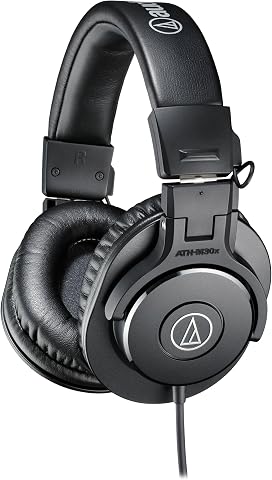 Audio-Technica ATH-M30x Professional Studio Monitor Headphones, BlackView on Amazon →
- 5
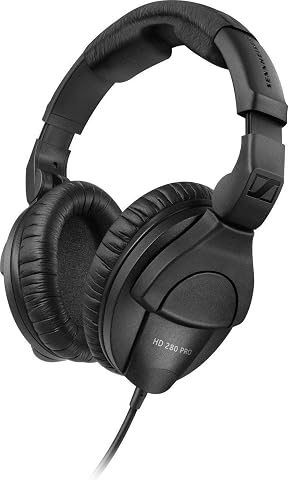 Sennheiser HD 280 Pro Headphones, BlackView on Amazon →
- 6
 Audio-Technica ATH-M20x Professional Studio Monitor HeadphonesView on Amazon →
- 7
 Yamaha HPH-MT5 Monitor Headphones, WhiteView on Amazon →
- 8
 Yamaha HPH-MT5 Monitor Headphones, BlackView on Amazon →
- 9
 OneOdio Pro-10 Wired Over-Ear Headphones with 50mm Drivers and Dual Jack – BlackView on Amazon →
- 10
 TASCAM TH-02 Professional Studio Monitor Headphones, Wired, Over EarView on Amazon →
Choosing Headphones for AI Audio Work
AI-assisted music and audio production still depends on people making listening decisions: checking edits, judging tonal balance and catching noise or distortion. Headphones that add strong bass or treble coloration can affect those judgments, so a clear account of each model’s sound and practical limitations can help creators match equipment to their workflow.
The guide’s most useful point is that a purchase is not only about sound. Isolation matters during recording, while comfort can shape long editing sessions and replaceable cables or pads can affect how long a pair remains usable. However, the source offers no independent response curves, controlled listening results or price comparisons. Readers should treat its picks as a starting point and verify fit, measurements and current availability before buying.
Products Worth Considering

Bose QuietComfort Ultra Wireless Noise-Cancelling Over-Ear Headphones with Spatial Audio, White Smoke

Apple MacBook Air 13-inch Laptop with M5 Chip, 16GB Memory, 512GB SSD, Liquid Retina Display, and 12MP Center Stage Camera (Midnight)

Samsung Odyssey OLED G8 34-Inch Curved Ultra WQHD Gaming Monitor
As an affiliate, we earn on qualifying purchases.
How the Guide Compares Models
The source frames studio headphones around a trade-off between closed-back isolation and open-back soundstage. It says all ten models in its lineup are closed-back, making them more suitable for tracking near microphones than open-back alternatives, which can leak sound. The lineup therefore emphasizes practical monitoring rather than comparing every headphone design available.
Its discussion also distinguishes neutral monitoring from more colored sound. The guide says the ATH-M50x has a subtle bass emphasis, while it describes the Yamaha HPH-MT5 as flatter and the MDR-7506 as having an upper-mid lift that may make vocals stand out. These are the author’s characterizations; the supplied material includes no frequency-response plots to substantiate them.
“The ATH-M50x stands out as the best overall for its balanced signature and detachable cable.”
— ThorstenMeyerAI.com guide
Missing Rankings and Test Evidence
The supplied source material does not identify the tenth headphone, provide a full ranking of all ten models or include the promised complete breakdown. It also gives no publication date beyond describing the guide as being for 2027, and no prices or retailer information. The impedance discussion is cut off, so its full advice about source compatibility cannot be assessed.
The author says the models were compared on the same test tracks, but the material does not specify the tracks, listening setup, evaluation process or any measured frequency-response results. Statements about durability, comfort and sound therefore remain editorial judgments. Product revisions and current availability are also not established by the supplied text.
What Buyers Should Verify
Readers considering a purchase can use the guide to identify trade-offs, then check current prices, replacement-part availability and fit with manufacturers or retailers. Listening in person, where possible, may help determine whether clamp force and tonal balance suit a particular workflow.
A more complete version of the guide would need to name all ten picks, publish the full ranking and explain its test method. Until then, the ATH-M50x, MDR-7506 and HPH-MT5 can be treated as the source’s highlighted options, not as a definitive or independently tested list.
Key Questions
What is the guide’s top overall headphone pick?
The Audio-Technica ATH-M50x is the guide’s best overall choice, chiefly because of its detachable cable and folding design. That is the source’s editorial recommendation.
Does the source list all 10 headphone models?
No. The supplied text names several models but does not identify a tenth headphone or give a complete numbered ranking.
Which models does the guide describe as flatter-sounding?
The guide describes the Yamaha HPH-MT5 as a flatter option for critical listening and says the MDR-7506 has a slight upper-mid lift. These are listening assessments from the source, not independently verified measurements.
Is this guide specifically about AI headphones?
No. It is a studio-headphone buying guide presented for an AI-related audience. The source discusses general monitoring needs rather than headphones designed specifically for AI systems.
Source: ThorstenMeyerAI.com