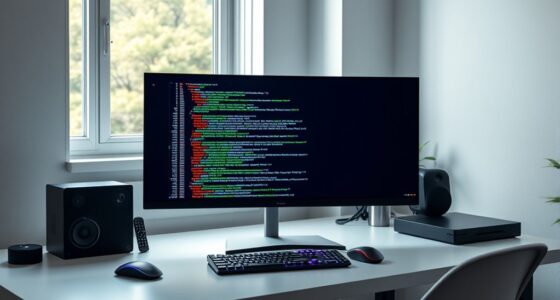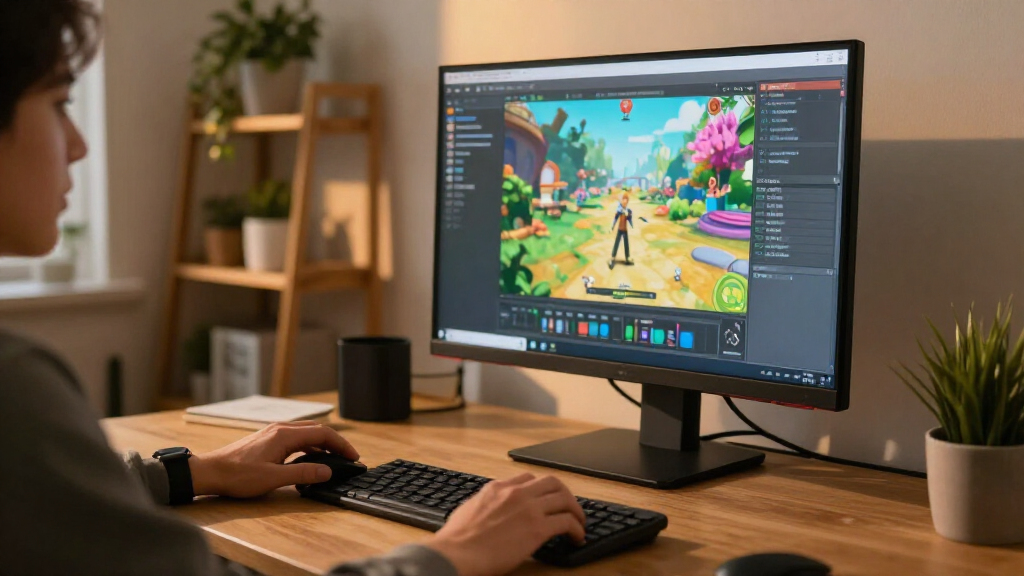
The best Black Friday monitor deals in this roundup cover very different needs, from high-refresh gaming to sharp 4K work displays. I’d make the Samsung Odyssey G5 32-Inch QHD 180Hz my overall pick for buyers who want a large screen, more detail than Full HD, and fast gaming performance. The Samsung ViewFinity S7 4K is the standout for fine image detail, while the Dell SE2426H is a practical compact choice with a 144Hz IPS panel. The main tradeoff is between resolution, screen size, refresh rate, and how much desk space your setup can handle. Read on for the full breakdown and advice on choosing a monitor that suits your actual use.

Get the latest gadgets delivered free with Prime
- Fast, free delivery on millions of items
- Prime Video, Amazon Music and more included
- Member-only deals all year
Complete the kit



Key Takeaways
The Samsung Odyssey G5 32-Inch QHD 180Hz offers the strongest blend of screen size, QHD resolution, and refresh rate among these picks; the smaller Full HD gaming monitors make more sense when desk space or graphics hardware is limited.
The Samsung ViewFinity S7 4K is the clear resolution specialist, but 4K is most useful for detailed work and media—not automatically the best fit for high-frame-rate gaming.
Refresh rate varies widely: several Sceptre and Samsung gaming options reach 180Hz, while the 75Hz and 100Hz everyday monitors prioritize simpler use over competitive motion smoothness.
Screen size alone does not tell the whole story: the 32-inch Samsung S30B is Full HD, while the 32-inch Odyssey G5 is QHD, so text and image sharpness differ at the same diagonal size.
Compact IPS picks serve a different buyer: the Dell SE2426H and LG 27U411A-B offer IPS panels and everyday versatility, while curved VA models emphasize immersion and contrast over viewing-angle flexibility.


| Black Friday monitor deal | Screen size | Resolution | Refresh rate | Response time |
|---|---|---|---|---|
| Sceptre Curved 27-inch Prime G | 27 inches | 1920 × 1080 (Full HD) | 100Hz | 1ms blur reduction |
| Sceptre 22-Inch FHD 144Hz Gami | 22 inches | 1920 × 1080 (Full HD) | Up to 144Hz | 1ms |
| New! Sceptre Curved 27-inch Pr | 27 inches | 1920 × 1080 (Full HD) | Up to 180Hz | 1ms blur reduction |
| LG 27U411A-B 27-Inch Full HD I | 27 inches | 1920 × 1080 | 120Hz | — |
| Samsung S30B 32-Inch FHD Monit | 32 inches | 1920 × 1080 (Full HD) | 75Hz | 8ms |
| Samsung 32-Inch Odyssey G5 QHD | 32 inches | 2560 × 1440 (QHD) | 180 Hz | 1 ms (GtG) |
| Dell SE2426H 23.8-Inch FHD IPS | 23.8 inches | 1920 × 1080 (FHD) | 144 Hz | 1 ms MPRT |
| Sceptre E275W-FW100T 27-Inch F | 27 inches | 1920 × 1080 (Full HD) | 100 Hz | 1 ms |
| Samsung 32-Inch ViewFinity S7 | 32 inches | 3840 × 2160 (4K UHD) | 60 Hz | 5 ms |
| Philips 241V8LB 23.8-Inch Full | 23.8 inches | 1920 × 1080 (Full HD) | 100 Hz | 4 ms |
| Samsung Odyssey G5 32-Inch QHD | 32 inches | 2560 × 1440 (QHD) | 180 Hz | 1 ms MPRT |
| Samsung 27-Inch Essential S3 C | 27 inches | 1920 × 1080 (Full HD) | 100Hz | 4 milliseconds |
| Samsung 27-Inch S30GD Essentia | 27 inches | 1920 × 1080 (Full HD) | 100 Hz, default 60 Hz | 5 milliseconds |
| Sceptre 27-Inch Full HD Gaming | 27 inches | 1920 × 1080 (Full HD) | Up to 180Hz | 1 millisecond |
| Samsung 27-inch Odyssey G3 | 27 inches | 1920 × 1080 (Full HD) | 180 Hz | 1 ms MPRT |
More Details on Our Top Picks
Sceptre Curved 27-inch Prime Gaming Monitor 1500R 100Hz HDMI X2 DisplayPort 1ms 100% sRGB, Build-in Speakers Machine Black 2025 (C275W-FW100T Series)
For a Black Friday monitor shortlist, I’d place this Sceptre among the more versatile curved options: its 27-inch 1500R screen and 100Hz refresh rate add immersion and smoother motion without making gaming the only reason to buy it. Full HD is easier to drive than the higher-resolution Samsung Odyssey G5 QHD, but it also gives you less desktop detail at this screen size. The listed 1ms blur reduction and 100% sRGB coverage suit casual play, streaming, and general creative work; they don’t make this a high-refresh competitive display. Two HDMI ports, DisplayPort, built-in speakers, and VESA mounting offer useful flexibility, though the speakers are better treated as a convenience than a replacement for dedicated audio. I’d choose it over the 22-inch Sceptre when a larger, curved workspace matters more than a faster refresh rate.
Pros:- 1500R curve gives games and videos a more enveloping feel.
- 100Hz refresh rate is smoother than standard 60Hz displays for casual play and scrolling.
- Two HDMI ports plus DisplayPort make it easier to keep multiple devices connected.
- VESA mounting and built-in speakers offer practical setup flexibility.
Cons:- Full HD resolution provides limited workspace detail on a 27-inch screen.
- 100Hz is slower than the 144Hz 22-inch Sceptre and 180Hz curved Sceptre in this lineup.
- Built-in speakers may not satisfy buyers who want fuller, more detailed audio.
Best for: PC users who want a curved 27-inch display for casual gaming, streaming, and everyday work, with multiple video inputs and no separate speakers.
Not ideal for: Competitive gamers seeking the highest refresh rate, or detail-focused users who want more than Full HD resolution at 27 inches.
- Screen size:27 inches
- Resolution:1920 × 1080 (Full HD)
- Panel curvature:1500R
- Refresh rate:100Hz
- Response time:1ms blur reduction
- Color gamut:100% sRGB
- Connectivity:2 HDMI; 1 DisplayPort
- Audio and mounting:Built-in speakers; VESA mount compatible
Our verdict“Choose this Sceptre for a roomy, curved all-purpose setup, but pick the 180Hz Sceptre for faster competitive gaming.”
Sceptre 22-Inch FHD 144Hz Gaming Monitor with Built-In Speakers
This is the lineup’s compact speed option: the 22-inch Full HD screen keeps the image manageable on a small desk, while 144Hz and 1ms response time offer a clear motion advantage over the 100Hz curved Sceptre. That higher refresh rate is most useful for fast games, provided your PC can produce enough frames. Its smaller panel also makes this a sensible fit for a secondary gaming station or a dual-monitor arrangement, though it leaves less room for side-by-side windows than the 27-inch LG 27U411A-B. FreeSync, a matte finish, and Blue-Light Shift round out a practical feature set, and built-in speakers keep the setup simple. The tradeoff is the limited screen area and a single listed HDMI port, so buyers connecting several consoles or devices may prefer a monitor with more inputs.
Pros:- Up to 144Hz refresh rate supports fluid motion in fast games.
- 1ms response time is suited to quick on-screen action.
- Compact 22-inch size fits smaller desks and secondary-monitor setups.
- FreeSync, matte finish, and built-in speakers add useful everyday features.
Cons:- The 22-inch screen offers less room for games and multitasking than the 27-inch options.
- Only one HDMI port is listed, limiting convenient connections for multiple devices.
Best for: Competitive PC gamers with limited desk space who prioritize a high refresh rate and want a compact display for fast-paced games.
Not ideal for: Multitaskers who need a large workspace, or buyers who regularly switch between several HDMI devices.
- Screen size:22 inches
- Resolution:1920 × 1080 (Full HD)
- Refresh rate:Up to 144Hz
- Response time:1ms
- Aspect ratio:16:9
- Contrast ratio:2000:1
- Adaptive sync:FreeSync
- Connectivity:1 HDMI; DisplayPort
- Features:Built-in speakers; Blue-Light Shift; matte screen
Our verdict“Pick this Sceptre when desk space is tight but gaming speed matters more than screen size.”
New! Sceptre Curved 27-inch Prime Gaming Monitor DisplayPort x2 180Hz HDMI x2 180Hz 1500R 1ms Build-in Speakers, Machine Black 2027 (C275B-FW180T Series)
Among these five, this Sceptre makes the strongest gaming-first case: it combines a 1500R curve with a listed 180Hz refresh rate, placing it well ahead of the 100Hz curved Sceptre for fast motion. Two HDMI and two DisplayPort inputs are another step up from the other Sceptre models here, particularly for a setup that keeps a PC and consoles connected. Adaptive-Sync and 1ms blur reduction are aimed at smoother, clearer action, while 100% sRGB coverage keeps the screen useful for everyday media and color-conscious work. The main compromise is resolution: this is still Full HD at 27 inches, so text and fine details will look less dense than on the Samsung Odyssey G5 QHD. I’d shortlist it for speed and connectivity, not for maximum desktop sharpness.
Pros:- 180Hz refresh rate offers the fastest motion specification among these five monitors.
- 1500R curve adds immersion for games and video.
- Two HDMI and two DisplayPort inputs support several connected devices.
- Adaptive-Sync, 1ms blur reduction, and 100% sRGB coverage broaden its gaming and everyday use.
Cons:- Full HD resolution looks less detailed at 27 inches than a QHD alternative.
- The 180Hz capability is most useful with a PC that can deliver high frame rates.
- Built-in speakers provide convenience but may not replace a dedicated audio setup.
Best for: Gamers with a PC capable of high frame rates who want a curved 27-inch screen, several connected devices, and smoother action.
Not ideal for: Buyers who prioritize sharp text, detailed creative work, or high-resolution gaming over refresh rate.
- Screen size:27 inches
- Resolution:1920 × 1080 (Full HD)
- Panel curvature:1500R
- Refresh rate:Up to 180Hz
- Response time:1ms blur reduction
- Color gamut:100% sRGB
- Connectivity:2 HDMI; 2 DisplayPort
- Adaptive sync:Adaptive-Sync; FreeSync listed
- Audio:Built-in speakers; audio out jack
Our verdict“Choose this model for a curved gaming setup where high refresh and multiple inputs matter more than QHD detail.”
LG 27U411A-B 27-Inch Full HD IPS Monitor, 120Hz, HDR10, HDMI, Black
I’d rank the LG as the most balanced flat-screen choice here for workdays that include some gaming. Its IPS panel and 178-degree viewing angle make the picture easier to share or view off-center than on the curved Sceptre options, while 120Hz gives scrolling and casual gameplay a smoother feel than a standard office monitor. HDR10 support and up to 99% sRGB coverage add flexibility for media, though the listed 250 cd/m² brightness and Full HD resolution set limits for HDR impact and fine-detail work. Compared with the compact 144Hz Sceptre, the LG gives you a larger screen and a tilt-adjustable stand, but it has a lower refresh rate and only HDMI connectivity listed. The stand lacks specified height adjustment, so ergonomics may call for a separate mount.
Pros:- IPS panel and 178-degree viewing angle suit shared viewing and varied seating positions.
- 120Hz refresh rate makes motion smoother for everyday use and casual gaming.
- Up to 99% sRGB coverage and HDR10 support add versatility for media.
- Tilt adjustment and a three-side virtually borderless design fit a tidy desk setup.
Cons:- Full HD resolution offers less fine detail and workspace than a QHD monitor of similar size.
- Only HDMI connectivity is listed, with no DisplayPort specified.
- Stand adjustment is limited to tilt; height adjustment is not specified.
Best for: Home-office users who want a 27-inch IPS screen for documents, shared viewing, streaming, and occasional gaming.
Not ideal for: Competitive gamers who want the highest refresh rates, or users needing sharp high-resolution workspace detail and height-adjustable ergonomics.
- Screen size:27 inches
- Resolution:1920 × 1080
- Display technology:IPS LED
- Refresh rate:120Hz
- Viewing angle:178 degrees
- Color gamut:Up to 99% sRGB
- HDR:HDR10
- Brightness:250 cd/m²
- Connectivity and stand:HDMI; tilt adjustment from -5° to 20°
Our verdict“Choose the LG for a flat, wide-view 27-inch work-and-play screen, but look elsewhere for high-end gaming speed or more resolution.”
Samsung S30B 32-Inch FHD Monitor, 75Hz, AMD FreeSync
The Samsung’s case is size, not speed: its 32-inch screen gives documents, video, and games a larger presentation than the 27-inch LG or either curved Sceptre, while the flat, anti-glare finish suits general desk use. The 4000:1 contrast ratio is a listed advantage for deeper dark tones, and FreeSync can help reduce tearing when frame rates vary. But Full HD spread across 32 inches means visibly less pixel density than the LG’s 27-inch Full HD panel, so small text and fine details are not its strength. Its 75Hz refresh rate and 8ms response time also place it behind every other gaming-focused option in this batch for fast action. I’d choose it for a large, simple viewing area, not as a competitive gaming upgrade.
Pros:- 32-inch screen provides a broad viewing area for video and everyday tasks.
- 4000:1 contrast ratio can deliver deeper dark tones than the listed LG panel.
- FreeSync and Game Mode add support for casual gaming.
- HDMI and DisplayPort offer flexibility for connecting a computer and another device.
Cons:- Full HD resolution is relatively low for a 32-inch display, reducing fine-detail clarity.
- 75Hz refresh rate is slower than the other four monitors in this batch.
- Listed 8ms response time is less suited to fast-paced gaming.
Best for: Users who want a large screen for streaming, everyday browsing, or casual gaming and value a flat, anti-glare display.
Not ideal for: Competitive gamers and detail-focused office users who need fast response, crisp text, or more than Full HD resolution on a large screen.
- Screen size:32 inches
- Resolution:1920 × 1080 (Full HD)
- Refresh rate:75Hz
- Response time:8ms
- Contrast ratio:4000:1
- Brightness:250 cd/m²
- Adaptive sync:AMD FreeSync
- Connectivity:1 HDMI; DisplayPort
- Features:Game Mode; Eye Saver Mode; Flicker Free
Our verdict“Pick the Samsung when screen size matters most for general viewing, but choose a faster or sharper model for gaming and detailed work.”
Samsung 32-Inch Odyssey G5 QHD Gaming Monitor (G50F)
For a big gaming display that still prioritizes speed, I’d put the Odyssey G5 G50F ahead of the slower Samsung ViewFinity S7. Its 32-inch QHD fast IPS panel pairs a 180Hz refresh rate with a 1ms GtG response time, giving motion-focused games more headroom while keeping the resolution sharper than Full HD options such as the Sceptre E275W-FW100T. FreeSync and G-Sync compatibility support smoother play across compatible systems, and the height-, pivot-, tilt- and swivel-adjustable stand makes it easier to fit a large screen to your desk.
The tradeoff is that QHD spread across 32 inches is less dense than 4K on the ViewFinity S7, and this model’s 1000:1 contrast ratio is modest beside that monitor’s VA panel. HDR10 is supported, but the listed 300 cd/m² brightness sets restrained expectations for HDR impact. I’d choose it for responsive gaming, not contrast-rich movie viewing.
Pros:- QHD resolution on a 32-inch fast IPS screen
- 180Hz refresh rate and 1ms GtG response time
- FreeSync and G-Sync compatibility
- Stand adjusts for height, pivot, tilt, and swivel
Cons:- QHD is less detailed than the 4K ViewFinity S7 at the same screen size
- 1000:1 contrast and 300 cd/m² brightness limit HDR impact
- Listed weight appears inconsistent with the monitor’s dimensions
Best for: PC and console gamers who want a large, adjustable 32-inch screen with QHD detail and a high refresh rate.
Not ideal for: Buyers prioritizing 4K sharpness, strong dark-room contrast, or a compact desk setup.
- Screen size:32 inches
- Resolution:2560 × 1440 (QHD)
- Panel type:Fast IPS
- Refresh rate:180 Hz
- Response time:1 ms (GtG)
- Adaptive sync:AMD FreeSync, G-Sync Compatible
- HDR:HDR10
- Stand adjustment:Height, pivot, tilt, swivel
Our verdict“Choose the Odyssey G5 G50F if you want a large, fast QHD gaming display and value motion performance over 4K detail or deep contrast.”
Dell SE2426H 23.8-Inch FHD IPS Monitor, 144Hz, 1ms MPRT, FreeSync, Dual HDMI, Tilt-Adjustable
The Dell SE2426H is the compact gaming pick here: its 23.8-inch Full HD IPS screen takes up less desk space than the Sceptre E275W-FW100T, while its 144Hz refresh rate gives motion a smoother feel than the Sceptre’s 100Hz panel. IPS viewing angles help keep colors consistent when you’re not sitting perfectly centered, and FreeSync can reduce tearing with compatible graphics hardware. The matte anti-glare finish and TÜV Rheinland eye comfort certification also suit a monitor that may pull double duty for work and gaming.
The size and speed come with clear limits. Its 1080p resolution offers less workspace and fine detail than the Samsung Odyssey G5 G50F’s QHD screen, and the stand only tilts, with no height adjustment. Two HDMI ports are useful for a simple multi-device setup, but there’s no DisplayPort listed. I’d shortlist it for a small desk rather than a high-resolution or highly adjustable workstation.
Pros:- 144Hz refresh rate for smoother motion than 100Hz options
- IPS panel with 178° viewing angle
- FreeSync support and matte anti-glare finish
- Two HDMI ports and TÜV Rheinland 3-star eye comfort certification
Cons:- Full HD resolution provides less detail than the QHD Samsung Odyssey G5 G50F
- Stand adjustment is limited to tilt
- No DisplayPort connection is listed
Best for: Gamers with limited desk space who want a compact IPS screen, 144Hz motion, and two HDMI connections.
Not ideal for: Buyers seeking QHD detail, DisplayPort connectivity, or a stand with height and swivel adjustments.
- Screen size:23.8 inches
- Resolution:1920 × 1080 (FHD)
- Panel technology:IPS LCD
- Refresh rate:144 Hz
- Response time:1 ms MPRT
- Adaptive sync:AMD FreeSync
- Ports:2 HDMI
- Adjustment:Tilt
Our verdict“Pick the Dell SE2426H for a small gaming or work desk where 144Hz and dual HDMI matter more than higher resolution or stand flexibility.”
Sceptre E275W-FW100T 27-Inch Full HD 100Hz Gaming Monitor
The Sceptre E275W-FW100T makes a practical case for buyers who want a larger screen and basic gaming features without chasing high refresh rates. Its 27-inch Full HD display is roomier than the compact Dell SE2426H, and 100Hz with FreeSync offers a smoother step up from standard 60Hz displays. The listed 100% sRGB color gamut is a useful point for general media and casual creative work, while built-in speakers mean you can get sound without adding desktop speakers right away. HDMI, DisplayPort, and VESA mounting give it more setup flexibility than the Philips 241V8LB.
Its 1080p resolution is spread over 27 inches, so text and fine details won’t look as crisp as on the QHD Samsung Odyssey G5 G50F. The 100Hz ceiling also falls short of the Dell’s 144Hz and the Samsung’s 180Hz, making this a weaker fit for competitive play. The listed 170° viewing angle is narrower than the 178° figures on those alternatives. I’d favor it for casual gaming and everyday use, not high-speed play or sharp, dense imagery.
Pros:- 27-inch screen with a 100Hz refresh rate
- FreeSync and listed 1ms response time
- 100% sRGB color gamut
- Built-in speakers, HDMI, DisplayPort, and VESA mounting
Cons:- Full HD resolution is less detailed than the QHD Samsung Odyssey G5 G50F
- 100Hz is slower than the Dell SE2426H and Samsung Odyssey G5 G50F
- Listed 170° viewing angle is narrower than several alternatives
Best for: Casual gamers and general-use buyers who want a 27-inch screen, built-in speakers, and both HDMI and DisplayPort.
Not ideal for: Competitive gamers who want higher refresh rates, or users who prioritize crisp text and fine detail at 27 inches.
- Screen size:27 inches
- Resolution:1920 × 1080 (Full HD)
- Refresh rate:100 Hz
- Response time:1 ms
- Contrast ratio:2000:1
- Color gamut:100% sRGB
- Adaptive sync:AMD FreeSync
- Ports:2 HDMI, 1 DisplayPort
- Audio:Built-in speakers, audio in, headphone jack
Our verdict“Choose this Sceptre for casual gaming and everyday use if a 27-inch screen, built-in audio, and flexible mounting matter more than high resolution or refresh rate.”
Samsung 32-Inch ViewFinity S7 4K UHD Monitor
The ViewFinity S7 is the resolution-first choice in this group. Its 32-inch 4K VA panel offers finer detail than the Odyssey G5 G50F’s QHD screen, which makes it a better match for reading small text, viewing high-resolution media, or keeping multiple windows open. The 3000:1 contrast ratio also gives dark scenes more depth than the G5’s listed 1000:1 ratio. A matte finish and Eye Saver Mode add useful comfort features for long work sessions, and HDMI plus DisplayPort cover common desktop connections.
This is not the gaming alternative to the G5: the ViewFinity tops out at 60Hz and lists a 5ms response time, so fast motion won’t look as fluid as on the G5 or Dell SE2426H. It also has just one HDMI port, which is less convenient for several connected devices than the Dell’s dual-HDMI setup. I’d pick it for detailed work and video, and skip it if fast competitive play is the priority.
Pros:- 4K UHD resolution delivers more detail than the QHD Samsung Odyssey G5 G50F
- VA panel with a 3000:1 contrast ratio
- Matte finish and Eye Saver Mode for extended viewing
- HDMI and DisplayPort connections
Cons:- 60Hz refresh rate is much lower than the gaming-focused Samsung Odyssey G5 G50F
- 5ms response time is less suited to fast competitive games
- Only one HDMI port is listed
Best for: Office and media users who want a large 4K screen for detailed text, high-resolution content, and multitasking.
Not ideal for: Competitive gamers or multi-device users who need a high refresh rate or more than one HDMI port.
- Screen size:32 inches
- Resolution:3840 × 2160 (4K UHD)
- Display type:VA
- Refresh rate:60 Hz
- Response time:5 ms
- Contrast ratio:3000:1
- HDR:HDR10
- Ports:1 HDMI, DisplayPort
Our verdict“Choose the ViewFinity S7 for 4K detail, work, and media viewing; choose the Odyssey G5 G50F instead if smooth gaming motion matters more.”
Philips 241V8LB 23.8-Inch Full HD 100Hz VA Monitor
The Philips 241V8LB suits a different brief from the gaming-focused Dell SE2426H: it pairs a similar compact Full HD size with a VA panel and 3000:1 contrast ratio, which can make dark scenes and everyday video appear richer than on the Dell’s 1000:1 IPS panel. Its 100Hz refresh rate and Adaptive-Sync add smoother motion than a basic 60Hz office screen, while LowBlue, flicker-free, and EasyRead modes give it useful options for reading and longer desk sessions. The three-sided bezel-free design can also help when arranging multiple monitors.
There are meaningful compromises. The Dell reaches 144Hz and has a matte anti-glare finish, while the Philips is limited to 100Hz and uses a glossy screen that can reflect windows or lamps. Connections are also basic: HDMI and VGA, with no DisplayPort listed. Its 250 cd/m² brightness is lower than the 300 cd/m² listed for the Dell and Sceptre E275W-FW100T. I’d choose it for contrast and eye-care features, not a bright room or competitive gaming.
Pros:- VA panel with a 3000:1 contrast ratio
- 100Hz refresh rate and Adaptive-Sync
- LowBlue, flicker-free, and EasyRead modes
- Three-sided bezel-free design suits multi-monitor layouts
Cons:- Glossy screen can reflect ambient light, unlike the Dell SE2426H’s matte finish
- 100Hz is slower than the Dell SE2426H’s 144Hz
- HDMI and VGA connectivity lacks DisplayPort
Best for: Readers and everyday desktop users with a small setup who want stronger VA contrast and built-in eye-care modes.
Not ideal for: Competitive gamers, bright-room users, or buyers who need a matte display, DisplayPort, or higher brightness.
- Screen size:23.8 inches
- Resolution:1920 × 1080 (Full HD)
- Panel type:VA LCD
- Refresh rate:100 Hz
- Response time:4 ms
- Contrast ratio:3000:1
- Brightness:250 cd/m²
- Connectivity:HDMI, VGA
- Eye care:LowBlue Mode, flicker-free, EasyRead
Our verdict“Pick the Philips 241V8LB for a compact everyday monitor with strong VA contrast and eye-care modes, provided its glossy screen and basic ports fit your setup.”
Samsung Odyssey G5 32-Inch QHD 180Hz Gaming Monitor
For Black Friday shoppers who want a large gaming screen without dropping to Full HD, this 32-inch QHD Odyssey G5 is the standout pick in this group. Its 2560 × 1440 resolution gives games more detail than the 27-inch Odyssey G3 or Sceptre E275B-FW180T, both of which run at Full HD. The 180Hz refresh rate and AMD FreeSync support suit fast-paced play, while the VA panel’s 3000:1 contrast ratio can give darker scenes more depth. The height-adjustable stand is a practical advantage over the tilt-only Samsung S30GD. The tradeoff is that QHD demands more graphics power, and the large flat screen may take up more desk space than the 27-inch alternatives. Connectivity is also limited to one HDMI and one DisplayPort.
Pros:- QHD resolution provides more detail than the Full HD gaming monitors in this group.
- 180Hz refresh rate and AMD FreeSync support responsive, smoother gameplay.
- 3000:1 contrast ratio can help darker game scenes appear more distinct.
- Stand adjusts for height and tilt.
Cons:- QHD gaming can place a heavier load on a graphics card than Full HD.
- Only one HDMI port is listed.
- The 32-inch footprint may be too large for compact desks.
Best for: PC gamers who want a spacious 32-inch screen with sharper-than-Full-HD resolution and a high refresh rate.
Not ideal for: Gamers with entry-level graphics hardware, limited desk space, or several HDMI devices to connect.
- Screen size:32 inches
- Resolution:2560 × 1440 (QHD)
- Panel:VA
- Refresh rate:180 Hz
- Response time:1 ms MPRT
- Contrast ratio:3000:1
- HDR:HDR10
- Adaptive sync:AMD FreeSync
- Ports:1 HDMI, 1 DisplayPort
Our verdict“Choose this Odyssey G5 if you want a large, high-refresh QHD gaming display and have the desk space and graphics power to support it.”
Samsung 27-Inch Essential S3 Curved FHD Monitor
This Essential S3 is the everyday-use option for buyers who want a curved screen for work, video, and casual games rather than a dedicated high-speed gaming setup. Its 1800R curve gives the 27-inch Full HD display a different feel from the flat Samsung S30GD, while its 100Hz refresh rate is a step up from standard 60Hz motion once enabled in settings. The TÜV-certified eye-comfort features also suit long sessions at a desk. Compared with the more gaming-focused Samsung Odyssey G3, this model gives up 180Hz performance and an ergonomic stand in favor of a straightforward curved-screen format. Full HD across 27 inches offers less fine detail than QHD, and the supplied default refresh rate is 60Hz, so buyers must change the setting to access 100Hz. Its listed ports are HDMI and D-sub.
Pros:- 1800R curve offers a more enveloping view than the flat Samsung S30GD.
- 100Hz refresh rate can make scrolling and casual gaming look smoother than 60Hz.
- Eye-comfort features address blue light and screen flicker.
- Includes Game Mode for adjusting image presentation in games.
Cons:- Ships at a 60Hz default setting, so 100Hz must be enabled manually.
- Full HD resolution is less detailed than the QHD Odyssey G5.
- Listed connectivity is limited to one HDMI and D-sub.
Best for: Home-office users and casual gamers who prefer a curved 27-inch screen for mixed daily use.
Not ideal for: Competitive gamers who want 180Hz, or detail-focused users seeking QHD resolution and a fully adjustable stand.
- Screen size:27 inches
- Resolution:1920 × 1080 (Full HD)
- Curvature:1800R
- Refresh rate:100Hz
- Response time:4 milliseconds
- Contrast ratio:3,000:1
- Brightness:250 cd/m²
- Ports:1 HDMI, 2 component outputs
Our verdict“Pick the Essential S3 for a curved screen and comfortable everyday use, but choose the Odyssey G3 if gaming speed and stand flexibility matter more.”
Samsung 27-Inch S30GD Essential Monitor with IPS Panel
The S30GD is the most work-oriented 27-inch choice here: its IPS panel keeps colors more consistent across wide viewing angles, which can help when sharing a screen or shifting position at a desk. Compared with the curved Samsung Essential S3, it trades the enveloping shape for a flat display and two USB ports alongside HDMI. The 100Hz refresh rate can make everyday scrolling feel smoother, though this is not a match for the 180Hz Odyssey G3 or Sceptre E275B-FW180T when fast gaming is the priority. Its Full HD resolution is common to those gaming alternatives, but the tilt-only stand and glossy finish make placement and reflections worth factoring into a desk setup. As with the Essential S3, the listed 100Hz mode defaults to 60Hz and needs to be selected manually.
Pros:- IPS panel supports consistent color across broad viewing angles.
- Two USB ports add useful connectivity beyond the HDMI input.
- 100Hz refresh rate can smooth everyday motion after it is enabled.
- Slim design and thin bezels suit compact or multi-monitor desk setups.
Cons:- Full HD resolution provides less workspace detail than the QHD Odyssey G5.
- Stand offers tilt adjustment only.
- Glossy finish can make reflections more noticeable.
Best for: Desk-based workers who want wide-viewing-angle color, a slim 27-inch screen, and USB ports for everyday peripherals.
Not ideal for: Competitive gamers seeking high refresh rates, or anyone who needs a height-adjustable stand or a matte screen.
- Screen size:27 inches
- Panel:IPS
- Resolution:1920 × 1080 (Full HD)
- Refresh rate:100 Hz, default 60 Hz
- Response time:5 milliseconds
- Brightness:250 cd/m²
- Ports:1 HDMI, 2 USB
- Stand:Tilt-only
Our verdict“Choose the S30GD for everyday work and shared viewing; opt for the Sceptre E275B-FW180T or Odyssey G3 for faster gaming.”
Sceptre 27-Inch Full HD Gaming Monitor, 180Hz, E275B-FW180T Series
Among the 27-inch Full HD gaming picks, the Sceptre E275B-FW180T makes the strongest case for a desk with several connected devices. Its two HDMI ports and two DisplayPort connections offer more flexibility than the Samsung Odyssey G3, whose listing specifies DisplayPort and HDMI without port counts. The up-to-180Hz refresh rate, 1ms response time, and Adaptive-Sync target smooth play, while a matte screen avoids the glossy finish used by the G3. Built-in speakers can also simplify a basic setup. The tradeoff is resolution: like the G3 and Samsung Essential S3, this is Full HD, so it does not have the extra detail of the 32-inch QHD Odyssey G5. The product data also does not specify the VESA mount size or stand adjustments, so buyers planning a monitor arm should verify fit before choosing it.
Pros:- Two HDMI and two DisplayPort connections accommodate multiple devices.
- Up-to-180Hz refresh rate and 1ms response time suit fast-paced games.
- Adaptive-Sync helps match display refresh to graphics output.
- Matte screen, built-in speakers, and Blue-Light Shift add practical setup features.
Cons:- Full HD resolution has less detail than the QHD Odyssey G5.
- VESA mount size and stand adjustment options are not specified.
- Built-in speakers may not replace dedicated audio for gaming or media.
Best for: PC and console gamers who switch between several devices and want high refresh performance with multiple video inputs.
Not ideal for: Buyers prioritizing QHD detail, a known adjustable stand, or a confirmed monitor-arm mounting size.
- Screen size:27 inches
- Resolution:1920 × 1080 (Full HD)
- Refresh rate:Up to 180Hz
- Response time:1 millisecond
- Adaptive sync:Adaptive-Sync
- Color gamut:94% sRGB
- Ports:2 HDMI, 2 DisplayPort, audio out
- Audio:Built-in speakers
- Mounting:VESA wall-mountable; mount size not specified
Our verdict“Choose the Sceptre if multiple video inputs and Full HD high-refresh gaming matter more than QHD resolution or clearly specified stand ergonomics.”
Samsung 27-inch Odyssey G3 (G30D) FHD Gaming Monitor
The Odyssey G3 is the gaming pick for buyers who want adjustability built into the stand, not just a fast panel. Its height, swivel, tilt, and pivot adjustments make it easier to line up the screen with a comfortable desk position than the tilt-only Samsung S30GD; the Sceptre E275B-FW180T listing does not specify stand adjustments. Gaming features include 180Hz, 1ms MPRT, and AMD FreeSync, plus Black Equalizer and Virtual Aim Point. That makes it a more purpose-built gaming choice than the curved Essential S3, but it shares the same Full HD resolution as that model and the Sceptre. The glossy finish may catch reflections, and buyers wanting extra image detail should look to the QHD 32-inch Odyssey G5, accepting its larger size and higher pixel demand.
Pros:- Stand supports height, swivel, tilt, and pivot adjustments.
- 180Hz refresh rate and 1ms MPRT target responsive gaming.
- AMD FreeSync helps reduce tearing.
- Black Equalizer, Virtual Aim Point, and Eye Saver Mode add gaming and viewing controls.
Cons:- Full HD resolution offers less detail than the 32-inch QHD Odyssey G5.
- Glossy screen finish may show reflections.
- Listed brightness is 250 cd/m², which may be limiting in very bright spaces.
Best for: Gamers who want a 27-inch Full HD display with a highly adjustable stand for a carefully positioned desk setup.
Not ideal for: Players seeking QHD sharpness or a matte screen for a bright, reflection-prone room.
- Screen size:27 inches
- Resolution:1920 × 1080 (Full HD)
- Refresh rate:180 Hz
- Response time:1 ms MPRT
- Contrast ratio:3000:1
- Brightness:250 cd/m²
- Adaptive sync:AMD FreeSync
- Connectivity:DisplayPort, HDMI
- Stand adjustments:Height, swivel, tilt, and pivot
Our verdict“Choose the Odyssey G3 if ergonomic stand adjustments and 180Hz Full HD gaming are your priorities; choose the Odyssey G5 for higher resolution.”
How We Picked
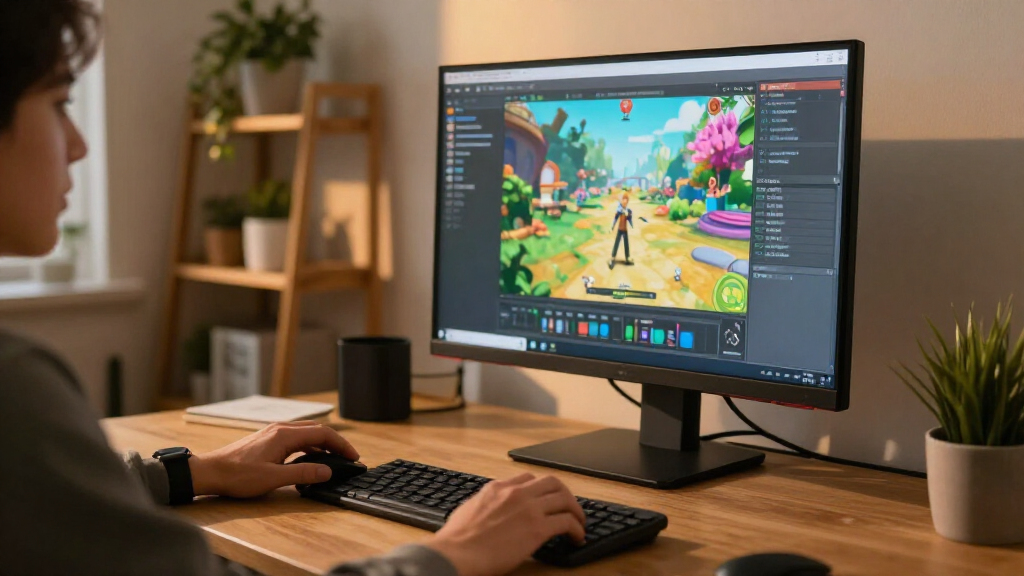
I ranked these monitors by how clearly each one serves a real buying need during a Black Friday search: gaming speed, resolution and image detail, workspace fit, and straightforward everyday use. I compared the stated panel type, screen size, resolution, refresh rate, adaptive-sync support where listed, and practical features such as connectivity, speakers, and tilt adjustment. A higher refresh rate mattered most for gaming picks, while pixel resolution and panel suitability carried more weight for work-focused screens.
The order reflects the balance of capability and audience, not a claim that one display suits everyone. The 32-inch QHD 180Hz Odyssey G5 leads for its unusually broad mix of gaming-focused specs; the 4K ViewFinity S7 ranks highly for detail but serves a narrower use. Smaller Full HD options remain relevant for tighter budgets, compact desks, or less demanding setups, while models with limited resolution or refresh rates rank lower for buyers seeking a major upgrade. I have not treated Black Friday as a reason to buy a monitor that does not fit the user’s graphics hardware, desk, or daily workload.
| Black Friday monitor deal | Adaptive sync |
|---|---|
| Sceptre Curved 27-inch Prime G | — |
| Sceptre 22-Inch FHD 144Hz Gami | FreeSync |
| New! Sceptre Curved 27-inch Pr | Adaptive-Sync; FreeSync listed |
| LG 27U411A-B 27-Inch Full HD I | — |
| Samsung S30B 32-Inch FHD Monit | AMD FreeSync |
| Samsung 32-Inch Odyssey G5 QHD | AMD FreeSync, G-Sync Compatible |
| Dell SE2426H 23.8-Inch FHD IPS | AMD FreeSync |
| Sceptre E275W-FW100T 27-Inch F | AMD FreeSync |
| Samsung 32-Inch ViewFinity S7 | — |
| Philips 241V8LB 23.8-Inch Full | — |
| Samsung Odyssey G5 32-Inch QHD | AMD FreeSync |
| Samsung 27-Inch Essential S3 C | — |
| Samsung 27-Inch S30GD Essentia | — |
| Sceptre 27-Inch Full HD Gaming | Adaptive-Sync |
| Samsung 27-inch Odyssey G3 | AMD FreeSync |
Factors to Consider When Choosing Black Friday Monitor Deals
A Black Friday shortlist can be tempting, but the right monitor depends on how your computer will drive it and what you spend most of your screen time doing. I’d settle the following questions before choosing between a high-refresh gaming screen, a 4K work display, and a general-purpose monitor.
Match Resolution to Screen Size and Viewing Distance
Resolution affects how fine text and images appear, but its impact depends on both screen size and how close you sit. Full HD on a 32-inch display gives you a large picture, yet it will look less dense than QHD or 4K at the same size. For spreadsheets, design work, or several windows side by side, extra resolution can make small details easier to read without enlarging everything. Gaming at higher resolutions also asks more of your graphics card, so a 4K monitor can reduce frame rates if your system cannot keep up. A common mistake is choosing the biggest screen available without checking pixel density or desk distance. Decide whether you value screen area, image sharpness, or gaming performance most before paying for more pixels.
Choose a Refresh Rate Your PC Can Use
A 144Hz or 180Hz panel can make motion look smoother than a 75Hz or 100Hz display, especially in fast games and while scrolling. That advantage depends on your computer producing enough frames to take advantage of the panel. If your system usually runs games at lower frame rates, a high refresh rate may bring less benefit than a sharper resolution or a more comfortable screen size. Adaptive-sync support can help reduce visible tearing when frame rates fluctuate, but check compatibility with your graphics card and connection. Do not compare refresh rates alone: panel resolution and the game’s performance matter too. For office tasks and video, a moderate refresh rate may be a more sensible use of your monitor budget.
Consider Panel Type, Shape, and Shared Viewing
IPS panels are often a strong fit for mixed work because they tend to preserve color and appearance across wider viewing angles. VA panels can suit viewers who prefer a more immersive picture, and curved designs may feel more enveloping when viewed from directly in front. That curve can be less convenient for shared viewing, wall placement, or tasks where straight lines need to look undistorted. Product names do not always make panel behavior obvious, so verify the panel type and curvature before choosing. If several people will view the screen at once, a flat IPS display is often easier to place and share. For a single-user gaming setup, a curve may be a worthwhile preference rather than a requirement.
Check Desk Fit, Stand Adjustment, and Connections
Screen diagonal is only part of the space calculation: a wide 32-inch monitor also needs room for its stand, viewing distance, and any speakers or accessories. Compare the display’s footprint with your desk, and check whether the stand offers the height and tilt adjustments you need. A tilt-only stand may require a riser or monitor arm if you need the screen higher. Count your available HDMI and DisplayPort connections against the devices you plan to connect, including a work laptop or console. Built-in speakers can simplify a basic setup, but they are not a substitute for dedicated audio if sound quality matters. Planning these details first can prevent a monitor from becoming awkward to use even when its screen specs look appealing.
Think About Graphics Hardware and Console Use
Before choosing a gaming monitor, check the outputs and performance of the device that will drive it. A PC may support high refresh rates over one connection but not another, while a console may have its own limits on resolution and frame rate. Read the monitor’s connection specifications alongside your device’s manual rather than assuming every port supports every advertised mode. If you play demanding games, a Full HD high-refresh display can be a better match for modest hardware than a high-resolution screen that is difficult to drive smoothly. For a console used mainly for media, resolution and screen size may matter more than reaching the highest refresh rate. Make the monitor and source device a matched pair instead of buying based on one headline specification.
Set a Feature Priority Before Comparing Deals
Black Friday listings can make a long specification sheet feel like a reason to buy, but only a few features may change your daily experience. Write down your primary need—competitive gaming, detailed work, a large screen, or an affordable everyday display—and treat other features as secondary. Pay more for a feature you can use consistently, such as QHD for detailed desktop work or 180Hz for compatible gaming, rather than for a spec that sounds impressive but does not suit your setup. Also check the exact model number, since similar product names can refer to different sizes or refresh rates. A lower-tier monitor can be the better purchase if it fits your desk and computer cleanly. The best deal is the display that solves your main problem, not the one with the longest feature list.
Frequently Asked Questions
Is a 32-inch Full HD monitor a good choice for desktop work?
It can work well if you want a large image for casual tasks and sit far enough away to view the whole screen comfortably. At 32 inches, Full HD spreads its pixels over a larger area than on a smaller display, so text and fine details may look less sharp. For dense spreadsheets, small fonts, or side-by-side windows, a 32-inch QHD or 4K screen can provide a clearer desktop. The Samsung S30B suits buyers who prioritize size and everyday use, while the QHD Odyssey G5 or 4K ViewFinity S7 is a better direction for sharper detail. Check your viewing distance and typical text size before deciding.
Should I choose a 180Hz Full HD monitor or a 180Hz QHD monitor for gaming?
The right choice depends on your graphics card and the games you play. A Full HD 180Hz display is generally easier for a PC to drive at high frame rates, which can help in competitive games where motion smoothness matters. QHD gives you a sharper image and more desktop room, but reaching high frame rates at that resolution takes more graphics power. This roundup includes both high-refresh Full HD Sceptre options and the QHD Samsung Odyssey G5, making the tradeoff clear. Check the frame rates your system can sustain in your most-played games before choosing the higher-resolution option.
Does an IPS monitor make more sense than a curved VA monitor for mixed work and gaming?
For a shared workspace or tasks where consistent color and viewing angles matter, an IPS display is often the more flexible choice. A curved VA monitor may appeal more for a single-user setup, especially if you value an immersive view and mostly sit centered in front of the screen. Neither panel type is automatically best for every game or office task, so check the specific model’s features and your viewing habits. In this lineup, the Dell SE2426H and LG 27U411A-B are IPS options, while several Sceptre and Samsung models offer curved designs. If more than one person will regularly view the display, lean toward a flat panel with broad viewing angles.
Can I use a high-refresh monitor with a laptop or console?
Possibly, but the monitor’s refresh-rate claim does not guarantee that every connected device can output that mode. Check your laptop or console’s supported resolution and refresh rate, then confirm the monitor’s connection specifications for the port you will use. Some devices or ports may limit the available combination of resolution and refresh rate. A laptop also needs suitable graphics performance to produce high frame rates in games, while console support varies by model and game. If you mainly connect a console, prioritize modes it supports rather than paying extra for a refresh rate it cannot use.
How do I choose between a 4K work monitor and a high-refresh gaming monitor?
Start with your main use rather than trying to maximize every specification at once. A 4K screen such as the Samsung ViewFinity S7 is more appealing for detailed documents, image work, and clear text, especially when your computer can handle the resolution. A high-refresh gaming display is the stronger fit when smooth motion and responsive play matter more than maximum pixel density. If you split time between work and games, consider whether your graphics hardware can run games well at the resolution you want and whether your work benefits from extra detail. The Samsung Odyssey G5 32-Inch QHD 180Hz is a middle ground in this group, combining QHD detail with a gaming-focused refresh rate.
Conclusion
For the best overall balance, I’d choose the Samsung Odyssey G5 32-Inch QHD 180Hz if your PC can handle QHD gaming and your desk has room for a 32-inch screen. The best premium detail pick is the Samsung ViewFinity S7 4K, particularly for work that benefits from a crisp, high-resolution desktop. If you want a more accessible everyday or gaming setup, the Dell SE2426H offers a compact IPS screen and 144Hz refresh rate; for a straightforward first monitor, the Philips 241V8LB is a simple Full HD option with 100Hz. Buyers focused on high-refresh Full HD gaming can compare the Sceptre 180Hz models, while those who want a large screen for routine use may prefer the Samsung S30B. Match your choice to your desk, graphics hardware, and main activity before treating any Black Friday listing as the right fit.