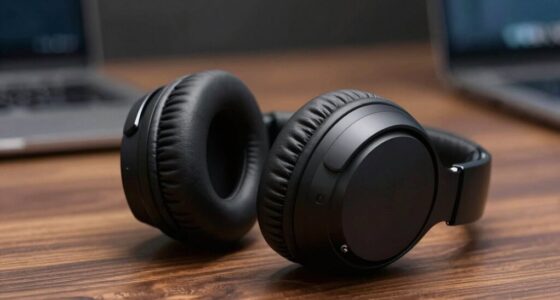
Choosing wireless earbuds for commuting comes down to how much you want to spend to make a noisy trip quieter. Premium noise-cancelling earbuds typically offer stronger active noise cancellation, more refined call handling, and features such as multipoint pairing. Affordable earbuds can still deliver convenient wireless listening and useful noise reduction, but their performance and controls tend to vary more by model. That difference matters most on loud trains, buses, and shared rides; on a short, relatively quiet commute, paying extra may bring little practical benefit. This comparison weighs both categories against the same commuter needs so you can decide whether premium features earn their price for your route.

Get the latest gadgets delivered free with Prime
- Fast, free delivery on millions of items
- Prime Video, Amazon Music and more included
- Member-only deals all year

Soundcore P30i by Anker Noise Cancelling Earbuds, Hands-Free Viewing
- ✔ Bluetooth: 5.4
- ✔ ANC: Adaptive, up to 42dB
- ✔ Listening time per charge: Up to 10 hours; up to 6 hours with ANC

Monster N-Lite 203 AirLinks Wireless Earbuds
- ✔ Bluetooth: 5.3
- ✔ Audio codec: Qualcomm aptX
- ✔ Drivers: 10 mm
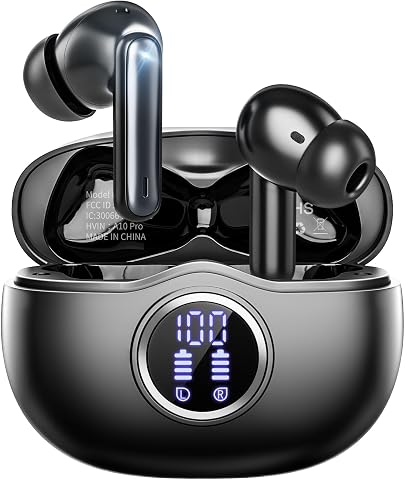
Fhumsh A10 Wireless Earbuds with LED Display, Bluetooth 5.3, ENC Noise Cancelling, IPX7 Waterproof, 50H Playback
- ✔ Bluetooth: 5.3 listed in specifications
- ✔ Playback per charge: Up to 8 hours
- ✔ Total playback with case: Up to 50 hours
At a Glance
| Criteria | Premium noise-cancelling earbuds | Affordable wireless earbuds | Winner |
|---|---|---|---|
| Noise cancellation | Usually stronger, with more adjustment options; performance varies by model and fit. | May reduce some low-frequency rumble, but often lets more voices and traffic through. | A |
| Comfort and fit | Often offers more sizes and fit adjustments, though comfort is personal. | Can be light and comfortable, but fewer fit options may make a secure seal harder. | Depends |
| Battery life | Commonly around 5–8 hours per charge with ANC enabled; case adds several charges. | Ranges widely; some last as long as premium pairs, while ANC can shorten playback. | Depends |
| Call quality | Often better at suppressing background noise, but results vary in wind and crowds. | Adequate for quiet settings; busy streets can make speech less clear to callers. | A |
| Controls and connectivity | More likely to include multipoint, app controls, and customizable settings. | Typically covers basic playback controls; advanced pairing and app features are less common. | A |
| Durability | Water resistance and case protection vary; check the specific rating. | Ratings vary; budget pricing does not guarantee a suitable sweat or rain rating. | Depends |
| Price and value | Higher upfront cost; worthwhile when stronger ANC and call features solve daily problems. | Lower upfront cost and strong value for casual listening or quieter routes. | B |
Soundcore P30i by Anker Noise Cancelling Earbuds, Hands-Free Viewing
The Soundcore P30i earns the top spot because it addresses the most common commuter frustration in this lineup: persistent background noise. Its adaptive noise cancelling is listed at up to 42dB, and transparency mode gives us a way to let more surrounding sound through when our journey requires it. That combination makes it more adaptable than the Monster N-Lite 203 AirLinks and Fhumsh A10, neither of which lists music-focused ANC or a transparency mode.Battery life depends on how we use that advantage. Soundcore lists up to 10 hours per charge without ANC, but up to six hours with it; case totals fall from 45 to 25 hours with ANC. That is the key tradeoff for frequent riders who want noise reduction throughout the day. The 10-minute quick charge, listed as providing two hours of listening, can help when we have a short break, while four microphones and AI call processing are aimed at clearer calls. The case also doubles as a phone stand, a convenient extra for waiting areas, though it is less central to the earbuds’ commuting value.Compared with Monster, Soundcore offers more control over the sound around us, while Monster has a longer stated per-charge figure when ANC is not involved and supports aptX. Compared with Fhumsh, Soundcore has a less rugged stated water-resistance rating and no listed earhooks. Choose it for sound management on public transport; skip it if long ANC sessions without recharging or a secure hooked fit are your priorities.
Pros:
- Adaptive ANC and transparency mode support changing travel environments.
- Up to 45 hours total playback listed without ANC.
- Quick charge is listed as adding two hours from a 10-minute charge.
- Phone-stand case can be useful while waiting or watching on the move.
Cons:
- Per-charge playback is listed at six hours with ANC, compared with 10 hours without it.
- Full customization requires the Soundcore app.
- No wireless charging is listed.
Best for: Commuters who regularly ride noisy trains or buses and want both ANC and a transparency mode.
Not ideal for: People who need more than six hours of ANC listening between charges or prefer earhooks for a particularly secure fit.
Bottom line: For most commuters who want active control over travel noise, Soundcore offers the most complete feature set, provided its shorter ANC battery life fits the route.
“For most commuters who want active control over travel noise, Soundcore offers the most complete feature set, provided its shorter ANC battery life fits the route.”
Monster N-Lite 203 AirLinks Wireless Earbuds
When ANC is not a must-have, the Monster N-Lite 203 AirLinks make a straightforward commuting case. Each earbud is listed at 3.85 g, and three ear tip sizes give us options for finding a fit that stays comfortable through a journey. Its aptX audio decoding is another point of distinction from the other two picks, while Bluetooth 5.3 and automatic reconnection keep the feature set simple after initial pairing.Monster sits between the other choices in the ranking because it combines an easy-to-carry design with up to eight hours of playback per charge, but it does not list active noise cancellation or transparency mode. On a quiet walk or a mixed trip where we want to hear more of the environment, that simplicity may suit us. On a loud train, the Soundcore P30i is better equipped to reduce background noise. Fhumsh, meanwhile, adds earhooks and a battery display, features Monster does not list.Its IPX6 rating is described for sweat and drizzle rather than submersion, which gives some context for occasional damp weather but is not a guarantee for every rainy commute. Case playback is listed at up to 30 hours, less than Soundcore’s 45 hours and Fhumsh’s 50. Pick Monster for a lightweight, uncomplicated pair with aptX support; look elsewhere if active noise control or the longest stated case life matters more.
Pros:
- Listed earbud weight is 3.85 g per side.
- aptX audio decoding is specified.
- Up to eight hours of playback per charge and 30 hours with the case.
- Three pairs of ear tips provide fit options.
Cons:
- No ANC or transparency mode is listed.
- IPX6 is described for sweat and drizzle, not submersion.
- Total listed case playback is lower than the Soundcore and Fhumsh figures.
Best for: Commuters who prioritize light earbuds, multiple tip sizes, and aptX support over noise-cancelling modes.
Not ideal for: People who need ANC on noisy transport or want the longest listed total battery life.
Bottom line: Monster is the more straightforward lightweight choice when a comfortable fit and aptX matter more than active noise control.
“Monster is the more straightforward lightweight choice when a comfortable fit and aptX matter more than active noise control.”
Fhumsh A10 Wireless Earbuds with LED Display, Bluetooth 5.3, ENC Noise Cancelling, IPX7 Waterproof, 50H Playback
The Fhumsh A10 is the most distinctive fit-focused option here. Reinforced earhooks are designed to keep the buds secure, which can be reassuring when our commute includes a brisk walk, crowded platforms, or movement between stops. The charging case’s LED display shows the case and earbud battery levels, so we can check remaining charge at a glance. Its listed total playback of up to 50 hours is the highest of these three options, ahead of Soundcore’s 45 hours and Monster’s 30.Those strengths do not make it the best pick for a noise-heavy ride. Fhumsh describes ENC for clearer calls, not active noise cancellation for listening, so we should not expect the same stated travel-noise control as the Soundcore P30i. Monster is the lighter, more conventional option, while Fhumsh gives us a more secure hooked design and a more visible battery readout. The case and earbuds are listed with Type-C charging and IPX7 water resistance; the supplied details also mention a 90-day warranty, a notably short coverage period to weigh before choosing.This pair makes the most sense for commuters who value fit security, battery visibility, and a high total playback claim over ANC. It is less suitable for someone who wants a clearly specified noise-cancelling mode for listening or stronger warranty coverage. The product title and supplied information contain conflicting Bluetooth claims: the specs say 5.3, so we use that figure here.
Pros:
- Earhooks and multiple ear tip sizes are designed for a secure fit.
- Case display shows battery levels for the case and earbuds.
- Up to 50 hours total playback is listed.
- IPX7 water resistance is specified.
Cons:
- ENC is described for calls; ANC for listening is not specified.
- The listed warranty is 90 days.
- Supplied Bluetooth information conflicts, although the specifications state 5.3.
Best for: Commuters who want earhooks for a secure fit, an at-a-glance battery display, and long stated total playback.
Not ideal for: Riders seeking ANC for music and travel noise, or buyers who want a longer listed warranty.
Bottom line: Fhumsh is the fit-and-battery pick for active journeys, but its call-focused ENC does not replace the Soundcore’s stated ANC for noisy transport.
“Fhumsh is the fit-and-battery pick for active journeys, but its call-focused ENC does not replace the Soundcore’s stated ANC for noisy transport.”
As an Amazon Associate we earn from qualifying purchases.
Key Differences
The biggest gap is usually noise cancellation. Premium models are more likely to reduce steady train and bus rumble enough to make listening less tiring, while affordable earbuds may soften the background without creating the same sense of quiet. Neither category can remove every sound: voices, announcements, wind, and sudden noises remain audible to varying degrees. A good seal also matters, so a well-fitting affordable pair can outperform a premium pair that does not suit your ears.
Price buys more than quiet. Premium models are more likely to handle calls in noisy places, switch between devices, and let you adjust settings in an app. Those advantages matter to commuters who take calls or move between a phone and laptop. For a short ride spent listening to music or podcasts, the basic features in an affordable pair may be enough. Battery life, comfort, water resistance, and call performance vary by individual model, so check those specifications instead of relying on price alone.
Detailed Comparison
Premium earbuds generally win by reducing steady low-frequency noise more effectively and offering more control over cancellation or transparency modes. This is a major difference for frequent riders on loud trains or buses: you may hear audio more clearly at a lower volume. Affordable models can take the edge off rumble, but often leave more sound in the background. Fit and the specific model still matter, and neither type should be expected to silence announcements or every nearby conversation.
Comfort and fit (moderate difference)
There is no dependable category winner because ears differ and models use different shapes. Premium sets are more likely to include multiple tip sizes and fit tools, which can help you find a seal that stays comfortable over a long ride. Affordable pairs may be lighter or simpler, but fewer adjustment options can make a poor fit harder to correct. Try the tips, if possible, and check the return policy: comfort affects both stability and noise reduction.
Battery life (moderate difference)
This is a model-by-model comparison. Some premium earbuds last roughly five to eight hours with ANC on, and their charging cases add several charges; affordable models span a broad range and can match or exceed that runtime. Active noise cancellation can shorten playback in either category. For a commute with a long connection or no convenient charging, check the stated runtime with ANC enabled and whether the case supports quick charging.
Premium earbuds tend to do better at keeping speech clear when traffic, wind, or crowd noise competes with your voice. That is a moderate to major advantage if you regularly join calls on the move. Affordable models may work well indoors or on a quiet platform, but callers can have a harder time hearing you in busy conditions. Microphone performance differs widely between models, so reviews that describe noisy outdoor calls are more useful than microphone counts.
Premium models more often include multipoint pairing, configurable controls, and an app with equalizer or listening-mode settings. These features save time if you switch between work and personal devices or adjust modes during a trip. Affordable earbuds usually cover play, pause, and basic call controls, which is enough for many riders. The gap is moderate for a multi-device commuter and minor for someone who listens from one phone.
Durability (minor difference)
Neither price tier guarantees better protection from rain, sweat, or bag wear. A stated water-resistance rating is more useful than a premium label, and the rating may apply to the earbuds but not the case. Compare the specific product’s rating and warranty with your commute. If you walk or cycle in wet weather, skip any pair without suitable protection, whether it is inexpensive or premium.
Price and value (Affordable wireless earbuds wins — major)
Affordable earbuds win on upfront cost and are usually the better value when your route is quiet, your listening is casual, or you rarely take calls. Premium earbuds cost more, but can justify the difference for daily exposure to loud transit, frequent calls, or useful multi-device features. If those advantages would change your routine every weekday, paying more may be sensible. If not, the extra expense is unlikely to pay off in day-to-day use.
Pros:
- Stronger noise cancellation is common, especially for steady transit rumble.
- Often better call handling in crowded or noisy surroundings.
- More likely to offer multipoint pairing and adjustable listening settings.
Cons:
- Higher upfront cost.
- Comfort, battery life, and rain protection still vary by model.
- Extra features offer little value if your commute is quiet or brief.
Affordable wireless earbuds: Pros and Cons
Pros:
- Lower upfront cost for basic wireless listening.
- Some models match premium pairs for comfort or battery life.
- A practical choice for quiet routes and occasional calls.
Cons:
- Noise reduction may be less effective on loud transit.
- Calls can sound less clear to others in busy outdoor settings.
- Advanced controls and device switching are less common.
Who Should Choose What
Choose Premium noise-cancelling earbuds if:
- You ride a loud train or bus most weekdays and want stronger reduction of steady background rumble.
- You take work calls while commuting and need better odds of clear speech in noisy places.
- You switch between devices and will use app controls, multipoint, or listening modes regularly.
Choose Affordable wireless earbuds if:
- Your trip is short or relatively quiet and you mainly listen to music, podcasts, or audiobooks.
- You want to keep spending down and do not need advanced call handling or device switching.
- You are willing to compare model-specific fit, battery, and protection ratings to find a basic pair that suits your route.
Skip both if: Neither category fits if you need a fit you cannot achieve with available in-ear tips, require a specific hearing or accessibility feature these models lack, or need dependable protection beyond the product’s stated rating. Consider another form factor or a model designed for that need.
Value for Money
Pay more only if the premium features address a regular problem. Stronger noise cancellation and better calls can earn their price for someone spending an hour a day on loud transit or taking calls between stops. For a quiet bus ride with music, an affordable pair is often the better value: you retain wireless convenience without paying for features you may rarely use. Compare the exact models on battery with ANC enabled, fit, microphone performance, and water resistance. A lower price is not good value if the earbuds hurt, run out before your trip ends, or cannot handle the conditions of your commute.
Final Verdict
For most commuters on loud public transit, choose premium noise-cancelling earbuds if your budget allows and you will use the noise reduction or call features most weekdays. The main deciding factor is how noisy your route is: premium models are more likely to make that environment easier to listen in and work from. Choose affordable earbuds for a quieter or shorter trip, casual listening, or a firm spending limit; they provide the better value when advanced features would go unused. In either category, prioritize a comfortable seal, adequate battery with ANC enabled, and a suitable protection rating over the price label.
Frequently Asked Questions
Are premium earbuds worth the extra cost for commuting?
They can be if your route is loud, you commute often, or you take calls on the way. Stronger noise cancellation and better call handling are the clearest reasons to pay more. On a short, quiet commute, affordable earbuds are usually better value.
Will noise-cancelling earbuds block train announcements?
Not reliably. Active noise cancellation tends to reduce steady low-frequency sounds more than voices, announcements, or sudden noises. Use a transparency mode when you need to hear what is happening around you.
Do affordable earbuds have enough battery for a commute?
Many do, but runtimes vary and noise cancellation can reduce playback time. Check the stated battery life with ANC enabled, then compare it with the length of your full trip and whether the case can recharge the earbuds.
Which type is better for calls on a noisy commute?
Premium earbuds are more likely to keep your voice clear amid traffic or crowd noise, but the result depends on the specific microphones and software. Look for model-specific call examples from noisy outdoor settings.