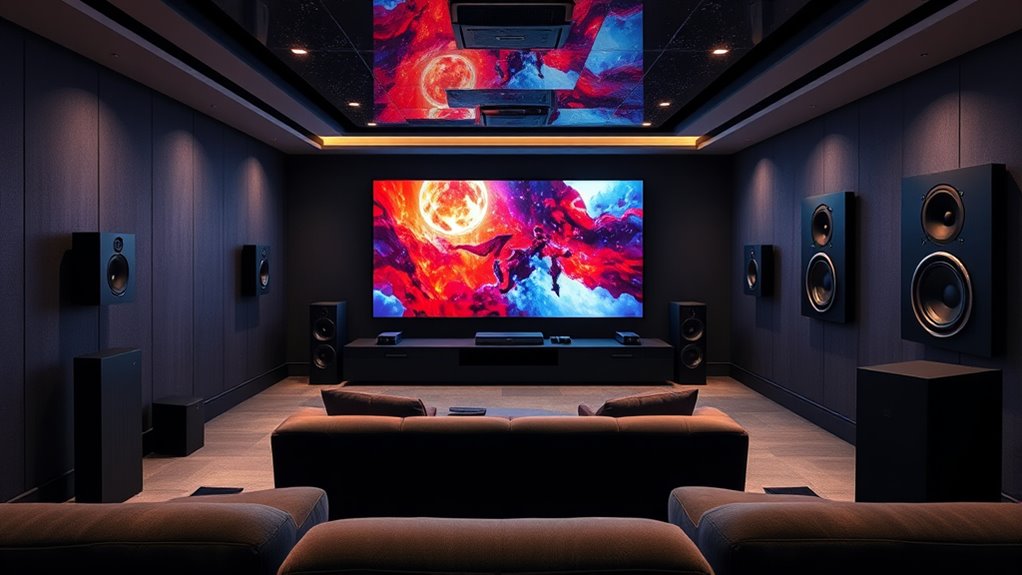

Dolby Atmos and DTS:X are advanced object-based audio formats that create immersive, 3D sound experiences at home. Atmos offers precise sound placement with overhead effects, while DTS:X provides flexible speaker setups and broader compatibility. Both formats use metadata and dynamic rendering to deliver realistic audio, but their setup, content support, and device compatibility differ. If you want to understand which one best fits your space and preferences, there’s more to explore ahead.
Key Takeaways
- Dolby Atmos offers precise object placement and overhead effects, enhancing cinematic immersion, while DTS:X provides flexible speaker configurations and adaptable soundfield management.
- Atmos requires specific speaker setups like ceiling or upward-firing speakers, whereas DTS:X adapts to a wider range of existing home theater arrangements.
- Dolby Atmos enjoys broader content availability and device support across streaming platforms, compared to more limited DTS:X content primarily on physical media.
- Atmos emphasizes detailed metadata and dynamic rendering for realistic sound object movement; DTS:X uses flexible channel allocation for spatial accuracy.
- Overall, Atmos is ideal for immersive overhead effects, while DTS:X offers greater flexibility and compatibility with various room setups.
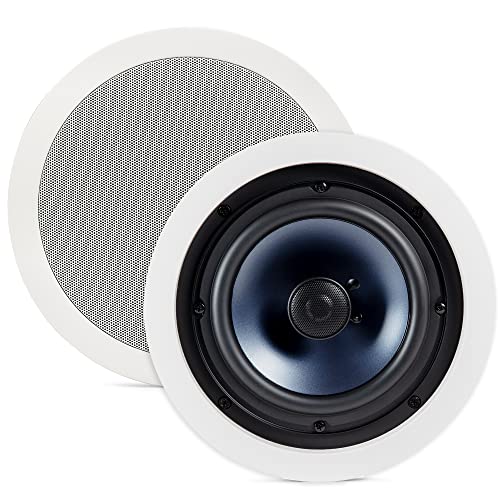
Polk Audio RC80i 2-Way Premium In Ceiling Speakers 8" Round Perfect for Damp and Humid Indoor/Outdoor Placement – Bluetooth Ceiling Speakers, 1 Pair
- Seamless Audio Quality: Excellent sound reproduction for home systems
- Balanced, Lifelong Sound: 8" woofer and 1" aimable tweeter for depth
- Moisture-Resistant Design: Rubber seal prevents leaks and enhances response
As an affiliate, we earn on qualifying purchases.
As an affiliate, we earn on qualifying purchases.
Understanding the Core Technologies of Dolby Atmos and DTS:X
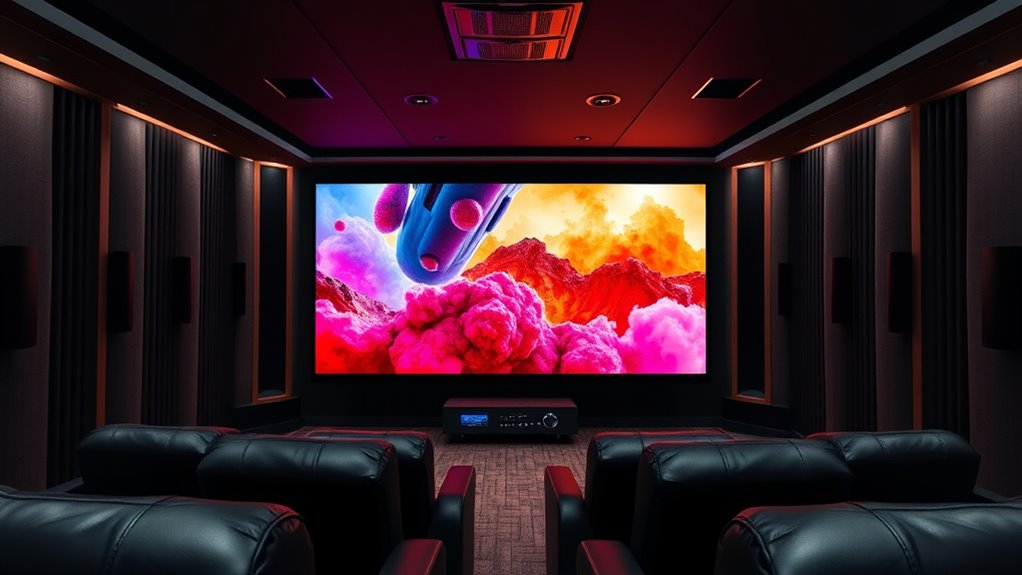
Both Dolby Atmos and DTS:X are advanced object-based audio technologies that revolutionize how sound is experienced in a home theater or cinema setting. They enhance sound quality by allowing audio objects—like individual voices, effects, and music—to move freely in a three-dimensional space. This dynamic sound placement creates a more immersive experience, making you feel like you’re inside the action. Unlike traditional channel-based systems, these technologies don’t rely on fixed speaker locations, which improves the user experience by offering richer, more detailed audio. The core difference lies in how each system processes and renders sound objects, but both aim to deliver clearer, more realistic soundscapes that heighten your overall viewing pleasure. Implementing multi-dimensional sound can further elevate your home theater setup by creating a truly enveloping auditory environment, and understanding these core technology differences can help you choose the best system for your needs. Additionally, the way each technology handles sound processing impacts the overall quality and compatibility with various home audio setups, and advancements in audio rendering algorithms continue to push the boundaries of immersive sound. Moreover, the integration of speaker configurations plays a crucial role in maximizing the benefits of each technology, ensuring a seamless and engaging listening experience.

Yamaha RX300A 5.2-Channel Home Theater AV Receiver with Dolby Atmos, 4K120/8K HDMI and Bluetooth Multipoint (Black)
- Power Output: 70W per channel for immersive sound
- Audio Technologies: Dolby Atmos and DTS Virtual:X support
- Video Resolution: Supports 4K120 and 8K60 HDMI
As an affiliate, we earn on qualifying purchases.
As an affiliate, we earn on qualifying purchases.
Sound Format Compatibility and Device Support
Understanding the compatibility of sound formats and device support is essential when choosing between Dolby Atmos and DTS:X. Both formats require specific hardware, but support varies across devices. You need to consider:
- Speaker placement: Proper placement is vital for immersive sound, especially for overhead speakers in Atmos systems or height channels in DTS:X setups. Additionally, the effectiveness of each format can be influenced by device support limitations. Correct speaker positioning enhances the immersive experience and ensures sound is accurately projected in three-dimensional space. The audio calibration process can further optimize sound quality based on room characteristics. In some cases, the room’s acoustic environment can further impact the overall sound experience and should be taken into account during setup.
- Room acoustics: Room size and acoustics influence how well your system reproduces these formats. Some devices adapt better to different room conditions. Optimizing room acoustics can significantly improve overall sound quality and immersion.
- Device compatibility: Not all AV receivers, soundbars, or media players support both formats. Check whether your existing equipment or future purchases will handle Atmos or DTS:X. Ensuring your device supports your preferred format guarantees ideal sound performance and a seamless home theater experience. Format compatibility plays a crucial role in the overall effectiveness of your setup. Being aware of audio format support can prevent compatibility issues that might hinder your listening experience.

Saiyin 5.0 Home Theater System, HiFi Surround Sound Speakers
- Powerful Surround Sound: 40W x 4 bookshelf and 75W center speakers
- Clear Dialogue: Enhanced clarity with professional center channel
- Flexible Installation: Mount on shelves, stands, or walls
As an affiliate, we earn on qualifying purchases.
As an affiliate, we earn on qualifying purchases.
Audio Object and Channel Management
You’ll notice how both formats handle audio objects and channels differently to create immersive soundscapes. Dolby Atmos emphasizes precise object-based audio, allowing sounds to move freely in space, while DTS:X uses flexible channel allocation to adapt to your setup. Understanding these techniques helps you see how spatial audio control enhances your listening experience. Additionally, each format’s approach impacts how well your system can deliver a true surround sound environment by leveraging different audio rendering methods.
Object-Based Audio Precision
Object-based audio precision is crucial for delivering immersive sound experiences, as it allows audio to be treated as distinct objects rather than fixed channels. This means sound elements like music streaming or gaming audio can be precisely placed anywhere in 3D space, creating a realistic environment. To guarantee accurate placement, systems rely on:
- Advanced decoding algorithms that interpret object data.
- Precise metadata management for each audio object.
- Dynamic rendering that adapts to your speaker setup in real time.
- Outdoor‑kitchen essentials and accessories enhance your home theater setup for optimal sound quality. Additionally, the use of audio object management techniques ensures that each sound element is accurately positioned, increasing the overall realism of the experience. Proper calibration and configuration of your speaker system are also essential for achieving the best immersive effects. Implementing object-based audio technologies further improves spatial accuracy by leveraging metadata to adapt sound placement dynamically. This precision enhances your experience by making sounds more lifelike, whether you’re enjoying music streaming or gaming. It’s what allows you to hear a helicopter fly overhead or footsteps behind you with clarity. Object-based audio ensures your home theater delivers a truly immersive, multidimensional soundscape.
Channel Allocation Techniques
Channel allocation techniques determine how audio objects and signals are assigned to speakers within a home theater or sound system, directly impacting the clarity and immersion of the listening experience. Proper speaker placement and understanding room acoustics are essential for ideal channel allocation. Dolby Atmos and DTS:X use different methods to assign sounds to speakers, whether fixed or dynamic, to create a seamless soundstage. These techniques ensure that sounds move naturally across the space, enhancing realism. The key is how well the system adapts to your room’s unique characteristics. Here’s a quick comparison:
| Technique | Speaker Placement | Room Acoustics |
|---|---|---|
| Fixed Channel | Static positioning | Less adaptable |
| Dynamic Channel | Adjusts in real-time | Optimizes sound |
Both methods aim for immersive audio, but room acoustics and speaker placement influence their effectiveness. Additionally, understanding audio object management is crucial for maximizing system performance, especially when considering speaker calibration techniques that fine-tune audio delivery based on room acoustics. Moreover, effective channel management enhances overall sound quality by ensuring proper alignment and distribution of audio signals. Advanced channel allocation methods can also help compensate for challenging room geometries or acoustic anomalies, leading to a more accurate and immersive listening experience.
Spatial Sound Control
Spatial sound control is the process of managing how audio objects and channels are assigned and manipulated within a soundfield to create a realistic and immersive experience. Your system adjusts for speaker placement and room acoustics to optimize sound placement and movement. Proper control guarantees sounds move seamlessly around you, enhancing immersion. Key aspects include:
- Adjusting speaker placement to balance sound distribution.
- Tailoring audio object positioning based on room acoustics.
- Using dynamic processing to adapt to changing sound environments.
- Incorporating calibration techniques to ensure accurate sound reproduction tailored to your specific setup.
This control allows you to fine-tune how sounds are perceived, making sure they come from the right directions and distances. Whether you’re watching a movie or listening to music, spatial sound management ensures a natural, enveloping experience that matches your room’s unique characteristics.

Polk Monitor XT90 Hi-Res Height Speaker Pair for 3D Sound Effect – Dolby Atmos-Certified, DTS:X and DTS Virtual:X Compatible, Surround Sound Speakers, 4" Dynamically Balanced Woofer, Midnight Black
- Height Speaker Pair for 3D Audio: Enhances movies, music, and games with height elevation
- Dynamically Balanced 4-inch Woofer: Provides multidimensional sound effects
- Premium Build and Modern Design: Stylish speakers that blend with home décor
As an affiliate, we earn on qualifying purchases.
As an affiliate, we earn on qualifying purchases.
Setup and Configuration Differences
When setting up Dolby Atmos or DTS:X, you’ll notice different system compatibility requirements that can affect your choices. Calibration and tuning processes also vary, requiring specific adjustments to optimize sound quality. Understanding these differences helps make certain your system is configured correctly for the best immersive experience. Additionally, being aware of industry transformations like AI automation can influence how future updates and integrations are handled in home theater systems.
System Compatibility Requirements
While both Dolby Atmos and DTS:X aim to deliver immersive audio experiences, they have distinct system compatibility requirements that can influence your setup. Dolby Atmos generally requires specific speaker placement, such as upward-firing or ceiling speakers, to achieve the overhead sound effect. DTS:X offers more flexibility, working with existing speaker arrangements. Additionally, power requirements differ: Atmos setups often need more amplifier channels to support multiple height speakers, while DTS:X can operate with fewer. Here are key points to contemplate:
- Speaker Placement: Atmos benefits from optimized placement for overhead sound, whereas DTS:X adapts to your current setup.
- Power Requirements: Atmos may demand higher power for additional speakers, unlike DTS:X.
- AV Receiver Compatibility: Not all receivers support both formats, so check your gear before choosing.
Calibration and Tuning
Calibration and tuning processes for Dolby Atmos and DTS:X differ considerably, affecting how you set up your system for ideal sound. You need to take into account room acoustics and speaker placement carefully. Dolby Atmos often requires precise placement of upward-firing or ceiling speakers, while DTS:X offers more flexibility with speaker positioning. To optimize your setup, adjust speaker levels and distances based on your room’s acoustics. Use calibration tools or microphone setups for accurate measurements. Here’s a quick comparison:
| Aspect | Dolby Atmos | DTS:X | Similarities |
|---|---|---|---|
| Room acoustics | Critical for height effects | Less sensitive but important | Both need quiet environment |
| Speaker placement | Specific for ceiling/upward-firing | Flexible, room-dependent | Proper placement improves sound quality |
| Calibration process | Automated or manual tuning | Manual or auto calibration | Essential for balanced sound |
Proper calibration ensures immersive, balanced sound in your home theater.
Content Availability and Licensing
Content availability and licensing play an essential role in determining how easily you can access Dolby Atmos or DTS:X soundtracks across different platforms. Your ability to experience these formats depends on content licensing agreements and format accessibility. Not all streaming services or media providers support both formats equally, affecting your options.
Consider these points:
- Dolby Atmos enjoys broader support in streaming services like Netflix and Disney+.
- DTS:X content is more limited but often available on physical media like Blu-ray discs.
- Licensing restrictions may prevent some content from being available in either format, limiting your choices.
Ultimately, your access depends on platform support and licensing agreements, shaping your home theater experience.
Which Format Is Better for Your Home Theater?
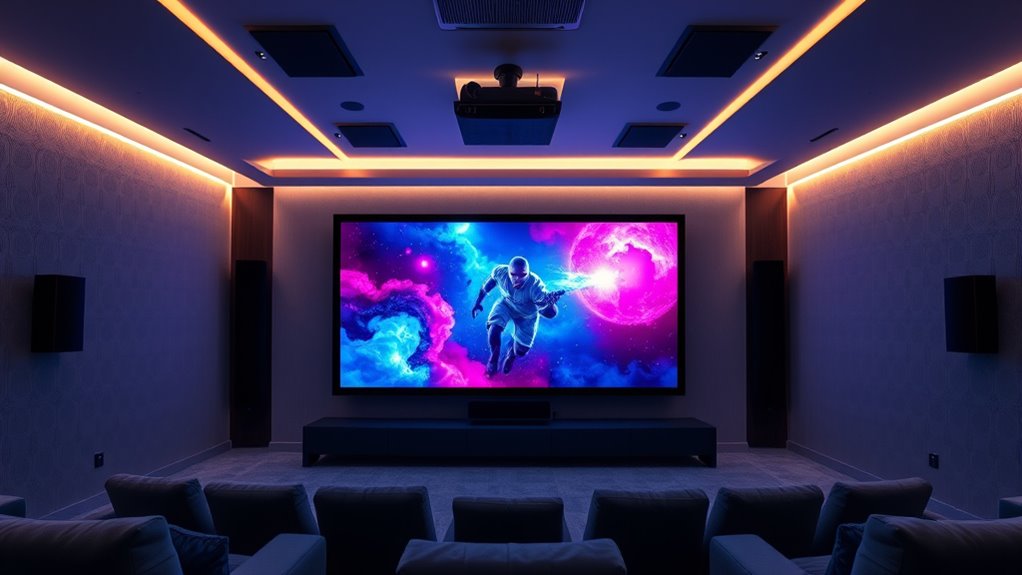
Choosing the best audio format for your home theater depends on your specific needs and setup. If you prioritize immersive surround sound, Dolby Atmos offers more precise sound placement with overhead effects, ideal for a cinematic experience. DTS:X also provides excellent surround sound but emphasizes flexibility by adapting to your room’s configuration without requiring ceiling speakers. Consider your audio streaming options too. Dolby Atmos has broader support across streaming platforms, making it easier to access Atmos-enabled content. DTS:X is gaining ground but remains less widespread. Think about your existing equipment, room layout, and content sources. If you want a seamless, versatile experience, Dolby Atmos might be better. For more flexible setups and fewer hardware constraints, DTS:X could be the right choice.
Frequently Asked Questions
Can Both Formats Be Used Simultaneously in the Same Home Theater System?
Yes, you can use both formats simultaneously in your home theater system. Most modern AV receivers support multi-format compatibility and technical integration, allowing you to enjoy both Dolby Atmos and DTS:X content. This setup offers flexibility and enhances your audio experience. Just make certain your receiver and speakers are compatible with both formats, and you’ll seamlessly switch between them, enjoying immersive sound regardless of the format used.
How Do Dolby Atmos and DTS:X Impact Overall Audio Quality?
They say music soothes the savage beast, and your home theater’s sound immersion can do the same. Dolby Atmos and DTS:X elevate your audio clarity, making sounds more lifelike and immersive. They add height and dimension to your soundscape, which sharpens overall audio quality. By creating a more dynamic environment, these formats guarantee every whisper, explosion, and note hits with precision, transforming your movie nights into theater experiences.
Are There Differences in Latency or Processing Delay Between the Two Formats?
You might notice that Dolby Atmos and DTS:X have minimal differences in audio latency and processing delay, but it depends on your equipment. Generally, both formats offer quick processing to keep audio in sync with visuals, often within a few milliseconds. Your setup’s quality and how well it handles decoding can influence delays. To minimize latency, verify your receiver and source devices are compatible and updated for peak performance.
Do Streaming Services Support Both Formats Equally?
Think of streaming services as a library with shelves for different formats. Some platforms support both Dolby Atmos and DTS:X, making your home theater feel like a concert hall or cinema. However, streaming compatibility varies—many services prioritize Dolby Atmos, offering broader content availability. To enjoy both, you might need specific devices or subscriptions. Verify each platform’s support to guarantee you get the immersive sound your home theater deserves.
What Are the Future Development Plans for Dolby Atmos and DTS:X?
You’ll see future innovations and technological advancements from Dolby Atmos and DTS:X as they aim to enhance immersive sound experiences. Both companies plan to develop more seamless integration with smart home systems, improve object-based audio precision, and support higher-resolution formats. Expect updates that make setup easier, expand compatibility across devices, and deliver richer, more dynamic soundscapes, ensuring your home theater stays at the cutting edge of audio technology.
Conclusion
Ultimately, choosing between Dolby Atmos and DTS:X depends on your preferences, your device compatibility, and your content library. Both formats deliver immersive sound, enhance your viewing experience, and elevate your home theater. Whether you prioritize ease of setup, content availability, or audio customization, understanding their differences helps you make an informed decision. With either choice, you’ll transform your space into a true cinematic experience, making every movie night more engaging, more dynamic, and more unforgettable.