Black Friday gaming monitors span budget-friendly 1080p screens, high-refresh esports displays, and larger QHD or ultrawide models. My best overall pick is the Samsung 32-Inch Odyssey G5, which pairs QHD resolution with a 180Hz refresh rate for a balanced step up in screen space and speed. The Dell SE2426HG stands out for competitive play with its 240Hz refresh rate, while the INNOCN 49-Inch Ultrawide suits buyers who want an expansive, immersive setup. The main tradeoffs are resolution versus refresh rate, screen size versus desk space, and speed versus the graphics power needed to drive it. Read on for the full comparison and guidance on choosing a monitor that fits your games, PC, and setup.

Get the latest gadgets delivered free with Prime
- Fast, free delivery on millions of items
- Prime Video, Amazon Music and more included
- Member-only deals all year
Complete the kit


Key Takeaways
- QHD at 180Hz is the roundup’s most balanced high-performance combination, represented by the Samsung Odyssey G5 and LG UltraGear 32-inch curved monitor.
- For fast competitive gaming, the Dell SE2426HG’s 240Hz refresh rate is a stronger fit than the larger, more immersive screens, provided your PC can deliver high frame rates.
- The INNOCN 49-inch ultrawide offers a very different experience from standard monitors, but its 3840 × 1080 resolution and broad footprint call for checking game support and desk space first.
- Several 24- and 27-inch options focus on 1080p affordability and approachable sizing; the right choice depends more on refresh rate and panel type than on screen size alone.
- The lineup includes curved screens across budget, QHD, and ultrawide tiers, but curvature is a preference, not a performance guarantee; compare resolution, refresh rate, and ergonomics separately.
| Sceptre E275W-FW100T 27-Inch Full HD 100Hz Gaming Monitor |  | Best Large-Screen Entry Pick | Screen size: 27 inches | Resolution: 1920 × 1080 (Full HD) | Refresh rate: Up to 100Hz | VIEW LATEST PRICE | See Our Full Breakdown |
| Sceptre 24-Inch Curved Gaming Monitor, 1080p, 180Hz |  | Best Compact High-Refresh Pick | Screen size: 24 inches | Resolution: 1920 × 1080 (Full HD) | Refresh rate: 180Hz | VIEW LATEST PRICE | See Our Full Breakdown |
| INNOCN 49-Inch Curved Ultrawide Gaming Monitor, 3840 × 1080, 144 Hz |  | Best Ultrawide Multitasking Pick | Screen size: 49 inches | Panel type: VA | Resolution: 3840 × 1080 | VIEW LATEST PRICE | See Our Full Breakdown |
| Sceptre 22-Inch FHD 144Hz Gaming Monitor with Built-In Speakers |  | Best Small-Desk Gaming Pick | Screen size: 22 inches | Resolution: 1920 × 1080 (Full HD) | Refresh rate: Up to 144Hz | VIEW LATEST PRICE | See Our Full Breakdown |
| Samsung Essential S3 27-Inch Curved FHD Monitor |  | Best for Casual Gaming and Everyday Use | Screen size: 27 inches | Resolution: 1920 × 1080 (Full HD) | Screen curvature: 1800R | VIEW LATEST PRICE | See Our Full Breakdown |
| Dell SE2426HG 24-Inch FHD 240Hz Gaming Monitor |  | Best for Competitive 1080p Gaming | Screen size: 23.8 inches | Resolution: 1920 x 1080 (FHD) | Refresh rate: 240Hz | VIEW LATEST PRICE | See Our Full Breakdown |
| Sceptre 27-Inch Full HD Gaming Monitor, 180Hz, E275B-FW180T |  | Best for a Feature-Packed 27-Inch Setup | Screen size: 27 inches | Resolution: 1920 x 1080 (Full HD) | Refresh rate: 180Hz | VIEW LATEST PRICE | See Our Full Breakdown |
| Sceptre Curved 27″ Gaming Monitor 1500R 100Hz HDMI x2 DisplayPort 1ms 100% sRGB Built-in Speakers Machine Black (C275W-FW100T) |  | Best for Casual Curved-Screen Gaming | Screen size: 27 inches | Resolution: 1920 x 1080 (Full HD) | Panel type: VA LCD | VIEW LATEST PRICE | See Our Full Breakdown |
| LG UltraGear 32-Inch QHD 180Hz Curved Gaming Monitor |  | Best for Immersive QHD Gaming | Screen size: 32 inches | Resolution: 2560 x 1440 (QHD) | Refresh rate: 180Hz | VIEW LATEST PRICE | See Our Full Breakdown |
| LG UltraGear 24-Inch Full HD IPS Gaming Monitor, 120Hz (144Hz Overclocked), 1ms MBR, G-SYNC Compatible, FreeSync, HDR10 |  | Best for Flexible Adaptive-Sync Support | Screen size: 24 inches | Resolution: 1920 x 1080 (Full HD) | Panel type: IPS LED | VIEW LATEST PRICE | See Our Full Breakdown |
| Westinghouse 27-Inch Curved FHD Gaming Monitor, 200Hz, 1ms |  | Best Curved FHD Speed Pick | Screen size: 27 inches | Panel type: VA | Resolution: 1920 × 1080 (FHD) | VIEW LATEST PRICE | See Our Full Breakdown |
| Samsung 32-Inch Odyssey G5 QHD 180Hz Gaming Monitor |  | Best for Large-Screen QHD Gaming | Screen size: 32 inches | Resolution: 2560 × 1440 (QHD) | Panel type: VA | VIEW LATEST PRICE | See Our Full Breakdown |
| KTC H32S25E 32-Inch Curved QHD Gaming Monitor, 240Hz |  | Best High-Refresh QHD Pick | Screen size: 32 inches | Resolution: 2560 × 1440 (QHD) | Panel type: VA LCD | VIEW LATEST PRICE | See Our Full Breakdown |
| Samsung Odyssey G3 G30D 27-Inch FHD Gaming Monitor |  | Best Adjustable-Stand FHD Pick | Screen size: 27 inches | Resolution: 1920 × 1080 (FHD) | Display type: LED | VIEW LATEST PRICE | See Our Full Breakdown |
| Sceptre E275B-FPT165 27-Inch FHD IPS Gaming Monitor |  | Best IPS and Multi-Device Pick | Screen size: 27 inches | Panel type: IPS | Resolution: 1920 × 1080 (FHD) | VIEW LATEST PRICE | See Our Full Breakdown |
| Black Friday gaming monitor | Screen size | Resolution | Refresh rate | Adaptive sync |
|---|---|---|---|---|
| Sceptre E275W-FW100T 27-Inch F | 27 inches | 1920 × 1080 (Full HD) | Up to 100Hz | AMD FreeSync |
| Sceptre 24-Inch Curved Gaming | 24 inches | 1920 × 1080 (Full HD) | 180Hz | FreeSync Premium |
| INNOCN 49-Inch Curved Ultrawid | 49 inches | 3840 × 1080 | Up to 144Hz via DisplayPort 1.4 | — |
| Sceptre 22-Inch FHD 144Hz Gami | 22 inches | 1920 × 1080 (Full HD) | Up to 144Hz | FreeSync |
| Samsung Essential S3 27-Inch C | 27 inches | 1920 × 1080 (Full HD) | 100Hz | — |
| Dell SE2426HG 24-Inch FHD 240H | 23.8 inches | 1920 x 1080 (FHD) | 240Hz | AMD FreeSync Premium |
| Sceptre 27-Inch Full HD Gaming | 27 inches | 1920 x 1080 (Full HD) | 180Hz | — |
| Sceptre Curved 27" Gaming Moni | 27 inches | 1920 x 1080 (Full HD) | 100Hz | — |
| LG UltraGear 32-Inch QHD 180Hz | 32 inches | 2560 x 1440 (QHD) | 180Hz | AMD FreeSync |
| LG UltraGear 24-Inch Full HD I | 24 inches | 1920 x 1080 (Full HD) | 120Hz native, 144Hz overclocked | AMD FreeSync, NVIDIA G-SYNC Compatible |
| Westinghouse 27-Inch Curved FH | 27 inches | 1920 × 1080 (FHD) | 200 Hz | AMD FreeSync |
| Samsung 32-Inch Odyssey G5 QHD | 32 inches | 2560 × 1440 (QHD) | 180 Hz | AMD FreeSync |
| KTC H32S25E 32-Inch Curved QHD | 32 inches | 2560 × 1440 (QHD) | 240 Hz via DisplayPort; 144 Hz via HDMI | FreeSync and G-Sync |
| Samsung Odyssey G3 G30D 27-Inc | 27 inches | 1920 × 1080 (FHD) | 180 Hz | AMD FreeSync |
| Sceptre E275B-FPT165 27-Inch F | 27 inches | 1920 × 1080 (FHD) | Up to 180 Hz | FreeSync |
More Details on Our Top Picks
Sceptre E275W-FW100T 27-Inch Full HD 100Hz Gaming Monitor
For Black Friday shoppers who want a roomy screen without prioritizing competitive refresh rates, the Sceptre E275W-FW100T pairs a 27-inch display with 100Hz and AMD FreeSync. That refresh rate is a step up from standard 60Hz for smoother everyday play, though the 22-inch Sceptre E225W-FW144G is better suited to fast-paced games with its 144Hz refresh rate. Both offer Full HD, but the larger Sceptre spreads those pixels over more screen area, so fine detail can look less crisp at a typical desk distance.
Two HDMI ports, DisplayPort, built-in speakers, and VESA mounting make it flexible for a mixed gaming-and-work setup. The tradeoff is modest motion performance beside higher-refresh choices, and its built-in speakers are a convenience rather than a substitute for dedicated audio. I’d shortlist it for screen size and versatility, not esports speed.
Pros:- 27-inch screen offers more viewing space than the 22-inch Sceptre E225W-FW144G.
- 100Hz refresh rate and AMD FreeSync support smoother gameplay than a basic 60Hz display.
- Two HDMI ports and one DisplayPort support multiple connected devices.
- VESA mounting, built-in speakers, and Blue Light Shift add setup flexibility.
Cons:- 100Hz is slower than the 144Hz Sceptre E225W-FW144G and 180Hz Sceptre 24-Inch Curved Gaming Monitor.
- Full HD resolution is less sharp across 27 inches than higher-resolution options.
- Built-in speakers may not provide the sound quality dedicated gaming audio needs.
Best for: Players who want a 27-inch screen for casual gaming, streaming, and desk work, with FreeSync and several connection options.
Not ideal for: Competitive players who prioritize high refresh rates, or buyers who want sharper-than-Full-HD detail on a 27-inch screen.
- Screen size:27 inches
- Resolution:1920 × 1080 (Full HD)
- Refresh rate:Up to 100Hz
- Response time:1ms
- Adaptive sync:AMD FreeSync
- Ports:2 HDMI, 1 DisplayPort
- Color gamut:100% sRGB
- Mounting:VESA wall mountable
Our verdict“Choose this Sceptre if you want a versatile 27-inch Full HD screen for casual play and everyday tasks, rather than high-refresh competitive gaming.”
Sceptre 24-Inch Curved Gaming Monitor, 1080p, 180Hz
The Sceptre 24-Inch Curved Gaming Monitor makes the strongest case here for a compact setup built around quick play: its 180Hz refresh rate and FreeSync Premium are a substantial step above the 100Hz Sceptre E275W-FW100T. The 24-inch Full HD format also keeps the image relatively dense while leaving less desk space occupied than a 27-inch screen. For players who care more about screen size, the larger Sceptre offers a roomier view, but it gives up this model’s higher refresh rate.
Four video inputs—two HDMI and two DisplayPort— make it easier to keep a PC and other devices connected. Its curved shape may feel engaging at this size, but it is a matter of preference and can be less suited to flat, side-by-side displays. Full HD limits fine detail, and the built-in speakers are best treated as a backup. I’d pick it for compact, fluid gaming rather than cinematic resolution.
Pros:- 180Hz refresh rate supports smoother motion than the 100Hz Sceptre E275W-FW100T.
- FreeSync Premium helps coordinate the display refresh with compatible graphics output.
- Two HDMI and two DisplayPort connections offer more input flexibility than the other listed Sceptre models.
- Compact 24-inch size takes up less desk space than 27-inch and ultrawide alternatives.
Cons:- Full HD resolution provides less detail than QHD monitors in the wider roundup.
- Curved screen may not suit every desk layout or multi-monitor setup.
- Built-in speakers are unlikely to satisfy buyers seeking fuller gaming audio.
Best for: Competitive-minded players with limited desk space who want a high-refresh 24-inch display and multiple connected devices.
Not ideal for: Buyers seeking QHD detail, a larger screen for immersive single-player games, or a flat display for a multi-monitor arrangement.
- Screen size:24 inches
- Resolution:1920 × 1080 (Full HD)
- Refresh rate:180Hz
- Response time:1ms
- Adaptive sync:FreeSync Premium
- Ports:2 HDMI, 2 DisplayPort
- Color gamut:100% sRGB
- Mounting:VESA compatible
Our verdict“Pick this model for a compact desk and high-refresh Full HD gaming, but look elsewhere if resolution or screen size matters more than speed.”
INNOCN 49-Inch Curved Ultrawide Gaming Monitor, 3840 × 1080, 144 Hz
The INNOCN 49-Inch Curved Ultrawide is the lineup’s specialist: its 32:9 screen can replace a pair of conventional displays for supported games, wide desktop layouts, and simultaneous input sources. Picture-by-picture and picture-in-picture modes, plus USB-C with 65W power delivery, make it more useful for a gaming-and-work station than the smaller Sceptre models. Its 144Hz refresh rate is capable, but the Sceptre 24-Inch Curved Gaming Monitor reaches 180Hz and takes up far less room.
The central compromise is resolution: 3840 × 1080 gives this very wide panel the same vertical pixel count as Full HD, so it does not deliver the vertical sharpness of a QHD monitor. The 144Hz specification also depends on a DisplayPort connection. Its size demands substantial desk space, and not every game supports the ultrawide format well. I’d choose it for expansive multitasking and compatible games, not as a simple plug-and-play upgrade.
Pros:- 32:9 display provides extensive horizontal workspace and supports PIP/PBP input layouts.
- USB-C offers up to 65W power delivery for a compatible connected laptop.
- 144Hz refresh rate and Adaptive-Sync support fluid gaming.
- Stand adjusts for height, tilt, and swivel.
Cons:- 3840 × 1080 resolution has limited vertical detail compared with QHD alternatives.
- 144Hz refresh rate is specified through DisplayPort 1.4.
- 49-inch curved panel requires substantial desk space, and game support for the aspect ratio varies.
Best for: PC gamers and hybrid work users with a wide desk who want one screen for compatible ultrawide games, split-screen work, and USB-C laptop connection.
Not ideal for: Buyers with limited desk space, those who want QHD-level vertical detail, or players whose games do not support ultrawide layouts well.
- Screen size:49 inches
- Panel type:VA
- Resolution:3840 × 1080
- Aspect ratio:32:9
- Curvature:1800R
- Refresh rate:Up to 144Hz via DisplayPort 1.4
- USB-C power delivery:Up to 65W
- HDR:HDR400
- Stand adjustment:Height, tilt, and swivel
Our verdict“Choose the INNOCN if a single expansive screen and USB-C workstation features matter more than QHD sharpness or a compact setup.”
Sceptre 22-Inch FHD 144Hz Gaming Monitor with Built-In Speakers
When desk space is the main constraint, the Sceptre E225W-FW144G is the most focused pick in this group. Its 22-inch Full HD screen and 144Hz refresh rate offer a compact way to get smoother motion than the 100Hz Sceptre E275W-FW100T, while FreeSync can help reduce tearing with compatible systems. The smaller panel also suits a dual-monitor arrangement better than the 27-inch Sceptre, though it gives up that model’s more generous viewing area.
A matte finish, Blue-Light Shift, built-in speakers, and minimal bezel design support a tidy everyday setup. The tradeoffs are practical: 22 inches can feel cramped for immersive games or split-screen work, and only one HDMI port is listed, compared with the 24-inch Sceptre’s two HDMI and two DisplayPort inputs. It is a better match for a compact gaming station than a display meant to anchor a large desk.
Pros:- 144Hz refresh rate provides smoother motion than the 100Hz Sceptre E275W-FW100T.
- Compact 22-inch form factor suits limited desk space and dual-monitor layouts.
- FreeSync support helps coordinate refresh with compatible graphics hardware.
- Matte screen, Blue-Light Shift, and built-in speakers support a simple everyday setup.
Cons:- The 22-inch screen may feel small for immersive games or multitasking.
- Only one HDMI port is listed, fewer than on the Sceptre 24-Inch Curved Gaming Monitor.
- Full HD resolution offers less detail than QHD options in the roundup.
Best for: Players with a small desk or a planned dual-monitor setup who want a compact Full HD screen with a 144Hz refresh rate.
Not ideal for: Buyers who want a large, immersive image, multiple HDMI connections, or more resolution for detailed gaming and work.
- Screen size:22 inches
- Resolution:1920 × 1080 (Full HD)
- Refresh rate:Up to 144Hz
- Response time:1ms
- Adaptive sync:FreeSync
- Ports:1 HDMI, DisplayPort
- Screen finish:Matte
- Eye care:Blue-Light Shift
Our verdict“Choose this Sceptre when desk space and 144Hz gaming matter more than a large screen or a broad selection of inputs.”
Samsung Essential S3 27-Inch Curved FHD Monitor
The Samsung Essential S3 is a general-use curved display with enough refresh headroom for casual gaming, rather than a dedicated high-speed gaming pick. Its 27-inch 1800R screen and 100Hz refresh rate give everyday play and video a smoother feel than a standard 60Hz display. Compared with the Sceptre E275W-FW100T, it shares the 27-inch Full HD and 100Hz basics but adds a curved panel and flicker reduction; the Sceptre is the more gaming-oriented choice, with a listed 1ms response time, FreeSync, and DisplayPort.
The Samsung’s 4ms response time and single HDMI connection make it less suited to competitive play or a multi-device gaming setup. Full HD across 27 inches also means less fine detail than a QHD monitor. Its blue-light and flicker-reduction features may suit long mixed-use sessions, but it is best viewed as a work-and-entertainment monitor that can handle games, not a direct rival to the 144Hz and 180Hz Sceptre models.
Pros:- 27-inch curved screen gives everyday gaming and video a larger viewing area than compact options.
- 100Hz refresh rate is a step above standard 60Hz operation.
- Blue-light reduction and flicker reduction support mixed-use viewing.
- HDMI and D-sub connections accommodate compatible devices.
Cons:- 4ms response time and 100Hz refresh rate are less suited to competitive gaming than the 144Hz Sceptre E225W-FW144G.
- Full HD resolution is limited in detail across a 27-inch screen.
- One HDMI port is less flexible for several modern gaming devices than the Sceptre E275W-FW100T.
Best for: Casual players who also use their monitor for everyday work and video, and prefer a curved 27-inch screen with eye-comfort features.
Not ideal for: Competitive gamers seeking a short response time, high refresh rate, or multiple modern gaming inputs, and buyers who want QHD resolution.
- Screen size:27 inches
- Resolution:1920 × 1080 (Full HD)
- Screen curvature:1800R
- Refresh rate:100Hz
- Response time:4ms
- Contrast ratio:3,000:1
- Brightness:250 cd/m²
- Ports:1 HDMI, D-sub
Our verdict“Pick the Samsung for casual gaming alongside everyday work and viewing, but choose a faster Sceptre if gaming performance is the priority.”
Dell SE2426HG 24-Inch FHD 240Hz Gaming Monitor
For a Black Friday shortlist built around fast, competitive play, I’d put the Dell ahead of the LG UltraGear 24-inch, whose 120Hz native refresh rate (144Hz overclocked) is more modest. The Dell’s 240Hz Fast IPS panel and 0.5ms response time suit players who prioritize quick motion and low-latency-feeling gameplay over extra resolution. FreeSync Premium and HDMI VRR help limit tearing, while 99% sRGB coverage gives it more color range than a bare-bones esports screen. The tradeoff is a firm commitment to 1080p: games and text won’t look as detailed as they do on the LG UltraGear 32-inch QHD model. Its stand only tilts, so buyers who need height adjustment should plan for a monitor arm or choose another display.
Pros:- 240Hz refresh rate and 0.5ms response time are well suited to fast-moving games.
- Fast IPS panel combines wide viewing angles with 99% sRGB coverage.
- FreeSync Premium and HDMI VRR help reduce screen tearing.
- TÜV Rheinland 3-star eye comfort certification and matte finish support longer sessions.
Cons:- Full HD resolution offers less detail than the LG UltraGear 32-inch QHD model.
- Stand adjustment is limited to tilt.
- A 240Hz refresh rate is most useful to players whose systems can deliver high frame rates.
Best for: Competitive PC or console players who want a high refresh rate on a compact 24-inch 1080p screen.
Not ideal for: Players who want QHD detail, a larger workspace, or a stand with height and swivel adjustment.
- Screen size:23.8 inches
- Resolution:1920 x 1080 (FHD)
- Refresh rate:240Hz
- Panel and response:Fast IPS, 0.5ms
- Adaptive sync:AMD FreeSync Premium
- Color coverage:99% sRGB
- Ports:2 x HDMI, DisplayPort 1.4
- Stand adjustment:Tilt
Our verdict“Choose the Dell if your Black Friday priority is responsive 1080p competitive gaming rather than higher resolution or a more adjustable stand.”
Sceptre 27-Inch Full HD Gaming Monitor, 180Hz, E275B-FW180T
This Sceptre is a practical pick for a Black Friday gaming setup that needs a larger screen and flexible connections without moving up to QHD. Its 27-inch panel, 180Hz refresh rate, and 1ms response time offer a more responsive feel than the 100Hz Sceptre C275W-FW100T, while two HDMI and two DisplayPort connections make it easier to keep several devices connected. Adaptive-Sync and Blur Reduction add useful motion support, and the built-in speakers can cover basic audio when desk space is tight. The compromise is pixel density: 1080p spread across 27 inches looks less crisp than the LG UltraGear 32-inch QHD. The integrated speakers are convenient, but buyers who care about game audio will likely want dedicated speakers or a headset.
Pros:- 180Hz refresh rate and 1ms response time support fast-moving gameplay.
- Two HDMI and two DisplayPort connections accommodate several devices.
- Adaptive-Sync and Blur Reduction provide motion-focused gaming features.
- VESA mounting and built-in speakers offer setup flexibility.
Cons:- Full HD resolution is less sharp on a 27-inch screen than QHD.
- Built-in speakers may not satisfy players seeking fuller, more detailed sound.
- The listed specs do not specify stand adjustments.
Best for: PC and console players who want a 27-inch screen, high refresh rate, and multiple video inputs in one setup.
Not ideal for: Buyers who want sharp QHD detail at 27 inches or rely on strong built-in audio.
- Screen size:27 inches
- Resolution:1920 x 1080 (Full HD)
- Refresh rate:180Hz
- Response time:1ms
- Display technology:LED
- Color gamut:94% sRGB
- Connectivity:2 HDMI, 2 DisplayPort, audio out
- Features:Adaptive-Sync, Blur Reduction, Blue-Light Shift, built-in speakers
Our verdict“Pick this Sceptre for a connected 27-inch 1080p setup with a faster refresh rate than the 100Hz curved Sceptre, but skip it if resolution or audio quality comes first.”
Sceptre Curved 27″ Gaming Monitor 1500R 100Hz HDMI x2 DisplayPort 1ms 100% sRGB Built-in Speakers Machine Black (C275W-FW100T)
The C275W-FW100T suits buyers who want a curved 27-inch screen for casual play and everyday use, rather than the high refresh rates prioritized by the Dell SE2426HG or the 180Hz Sceptre E275B-FW180T. Its 1500R curve brings the edges of the display toward the viewer, while the VA panel and 100% sRGB coverage make it a colorful option for games and general desktop use. At 100Hz, motion should feel smoother than on a standard office display, but it gives up speed against both higher-refresh Sceptre models. The main visual compromise is Full HD resolution on a 27-inch panel, which looks less defined than the LG UltraGear 32-inch QHD. Built-in speakers and eye-care features add convenience, though the speakers are unlikely to replace a dedicated audio setup.
Pros:- 1500R curve gives the 27-inch display a more enveloping shape.
- 100% sRGB coverage supports vivid color for games and everyday media.
- Blue-Light Shift and anti-flicker features address common eye-comfort concerns.
- Two HDMI inputs, DisplayPort, and built-in speakers simplify a basic setup.
Cons:- 100Hz refresh rate trails the 180Hz Sceptre E275B-FW180T and 240Hz Dell SE2426HG for competitive play.
- Full HD resolution is less crisp at 27 inches than QHD.
- Built-in speakers are modest compared with a separate audio setup.
Best for: Casual gamers who want a curved 27-inch display for mixed gaming and everyday computing, with basic audio built in.
Not ideal for: Competitive players seeking high refresh rates or buyers who want sharper-than-Full-HD detail on a 27-inch screen.
- Screen size:27 inches
- Resolution:1920 x 1080 (Full HD)
- Panel type:VA LCD
- Curvature:1500R
- Refresh rate:100Hz
- Response feature:1ms blur reduction
- Color gamut:100% sRGB
- Connectivity:2 x HDMI, 1 x DisplayPort, audio out
Our verdict“Choose this Sceptre for a curved, color-focused casual setup; choose the faster E275B-FW180T or Dell instead if competitive motion is your priority.”
LG UltraGear 32-Inch QHD 180Hz Curved Gaming Monitor
For shoppers willing to trade desk space for a more immersive image, this LG is the most substantial step up from the 24- and 27-inch Full HD choices here. Its 32-inch QHD display gives games and desktop work more room and detail than the Dell SE2426HG or either Sceptre 27-inch Full HD model. The 1000R curve, VA contrast, and 180Hz refresh rate make it a strong fit for single-player games that benefit from scale without abandoning responsive motion. FreeSync, Dynamic Action Sync, and Black Stabilizer add gaming-focused controls; HDR10 support is present, though it doesn’t change the fact that this is a 300-nit display. Compared with the Dell, this LG is less compact and less focused on maximum refresh rate. Its stand only tilts, so a large screen doesn’t come with broad ergonomic adjustment.
Pros:- QHD resolution provides more image detail than the Full HD models in this batch.
- 32-inch screen and 1000R curve create an enveloping gaming view.
- 180Hz refresh rate, 1ms GtG response, and AMD FreeSync support responsive play.
- VA panel’s 3000:1 contrast ratio and Black Stabilizer support darker scenes.
Cons:- Tilt-only stand lacks specified height and swivel adjustments.
- The larger screen and 13-pound weight need more desk space than the 24-inch options.
- HDR10 support and 300-nit brightness may not deliver the impact buyers expect from high-end HDR.
Best for: Players who want a large curved QHD screen for immersive PC gaming and enough refresh rate for fast gameplay.
Not ideal for: Small-desk users, buyers who need height-adjustable ergonomics, or competitive players prioritizing 240Hz over resolution and screen size.
- Screen size:32 inches
- Resolution:2560 x 1440 (QHD)
- Refresh rate:180Hz
- Panel and curvature:VA LED, 1000R
- Response time:1ms GtG
- Contrast ratio:3000:1
- Adaptive sync:AMD FreeSync
- Ports:2 x HDMI, DisplayPort
Our verdict“Choose the LG for large-screen QHD immersion; pick the Dell SE2426HG instead if compact size and 240Hz competitive play matter more.”
LG UltraGear 24-Inch Full HD IPS Gaming Monitor, 120Hz (144Hz Overclocked), 1ms MBR, G-SYNC Compatible, FreeSync, HDR10
This 24-inch LG makes sense for a Black Friday buyer who wants a compact IPS display with both FreeSync and G-SYNC Compatible support, rather than the Dell SE2426HG’s much higher 240Hz ceiling. Its native 120Hz refresh rate is a clear step up from standard office screens, and the option to overclock to 144Hz gives some extra headroom when the system supports it. IPS viewing angles and up to 99% sRGB coverage suit shared desks and varied games, while Black Stabilizer and Dynamic Action Sync add practical gaming controls. The tradeoff is straightforward: Full HD resolution and a lower native refresh rate put it behind the Dell for fast competitive play, while the LG UltraGear 32-inch offers more detail and screen area. The minimal tilt-only stand also limits placement options.
Pros:- Supports AMD FreeSync and NVIDIA G-SYNC Compatible adaptive sync.
- IPS panel offers 178-degree viewing angles and up to 99% sRGB coverage.
- 120Hz native refresh rate with an optional 144Hz overclock.
- Black Stabilizer, Dynamic Action Sync, and an on-screen crosshair provide gaming tools.
Cons:- Full HD resolution offers less detail than the LG UltraGear 32-inch QHD.
- 144Hz operation requires overclocking; the native refresh rate is 120Hz.
- Minimal stand offers tilt adjustment only.
Best for: PC players with AMD or NVIDIA graphics who want a compact IPS gaming monitor with broad adaptive-sync compatibility.
Not ideal for: Competitive players seeking 240Hz, or buyers who want QHD resolution, a larger screen, or more stand adjustment.
- Screen size:24 inches
- Resolution:1920 x 1080 (Full HD)
- Panel type:IPS LED
- Refresh rate:120Hz native, 144Hz overclocked
- Response feature:1ms Motion Blur Reduction
- Adaptive sync:AMD FreeSync, NVIDIA G-SYNC Compatible
- HDR:HDR10
- Connectivity:DisplayPort, HDMI
Our verdict“Choose this LG for compact IPS gaming and cross-brand adaptive-sync support, but favor the Dell SE2426HG if you want a much higher refresh rate.”
Westinghouse 27-Inch Curved FHD Gaming Monitor, 200Hz, 1ms
I’d shortlist the Westinghouse 27-inch for buyers who want a fast refresh rate and a curved screen without moving up to a larger QHD display. Its 200Hz refresh rate is higher than the Samsung Odyssey G3 G30D’s 180Hz, which can make fast movement look smoother when a PC can deliver the frames. The 1500R curve and VA panel suit a centered, immersive setup, while FreeSync helps limit tearing. The tradeoff is resolution: FHD on 27 inches gives less fine detail than the 32-inch QHD Samsung Odyssey G5 or KTC H32S25E. I’d choose it for competitive play at 1080p, not for buyers prioritizing sharp text or expansive desktop space. Built-in speakers are handy, though they are no substitute for dedicated audio.
Pros:- 200Hz refresh rate supports smooth motion in compatible games.
- 1500R curve, VA contrast, and matte finish suit an immersive gaming setup.
- AMD FreeSync helps reduce tearing.
- Built-in speakers, two HDMI ports, and DisplayPort offer flexible basic connectivity.
Cons:- FHD resolution is less detailed than the QHD Samsung Odyssey G5 and KTC H32S25E.
- DisplayPort input count is not specified.
- Built-in speakers may not satisfy buyers who want fuller game audio.
Best for: PC gamers who want a 27-inch curved screen and high refresh rate for 1080p competitive play, with speakers for a simple setup.
Not ideal for: Buyers who want crisp QHD detail at 27 inches or 32-inch screen space; this model is limited to FHD.
- Screen size:27 inches
- Panel type:VA
- Resolution:1920 × 1080 (FHD)
- Refresh rate:200 Hz
- Response time:1 ms
- Curvature:1500R
- Adaptive sync:AMD FreeSync
- Ports:2 HDMI, DisplayPort input, audio-out jack
- Audio:Built-in speakers
Our verdict“Choose this Westinghouse if you want a curved 27-inch FHD monitor with 200Hz speed, and skip it if QHD sharpness matters more.”
Samsung 32-Inch Odyssey G5 QHD 180Hz Gaming Monitor
The Samsung Odyssey G5 is the more balanced large-screen pick for gamers who want QHD resolution without chasing the KTC H32S25E’s 240Hz DisplayPort ceiling. Its 32-inch, 2560 × 1440 display gives games and desktop content more room and detail than the FHD Westinghouse and Samsung G3, while 180Hz still supports fast-paced play. HDR10, FreeSync, and gaming tools such as Black Equalizer add useful flexibility, and the stand’s height adjustment is a practical advantage over models whose listed stand features are less extensive. The VA panel is flat rather than curved, so it lacks the wraparound feel of the KTC. Connectivity is also lean: one HDMI and one DisplayPort mean frequent device swapping may be inconvenient.
Pros:- QHD resolution on a 32-inch screen offers more detail and workspace than the FHD options.
- 180Hz refresh rate and 1ms MPRT response time support responsive gameplay.
- Height and tilt adjustments help with positioning.
- HDR10, FreeSync, Black Equalizer, and Virtual Aim Point add gaming features.
Cons:- Flat VA screen lacks the curved presentation of the Westinghouse and KTC.
- One HDMI port limits convenient connections for multiple devices.
- The KTC H32S25E offers a higher 240Hz refresh rate via DisplayPort.
Best for: Gamers who want a 32-inch QHD screen for both immersive play and everyday desktop use, plus a height-adjustable stand.
Not ideal for: Players seeking the highest listed refresh rate or several HDMI-connected devices; the KTC reaches 240Hz via DisplayPort and this Samsung has one HDMI port.
- Screen size:32 inches
- Resolution:2560 × 1440 (QHD)
- Panel type:VA
- Refresh rate:180 Hz
- Response time:1 ms MPRT
- HDR:HDR10
- Adaptive sync:AMD FreeSync
- Ports:1 HDMI, 1 DisplayPort
- Stand adjustments:Height and tilt
Our verdict“Pick the Odyssey G5 if you want a large QHD gaming screen with an adjustable stand rather than a steep curve or maximum refresh rate.”
KTC H32S25E 32-Inch Curved QHD Gaming Monitor, 240Hz
For buyers who want a large curved screen and a refresh rate beyond the Samsung Odyssey G5, the KTC H32S25E is the performance-focused choice here. It combines QHD resolution at 32 inches with up to 240Hz over DisplayPort, giving fast-action players more headroom than the Samsung’s 180Hz. Its 1000R curve is much tighter than the Westinghouse’s 1500R, creating a more enveloping view from a centered position; FreeSync and G-Sync support broaden its appeal across graphics cards. The catch is that the full refresh rate is tied to DisplayPort: HDMI is limited to 144Hz at QHD. Its USB port is for updates only, so it does not add useful hub functionality. I’d favor it for PC gaming, not a setup built around HDMI sources.
Pros:- QHD resolution and 240Hz via DisplayPort combine detail with high refresh potential.
- 1000R curve creates a more enveloping view than the flatter Samsung Odyssey G5.
- FreeSync and G-Sync support a wider range of graphics-card setups.
- Two HDMI and two DisplayPort inputs offer more connection options than the Samsung Odyssey G5.
Cons:- HDMI refresh rate is limited to 144Hz at QHD.
- USB port supports updates only, not peripheral connections.
- The 1000R curve may feel too pronounced for buyers who prefer a flat screen.
Best for: PC gamers with a DisplayPort-capable graphics card who want a 32-inch curved QHD screen and very high refresh rates.
Not ideal for: Console-focused buyers or people relying on HDMI for high-refresh gaming; HDMI is limited to 144Hz at QHD, and the USB port is update-only.
- Screen size:32 inches
- Resolution:2560 × 1440 (QHD)
- Panel type:VA LCD
- Refresh rate:240 Hz via DisplayPort; 144 Hz via HDMI
- Curvature:1000R
- Contrast ratio:4000:1
- Adaptive sync:FreeSync and G-Sync
- Ports:2 HDMI 2.0, 2 DisplayPort 1.4, USB (update only), headphone jack
- Weight:5.9 kg
Our verdict“Choose the KTC for a curved 32-inch QHD PC setup that can use DisplayPort at high refresh rates, not for HDMI-first gaming.”
Samsung Odyssey G3 G30D 27-Inch FHD Gaming Monitor
The Samsung Odyssey G3 G30D earns its place for setup flexibility rather than resolution or peak speed. Its stand adjusts for height, swivel, tilt, and pivot, giving it a stronger ergonomic case than the Sceptre E275B-FPT165, whose listed specs do not state stand adjustments. The 180Hz refresh rate, 1ms MPRT response time, and FreeSync make it a capable FHD gaming option, while Black Equalizer and Virtual Aim Point provide game-focused display tools. Against the Westinghouse, it gives up 20Hz and a curved screen but keeps the same 27-inch FHD class and adds a more flexible stand. The glossy finish may reflect room lighting, and FHD is less sharp than the QHD Samsung Odyssey G5.
Pros:- Stand supports height, swivel, tilt, and pivot adjustments.
- 180Hz refresh rate and 1ms MPRT response time suit responsive FHD gaming.
- FreeSync helps reduce tearing.
- Black Equalizer, Virtual Aim Point, and Eye Saver Mode add useful display controls.
Cons:- FHD resolution provides less detail than the QHD Samsung Odyssey G5 and KTC H32S25E.
- Glossy screen finish can reflect lights and windows.
- Refresh rate is lower than the Westinghouse’s 200Hz and the KTC’s 240Hz via DisplayPort.
Best for: Gamers with a compact desk who want a 27-inch FHD display and a stand that supports height, swivel, tilt, and portrait positioning.
Not ideal for: Buyers who play in bright or reflective rooms, want a matte finish, or prioritize QHD detail and a larger workspace.
- Screen size:27 inches
- Resolution:1920 × 1080 (FHD)
- Display type:LED
- Refresh rate:180 Hz
- Response time:1 ms MPRT
- Adaptive sync:AMD FreeSync
- Screen finish:Glossy
- Stand adjustments:Height, swivel, tilt, pivot
- Connectivity:DisplayPort and HDMI
Our verdict“Pick the Odyssey G3 G30D if adjustable positioning matters more than a matte screen, curved design, or QHD resolution.”
Sceptre E275B-FPT165 27-Inch FHD IPS Gaming Monitor
The Sceptre E275B-FPT165 is the more versatile choice for buyers who want an IPS panel and several HDMI connections, rather than the curved VA presentation of the Westinghouse. Its 100% sRGB coverage and 178-degree viewing angle suit shared viewing and general desktop use, while refresh rates up to 180Hz and FreeSync keep gaming in the mix. Three HDMI ports make it easier to leave multiple devices connected than on the Samsung Odyssey G3, which lists HDMI and DisplayPort but not a port count beyond that. This Sceptre does not match the Westinghouse’s 200Hz ceiling, and its FHD resolution trails the QHD Samsung Odyssey G5 and KTC. The specs also do not state stand adjustments, so I’d check the desk position before choosing it over the adjustable Samsung.
Pros:- IPS panel, 100% sRGB gamut, and 178-degree viewing angle support consistent viewing from different positions.
- Refresh rates up to 180Hz and FreeSync support responsive gameplay.
- Three HDMI ports accommodate several connected devices.
- Built-in speakers, blue-light reduction, and VESA mounting add setup flexibility.
Cons:- FHD resolution is less detailed than the QHD Samsung Odyssey G5 and KTC H32S25E.
- Refresh rate tops out below the Westinghouse’s 200Hz and KTC’s 240Hz via DisplayPort.
- Listed specifications do not state adjustable stand features.
Best for: Gamers who also use their monitor for shared viewing or everyday tasks and need an IPS panel with three HDMI ports.
Not ideal for: Buyers who need QHD detail, a refresh rate above 180Hz, or a clearly specified adjustable stand.
- Screen size:27 inches
- Panel type:IPS
- Resolution:1920 × 1080 (FHD)
- Refresh rate:Up to 180 Hz
- Response time:1 ms blur reduction
- Color gamut:100% sRGB
- Adaptive sync:FreeSync
- Connectivity:DisplayPort, 3 × HDMI
- Mounting:VESA wall mount pattern
Our verdict“Choose this Sceptre if IPS viewing and three HDMI inputs matter more than QHD resolution, a curved screen, or the highest refresh rate.”
How We Picked
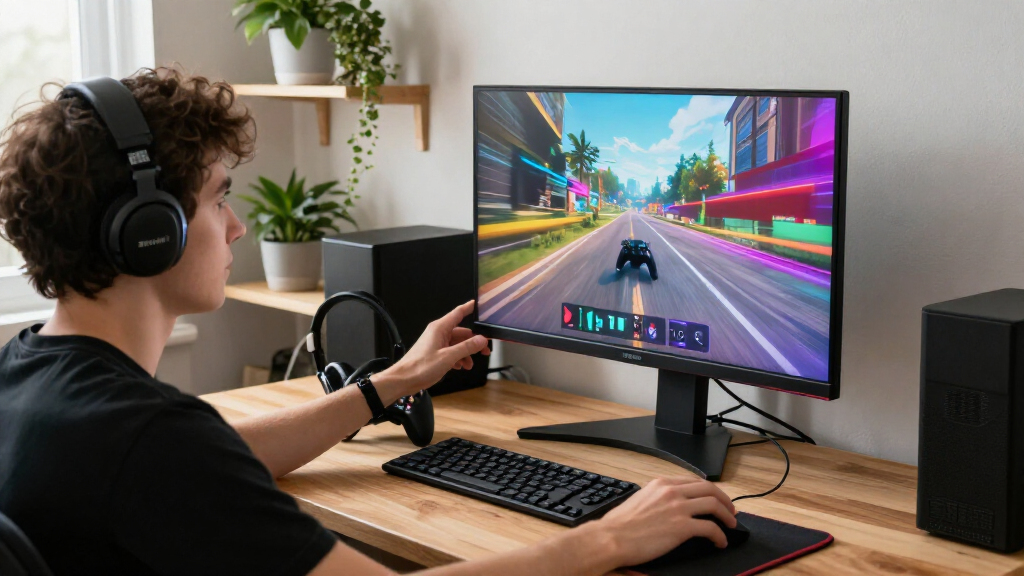
I compared these 15 monitors around the choices shoppers face during Black Friday: screen resolution, refresh rate, panel and screen format, gaming features, and how each model fits common desk and PC setups. I gave more weight to combinations that make sense together—such as QHD with a fast refresh rate—than to a single headline specification. I also considered whether a monitor’s size and shape suit its likely use, from compact competitive play to a wide, immersive setup.
The order reflects distinct buyer roles rather than a claim that one specification wins for everyone. Models with a strong balance of resolution, speed, and practical versatility rank ahead of narrower-use picks; options aimed at high-frame-rate play, entry-level setups, and ultrawide immersion follow where they serve those needs best. Since Black Friday listings can vary by configuration, I recommend checking the exact model number, inputs, stand adjustments, and refresh-rate support before buying.
| Black Friday gaming monitor | Adaptive sync |
|---|---|
| Sceptre E275W-FW100T 27-Inch F | AMD FreeSync |
| Sceptre 24-Inch Curved Gaming | FreeSync Premium |
| INNOCN 49-Inch Curved Ultrawid | — |
| Sceptre 22-Inch FHD 144Hz Gami | FreeSync |
| Samsung Essential S3 27-Inch C | — |
| Dell SE2426HG 24-Inch FHD 240H | AMD FreeSync Premium |
| Sceptre 27-Inch Full HD Gaming | — |
| Sceptre Curved 27" Gaming Moni | — |
| LG UltraGear 32-Inch QHD 180Hz | AMD FreeSync |
| LG UltraGear 24-Inch Full HD I | AMD FreeSync, NVIDIA G-SYNC Compatible |
| Westinghouse 27-Inch Curved FH | AMD FreeSync |
| Samsung 32-Inch Odyssey G5 QHD | AMD FreeSync |
| KTC H32S25E 32-Inch Curved QHD | FreeSync and G-Sync |
| Samsung Odyssey G3 G30D 27-Inc | AMD FreeSync |
| Sceptre E275B-FPT165 27-Inch F | FreeSync |
Factors to Consider When Choosing Black Friday Gaming Monitors
Black Friday can make a specification list look more persuasive than the monitor itself will be in your setup. I would start with the games you play, the graphics card you own, and the space available on your desk; those three factors narrow the field faster than chasing the biggest refresh-rate number.
Match Resolution to Your PC and Screen Size
Resolution affects both image detail and the workload placed on your graphics card. A 27-inch 1080p monitor is a practical fit for modest hardware, but text and fine details may look less crisp than on QHD at the same size. QHD can give 27- and 32-inch screens more usable detail, though maintaining high frame rates at that resolution takes more GPU power. Before choosing a faster QHD display, check performance in the games you actually play rather than relying on a best-case benchmark. A 49-inch 3840 × 1080 ultrawide spreads pixels across a much wider area, so it is not a simple substitute for a high-resolution 4K screen. Choose the resolution that your PC can drive smoothly at your preferred settings.
Choose Refresh Rate for the Games You Play
A high refresh rate can make motion and input feel smoother, but its benefit depends on the frame rate your PC can deliver. The Dell’s 240Hz target makes more sense for competitive games and a system that can produce high frame rates than for a graphics-heavy single-player setup that runs far below that level. A 120Hz or 144Hz option may already feel like a meaningful upgrade from a basic office display. Check how refresh rate changes with resolution and connection type, since the monitor, graphics card, cable, and game settings all need to support the selected mode. Don’t pay extra for a headline figure if your regular games and hardware cannot take advantage of it. A steadier frame rate can matter more to your play than the highest number on the box.
Decide Whether Curved or Ultrawide Fits Your Setup
Curved screens can make a wide display feel more enveloping, but the effect varies with screen size, curvature, and how far you sit from it. On a smaller screen, curvature may be a minor preference rather than a reason to choose one monitor over another. An ultrawide can add peripheral view in supported games and provide room for side-by-side applications, but some games may show borders, crop the image, or need settings adjustments. Measure the width of your desk and the space between the monitor and your seating position before choosing a large curved model. Also check whether your preferred games support the format well. If you mainly play titles that don’t benefit from a wider view, a standard 16:9 screen may be easier to live with.
Check Panel Type, Motion Features, and Sync Support
Panel type influences viewing angles, color behavior, and how the image looks when you move around the screen, so it deserves attention alongside speed. The LG UltraGear 24-inch IPS model may appeal to buyers who want an IPS panel and adaptive-sync support in a compact 1080p format. Features such as G-SYNC compatibility or FreeSync can help reduce tearing when frame rates fluctuate, but confirm compatibility with your graphics card and the exact model listing. Motion-blur reduction can improve perceived clarity in some situations, though it may change brightness or interact with variable refresh rate. HDR labels also vary in practical effect; don’t assume a basic HDR designation will deliver the contrast of a display built for strong HDR performance. Read the full connection and feature specifications rather than relying on a short product title.
Check Desk Fit, Stand Adjustments, and Connections
A monitor can have the right image specifications and still be a poor fit if its stand takes too much space or offers limited positioning. Check whether height, tilt, or swivel adjustments are available, and confirm that the monitor’s mounting pattern works with your arm if you use one. Built-in speakers on some Sceptre models can cover basic audio needs, but they are not a reason to skip checking sound quality or available audio connections. Count the inputs you need for a PC, console, and other devices, and check which connection supports the refresh rate and resolution you want. Larger curved screens can also need more clearance behind the panel. Taking these measurements before a sale helps avoid choosing a display that doesn’t fit your room or cabling.
Compare the Exact Black Friday Listing, Not Just the Model Family
Sale pages can group similar monitors under one family name while changing the panel, refresh rate, stand, or included connections between versions. Match the complete model number to the specifications you intend to buy, especially for products with similar sizes and names. Confirm the native resolution and refresh rate, not just an overclocked or marketing figure shown in a headline. Check the return window and warranty terms before ordering, since dead pixels, backlight issues, or an unsuitable curve are easier to address when you know the retailer’s policy. Consider the whole cost of a setup, including a suitable cable, monitor arm, or speakers if the display lacks what you need. A lower sale price does not make the wrong configuration a good fit.
Frequently Asked Questions
Should I choose the 240Hz Dell or a QHD 180Hz monitor for PC gaming?
Choose the Dell SE2426HG if your priority is competitive play, you prefer a 24-inch 1080p screen, and your PC can produce high frame rates. A QHD 180Hz option such as the Samsung Odyssey G5 or LG UltraGear 32-inch model makes more sense if you also value extra detail and a larger image. QHD generally asks more of the graphics card, so compare expected performance in your regular games before choosing. If your frame rate rarely reaches the levels your display supports, the extra refresh headroom may bring less benefit than improved resolution or screen size. Your games and GPU should settle the choice, not the largest number in the product name.
Is a 49-inch ultrawide a good choice as my only gaming monitor?
It can work as an all-purpose display if your desk has room and your games support ultrawide resolutions well. The INNOCN’s 3840 × 1080 format gives you a broad field of view and room for multiple windows, but it has a different pixel distribution from a QHD or 4K screen. Some games may need aspect-ratio adjustments or may not use the full panel. Check the monitor’s width against your desk and make sure your graphics card can drive the resolution at the settings you want. If you play titles with limited ultrawide support or prefer a sharper image over a wider view, a standard QHD model is a safer choice.
Will a 1080p gaming monitor still make sense for a newer graphics card?
Yes, especially if you focus on competitive games where high frame rates matter more to you than additional image detail. A fast 1080p screen can also be a sensible choice for a smaller desk or a system that you want to keep responsive at demanding settings. However, a newer graphics card may have enough power to make QHD a worthwhile upgrade, particularly at 27 inches or larger. Compare the resolution you want with the frame rates your games can sustain before deciding. This roundup’s mix of 1080p and QHD models shows that screen size alone does not determine whether a resolution will feel right.
Does a curved monitor make games better than a flat monitor?
Curvature can make a large or wide screen feel more immersive, but it does not automatically improve image quality, response, or competitive performance. The benefit depends on your seating distance, screen size, and personal preference. Curved models in this roundup range from standard-sized 1080p options to a 49-inch ultrawide, so their fit and effect are not interchangeable. A flat screen may be easier to position for shared viewing or non-gaming work, while a curved screen can suit a centered, single-user setup. If possible, compare the curve in person or check the return policy before choosing it over a better-matched flat display.
What should I verify before buying a monitor during Black Friday?
First, match the exact model number to the resolution, refresh rate, panel type, and ports you want; similar product names can hide different configurations. Check whether the stated refresh rate is native or depends on an overclocked mode, and confirm that your graphics card and cable can support it. Review the stand adjustments, mounting compatibility, and desk dimensions, especially for large curved and ultrawide models. Read the return and warranty terms so you know what options you have if the screen arrives damaged or doesn’t suit your setup. Finally, compare the monitor against your actual use rather than treating a sale listing’s biggest specification as the deciding factor.
Conclusion
For the strongest all-around mix in this lineup, I’d start with the Samsung 32-Inch Odyssey G5: QHD and 180Hz combine screen detail with fast gaming performance. For a value-focused 1080p setup, compare the Sceptre 27-inch 180Hz and Westinghouse 27-inch 200Hz models against your preferred size, curve, and connections. The Dell SE2426HG is my pick for competitive players who want 240Hz in a compact 24-inch format, while the INNOCN 49-inch ultrawide is the specialized choice for buyers with room for a broad, immersive screen. Beginners who want a straightforward 1080p upgrade can look at the LG UltraGear 24-inch or Sceptre 22-inch 144Hz model instead of paying for QHD or ultrawide capacity they may not use. Before buying, confirm the exact listing and that your graphics card, desk, and preferred games match the monitor you choose.