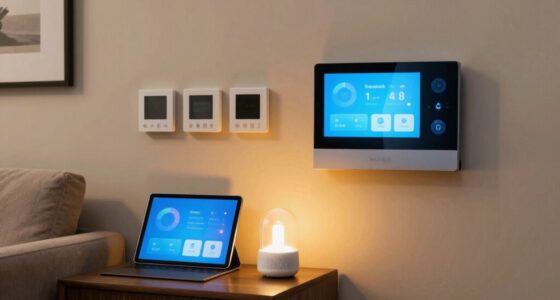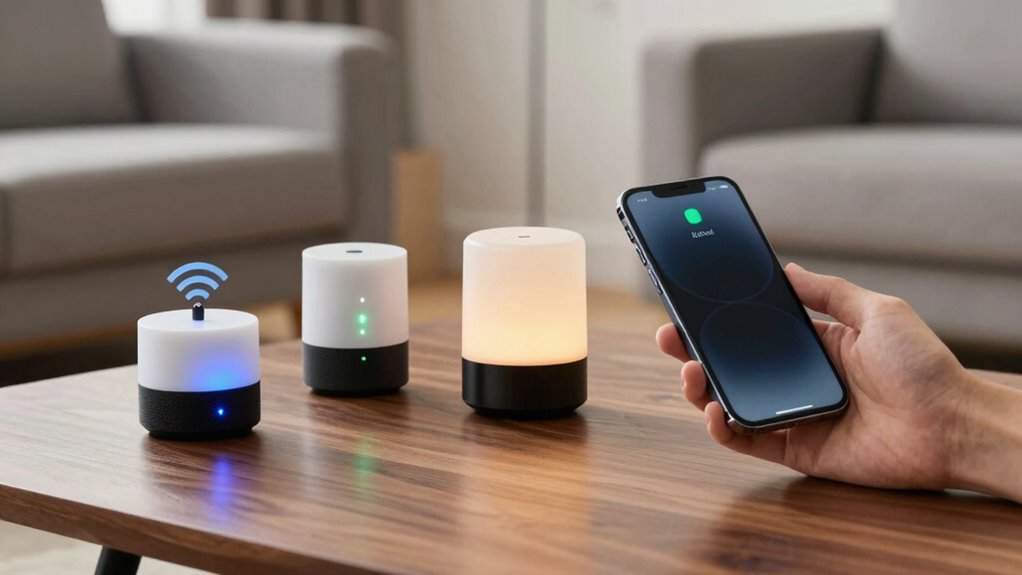

To choose between Wi-Fi, Zigbee, Thread, and Bluetooth, consider your device’s purpose and power needs. Wi-Fi suits high-data tasks like streaming, but uses more energy. Zigbee and Thread are perfect for low-power, reliable home automation, while Bluetooth is best for short-range personal devices. If you prioritize broad compatibility and future-proofing, Wi-Fi or Thread might fit. Keep exploring your options to find the best fit for your smart home setup.

Get the latest gadgets delivered free with Prime
- Fast, free delivery on millions of items
- Prime Video, Amazon Music and more included
- Member-only deals all year
Key Takeaways
- Consider device data transfer needs: Wi-Fi for high bandwidth, Zigbee/Thread for low power automation, Bluetooth for short-range personal use.
- Evaluate power consumption: Zigbee and Thread are ideal for battery-powered devices, while Wi-Fi consumes more energy.
- Assess communication range: Wi-Fi covers larger areas; Zigbee and Thread use mesh networks for extended indoor coverage; Bluetooth suits close-range.
- Check device ecosystem compatibility: Zigbee and Thread support diverse products; Bluetooth is best for personal devices like wearables.
- Future-proof your setup: favor standards like Thread and Zigbee for better interoperability and ongoing protocol evolution.
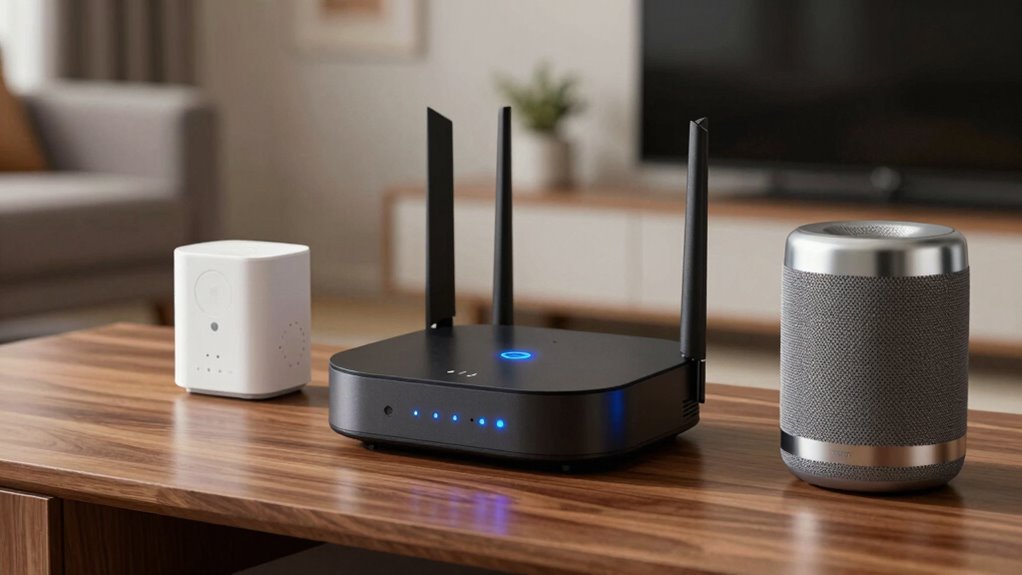
When selecting smart home devices or IoT solutions, understanding the differences between Wi-Fi, Zigbee, Thread, and Bluetooth is essential. Your choice depends on several factors, including device compatibility and energy efficiency. Wi-Fi is widely used because it offers high data transfer speeds and broad compatibility with most devices. If you want to stream high-definition videos or run demanding applications, Wi-Fi is your best bet. However, it consumes more energy, which can be a drawback if you’re aiming for lower power consumption in your smart home setup.
Zigbee and Thread are both mesh network protocols designed specifically for smart home devices, making them ideal for home automation. When considering device compatibility, Zigbee has a longer track record and supports a wide range of products from different manufacturers. This means you’ll likely find more compatible devices that work seamlessly together. Thread is newer but offers similar benefits, including robust device compatibility, especially with devices that support the latest standards. Both protocols are designed to operate on low power, making them highly energy-efficient choices for battery-powered sensors, lights, and locks. If you’re looking to save energy and extend device battery life, Zigbee and Thread outperform Wi-Fi in this regard. Additionally, interoperability standards are continuously evolving to enhance communication between different protocols, which can influence your choice depending on your smart home ecosystem. Understanding these protocol interoperability efforts can help future-proof your smart home setup.
Bluetooth primarily excels in short-range communication and is well-suited for personal devices like headphones, wearables, or smart locks. Its energy efficiency is quite high, especially with Bluetooth Low Energy (BLE), which is optimized for minimal power consumption. If your focus is on devices that need to communicate over short distances without draining batteries quickly, Bluetooth is an excellent option. Keep in mind, though, that Bluetooth doesn’t support the same expansive device ecosystem as Zigbee or Thread, so device compatibility might be more limited depending on your needs. Additionally, emerging standards such as Thread, aim to improve interoperability and expand the capabilities of IoT devices in smart homes.
As an affiliate, we earn on qualifying purchases.
Frequently Asked Questions
Can These Protocols Be Integrated Into a Single Smart Home System?
Yes, these protocols can be integrated into a single smart home system. You should look for devices supporting protocol interoperability, allowing seamless device integration across Wi-Fi, Zigbee, Thread, and Bluetooth. This guarantees your smart home components work together smoothly, regardless of the protocol they use. Choosing devices with compatible communication standards simplifies setup and enhances overall system performance, making your smart home more efficient and easier to manage.
Which Protocol Offers the Best Security Features for Smart Devices?
You’ll find Zigbee offers robust security, with encryption standards like AES-128 protecting your devices. Studies show Zigbee’s security protocols are resistant to common attacks, making them a top choice. Wi-Fi also provides strong encryption, but its complexity can sometimes introduce vulnerabilities. Bluetooth, especially newer versions, has improved security, but device interoperability can be a concern. Overall, Zigbee’s dedicated security features make it a smart choice for safeguarding your smart home.
How Do Battery Life Differences Impact Device Selection?
Battery life considerably impacts your device choice. Devices with longer battery longevity and better power efficiency are ideal for areas where frequent charging isn’t practical. Bluetooth devices generally consume less power, making them perfect for wearables or sensors. Zigbee and Thread also prioritize low power use, but Wi-Fi tends to drain batteries faster. Consider how often you want to recharge your device, and choose accordingly to guarantee reliable, long-lasting performance.
Are There Compatibility Issues Between Different Protocols?
Yes, there can be compatibility issues between different protocols due to protocol limitations and device interoperability challenges. You might find that some devices don’t communicate seamlessly if they use different protocols like Wi-Fi, Zigbee, Thread, or Bluetooth. To avoid issues, check if your devices support the same protocol or if they’re compatible through a hub or bridge. This guarantees smooth operation and reduces frustration.
What Are the Initial Setup Considerations for Each Protocol?
When setting up devices, you should consider device compatibility and signal range. Wi-Fi setups often require a stable internet connection and may need more network configuration, while Zigbee and Thread devices need compatible hubs or gateways. Bluetooth setup is straightforward but has a limited signal range. Confirm your devices support the protocol you choose, and plan your placement accordingly to maintain reliable communication within their signal range.
As an affiliate, we earn on qualifying purchases.
Conclusion
When choosing between Wi-Fi, Zigbee, Thread, and Bluetooth devices, consider your home’s size, device compatibility, and network stability. Did you know that over 80% of smart home devices now support multiple protocols? This shows how versatile and interconnected these technologies are becoming. By understanding each protocol’s strengths, you can create a seamless, reliable smart home experience tailored to your needs. So, pick the one that fits your lifestyle and enjoy smarter living!
As an affiliate, we earn on qualifying purchases.
Bluetooth Low Energy (BLE) devices
As an affiliate, we earn on qualifying purchases.
As an affiliate, we earn on qualifying purchases.
Fall Picks
fall essentials
As an affiliate, we earn on qualifying purchases.