

TL;DR
UC Santa Barbara scientists have engineered a new organic molecule that can store solar energy chemically and release it as heat, potentially replacing traditional batteries. This development could improve off-grid solar applications and energy storage efficiency.
Scientists at UC Santa Barbara have developed a novel liquid molecule that can store solar energy chemically and release it as heat, representing a significant advance in renewable energy storage technology.
The research team, led by Associate Professor Grace Han, described the creation of a modified organic molecule based on pyrimidone, inspired by DNA structures, that can absorb sunlight, store energy in chemical bonds, and later release it as heat on demand. The molecule is designed to be reusable and recyclable, functioning similarly to a rechargeable solar battery.
In experiments, the molecule demonstrated the ability to generate enough heat to boil water under ambient conditions, a key milestone indicating practical energy release. It stores more than 1.6 megajoules of energy per kilogram, surpassing the capacity of typical lithium-ion batteries, which store around 0.9 MJ/kg. The material’s stability over long periods was confirmed through computational modeling, showing minimal energy loss over time.
Why It Matters
This development offers a new approach to solar energy storage that could reduce dependence on large battery systems and the electrical grid, especially for off-grid applications. It could enable more efficient, sustainable heating solutions for homes, camping, or industrial processes, extending the usability of solar energy beyond daylight hours.

Next Generation Thermal Energy Storage And Industrial Heat Systems: Innovative Solutions and Strategic Approaches for Sustainable Industrial Heat Management
As an affiliate, we earn on qualifying purchases.
As an affiliate, we earn on qualifying purchases.
Background
Traditional solar energy systems rely on batteries or grid connection to store excess power generated during the day. Molecular Solar Thermal (MOST) technology, which involves storing energy in chemical bonds within organic molecules, has been under research for years but faced challenges in stability and energy density. This new molecule, inspired by DNA structures, addresses some of these issues by offering higher energy density and stability, with recent demonstrations of practical heat release such as boiling water.
“The concept is reusable and recyclable. Think of photochromic sunglasses. When you’re inside, they’re just clear lenses. You walk out into the sun, and they darken on their own. Come back inside, and the lenses become clear again.”
— Nguyen, lead author and doctoral student at UC Santa Barbara
“With molecular solar thermal energy storage, the material itself is able to store that energy from sunlight.”
— Benjamin Baker, co-author and doctoral student
“Our goal was to create a lightweight, compact molecule that could reliably store and release solar energy over long periods.”
— Grace Han, associate professor
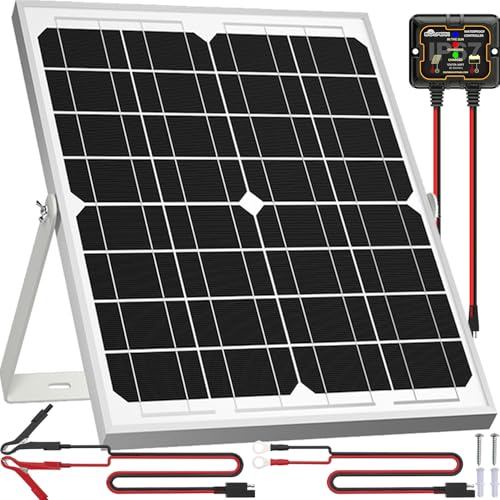
SOLPERK Solar Panel Kit 20W 12V, Waterproof Solar Battery Trickle Charger Maintainer + Smart MPPT Controller + Adjustable Mount Bracket for Boat Car RV Motorcycle Marine Automotive
【High Conversion Rate】This 20W solar panel with monocrystalline A+ solar cell has an excellent cell efficiency of 21%-30%….
As an affiliate, we earn on qualifying purchases.
As an affiliate, we earn on qualifying purchases.
What Remains Unclear
It is not yet clear how scalable this technology is for commercial applications or how long the molecules can reliably cycle without degradation. Further testing is needed to evaluate long-term stability and cost-effectiveness at larger scales.

The art of off-grid heating; efficient solutions for eco-conscous living;: DIY off-grid solutions for efficient woodstoves and heating in tiny homes, … living. (OFF-GRID SOLAR POWER FOR BEGINNERS)
As an affiliate, we earn on qualifying purchases.
As an affiliate, we earn on qualifying purchases.
What’s Next
Researchers plan to optimize the molecule for mass production, test long-term cycling stability, and develop prototypes for real-world applications such as off-grid heating systems and solar collectors. Additional studies are expected to explore integration with existing solar infrastructure.

A Solar heated asphalt storage tank
As an affiliate, we earn on qualifying purchases.
As an affiliate, we earn on qualifying purchases.
Key Questions
How does this molecule compare to traditional batteries?
The molecule has a higher energy density than lithium-ion batteries and stores energy chemically, allowing it to release heat directly, which could be more efficient for heating applications.
Can this technology be used for electricity storage?
Currently, it is designed for heat release, not electrical energy. Future developments might adapt the concept for electrical storage, but this remains under research.
What are the potential practical uses of this solar ‘sun battery’?
Possible applications include off-grid heating, water heating systems, and solar-powered industrial processes, especially where heat is needed rather than electricity.
When might this technology be commercially available?
It is still in the research phase, with further testing needed before commercial deployment, which could take several years.