
TL;DR

Get the latest gadgets delivered free — and shop member deals
- Fast, free delivery on millions of items
- Access to Prime Big Deal Days deals on October 6–7
- Prime Video, Amazon Music and more included
Rymvard published four illustrative U.S. data center scenarios on Oct. 3, 2026, covering Northern Virginia, Texas, Arizona and central Ohio. They show how connection delays, curtailment rules, cooling limits and power tariffs can make usable or sellable capacity differ from a site’s headline reservation; the company has not provided customer results or independent validation of its early-access product.
Rymvard published four illustrative U.S. data center capacity scenarios on Oct. 3, 2026, showing how grid connection delays, curtailment rules, cooling limits and utility charges can leave a facility with less power to use or sell than its headline reservation suggests, as explored in the original analysis. The examples cover Northern Virginia, Texas, Arizona and central Ohio and are intended to demonstrate the company’s early-access capacity-planning product, not report outcomes at named customer sites.
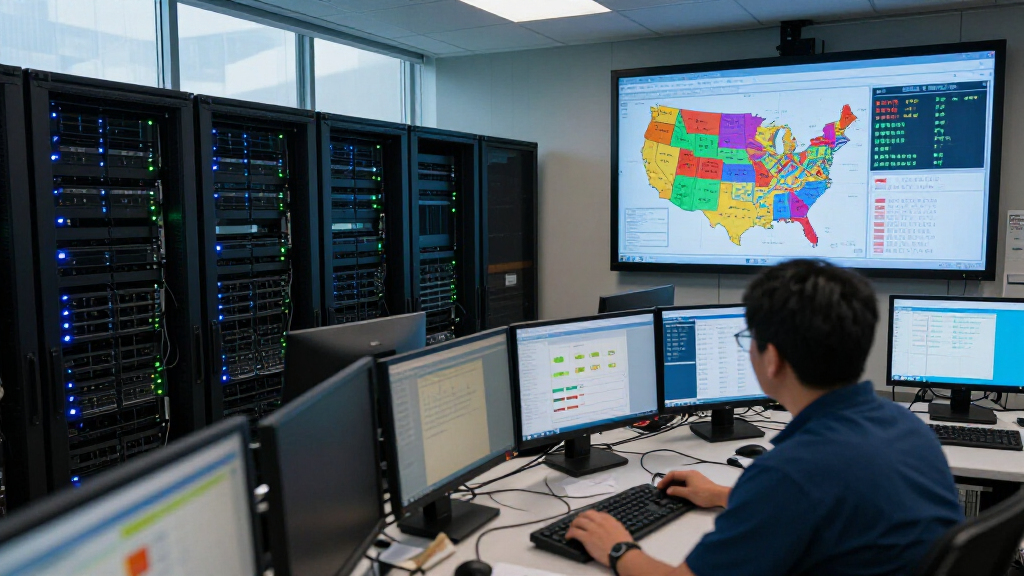
Rymvard says its product brings measured power, contracts, recovery reservations, cooling and demand into one ledger. The company describes the ledger as a way to compare a site’s stated or subscribed capacity with its actual draw and other operating commitments, an approach related to measuring data center capacity. It says the published scenarios use an illustrative estate, rather than data from a customer site or a documented operating result.
The regional examples identify different constraints. In Northern Virginia, Rymvard points to long waits for new utility connections and says some existing reservations exceed measured draw. In Texas, its scenario considers curtailment obligations for sites of 75 megawatts or more under Senate Bill 6, signed in June 2025. The example raises the planning question of which loads support critical services and which might be reduced; it does not describe a specific curtailment event.
In Arizona, Rymvard says cooling can limit capacity on the hottest afternoons. In central Ohio, it points to a Public Utilities Commission of Ohio-approved tariff requiring certain new data centers above 25 MW to pay for at least 85% of subscribed power for up to 12 years. The cited tariff is AEP Ohio’s, in case 24-508-EL-ATA, with an order dated July 9, 2025. Rymvard does not publish product pricing, saying terms are agreed with early-access partners; data center growth worldwide adds context to these capacity pressures.
🔍 Read the full analysis: Grid Queues, Curtailment And Tariffs: Four Hard Capacity Questions For US Data Centers on Rymvard
Reserved Power Is Not Usable Capacity
The scenarios underline why a power reservation alone may not show how much capacity a data center can reliably deploy, sell to customers or afford. A delayed grid connection can hold back expansion; curtailment requirements may affect which workloads can continue during grid stress; heat can constrain cooling; and a tariff can leave an operator paying for subscribed power it does not draw. These differences can affect customer commitments, equipment planning and cost forecasts.
The issue also matters beyond individual operators. Utilities and grid planners need to distinguish contracted or reserved capacity from measured demand and loads that can be reduced. A consolidated view of those factors could help inform planning, but Rymvard’s announcement does not establish that its product changes grid outcomes, lowers costs or improves capacity decisions. A ledger can organize information; it cannot by itself add grid supply or shorten a connection queue.
data center power capacity monitoring tools
As an affiliate, we earn on qualifying purchases.
As an affiliate, we earn on qualifying purchases.
Four Markets, Four Constraints
The scenarios are not a national forecast or a claim that every data center in these regions faces the same limits. They illustrate four distinct planning issues: connection timing and underused reservations in Northern Virginia, load reduction during grid stress in Texas, cooling performance in Arizona heat, and payment obligations under an Ohio utility tariff. Their value is in showing that the meaning of a site’s capacity depends on local grid conditions, operating needs and contract terms.
Rymvard says the product is in early access, but has not named customers or identified sites behind the examples. The company describes the material as an illustrative example estate, so it should not be treated as measured evidence about a particular campus or as a forecast of capacity across any of the four markets. The announcement also provides no quantified savings or independent evaluation.
“Rymvard joins measured power, contracts, recovery reservations, cooling and demand into one ledger.”
— Rymvard
data center cooling management systems
As an affiliate, we earn on qualifying purchases.
As an affiliate, we earn on qualifying purchases.
Customer Evidence Remains Unreported
No customer deployment, measured result or independent validation is identified in the announcement. It does not quantify whether the ledger has improved planning, reduced costs or changed a site’s response to curtailment. The company also does not detail its data inputs, integrations or verification methods, or explain how the product is used in operational decisions.
It remains unclear how frequently the described constraints occur across each market and what their financial effects are at individual facilities. Rymvard has not published pricing or a broader release date. The examples therefore show the problems the product aims to organize, not proof that it resolves them.
utility connection delay solutions for data centers
As an affiliate, we earn on qualifying purchases.
As an affiliate, we earn on qualifying purchases.
Watch for Deployments and Validation
Rymvard says interested parties can contact the company about early access, but it has not announced a general release schedule or named partner deployments. The next useful evidence would be customer use cases, site-specific measurements and independently verifiable outcomes, along with clearer details about the product’s inputs and methods.
Until such information is available, the four scenarios are best read as demonstrations of how capacity reservations can diverge from operational or affordable capacity. Whether the ledger helps operators act on that gap remains an open question.
data center power curtailment equipment
As an affiliate, we earn on qualifying purchases.
As an affiliate, we earn on qualifying purchases.
Key Questions
What did Rymvard announce?
Rymvard published four illustrative U.S. data center scenarios on Oct. 3, 2026, alongside a description of its early-access ledger for organizing power measurements, contracts, cooling limits and demand.
Which regions do the scenarios cover?
The examples cover Northern Virginia, Texas, Arizona and central Ohio. Each focuses on a different potential constraint, and none is presented as a report about a named customer site.
Does a power reservation equal usable capacity?
Not necessarily. The scenarios show how connection delays, curtailment obligations, cooling limits and tariff costs can affect how much power a site can use or sell. The specific effect depends on site conditions and contracts.
Has Rymvard shown that its product improves outcomes?
The announcement provides no customer results, quantified savings or independent validation. It describes the product’s intended function and illustrative scenarios, not evidence that it has changed capacity planning or grid outcomes.
Primary source: Rymvard · via ThorstenMeyerAI.com
Halloween Picks
halloween
As an affiliate, we earn on qualifying purchases.