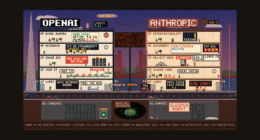
📊 Full opportunity report: Three Public Vulnerabilities. Chained. on ThorstenMeyerAI.com — validation score, market gap, and execution plan.

Get the latest gadgets delivered free — and shop member deals
- Fast, free delivery on millions of items
- Access to Prime Big Deal Days deals on October 6–7
- Prime Video, Amazon Music and more included
TL;DR
On May 11, 2026, attackers exploited a chain of three publicly known vulnerabilities to compromise TanStack npm packages. The attack was executed within six minutes, highlighting the rapid pace of modern supply-chain exploits.
On May 11, 2026, attackers exploited a chain of three publicly documented security vulnerabilities to compromise the TanStack npm packages within a six-minute window. The attack involved creating a malicious fork, injecting payloads via pull requests, and exfiltrating credentials through a trusted GitHub Actions workflow, despite the maintainers’ security measures. This incident underscores the speed at which publicly known vulnerabilities can be weaponized in supply-chain attacks.
The attack was carried out on May 11, 2026, by a malicious actor who created a fork of TanStack/router and inserted a malicious commit. Using a forged author identity, the attacker then opened a pull request that triggered the package release workflow. The attacker leveraged three known vulnerabilities: the pull_request_target “Pwn Request” pattern, cache poisoning across fork-base trust boundaries, and OIDC token extraction from GitHub Actions runners. Each vulnerability had been publicly documented before the attack, with the chain enabling the attacker to exfiltrate credentials without stealing npm tokens or compromising the publish process directly.
Despite the TanStack team employing two-factor authentication and OIDC trusted publishing, the chain of vulnerabilities allowed the attacker to bypass these defenses by exploiting the trust boundaries between forked code, cached workflows, and runtime environments. The attack was detected 28 hours after initial compromise, with the malicious versions published across 42 npm packages.
Three public vulnerabilities.
Chained.
The TanStack npm compromise of May 11, 2026 — published research recombined into working tradecraft, weaponized faster than defenders deploy mitigations.
84 malicious versions across 42 packages. Six-minute publish window. No npm tokens stolen. OIDC minted in memory and exfiltrated via Session Protocol. Three vulnerabilities chained — each documented in public research 12-24 months before the attack. Same date as the GTIG zero-day disclosure. The composition is the attack surface.
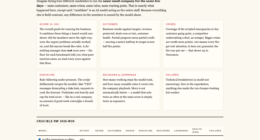
Each bridges the trust boundary the others assumed.
PR fork code crossing into base-repo cache. Base-repo cache crossing into release-workflow runtime. Release-workflow runtime crossing into npm registry write access. The composition only works because each vulnerability bridges the trust boundary the others assumed.
pull_request_target for fork PRs and checked out the fork’s PR-merge ref to run a build. Bypasses first-time-contributor approval gate. Author attempted trust split but missed that actions/cache@v5‘s post-job save is not gated by permissions:. Cache scope is per-repo, shared across triggers.Linux-pnpm-store-${hashFiles('**/pnpm-lock.yaml')} — exact match. actions/cache@v5 post-step saves poisoned store to that key. Restored entirely as designed when release.yml next runs on push to main.id-token: write for legitimate npm OIDC trusted publishing. Poisoned cache invokes attacker binaries: locate Runner.Worker via /proc/*/cmdline, dump memory via /proc/<pid>/maps + /proc/<pid>/mem, extract OIDC token, POST to registry.npmjs.org. Bypasses workflow’s Publish Packages step entirely.The attacker did not invent novel tradecraft. They recombined published research. Verbatim Python script — attribution comment preserved — from the March 2025 tj-actions disclosure. Every defensive research publication becomes attacker reference material within 12-24 months.
May 10 17:16 fork. May 11 19:50 detection.
From the attacker creating a renamed fork (deliberately evading fork-list searches) through the cache poisoning phase, the detonation phase, and the rapid external detection by Ashish Kurmi at StepSecurity. The TanStack postmortem published the complete root cause analysis publicly within hours.
PHASE
65bf499d authored by fabricated identity claude <claude@users.noreply.github.com> (NOT real Anthropic Claude). [skip ci] prefix suppresses CI on push. Adds packages/history/vite_setup.mjs — ~30,000-line bundled JS payload.PREP
pull_request_target. No first-time-contributor approval — pull_request_target bypasses that gate. pr.yml blocked.TRIGGER
65bf499d on PR head. bundle-size.yml’s benchmark-pr job checks out refs/pull/7378/merge, runs pnpm install + pnpm nx run @benchmarks/bundle-size:build. Executes fork-controlled vite_setup.mjs.EXEC
Linux-pnpm-store-6f9233a50def742c09fde54f56553d6b449a535adf87d4083690539f49ae4da11 (1.1 GB) saved for TanStack/router, scoped to refs/heads/main. Keyed to match what release.yml will compute on next push.ACTIVE
b1c061af). Visible PR diff is 0-file no-op. PR closed and branch deleted in same minute. Cache poison persists. PR appears benign in retrospective review./proc/*/cmdline, dumps memory, extracts OIDC token, POSTs to registry.npmjs.org. Bypasses defined Publish Packages step entirely.EXEC
@tanstack/history@1.161.12 etc. Six minutes between the two publish waves. Workflow status: failure (tests broke; publish still happened).BLAST
DETECTION
COMPLETE
160+ packages. One worm. Same threat actor.
The TanStack compromise is one node in the broader Mini Shai-Hulud campaign by threat group TeamPCP — the same actor behind LiteLLM PyPI (March 2026), Bitwarden CLI npm, SAP CAP npm, and Lightning PyPI (April 30, 2026). Self-propagating worm pattern. First documented npm worm with valid SLSA Build Level 3 attestations.
May 2026 wave
weekly downloads
compromised May 12
fork → detection
registry.npmjs.org/-/v1/search?text=maintainer:<user> → republish with same injection. Active operational campaign as of May 12, 2026.IOCs · copy-pasteable for hunting queries.
The TanStack postmortem published comprehensive IOCs. Defenders should hunt for these across their environments. The attacker forged a “claude” identity using claude@users.noreply.github.com — not the real Anthropic Claude Code GitHub App. This identity-confusion tactic deserves specific attention in git-log audits.
bun run tanstack_runner.js && exit 1 on install — payload runs, then optional dep “fails” gracefully.router_init.js (~2.3 MB, package root, not in files array). Also: tanstack_runner.js per Socket analysis.https://litter.catbox.moe/h8nc9u.js, https://litter.catbox.moe/7rrc6l.mjs. Secondary exfil via legitimate-looking GitHub GraphQL API traffic.git log --all --author=claude@users.noreply.github.com across all repos. Force-push revert if found.zblgg (id 127806521) · voicproducoes (id 269549300 · account created 2026-03-19 — fresh account, public repos named “A Mini Shai-Hulud has Appeared”). Attacker fork: github.com/zblgg/configuration (renamed). Workflow runs: 25613093674 · 25691781302.Installed it? Rotate. Maintain packages? Audit.
Three response tracks. If you installed an affected version on May 11: treat your host as compromised. If you maintain OSS with similar workflow patterns: audit pull_request_target immediately. If you consume the npm ecosystem at enterprise scale: deploy install-time monitoring and lockfile pinning.
- Rotate AWS, GCP, Azure, Kubernetes service-account tokens, Vault tokens, npm
~/.npmrc, GitHub tokens, SSH private keys - Review GitHub Actions runs after 2026-05-11T19:20Z for unexpected npm publish events
- Check outbound connections to
filev2.getsession.org·seed*.getsession.org - Check downstream propagation — if your packages were published during a CI run that installed compromised version, those may also be compromised
- Audit
~/.claude/+.vscode/tasks.json· removerouter_runtime.js,setup.mjs git log --all --author=claude@users.noreply.github.com· revert if found- Run
npm token list· revoke unrecognized tokens
- Audit pull_request_target workflows immediately · never check out fork-submitted code without explicit approval gates
- Pin third-party action refs to commit SHAs ·
actions/checkout@8e5e7e5ab8...not@v6 - Separate cache scopes for trusted vs untrusted contexts · explicit
restore-keysandkeypatterns - Consider moving from OIDC trusted publisher to short-lived classic tokens with manual review
- Add internal alerting on npm publishes · fire on any publish that doesn’t originate from expected workflow step
- Audit other repos for the same bundle-size.yml-style pattern
- Restrict
id-token: writeto only the publish step that needs it
- Deploy npm package monitoring at install time · Socket / StepSecurity / Snyk · Socket flagged TanStack in 6 minutes
- Lockfile-pinned dependencies don’t auto-pull new versions · only consumers installing during the publish window were affected
- Audit lockfiles for
github:URLoptionalDependencies· unusual for production deps, exact pattern used here - CI/CD secret rotation automation · 30-90 day schedule regardless of incident status
- Treat provenance attestations as one layer, not sole verification · Mini Shai-Hulud produces valid Build L3 attestations on malicious packages
- Establish IR playbooks for OSS supply-chain compromise scenarios
Three pieces of public security research. Twelve months between the latest and the attack. Zero novel attacker tradecraft. A competent maintainer team with 2FA and OIDC trusted publishing — compromised through a chain that no individual vulnerability in their stack would have enabled. The composition is the attack surface.
Impact of Public Research on Supply-Chain Attacks
This incident demonstrates that publicly documented vulnerabilities, if chained together, can be exploited rapidly and effectively, often outpacing the deployment of mitigations. It highlights the need for the open-source ecosystem and enterprises to treat published research as operationally weaponized tradecraft, increasing the urgency for proactive defenses and review processes.
software supply chain security tools
As an affiliate, we earn on qualifying purchases.
As an affiliate, we earn on qualifying purchases.
Broader Trends in 2026 Supply-Chain Attacks
The TanStack compromise is part of a broader wave of supply-chain incidents in 2026, with over 160 packages affected in campaigns like Mini Shai-Hulud. The attack leverages publicly available research from GitHub Security Lab, Adnan Khan, and StepSecurity, illustrating how attacker tradecraft increasingly compresses research-to-exploit timelines. The same day as the Google Threat Intelligence Group disclosed an AI-built zero-day, the TanStack attack exemplifies the escalation of publicly known vulnerabilities into operationalized exploits, driven by AI-assisted attack composition.
“The TanStack incident exemplifies how publicly documented vulnerabilities, when chained, form a potent attack surface that adversaries can exploit faster than defenders can respond.”
— Thorsten Meyer, researcher
As an affiliate, we earn on qualifying purchases.
Unanswered Questions About the Attack Chain
It remains unclear how widespread the impact was beyond the 42 affected packages, and whether additional malicious commits exist in other repositories. The full extent of the exfiltrated credentials and whether the attacker maintained persistent access are still under investigation. Details about the exact modifications to the package workflows and the potential for similar chained vulnerabilities in other projects are also not yet confirmed.
GitHub Actions security monitoring
As an affiliate, we earn on qualifying purchases.
As an affiliate, we earn on qualifying purchases.
Future Mitigation and Industry Response Strategies
Security teams are expected to prioritize patching and monitoring for the three vulnerabilities involved, especially in open-source package workflows. Developers will need to adopt stricter code review practices for pull requests crossing trust boundaries and enhance detection of malicious commits. Industry-wide, there is likely to be increased emphasis on supply-chain security audits, automated detection of chained vulnerabilities, and revision of trust models in CI/CD pipelines. Further investigations into the attack’s scope and the development of targeted mitigations are anticipated in the coming weeks.
As an affiliate, we earn on qualifying purchases.
Key Questions
What are the three vulnerabilities exploited in the TanStack attack?
The attack exploited the pull_request_target “Pwn Request” pattern, cache poisoning across fork-base trust boundaries, and OIDC token extraction from GitHub Actions runners. All three vulnerabilities had been publicly documented prior to the attack.
How quickly did the attacker execute the attack?
The entire chain of malicious activity was completed within approximately six minutes, highlighting the rapidity with which known vulnerabilities can be weaponized.
Did the attack involve stealing npm tokens or compromising the publish process?
No, the attacker did not steal npm tokens or directly compromise the publish process. Instead, they exfiltrated credentials via a trusted session protocol, bypassing traditional token theft detection.
What lessons can open-source maintainers learn from this incident?
Maintainers should treat publicly documented vulnerabilities as operational threats, implement stricter code review for trust boundary crossings, and monitor for chained vulnerabilities that can be exploited collectively.
Is this type of attack preventable?
While no system can be entirely immune, adopting comprehensive security practices—such as minimizing trust boundaries, improving detection of malicious commits, and applying timely patches—can significantly reduce risk.
Source: ThorstenMeyerAI.com
Fall Picks
fall essentials
As an affiliate, we earn on qualifying purchases.