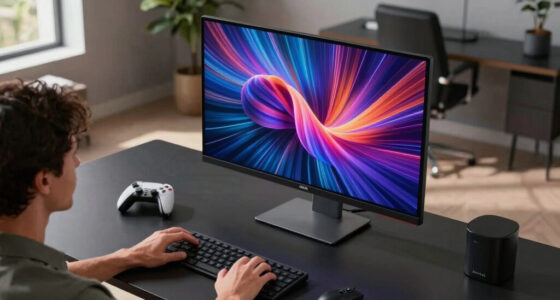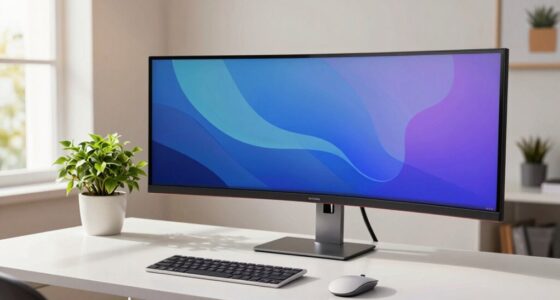

If you’re choosing between IPS, VA, and OLED screens, your decision depends on your priorities. IPS offers accurate colors and wide angles, making it great for photo editing and group viewing. VA panels deliver high contrast and deep blacks, ideal for watching movies in dark rooms. OLED provides stunning color, true blacks, and fast response times, perfect for gaming and multimedia. To truly understand which suits your needs best, learn more about each technology’s strengths and weaknesses.

Get the latest gadgets delivered free — and shop member deals
- Fast, free delivery on millions of items
- Access to Prime Big Deal Days deals on October 6–7
- Prime Video, Amazon Music and more included
Key Takeaways
- OLED offers superior contrast and true blacks, ideal for multimedia and gaming enthusiasts.
- IPS panels provide more accurate colors and wider viewing angles, suitable for professional editing and shared viewing.
- VA panels excel in contrast but have narrower angles, making them better for dark-room viewing.
- OLED screens tend to be more expensive and risk burn-in, affecting long-term durability.
- IPS displays are generally more affordable and less prone to burn-in, offering a good balance for most users.
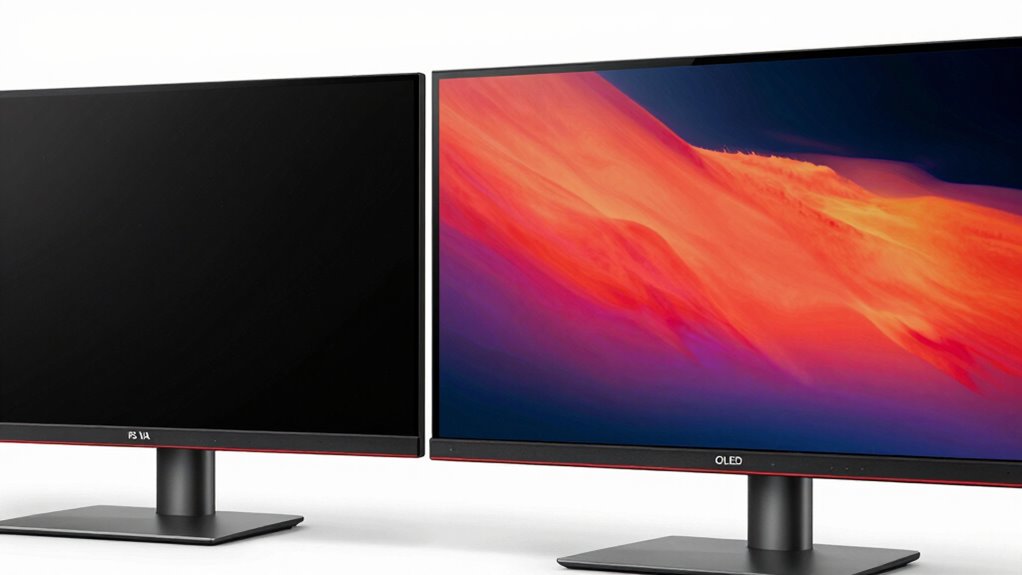
When choosing a display for your device, understanding the differences between IPS, VA, and OLED screens is essential because each technology offers distinct advantages and drawbacks. If you prioritize color accuracy, IPS panels often stand out. They deliver consistent, true-to-life colors across the screen, making them ideal for tasks like photo editing or graphic design. With their superior color reproduction, you can trust that what you see on the screen closely matches real-world colors. However, IPS panels typically have wider viewing angles, meaning the image quality remains stable even when you look at the screen from different positions. This makes them great for group viewing or sharing content without color distortion or contrast loss.
IPS screens offer accurate colors and wide viewing angles, perfect for professional tasks and shared viewing experiences.
In contrast, VA (Vertical Alignment) panels usually excel in contrast ratios and black levels. They can produce deeper blacks and better contrast than IPS screens, which is especially noticeable when watching movies or playing games in darker environments. While VA panels might not match IPS screens in color accuracy, they still offer decent color reproduction, suitable for general entertainment. Their viewing angles are narrower, so if you step to the side or look at the screen from a sharp angle, you might notice some color shifting or contrast reduction. That can be a drawback if you need a display for collaborative work or presentations where multiple viewers are involved. Additionally, VA panels often have longer response times, which can impact fast-paced gaming experiences. The manufacturing process for VA panels also influences their performance, often resulting in a trade-off between contrast and color accuracy. Moreover, the cost difference between VA and IPS panels can be significant for budget-conscious buyers. A thorough understanding of panel technology can help buyers make more informed decisions based on their specific needs.
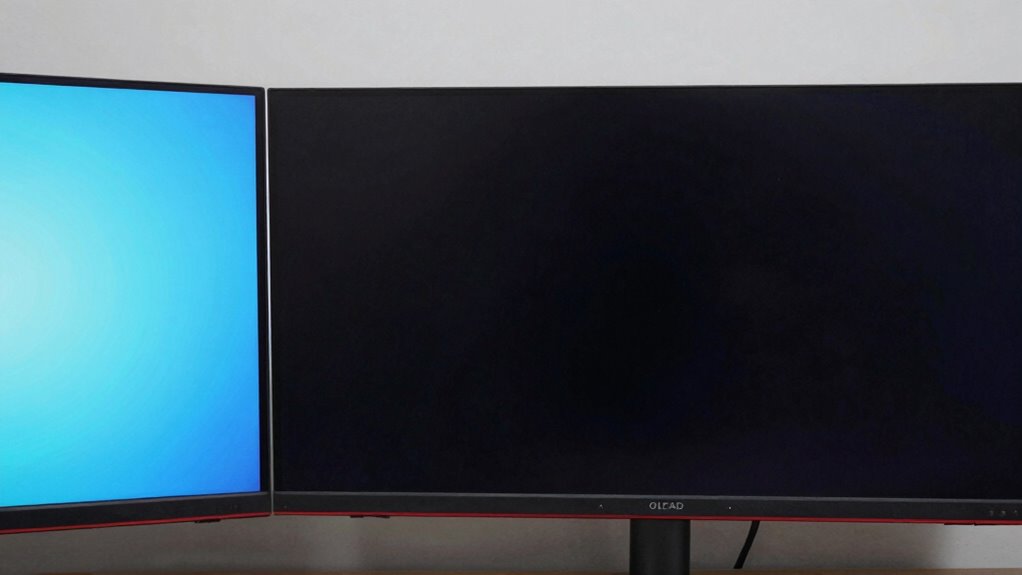
OLED (Organic Light Emitting Diode) technology takes a different approach altogether. Each pixel in an OLED screen emits its own light, allowing for incredibly vibrant colors, exceptional contrast, and true blacks. If you want a display that delivers stunning visuals for multimedia and gaming, OLED is hard to beat. It offers outstanding color accuracy, especially for high-dynamic-range (HDR) content, and maintains excellent viewing angles without color shifting or contrast issues. Additionally, OLED displays are known for their quick response times, making them ideal for fast-paced gaming. The downside is that OLED screens can be more expensive and may suffer from burn-in over time, which could be a concern if you use the device for static images or long periods. As a result, careful consideration of screen longevity becomes important when choosing OLED technology.
As an affiliate, we earn on qualifying purchases.
Frequently Asked Questions
Which Display Type Is More Energy-Efficient for Daily Use?
OLED displays are more energy-efficient for daily use, especially when displaying darker images, because they turn off pixels completely for black areas, saving power. While IPS and VA panels are generally less energy-efficient, they offer better color accuracy and wider viewing angles. If you prioritize color and viewing flexibility over energy savings, IPS or VA might suit you better, but for overall efficiency, OLED is the top choice.
How Do These Screens Perform in Outdoor Sunlight?
In outdoor sunlight, OLED screens shine brightest, offering vibrant color accuracy and deep blacks that stand out even in bright conditions. IPS VA displays perform well too, with good viewing angles and decent color accuracy, but they may struggle with glare and reflections. If you prioritize outdoor use, OLED screens give you a better experience, especially when it comes to maintaining color richness and clear viewing angles in sunlight.
Are There Differences in Screen Durability or Lifespan?
You’ll find that OLED screens generally have a shorter lifespan than IPS VA displays due to organic materials that degrade over time, affecting durability and color accuracy. While OLED offers stunning contrast and wide viewing angles, it can suffer burn-in, reducing lifespan. IPS VA screens tend to be more durable with consistent color accuracy and stable viewing angles, making them more reliable for long-term use.
Can These Displays Be Used Effectively for Professional Photo Editing?
Did you know that over 80% of professional photographers prefer OLED for editing? Yes, these displays excel in color accuracy, making them great for photo editing. However, calibration challenges can arise, especially with OLED’s tendency to change over time. IPS VA screens also offer good color fidelity and may be easier to calibrate consistently. So, for professional use, consider your priority: ultimate color precision or easier calibration.
How Do Refresh Rates VAry Among IPS VA, OLED, and Others?
You’ll find refresh rates vary among IPS VA, OLED, and others, impacting response time and color accuracy. OLED screens often have higher refresh rates, providing smoother motion and quicker response times, ideal for gaming. IPS VA panels usually offer good color accuracy but slightly lower refresh rates, while other types like TN panels tend to prioritize response time over color. Your choice depends on whether you prioritize smooth visuals or color fidelity.
As an affiliate, we earn on qualifying purchases.
Conclusion
Choosing between IPS, VA, and OLED depends on what matters most to you—vivid colors, deep blacks, or fast response times. Think of it like picking the right paint for your masterpiece; each has its own character and purpose. Remember, the grass isn’t always greener on the other side, but understanding these differences helps you make a smarter choice. Ultimately, select what fits your needs best, and your screen will become a window to your world.
As an affiliate, we earn on qualifying purchases.
As an affiliate, we earn on qualifying purchases.
Fall Picks
fall essentials
As an affiliate, we earn on qualifying purchases.