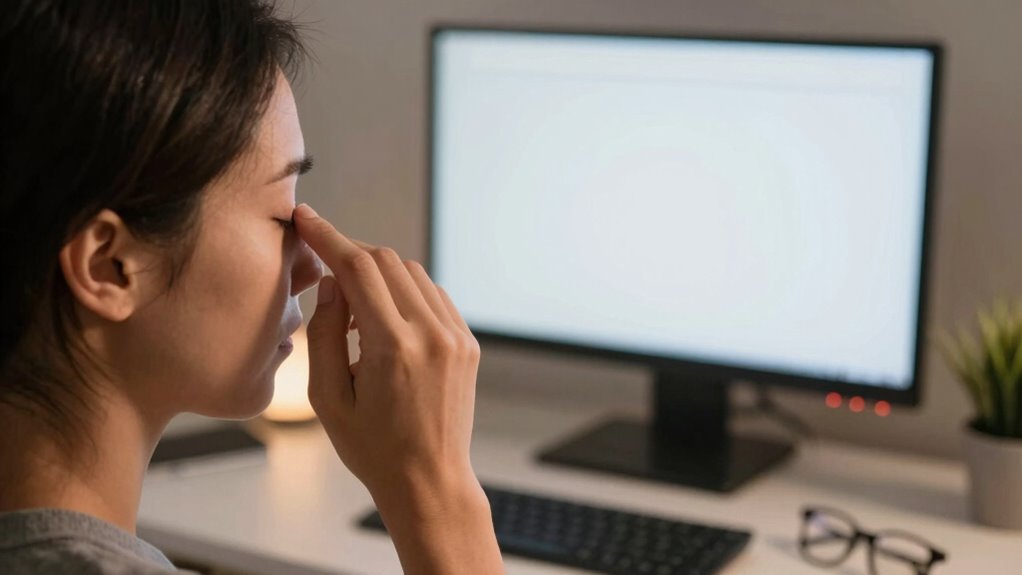

To reduce eye strain without replacing your monitor, start by adjusting the blue light settings or wearing blue light blocking glasses to cut down on digital eye fatigue. Position your monitor at eye level and about an arm’s length away for better comfort. Keep the lighting in your workspace soft and diffuse glare from windows or bright lights. Adjust your screen’s brightness and contrast to match ambient lighting, and guarantee your workspace supports good posture. If you want to learn more, there’s simple ways to optimize your setup even further.

Get the latest gadgets delivered free with Prime
- Fast, free delivery on millions of items
- Prime Video, Amazon Music and more included
- Member-only deals all year
Key Takeaways
- Enable blue light filters or wear blue light blocking glasses to reduce eye strain from prolonged screen exposure.
- Adjust screen brightness and contrast to match ambient lighting for comfortable viewing.
- Position your monitor at eye level and maintain a proper distance to minimize neck and eye fatigue.
- Optimize your workspace lighting by reducing glare and adding warm, adjustable lighting sources.
- Take regular breaks using the 20-20-20 rule to give your eyes rest and prevent strain.
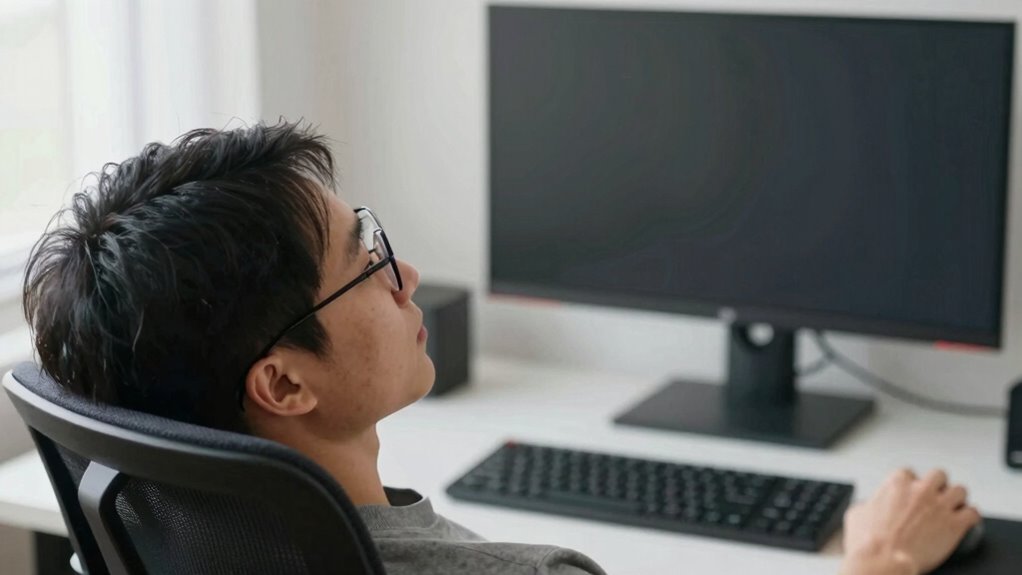
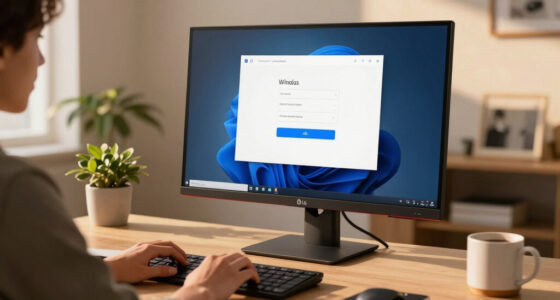
If you’re experiencing eye strain but aren’t ready to replace your monitor, there are plenty of simple adjustments you can make to ease your discomfort. One of the most common causes of eye fatigue is prolonged exposure to blue light emitted by screens. Blue light penetrates deep into your eyes and can cause digital eye strain, headaches, and disrupted sleep patterns. To combat this, consider enabling blue light filters or using glasses with blue light blocking lenses. Many devices now offer built-in settings or apps that adjust the screen’s color temperature, reducing blue light exposure during long work sessions. These small changes can make a noticeable difference in how your eyes feel at the end of the day.
Reducing blue light exposure can significantly lessen eye strain and improve sleep during long screen sessions.
In addition to managing blue light, adopting ergonomic tips can markedly improve your comfort. Proper ergonomics involves adjusting your workspace to support your body and reduce strain. Start by positioning your monitor so that the top of the screen is at eye level. This prevents you from tilting your head up or down constantly, which can cause neck and eye strain. Keep the monitor about an arm’s length away from your face; if it’s too close, your eyes work harder to focus, leading to fatigue. Ensure your chair provides good lumbar support, and your feet are flat on the ground, maintaining a natural posture. Being aware of contrast ratio and how it impacts image clarity can also help you adjust your display to reduce eye fatigue, especially in dark environments. An optimal contrast ratio can significantly improve visual comfort and clarity. Additionally, adjusting screen brightness to match your ambient lighting can help minimize strain, especially in dim settings. Incorporating ambient lighting into your workspace can further reduce glare and create a more comfortable visual environment.
Lighting also plays an essential role in minimizing eye discomfort. Avoid glare on your screen by positioning your monitor away from windows or bright lights. Use curtains or blinds to diffuse sunlight, and consider adding an adjustable desk lamp with warm lighting to create a balanced environment. When the ambient light is well managed, your eyes won’t have to constantly adapt between bright and dark areas, easing the strain. Additionally, incorporating proper lighting into your workspace can help reduce glare and improve overall comfort. Furthermore, taking into account the lighting conditions of your workspace can help you make more tailored adjustments for optimal visual comfort. Regularly updating your workspace lighting setup can also prevent long-term eye strain and fatigue.
Products Worth Considering

Samsung Odyssey G4 25-inch FHD Gaming Monitor

LG UltraGear 34GX90SA-W 34-inch WQHD Curved OLED Gaming Monitor

LG UltraGear 32GX850A-B 32-inch 4K UHD Glossy OLED Gaming Monitor
As an affiliate, we earn on qualifying purchases.
Frequently Asked Questions
Can Eye Exercises Help Reduce Eye Strain?
Yes, eye exercises can help reduce eye strain. Vision therapy often includes specific eye relaxation techniques that strengthen eye muscles and improve focus. Regularly practicing these exercises, like blinking frequently or focusing on distant objects, can ease discomfort caused by prolonged screen time. Incorporating eye exercises into your daily routine supports eye health, reduces fatigue, and promotes clearer vision without needing to replace your monitor.
Are Blue Light Glasses Effective for Eye Relief?
Yes, blue light glasses can be effective for eye relief. They help filter blue light emitted from screens, reducing eye strain and discomfort during prolonged use. When you wear blue light glasses, you may notice less fatigue and fewer headaches. While they aren’t a cure-all, many find them beneficial for protecting their eyes, especially if you spend hours in front of digital devices daily.
How Does Proper Lighting Affect Eye Comfort?
Proper lighting greatly boosts eye comfort; in fact, poor ambient illumination can cause up to 30% more eye strain. You should aim for balanced ambient illumination that matches your screen brightness. Reduce glare by positioning your monitor away from windows and light sources. Effective glare reduction and appropriate ambient illumination help prevent eye fatigue, making your viewing experience more comfortable and less tiring throughout the day.
Does Blinking Frequently Prevent Eye Fatigue?
Yes, blinking frequently helps prevent eye fatigue by maintaining proper eye lubrication. When you blink more often, you spread tears evenly across your eyes, reducing dryness and irritation. This habit keeps your eyes moist and comfortable, especially during long screen sessions. Make a conscious effort to blink regularly, and consider using the 20-20-20 rule to give your eyes a break, further reducing eye strain and fatigue.
Can Dietary Changes Improve Eye Health?
Imagine your eyes as a delicate garden, thriving with proper nourishment. Yes, dietary changes can improve eye health. Incorporate nutritional supplements rich in vitamins A, C, and E, which nourish your eyes, and maintain good hydration habits to prevent dryness and fatigue. Staying hydrated and eating nutrient-rich foods supports overall eye function. You’ll notice less strain and clearer vision, making your daily screen time more comfortable and less taxing.
Conclusion
So, before rushing out to replace your monitor, try these simple tips—adjust your lighting, take regular breaks, and tweak your display settings. Interestingly, some experts suggest that blue light filters might not substantially reduce eye strain, but they can still provide relief for many users. Remember, small changes often make a big difference. By being mindful of your habits, you can protect your eyes without investing in new tech, proving that sometimes, simplicity truly is key.