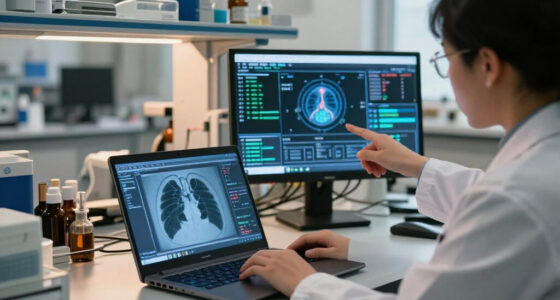
📊 Full opportunity report: New Health Signal: Viral Therapy Stops Pancreatic Cancer on IdeaNavigator AI — validation score, market gap, and execution plan.

Get the latest gadgets delivered free with Prime
- Fast, free delivery on millions of items
- Prime Video, Amazon Music and more included
- Member-only deals all year
TL;DR

The material describes a proposed health-signal monitoring service and repeats a claim that virus injections halted pancreatic cancer in three patients. It supplies no clinical study, patient details, treatment information or independent reporting to verify that claim, so it cannot establish that the therapy worked or that cancer was stopped.
A business-idea brief proposes a subscription monitor for consumer-health and food-safety professionals, using the claim that virus injections halted pancreatic cancer in three patients as an example of a signal the service might flag. The brief offers no study, clinical records or named medical source for that claim, so it does not establish that the treatment stopped cancer or that the reported cases occurred as described.
The proposed product would watch Hacker News and similar feeds for health, safety and contaminant findings, then filter them for a safety or compliance lead at a consumer-health or food brand. Its intended output is a short brief describing what changed, why it may matter and what action to consider. The stated business model is a subscription for professionals who want an early, role-specific read rather than a general roundup.
The idea brief says Hacker News surfaced the pancreatic-cancer item with a signal score of 88 out of 100. It does not explain how that score was calculated, what period it covers or what comparison it uses. The score is therefore a feature of the proposed monitoring concept, not evidence about the treatment or its medical results.
To test demand, the brief suggests sending the pancreatic-cancer item and two other health or safety findings to five people in the intended job roles, then checking whether any changes a decision or forwards the material. That is a proposed validation exercise; no interviews, customer responses, purchases or decisions are reported.
A viral cancer claim needs verification
A business brief proposes a subscription monitor for health and food-safety professionals. Its example claim that virus injections halted pancreatic cancer in three patients is not supported by clinical evidence in the material provided.
What the service proposes
It would filter scattered findings into short, role-specific briefs for consumer-health and food-brand professionals.
Collect health, safety and contaminant findings from Hacker News and similar sources.
Identify developments that may matter to safety or compliance leads.
Summarize what changed, why it may matter and what action to consider.
What the cancer claim lacks
The brief provides no basis to assess whether the reported cases occurred as described or whether treatment worked.
No clinical record
No study, publication, trial registration or named medical source is given.
No treatment details
The virus, dosage, other therapies and patient details are not provided.
“Halted” is undefined
There is no outcome measure, follow-up period or independent review.
A small proposed demand test
The idea brief suggests sharing three findings with five people in target roles.
Why the Medical Claim Needs Verification
Health and safety professionals may need to respond quickly to credible findings, but a fast-moving item is not automatically a reliable or relevant one. A monitor that passes along a dramatic medical claim without checking its provenance could spread misinformation or distract staff from evidence that directly affects their products, customers or regulatory duties. The proposed service would need to distinguish verified clinical evidence from online discussion and unconfirmed reporting.
The cancer-treatment claim also has significance beyond the business proposal because readers could mistake its wording for proof of a medical breakthrough. No treatment details, patient outcomes or clinical evidence appear in the brief. It does not say whether the reported patients were part of a trial, how cancer status was measured, how long any response lasted, or whether other treatments were used. No conclusion about efficacy or safety can be drawn from the information provided.
Products Worth Considering

Amazon Kindle Paperwhite (2024), 16 GB, 7-inch Display, Black

Samsung Odyssey G55C 32-Inch QHD Curved Gaming Monitor

Bose QuietComfort Ultra Headphones Gen 1, Lunar Blue
As an affiliate, we earn on qualifying purchases.
The Proposed Signal-Monitoring Service
The brief frames the opportunity as a workflow problem: relevant health, safety and contaminant information is scattered across news, forums and filings, making it harder for compliance staff to identify developments that affect their work. The proposed monitor would collect items from Hacker News and similar feeds, apply a role-specific filter and produce a concise decision brief.
Its suggested first test is deliberately small: provide three findings to five prospective users and observe whether they share the brief or say it changes a decision. That would offer early feedback on usefulness and user behavior, but would not by itself establish that a paid market exists or that the monitoring system can accurately identify significant developments. The brief does not describe a working product, validated filtering method, existing customers or completed test.
What the Patient Claim Does Not Establish
The central medical claim remains unverified in the material provided. It gives no publication, hospital, trial registration, clinician, treatment name, virus type, dosage, patient characteristics or follow-up period. It also does not define what “halted” means: the wording could refer to a temporary response, a change in tumor growth, or another outcome, but the brief supplies no basis to determine that.
It is also unclear when the alleged treatment occurred, where the cases were reported, and whether the three patients received other therapies. There is no information about adverse effects or whether any outcomes were independently reviewed. The 88/100 score has no stated methodology or comparison baseline, and no evidence shows that the suggested monitoring concept has been built or tested with prospective users.
Evidence and User Testing Needed
Before the cancer item can be treated as a medical development, it would need to be checked against an identifiable clinical or institutional record and supported by clear details about the treatment, patients, outcomes and follow-up. Until those details are available, the claim should be presented as an unverified report, not as evidence that pancreatic cancer was stopped by a virus injection.
For the product idea, the next step proposed in the brief is to deliver three relevant findings to five people who match the target roles and record whether the information affects a decision or is passed to a colleague. Any such test would need to assess not just speed and interest but also accuracy, source quality and role relevance. The brief does not provide a date for that test or report any results.
Source: IdeaNavigator AI
Key Questions
Is there evidence here that a virus injection stopped pancreatic cancer?
No clinical evidence is provided. The brief gives no study, medical record, treatment details or independent account to verify the claim.
What is the proposed product?
A subscription monitoring service that would track health, safety and contaminant findings, filter them for consumer-health and food-brand compliance staff, and summarize what changed and why it may matter.
What does the 88/100 score mean?
The brief says Hacker News surfaced the item with that score, but it does not explain the scoring method, time window or comparison baseline. It should not be read as a measure of medical reliability.
Has the monitoring service been tested with customers?
No test results or customers are reported. The brief proposes sharing three findings with five prospective users and measuring whether the information changes a decision or is forwarded.
Source: IdeaNavigator AI