
TL;DR

Get the latest gadgets delivered free — and shop member deals
- Fast, free delivery on millions of items
- Access to Prime Big Deal Days deals on October 6–7
- Prime Video, Amazon Music and more included
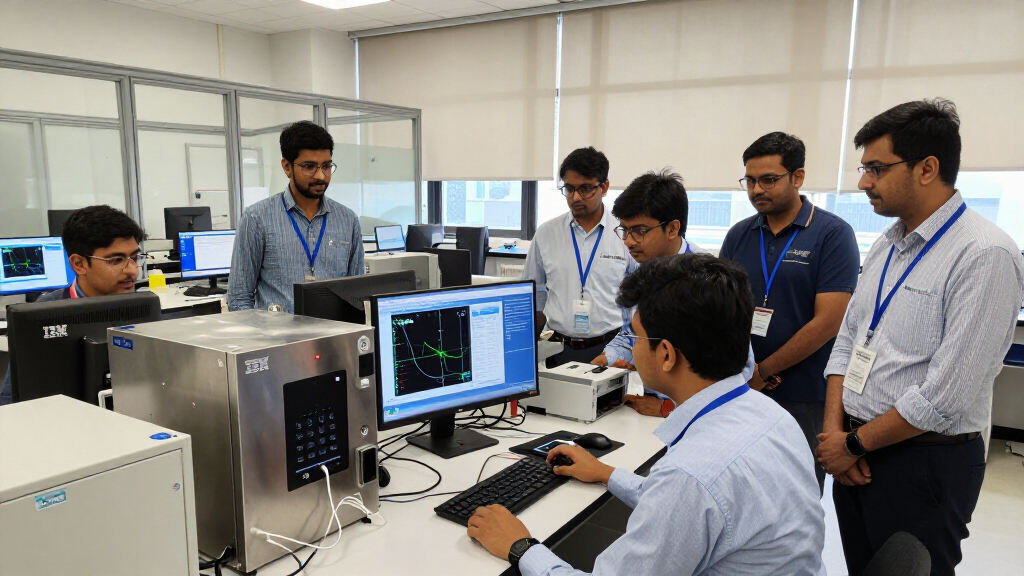
IBM announced expanded research collaborations with IIT Bombay and the Indian Institute of Science, covering AI and quantum computing. The work includes Indic-language and multimodal AI, agentic systems, energy-focused models and algorithms linking quantum computing with high-performance computing; timelines, funding and measurable results were not disclosed.
IBM is expanding research collaborations with IIT Bombay and the Indian Institute of Science (IISc), adding work on agentic AI, Indic-language models, energy analytics and quantum-computing algorithms. The announcement extends partnerships that began in 2018 with IIT Bombay and 2021 with IISc, but does not give project schedules, budgets or specific deliverables.
The IIT Bombay collaboration will focus on adapting sovereign and Indic-language models, developing multimodal AI and improving AI infrastructure and knowledge retrieval. IBM says the research will also examine AI tools for software-programming education and human-AI collaboration, along with more efficient runtimes and distributed inference for large language models. These are stated research areas; the announcement does not identify a product release or report completed performance results.
With IISc, the work will cover agentic systems, AI applications and quantum computing. IBM describes plans for lightweight time-series foundation models from its Granite model family for energy uses such as forecasting, anomaly detection, load disaggregation and optimization. The partners also plan to study how quantum and high-performance computing can be orchestrated together, including algorithms intended to improve quantum subspace iteration methods.
The announcement presents both partnerships as continuing research programs involving IBM researchers, faculty and students. It identifies broad technical objectives, including hybrid-cloud operations and scientific and industry applications, but provides no named research teams, publication schedule, funding figures or criteria for evaluating progress.
Research Targets Across Indian AI Needs
The expanded agenda links advanced computing research to several practical areas: Indian-language access, programming education, enterprise knowledge search and energy-system analysis. If the work produces effective methods, it could help researchers and organizations address language coverage and infrastructure demands that are specific to their applications. Those outcomes remain aims rather than demonstrated results in the announcement.
The quantum-HPC effort matters because scientific workloads may require coordination between quantum processors and classical computing resources. Research into algorithms and workflows could contribute to that field, but the announcement does not claim that the proposed methods have already delivered faster discoveries or operational advantages. The immediate development is the partners’ expanded research scope, not a validated technology or deployment.
The partnerships also connect a global technology company with two Indian research institutions on questions related to sovereign AI and local language capabilities. That may support research shaped by Indian use cases. The announcement does not specify how sovereignty will be defined, where models or data will be hosted, or whether the research will lead to systems available for public or commercial use.
Indic language AI development tools
As an affiliate, we earn on qualifying purchases.
As an affiliate, we earn on qualifying purchases.
Partnerships Built Since 2018
IBM says its collaboration with IIT Bombay began in 2018, while its work with IISc began in 2021. The new announcement describes expanded phases of those existing relationships, rather than the creation of two entirely new partnerships. It says the institutions have previously worked across AI, hybrid cloud, distributed systems and quantum computing.
The research areas reflect different emphases within the expanded programs. IIT Bombay’s agenda highlights language, multimodal systems, education and enterprise knowledge retrieval. IISc’s includes agentic workflows, energy-related models and quantum-classical computing. IBM frames both efforts as combining its research capabilities in AI, hybrid cloud and quantum computing with academic expertise, while offering few details about how projects will be governed or staffed.
“The next wave of computing will be shaped by advances in agentic AI, sovereign AI, and quantum computing.”
— Dr. Amith Singhee, director of IBM Research India and CTO of IBM India and South Asia
multimodal AI software development kits
As an affiliate, we earn on qualifying purchases.
As an affiliate, we earn on qualifying purchases.
Timelines and Deliverables Not Specified
The announcement does not state how much funding IBM or the institutions will commit, how long the expanded phases will run, or which specific milestones will mark progress. It also does not say when research findings, datasets, software or models might be published or released.
There are no benchmark results or independent evaluations in the source material. The described benefits—including more efficient AI inference, improved energy analysis and advances in quantum-HPC workflows—are research goals, not confirmed performance gains. It is also unclear which projects will involve students, how access to resulting systems will be arranged, and whether any work will move into commercial deployment.
quantum computing hardware for research
As an affiliate, we earn on qualifying purchases.
As an affiliate, we earn on qualifying purchases.
Research Progress and Public Results
The next developments will depend on the partners’ research activity and any later disclosures about project teams, timelines or results. Readers can look for papers, benchmark datasets and technical demonstrations that clarify whether the planned language, energy and quantum-computing work has produced measurable findings.
IBM and the institutions have not announced a date for those updates or a product launch tied to the collaborations. Until further details emerge, the confirmed development is the expanded research agenda and the continuation of partnerships established in 2018 and 2021.
high-performance computing clusters
As an affiliate, we earn on qualifying purchases.
As an affiliate, we earn on qualifying purchases.
Key Questions
What did IBM announce?
IBM announced expanded research collaborations with IIT Bombay and IISc, focused on AI, hybrid-cloud systems and quantum computing.
What will the IIT Bombay collaboration study?
Its planned areas include Indic-language and sovereign AI, multimodal systems, programming education, knowledge retrieval and AI infrastructure.
What is included in the IISc research agenda?
The IISc program covers agentic systems, time-series AI models for energy applications and algorithms and workflows connecting quantum computing with high-performance computing.
Have the collaborations produced new products or proven results?
The announcement describes research plans, not a product launch or validated performance results. It does not provide benchmarks, publication dates or deployment plans.
When did the existing partnerships begin?
IBM says its collaboration with IIT Bombay began in 2018 and its collaboration with IISc began in 2021.
Source: rss
Fall Picks
fall essentials
As an affiliate, we earn on qualifying purchases.