
TL;DR
Thorsten Meyer AI published a decision guide arguing that air cooling is the better default for most 24/7 AI inference workstations because it has fewer failure points and lower long-term cost. The guide says 360mm AIO liquid cooling still makes sense for very hot CPUs, compact cases or warm rooms.
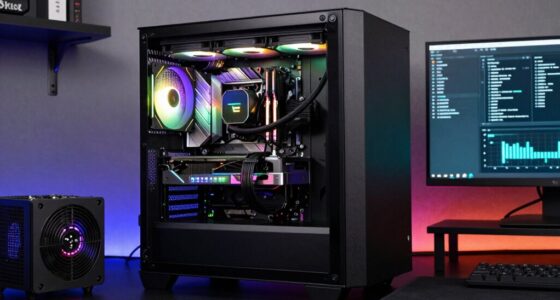
Thorsten Meyer AI has published a new decision guide for 24/7 inference rigs that recommends air cooling as the default for most always-on AI workstations, while reserving 360mm all-in-one liquid coolers for hotter CPUs, space-constrained cases and warm rooms.
The guide argues that cooling decisions for AI workstations should be judged less by short gaming benchmarks and more by reliability under sustained, unattended use. According to Thorsten Meyer AI, an air cooler has one main moving part, the fan, while an AIO liquid cooler adds a pump that becomes a single point of failure over time.
The site says a top dual-tower air cooler can handle many mainstream and high-end CPUs under sustained load, with the guide citing typical 2026 figures of about 250 watts for strong air coolers and about 360 watts for 360mm AIOs. Those numbers are presented as typical ranges that vary by chip, case airflow, mounting quality and room temperature.
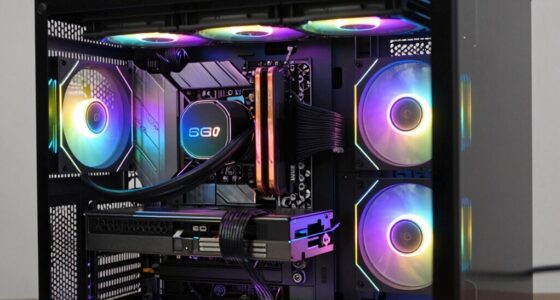
The recommendation is not a blanket rejection of liquid cooling. The guide says users should choose a 360mm AIO when a CPU is too hot for air under sustained all-core load, when a large tower cooler will not fit, when RAM clearance is tight or when moving heat out through a radiator is useful in a warm, non-climate-controlled room.
Why It Matters
The guidance matters because AI inference rigs are often built to run for hours or days at a time, sometimes unattended. A cooler that performs well in a short benchmark may not be the lowest-risk choice for a machine expected to stay online for years.
The cost issue is also material for workstation builders. Thorsten Meyer AI says AIOs can cost two to three times more over their service life once replacement is factored in, while an air cooler can often be kept in service by replacing a fan. For readers building local AI systems, the tradeoff is less about peak temperature and more about uptime, noise, serviceability and total ownership cost.
high airflow CPU air cooler
As an affiliate, we earn on qualifying purchases.
As an affiliate, we earn on qualifying purchases.
Background
Most consumer cooling comparisons are written around gaming PCs, where short bursts, peak temperatures and benchmark rankings dominate the decision. Thorsten Meyer AI frames inference workstations differently because sustained compute loads place cooling hardware under a steadier duty cycle.
The guide sits alongside the site’s broader AI workstation coverage, including material on reducing heat and noise in high-power systems and separate product recommendations for quiet CPU coolers. The new piece focuses on choosing the cooling category rather than naming a single part.
“For set-and-forget systems, air remains the safest choice.”
— Thorsten Meyer AI guide
“The question isn’t which cools better — it’s which one still works in three years without you thinking about it.”
— Thorsten Meyer AI guide
“Reach for a 360mm AIO when your CPU is too hot for air under sustained all-core load.”
— Thorsten Meyer AI guide
360mm all-in-one liquid CPU cooler
As an affiliate, we earn on qualifying purchases.
As an affiliate, we earn on qualifying purchases.
What Remains Unclear
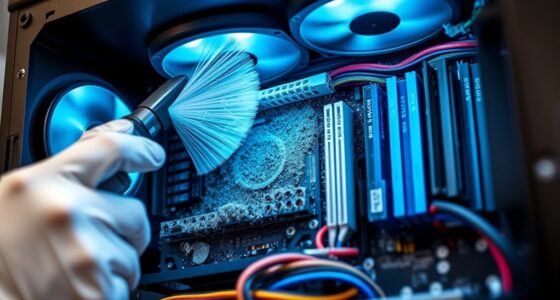
The exact outcome for any one rig remains configuration-dependent. CPU model, power limits, case airflow, radiator placement, ambient temperature, dust, fan curves and workload behavior can change the result. The guide also discloses affiliate links and says readers should verify pricing and compatibility before buying.
quiet CPU cooling fan
As an affiliate, we earn on qualifying purchases.
As an affiliate, we earn on qualifying purchases.
What’s Next
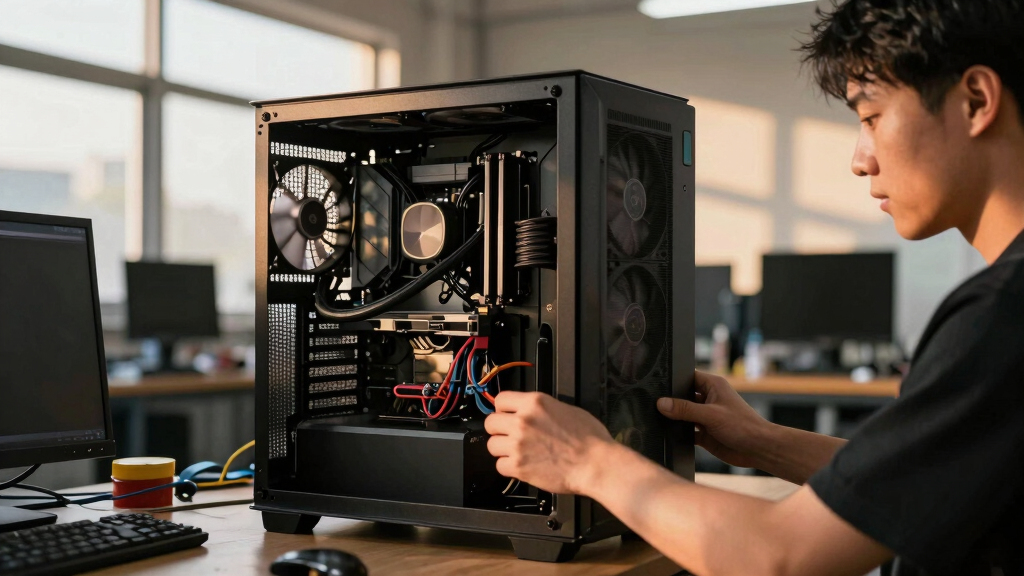
Readers planning an inference build should first check whether a large dual-tower air cooler fits their case, then estimate sustained CPU heat under their workload and room conditions. If air fits and the CPU is not one of the hottest all-core loads, the guide points to air cooling; if not, a 360mm AIO becomes the next category to compare.
AI inference workstation cooling
As an affiliate, we earn on qualifying purchases.
As an affiliate, we earn on qualifying purchases.
Key Questions
Is air cooling better than liquid cooling for a 24/7 inference rig?
For most builds, Thorsten Meyer AI says yes. The guide recommends air cooling as the default because it is simpler, cheaper and easier to service over years of always-on use.
When should a builder choose a 360mm AIO?
The guide points to three main cases: a very hot CPU under sustained all-core load, a case that cannot fit a large air tower or a warm room where radiator heat exhaust is useful.
What is the main reliability concern with AIO liquid coolers?
According to the guide, the pump is the main risk because it is a single point of failure. When it fails in a sealed AIO, the full cooler is usually replaced.
Do the cooling numbers apply to every workstation?
No. The guide presents figures as typical 2026 ranges. Real performance depends on the CPU, mounting, airflow, case layout, fan settings and room temperature.
Source: Thorsten Meyer AI