
TL;DR

Get the latest gadgets delivered free with Prime
- Fast, free delivery on millions of items
- Prime Video, Amazon Music and more included
- Member-only deals all year
Tesla’s Solar Roof project is effectively on hold, with the company ceasing new installations and marketing. Instead, Tesla is prioritizing traditional solar panels due to deployment challenges and customer service issues. The shift signals a major change in Tesla’s renewable energy strategy.
Tesla has largely ceased new Solar Roof installations and marketing efforts, signaling the end of its ambitious residential solar tile project and a shift toward conventional solar panels.
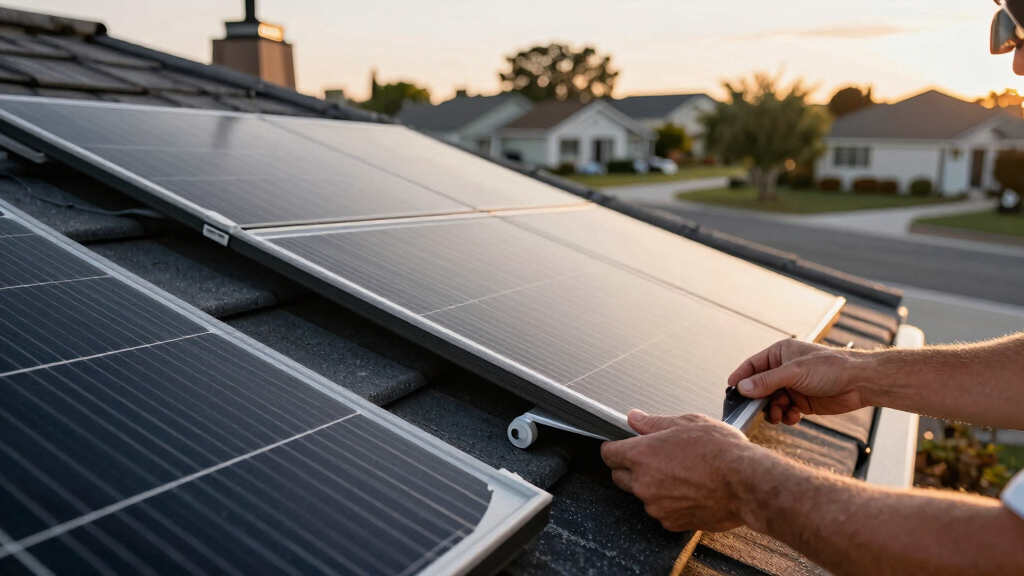
Since its launch in 2016, Tesla’s Solar Roof was intended to replace traditional roofing with integrated solar tiles. Despite Elon Musk’s initial promise of high-volume production and cost competitiveness, Tesla has installed only about 3,000 systems in total, far below its targets. The company stopped reporting solar deployment figures in early 2024, and recent actions indicate a strategic retreat from Solar Roof. Tesla now directs customers to third-party installers, many of whom report delays, service issues, and limited support. Customer complaints about underperformance, high costs, and poor service are widespread. Additionally, Tesla’s own marketing has largely disappeared from social media, and the company’s recent earnings calls feature no updates on Solar Roof projects. Instead, Tesla introduced a new residential solar panel product in early 2026, emphasizing traditional panels with advanced optimization, effectively replacing the Solar Roof as its flagship residential solar offering.
Why It Matters
This shift marks a major change in Tesla’s renewable energy strategy, highlighting the challenges of integrating solar tiles into mass-market residential use. It also impacts consumers who invested in Solar Roof systems, many of whom face unresolved service issues and limited support. The move reflects broader industry difficulties in deploying innovative solar roofing technology at scale and raises questions about Tesla’s future plans for residential solar solutions.
Products Worth Considering

Amazon Kindle Paperwhite (12th Generation, 2024), 16 GB, 7-inch Display, Black

LG UltraGear 32GS60QC-B 32-inch Curved QHD Gaming Monitor (180Hz, 1ms, 1000R, AMD FreeSync, HDR10)

Logitech MX Mechanical Wireless Illuminated Keyboard, Tactile Quiet, Graphite
As an affiliate, we earn on qualifying purchases.
Background
Tesla announced the Solar Roof in 2016, aiming to revolutionize home solar with aesthetically integrated tiles. Despite Musk’s ambitious targets and Tesla’s acquisition of SolarCity, deployment lagged significantly behind expectations. The company’s solar business has faced production delays, high costs, and customer service issues. In recent years, Tesla’s focus has shifted toward traditional solar panels and energy storage products, with the Solar Roof gradually fading from public view. The company’s decision to stop reporting deployment figures and to replace Solar Roof marketing with standard panels signals a strategic pivot after nearly a decade of unfulfilled promises.
“Tesla has shifted its focus to more scalable and cost-effective solar solutions, including traditional panels and energy storage products.”
— Tesla spokesperson
“Tesla’s Solar Roof deployment has fallen drastically short of initial targets, and the company appears to be deprioritizing the product.”
— Industry analyst at Wood Mackenzie
“My Solar Roof system underperforms and Tesla has been unresponsive for months. It feels like the product is on life support.”
— Tesla customer on Reddit
What Remains Unclear
It is not yet clear whether Tesla will completely phase out Solar Roof technology or develop new versions in the future. The company’s long-term plans for residential solar remain ambiguous, and further official statements are awaited.
What’s Next
Next steps include Tesla’s rollout of the new TSP-420 solar panel with advanced optimization features, which may serve as the company’s primary residential solar offering moving forward. Monitoring Tesla’s earnings calls and official updates will clarify whether the Solar Roof will be revived or permanently phased out.
Key Questions
Why did Tesla stop producing Solar Roofs?
Tesla cited manufacturing challenges, high costs, and poor sales performance as reasons for ceasing new Solar Roof installations and shifting focus to more traditional solar panels.
Will Tesla ever restart Solar Roof production?
It is currently unknown. Tesla has not announced any plans to restart Solar Roof production, and recent company focus suggests it may be phased out permanently.
How does the new Tesla solar panel compare to Solar Roof?
The new TSP-420 panel features advanced power optimization technology, offering improved performance on existing roofs, but does not aim to replace the integrated aesthetic of Solar Roof tiles.
What does this mean for existing Solar Roof owners?
Many owners face ongoing service issues and limited support, with Tesla no longer actively promoting or servicing Solar Roof systems. Support and performance may be inconsistent.