
TL;DR

Get the latest gadgets delivered free with Prime
- Fast, free delivery on millions of items
- Prime Video, Amazon Music and more included
- Member-only deals all year
A post by Bosscher describes using a $10 OpenStick as a low-power, passively cooled Debian homelab. The setup runs services for DNS filtering, monitoring, RSS, bookmarks and messaging-based administration, though the reported memory use and performance are the author’s own observations.
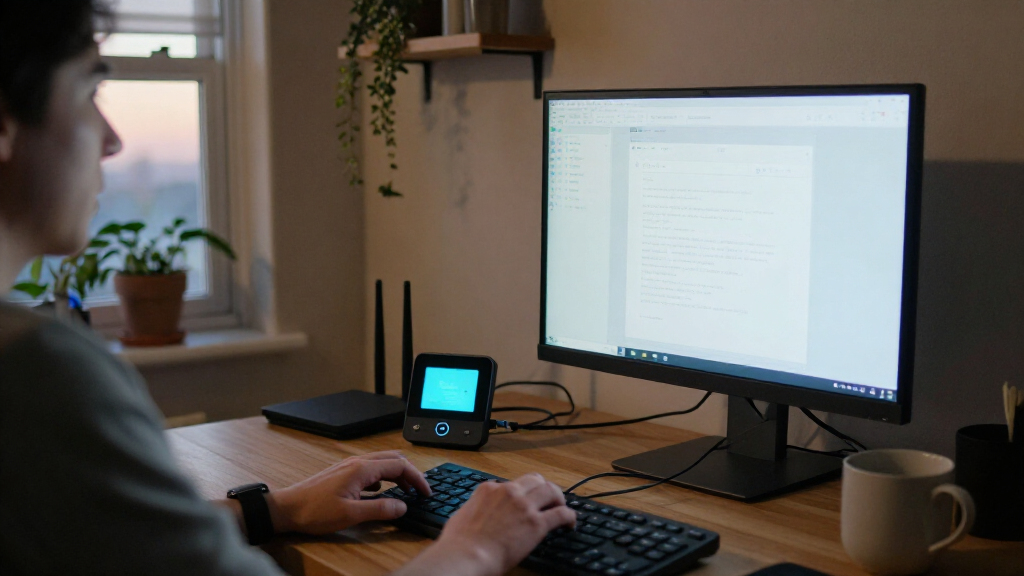
Bosscher’s report describes running a collection of self-hosted services on a $10 OpenStick, a small, passively cooled device with 512 MB of RAM and a 1 GHz quad-core ARM processor. The setup uses Debian and lightweight software for DNS filtering, server monitoring, RSS reading and other tasks, offering an example of what a low-cost, low-power homelab can do.
According to the report, the OpenStick has about 450 MB of usable RAM, 4 GB of eMMC storage, Wi-Fi and a 4G modem with GPS. Bosscher says installation takes some work, but the device runs Debian once configured, allowing the use of services managed with systemd and containers run through Podman. It is passively cooled, so it operates without a fan.
The listed services include AdGuard Home for DNS-level domain blocking, Beszel for resource monitoring and alerts, Gatus for checking whether services are reachable, and Dozzle for viewing container logs. Bosscher also runs Fusion as an RSS reader and Shiori to manage and archive bookmarks. The report gives approximate memory figures for several of these programs, including 20 MB for Beszel’s agent and server combined and 22 MB for Fusion.
Bosscher also uses CastSponsorSkip with Google Cast devices and Cloudflare Tunnel to make services reachable without opening ports on the home network. For remote administration, the author runs the Zeroclaw AI agent harness, which can communicate through Telegram. Bosscher says Zeroclaw uses about 3 MB of memory while idle and has access to the OpenStick itself, but not to other systems.
Small Hardware, Practical Services
The report offers a concrete example of self-hosting on modest hardware, rather than relying on a full-size server or a more complex cluster. At the listed purchase price, the device may be an accessible way to experiment with Linux services, containers and home-network tools. Its low memory and storage capacity also make software footprint and service selection practical constraints, not abstract efficiency goals.
The account is useful as a personal configuration, not a controlled performance test or a guarantee that every installation will behave the same way. The author’s figures show that several lightweight applications can coexist on the device, but readers would need to account for their own workload, network setup and software versions before relying on it for essential services.
Products Worth Considering

Jackery Explorer 1000 v2 Portable Power Station, 1070Wh, 1500W

Apple iPad 11-inch with A16 Chip, 512GB, Wi-Fi 6, and Apple Pencil (USB-C) — Blue

Apple iPad Pro 12.9-inch (2017), 512GB Wi-Fi, Space Gray
As an affiliate, we earn on qualifying purchases.
From Novelty to Debian Server
Bosscher says the OpenStick was bought on a whim as a novelty for $10, including shipping. The report frames its limited specifications as a reason to choose lightweight applications. The hardware is not presented as a replacement for a more powerful server; rather, it provides a small platform for selected services that do not demand much memory or processing capacity.
The software choices reflect that approach. Bosscher contrasts Zeroclaw with a prior experience running OpenClaw on a Kubernetes cluster, saying OpenClaw used more than 1 GB of memory and that updates disrupted existing workflows. The report also describes Beszel as a simpler alternative to running a Grafana monitoring stack. These are the author’s experiences and preferences, rather than independent comparisons.
“For 10 dollars you basically get a home server with minimal power usage and zero noise!”
— Bosscher, describing the OpenStick
Limits of the Reported Setup
The source does not provide independent benchmarks, a measured power draw, long-term uptime figures or a full breakdown of storage use. Memory figures are the author’s estimates for specific services and configurations, and may vary with versions, settings and workload. The report also does not establish that the OpenStick is available at the same price to other buyers.
Bosscher says AdGuard Home blocked 60% of DNS queries after adding blocklists, but the report does not specify the measurement period or provide a comparison baseline. That figure describes the author’s network and should not be read as a general rate for DNS filtering. DNS blocking also cannot stop every unwanted connection; the author notes that a firewall is needed for broader control.
Security and reliability depend on configuration. The author says Cloudflare Tunnel avoids exposing ports, while acknowledging a privacy trade-off, and describes giving Zeroclaw shell-level access to the device. The source does not detail a formal security review or explain how the setup is backed up and recovered if the device fails.
Further Software and Testing
Bosscher says a future Zeroclaw version may add rich message support for Telegram, with the author’s contribution available to track through a pull request. The source does not give a release date. For readers considering a similar setup, the report points toward checking each service’s requirements, using trusted software sources and limiting permissions, especially for tools with shell access.
The account leaves open how the device performs over extended periods or under heavier use. More detail on actual power consumption, storage headroom and uptime would help readers judge whether this low-cost configuration suits their own needs.
Key Questions
What hardware does the $10 OpenStick have?
Bosscher lists 512 MB of RAM, about 450 MB usable, four 1 GHz ARM Cortex-A53 cores, 4 GB of eMMC storage, Wi-Fi, a 4G modem and GPS. The device is passively cooled.
What services does Bosscher run on it?
The report names AdGuard Home, Beszel, Dozzle, Gatus, Fusion, Shiori, Cloudflare Tunnel, CastSponsorSkip and Zeroclaw. The services cover tasks such as DNS filtering, monitoring, container logs, RSS, bookmarks and remote administration.
Does the setup block 60% of all unwanted internet traffic?
No. Bosscher reports that 60% of DNS queries were blocked on the author’s network after adding blocklists. The source gives no measurement window or comparison baseline, and DNS filtering does not block every unwanted connection.
Is Zeroclaw given access to other devices?
Bosscher says Zeroclaw has access to the OpenStick itself, effectively as a root shell, but nothing beyond it. The report presents this as the author’s choice, not a general security recommendation.
Source: blog.bosscher.ch