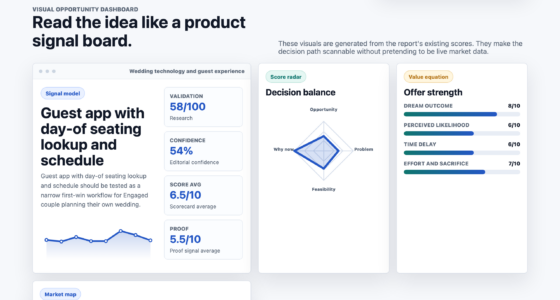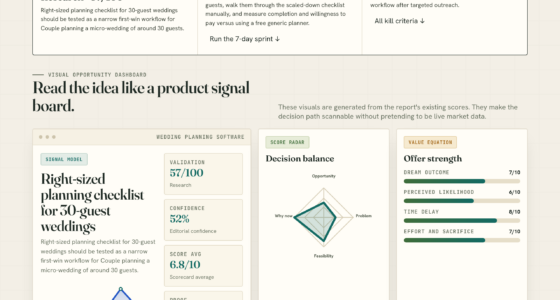

📊 Full opportunity report: The New Age Of Wedding Planning: AI As Your Personal Coordinator on IdeaNavigator AI — validation score, market gap, and execution plan.

Get the latest gadgets delivered free with Prime
- Fast, free delivery on millions of items
- Prime Video, Amazon Music and more included
- Member-only deals all year
TL;DR
AI wedding planning tools are being tested as a way for engaged couples to manage their wedding without professional planners. Early pilots show promise in automating vendor comparisons and timeline management, potentially transforming the industry.
AI-driven wedding planning tools are being tested as a new option for engaged couples seeking to organize their weddings without hiring professional planners, marking a potential shift in the industry. These tools aim to automate tasks such as vendor outreach, quote comparison, and budget tracking, providing couples with a personalized digital assistant during the planning process.
According to sources familiar with the initiative, the AI planning coordinator is designed specifically for couples who opt to skip traditional wedding planners, which typically cost around $5,000. The system is intended to handle approximately 200 decisions over a six-month planning period, including drafting vendor inquiries, comparing quotes, and flagging out-of-range pricing. It also connects to bank data to monitor budget adherence in real-time.
The prototype, currently in pilot testing, generates weekly timelines based on the wedding date and venue, and produces draft emails in the couple’s voice. Early results indicate that the AI tool can identify cost discrepancies and suggest more affordable options, potentially saving couples money and reducing planning stress. The initial pilot involves twenty couples, with success measured by documented savings and willingness-to-pay surveys.
Implications for the Wedding Industry
This development could significantly alter the wedding planning landscape by providing an accessible, cost-effective alternative to professional planners. For couples, especially those on a tight budget or seeking a more hands-on approach, AI tools could simplify decision-making and reduce the time commitment. Industry observers note that if these tools prove effective at scale, they could challenge the traditional market, which relies heavily on human expertise and high fees. However, the long-term impact on wedding planners and the quality of personalized service remains uncertain.
As an affiliate, we earn on qualifying purchases.
Emergence of AI in Wedding Planning
Over the past decade, wedding planning software has evolved from simple checklist apps to comprehensive platforms. The recent advent of large language models (LLMs) has enabled more sophisticated automation, including drafting communications and analyzing vendor quotes. The current push toward AI-driven coordination stems from the need to streamline planning, reduce costs, and address the complex decision layer that couples often find overwhelming. Pilot programs are now testing these AI tools in real-world scenarios, with early feedback indicating potential for broader adoption.
“AI planning coordinators could democratize wedding planning by making it more affordable and less stressful for couples.”
— an anonymous researcher
As an affiliate, we earn on qualifying purchases.
Unanswered Questions About AI Wedding Planning
It is not yet clear how well the AI tools will perform across diverse wedding styles and regional markets. The pilot results are preliminary, and long-term user satisfaction, the accuracy of vendor quote comparisons, and the system’s ability to handle unexpected planning challenges remain untested. Additionally, the impact on traditional wedding planners and the potential need for regulatory or industry standards are still unknown.
As an affiliate, we earn on qualifying purchases.
Next Steps for AI Wedding Planning Adoption
The ongoing pilot will continue to gather data on cost savings, user experience, and system reliability. If results remain positive, developers plan to expand the program to include more couples and refine features such as personalized vendor matching and integrated payment tracking. Industry observers expect broader market entry within the next year, pending further validation. Meanwhile, traditional planners will monitor these developments for potential competitive threats or integration opportunities.
As an affiliate, we earn on qualifying purchases.
Key Questions
Can AI replace professional wedding planners entirely?
Currently, AI tools are designed to assist couples with specific planning tasks and are not expected to fully replace the personalized service of professional planners in the near term.
How accurate are the AI’s vendor quote comparisons?
Early pilot programs indicate the AI can identify out-of-range quotes and suggest alternatives, but comprehensive accuracy across diverse markets is still being tested.
Will using AI tools reduce wedding planning costs?
Preliminary data suggests that AI assistance can help couples save money by flagging overpriced quotes and optimizing budgets, but final savings depend on individual circumstances.
What are the limitations of current AI wedding planning tools?
Limitations include handling unexpected issues, capturing personal preferences fully, and adapting to regional vendor differences. Long-term reliability is still under evaluation.
When will AI wedding planning tools be widely available?
If pilot programs continue positively, broader availability could occur within the next 12 months, with ongoing improvements based on user feedback.
Source: IdeaNavigator AI
Columbus Day / Indigenous Peoples' Day Picks
long weekend sales
As an affiliate, we earn on qualifying purchases.