
🔍 Read the full analysis: A Look At The Second Brain My AI Agents Share on ThorstenMeyerAI.com

Get the latest gadgets delivered free with Prime
- Fast, free delivery on millions of items
- Prime Video, Amazon Music and more included
- Member-only deals all year
TL;DR
Thorsten Meyer says he built a shared knowledge base that lets his AI agents read and add to the same long-term memory. As of Nov. 21, 2026, it contained 1,278 pages; Meyer reports a 97.4% top-one recall score, though the source does not detail how that measure was independently tested.
Thorsten Meyer has described a shared long-term memory system for the AI agents he runs, built from Markdown files and a Git-tracked index rather than a vector database or cloud service. In an article published Nov. 21, 2026, Meyer said the system held 1,278 pages and had a reported 97.4% top-one recall score, offering a way for multiple agents to draw on the same recorded information instead of starting each session without it.
Meyer calls the system his Second Brain. Its pages are plain text files, with each page holding a cluster of information, such as material about a project or decision. A single file, INDEX.md, lists each memory in one line. Meyer says an agent searches those index lines first, then opens the page that scores best and returns the relevant section along with its source. That lets him inspect the file behind an answer.
Two scripts handle the central operations, according to Meyer. The recall.py script scores index entries without first opening every memory page. The remember.py script adds a new fact by writing its page, its index entry and a log entry together. Meyer says that combined step helps keep the index aligned with the pages and leaves a record of changes. Git stores the files and their history; the system, as described, does not rely on a cloud service.
Meyer reported 1,761 links among the 1,278 pages and 1,363 recalls as of Nov. 21, 2026. He defines top-one recall as how often the first page the system selects is the right one and gives its score as 97.4%. The article also describes nine views for monitoring and managing the collection, including a change log, a page-link explorer, a daily summary and a console for the services and machines involved.
The system addresses a practical limitation of conversational agents: information available in one session may not carry into the next. A shared store could spare users from repeatedly supplying project details, prior decisions and failed approaches, while letting different agents consult the same material. Meyer’s design also puts the stored information in files a person can read and edit, rather than keeping it solely inside a tool-specific memory feature.
That approach makes traceability and portability part of the design. Meyer says each recalled answer identifies its source page, and Git keeps a history of edits. Those features can help an owner check or correct a remembered fact. The trade-off is that the owner must maintain useful pages and a descriptive index. Meyer says the setup is built for one owner, not a team; the article does not establish how it would handle shared permissions, conflicting edits or organizational data controls.
The reported figures provide a snapshot of one person’s system, not evidence that the same results would hold for other users or agent workloads. The 97.4% score may be useful as an internal performance measure, but readers cannot assess it fully without knowing the test set, evaluation method and what counted as a correct first result.
Products Worth Considering
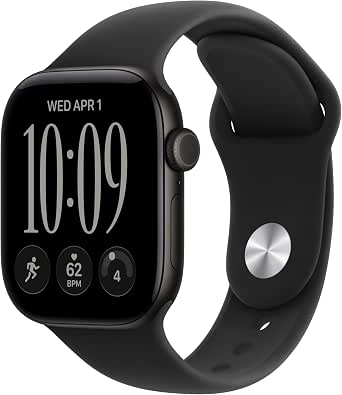
Apple Watch Series 12 GPS 42mm Smartwatch

Jackery Solar Generator 1000 v2 with 200W Solar Panel, 1024Wh LiFePO4 Battery

Logitech MX Mechanical Wireless Illuminated Keyboard, Tactile Quiet, Graphite
As an affiliate, we earn on qualifying purchases.
From Repeated Prompts to Stored Memory
Meyer frames the project around a recurring problem: an agent may be capable within its current context window but lack the user’s prior decisions and terminology when a new session begins. He says some tools provide memory, but he wanted a single store that every agent he runs could access and that he could inspect directly.
His response is a deliberately file-based system. Information is organized into Markdown pages, while the index serves as a compact catalogue for recall. A normal addition updates the page, catalogue and log together. The article describes this as an alternative to a cloud-hosted memory service or vector database, but does not compare its performance or cost with those approaches.
The described interface includes nine views: Map, Brief, Triage, Almanac, Chronicle, Explorer, Live, Desk and Fleet. They cover different tasks, from reviewing newly captured information to viewing links, tracking changes and monitoring services. Meyer says names and personal details in the accompanying video and frames are masked or protected.
““One memory, shared by every agent I run, that I can open and read myself.””
— Thorsten Meyer, describing the system
How the Recall Score Was Measured
The article gives the system’s page, link and recall counts as of Nov. 21, 2026, and reports a 97.4% top-one score. It does not explain the evaluation sample, the number of questions tested, the definition of a correct match beyond the brief description, or whether the score was independently checked. The figure should therefore be treated as Meyer’s reported measure, not an independently verified benchmark.
The description also leaves operational details open. It does not specify how the system handles outdated or contradictory memories, how access is controlled when several agents write to the same files, or how sensitive data is protected beyond the statement that personal information in the video and frames is masked. Meyer says the design is for one owner, so its suitability for teams remains unestablished.
How the System May Develop
Meyer’s article describes the system as it stood on Nov. 21, 2026, but does not announce a release schedule, a public repository or plans to offer it as a service. It also does not name a next performance test or a team-oriented version. Readers should treat the reported figures and features as a snapshot, rather than a commitment about future development.
The next practical questions are whether the system continues to scale as its collection grows and whether its reported recall accuracy holds across new queries and projects. For now, Meyer presents the setup as a personal workflow: agents consult the index, retrieve a source page and can add new information through a single write process.
Key Questions
What is Meyer’s Second Brain?
It is a personal knowledge base that Meyer says he shares with his AI agents. It stores information in Markdown files and uses a central index to help agents find relevant pages.
How do the agents retrieve information?
According to Meyer, a script scores entries in the index first, then opens the best-matching page and returns the relevant section with a source reference. The method is designed to avoid searching every page for each recall.
How large was the system on Nov. 21, 2026?
Meyer reported 1,278 pages, 1,761 links and 1,363 recalls on that date. He also reported a 97.4% top-one recall score, but did not provide enough testing detail for an independent assessment.
Is the system designed for teams?
Not according to Meyer. He describes it as a setup built for one owner and says it requires discipline. The article does not detail team permissions or collaboration safeguards.
Does the system use a cloud service or vector database?
Meyer says it uses plain Markdown files stored in Git, with a text index, rather than a vector database or cloud service. The article does not provide a comparative performance evaluation.
Source: ThorstenMeyerAI.com