
TL;DR

Get the latest gadgets delivered free with Prime
- Fast, free delivery on millions of items
- Prime Video, Amazon Music and more included
- Member-only deals all year
Wall Street is increasingly optimistic about Micron, citing its recent market valuation surge and long-term supply agreements with major AI firms. Analysts see potential for Micron to become a leading player in AI memory chips, similar to Nvidia’s role in GPUs.
Micron, the Boise-based memory chip maker, has experienced a dramatic surge in market valuation, briefly surpassing some of the industry’s giants, driven by investor optimism about its long-term role in AI infrastructure. Wall Street analysts are increasingly comparing Micron to Nvidia, citing its strategic supply agreements and booming demand for memory chips in AI data centers as key factors.
Over the past month, Micron’s stock has soared over 236%, closing at $1,132 per share on Friday, with a market cap near $1.27 trillion. This valuation briefly exceeded that of Meta and Tesla, reflecting strong investor confidence. The surge is largely attributed to the ongoing AI-driven supply crunch for memory chips, including DRAM and NAND, which Micron manufactures.
Recent quarterly earnings confirmed this momentum, with revenue quadrupling year-over-year to $41.45 billion and profits rising from $1.88 billion to $28.2 billion. Micron also forecasted fourth-quarter revenues between $49 billion and $51 billion, signaling confidence in sustained demand. The company highlighted long-term supply agreements with Nvidia, Anthropic, and other major clients, which analysts see as a sign of stability and growth potential.
Wall Street’s enthusiasm is based on the belief that Micron’s strategic partnerships and the persistent AI hardware shortage, dubbed ‘RAMageddon,’ will continue to drive demand into 2027. However, concerns remain about the long-term sustainability of this growth, given the industry’s history of capacity gluts and price fluctuations.
Implications of Micron’s Market Valuation Rise
This development signals a potential shift in the AI hardware supply chain, positioning Micron as a major player alongside Nvidia. If sustained, it could reshape investment strategies and supply dynamics in the tech industry, emphasizing the importance of memory chips in AI growth.
For investors, Micron’s rise suggests opportunities in the AI infrastructure sector, but also carries risks tied to industry cycles and supply-demand balances. The company’s long-term supply agreements are viewed as a buffer against typical bust cycles, making it a compelling, if still somewhat uncertain, candidate for sustained growth.
high performance DDR4 RAM for AI data centers
As an affiliate, we earn on qualifying purchases.
As an affiliate, we earn on qualifying purchases.
Background on Micron’s Market Rise and Industry Trends
Micron, historically known for consumer memory products like SD cards, has shifted focus to AI data center memory chips as demand boomed. The AI hardware shortage, termed ‘RAMageddon,’ has driven prices and demand for DRAM and NAND chips, benefiting companies like Micron. The company’s recent earnings and strategic partnerships have fueled investor optimism, with some analysts drawing parallels to Nvidia’s success in GPUs.
Building new manufacturing capacity is costly and time-consuming, making it uncertain whether Micron can maintain its growth trajectory. Historically, memory chip prices have been volatile, with demand often falling after capacity expansion. Nonetheless, long-term supply agreements are seen as a way to mitigate this risk.
“Demand growth continues to outpace the rate at which new manufacturing capacity can come online, supporting sustained ASP growth.”
— an anonymous researcher
NAND flash memory chips for servers
As an affiliate, we earn on qualifying purchases.
As an affiliate, we earn on qualifying purchases.
Uncertainties Surrounding Micron’s Long-Term Outlook
It remains unclear whether Micron can sustain its current growth without experiencing a bust cycle, as the memory industry has historically been cyclical. The longevity of the AI hardware shortage and the company’s ability to maintain long-term supply agreements are still uncertain. Additionally, potential technological or geopolitical disruptions could impact supply and demand dynamics.
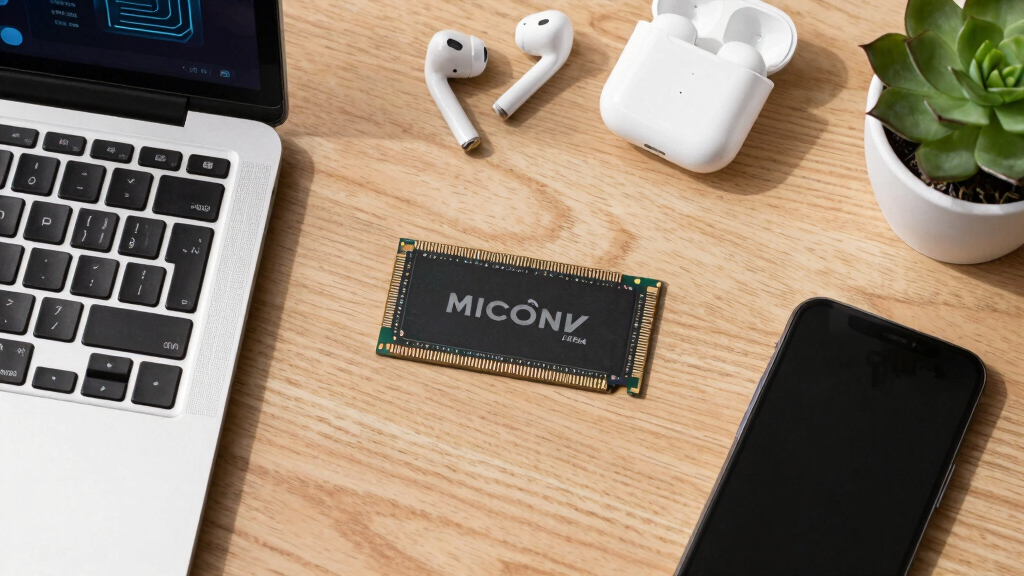
Micron memory modules for AI applications
As an affiliate, we earn on qualifying purchases.
As an affiliate, we earn on qualifying purchases.
Next Steps for Micron and Industry Watchers
Micron’s upcoming quarterly reports and further contract announcements will be key indicators of its long-term prospects. Industry analysts will monitor capacity expansion plans and pricing trends to assess whether the current growth momentum can be sustained into 2027. Investors and competitors will also watch for signs of industry saturation or new supply chain shifts.
As an affiliate, we earn on qualifying purchases.
Key Questions
Can Micron really replace Nvidia as a leader in AI hardware?
While Micron is positioned as a major supplier of memory chips for AI data centers, Nvidia remains dominant in AI processing hardware. Micron’s role is more as a component supplier, and its ability to rival Nvidia depends on broader market dynamics and technological developments.
What risks does Micron face in maintaining its growth?
The company faces risks from potential oversupply, price declines, technological changes, and geopolitical issues that could disrupt supply chains or demand. Its long-term success depends on sustained demand and effective capacity management.
How does the AI hardware shortage impact consumers?
The shortage has driven up prices for consumer electronics like Apple products and Xbox consoles, as manufacturers compete for limited memory supplies. This trend may continue into 2027 if the shortage persists.
What is the significance of Micron’s recent market valuation surge?
The surge reflects investor confidence in Micron’s strategic positioning within the AI infrastructure boom, potentially elevating it to a role similar to Nvidia’s in the AI hardware ecosystem.
Source: TechCrunch
Halloween Picks
halloween
As an affiliate, we earn on qualifying purchases.