
TL;DR

Get the latest gadgets delivered free — and shop member deals
- Fast, free delivery on millions of items
- Access to Prime Big Deal Days deals on October 6–7
- Prime Video, Amazon Music and more included
Anthropic’s Claude Code team has described dynamic workflows, a feature that lets Claude create a temporary multi-agent setup for complex tasks. The company says the approach can divide work, check outputs and merge results, but it uses more tokens and is meant for high-value jobs rather than small edits.
Anthropic’s Claude Code team has described dynamic workflows, a feature it says lets Claude write a task-specific JavaScript harness and coordinate temporary subagents for complex work. The development matters because it moves some Claude Code tasks from a single-agent process toward structured delegation, with separate workers, reviewers and synthesis steps.
According to the June 2 Anthropic blog post by Thariq Shihipar and Sid Bidasaria, a dynamic workflow is a JavaScript harness that Claude writes and runs for the task at hand. The source material says each subagent can receive a separate context window, its own work area and a focused brief, rather than forcing one agent to carry the whole job.
The workflow patterns described include six workflow moves: classify-and-act routing, fan-out-and-synthesize parallel work, adversarial verification, generate-and-filter selection, tournament judging and loop-until-done spawning until a stop condition is met. These are Anthropic’s stated mechanics and examples, not independent benchmark results.
Anthropic’s caveat is central: the approach uses meaningfully more tokens and is built for complex, high-value tasks. The source material says it is not for small edits, such as asking Claude to fix a typo, because the orchestration overhead can outweigh the benefit.
When one agent isn’t enough: Claude now builds its own team on the fly
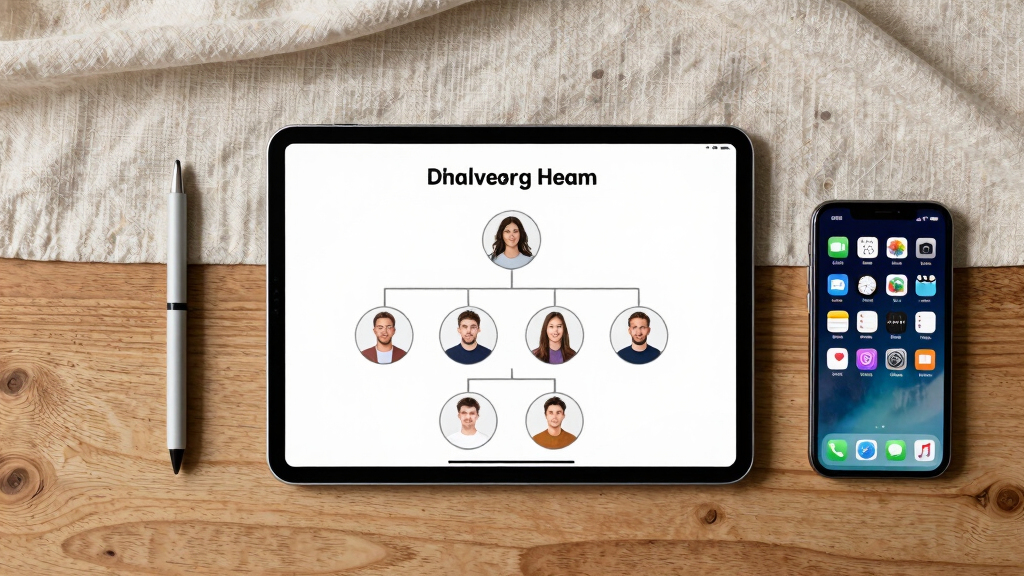
Skills package what you know; loops decide how far you delegate over time. Dynamic workflows are the third axis — within a single task, Claude writes its own harness and assembles a temporary team of subagents. Think of it as Claude drawing an org chart for one job.
The shift is from prompting a worker to commissioning a team — more output, more cost, and a manager’s judgment required. Reach for a workflow when a task is big, parallel, adversarial, or judgment-heavy — and when you can feel a single agent getting lazy, grading its own homework, or losing the plot. Bound it (token budgets, pilot first) — workflows can spawn hundreds of agents and burn far more tokens. For everything else, don’t hire five people to change a lightbulb.
Temporary Teams Change Agent Work
For developers and teams using coding agents, the feature points to a broader shift in how large tasks may be handled. Anthropic and the Thorsten Meyer AI analysis cite examples such as long migrations and refactors, research reports, ticket ranking and root-cause reviews, where parallel work and review can be more useful than one long agent session.
The value claimed by Anthropic is not just speed. It is also independent verification: a separate agent can attack or grade another agent’s output, reducing some single-agent failure modes described in the source material. The trade-off is cost and governance, since organizations will need rules for when these workflows are worth using in Claude Code deployments.
As an affiliate, we earn on qualifying purchases.
Claude Code’s Three-Part Pattern
Thorsten Meyer AI frames dynamic workflows as the third part of a loose Claude Code arc: Skills package organizational knowledge, loops control repeated delegation over time, and dynamic workflows coordinate multiple agents inside one task. In that framing, workflows are the third axis of agent orchestration.
The source material says the feature is aimed at failures that appear when one agent handles a large job alone: agentic laziness, where work stops before completion; self-preferential bias, where an agent favors its own output; and goal drift, where the original request weakens over a long session.
“Dynamic workflows are the third axis; within a single task, Claude writes its own harness and assembles a temporary team of subagents.”
— Thorsten Meyer AI
JavaScript harness for AI automation
As an affiliate, we earn on qualifying purchases.
As an affiliate, we earn on qualifying purchases.
Costs And Safeguards Need Proof
It is still unclear how much real-world performance gains users will see across routine projects, or how predictable token spending will be when workflows expand. The source material warns that workflows can spawn many agents, but it does not provide broad public data on pricing exposure or practical limits across teams.
Security boundaries also need close attention. The source material recommends security boundaries for agents that read untrusted public content, keeping them away from high-privilege actions and using separation of duties for any acting agent. How consistently teams apply that pattern remains an open operational question.
As an affiliate, we earn on qualifying purchases.
Docs Will Shape Early Use
The next step for users is likely experimentation through Claude Code documentation and limited pilot projects. Teams evaluating the feature will need to set token budgets, define stop conditions and decide which tasks justify multi-agent orchestration.
The next signal to watch is how teams use the pattern outside demonstrations: which models get routed to subagents, how reviewers judge outputs, and whether the added cost produces better results on large, messy work.
complex AI project management tools
As an affiliate, we earn on qualifying purchases.
As an affiliate, we earn on qualifying purchases.
Key Questions
What did Anthropic announce about Claude Code?
Anthropic described dynamic workflows, a Claude Code feature that can write and run a task-specific JavaScript harness to coordinate temporary subagents for complex jobs.
Is this the same as giving Claude a longer prompt?
No. The source material describes orchestration code, not just a longer instruction. Claude can split work among separate agents, wait for results and merge structured outputs.
When should teams use dynamic workflows?
The feature is aimed at large, parallel or review-heavy tasks, such as migrations, research, backlog triage and security review. Anthropic’s caveat is that it uses more tokens, so small edits are a poor fit.
What is confirmed and what is still claimed?
Confirmed from the cited source material: Anthropic described the feature, its mechanics and its intended use cases. Claimed by Anthropic and the analysis: it can reduce single-agent failures such as early stopping, self-review bias and goal drift.
Is this only for coding tasks?
No. Although it is part of Claude Code, the source material lists non-coding uses including research reports, ticket ranking, post-mortem analysis and design evaluation by rubric.
Source: Thorsten Meyer AI
Halloween Picks
halloween
As an affiliate, we earn on qualifying purchases.