
📊 Full opportunity report: DDR5 Now, DDR6 Soon: A Buyer’s Field Guide on ThorstenMeyerAI.com — validation score, market gap, and execution plan.

Get the latest gadgets delivered free with Prime
- Fast, free delivery on millions of items
- Prime Video, Amazon Music and more included
- Member-only deals all year
TL;DR
In 2026, DDR5 remains the recommended memory standard for most users due to current market conditions. DDR6 is not yet available for mainstream desktops and will arrive around 2027 at a premium. Buyers should focus on DDR5-6000 CL30 for best value.
DDR5 remains the dominant memory standard for mainstream PC builds in 2026, with DDR6 not yet available for consumer desktops. Experts advise buyers to focus on DDR5-6000 CL30 kits, as the next-generation DDR6 will only arrive around 2027 at a significantly higher cost, making waiting unwise for most consumers.
Market forecasts indicate that DDR5 prices have stabilized, and the recommended configuration for most users remains DDR5-6000 with CL30 timings. The industry has confirmed that DDR6, which offers a substantial architecture leap, will not be available for mainstream desktops until around 2027, with initial launches limited to enterprise and high-end servers in 2026–27.
DDR6 introduces a new physical form factor, CAMM2, and doubles or triples effective bandwidth, but it requires entirely new platforms—no backward compatibility with DDR5 or DDR4. The cost will be 2–3 times higher per gigabyte initially, and early adoption will involve immature software support and limited capacities.
Manufacturers have driven DDR4 to end-of-life, and current DDR4 prices are comparable to DDR5, making DDR4 a poor choice for new builds in 2026. Instead, users should invest in DDR5, which will serve well through at least 2028, and avoid overbuying capacity, focusing on practical workloads like gaming and content creation.
DDR5 now, DDR6 soon
A buyer’s field guide. The 20-year instinct — wait for prices to drop, or wait for the next generation — is broken this cycle. Buy the DDR5 you actually need now; don’t wait for DDR6. Here’s the reasoning.
Driven to end-of-life, production slashed. Same money, dead-end socket. Leave a working DDR4 box alone — but never start a new build on DDR4 to “save.”
A framework, not a gamble. Buy the DDR5 you need now, at the sweet spot, in the capacity you’ll actually use — don’t buy DDR4, don’t wait for DDR6. The two costliest mistakes in this market are the ones that feel prudent: waiting for a price drop that isn’t coming, and waiting for a next-gen part that launches dearer than what’s on the shelf. Next: The SSD Squeeze.
Why DDR5 Remains the Best Choice in 2026
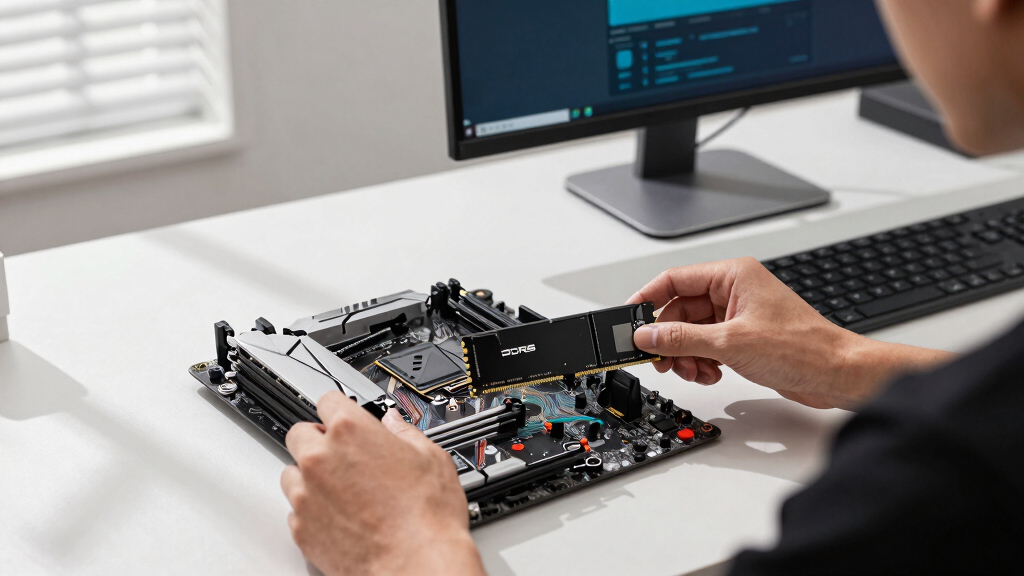
For most PC builders and upgraders in 2026, choosing DDR5 now offers the best balance of performance, cost, and future-proofing. Waiting for DDR6 would delay system upgrades and incur higher costs without immediate benefits, as DDR6 won’t be mainstream until 2027 and beyond. This guidance helps consumers avoid unnecessary expenses and premature obsolescence.
As an affiliate, we earn on qualifying purchases.
Current Market and Future DDR Memory Developments
In recent years, DDR5 has become the standard for new high-performance systems, with prices stabilizing at practical levels. Meanwhile, DDR6’s development has advanced in labs and enterprise sectors, with specifications finalized but mass adoption delayed until 2027. The transition from DDR4 to DDR5 has been gradual, and history suggests DDR6 will follow a similar pattern, but with a longer lead time.
Manufacturers and JEDEC have confirmed DDR6’s specifications, including increased bandwidth and new form factors, but the technology remains in early stages of adoption, primarily aimed at servers and high-end workstations. Consumer-grade DDR6 modules and compatible CPUs are not yet available, and their arrival is expected to be phased over the next two years.
“DDR6 specifications are finalized, but the first compatible platforms will not appear until 2027, with enterprise deployments starting earlier.”
— JEDEC standards committee
As an affiliate, we earn on qualifying purchases.
Uncertainties Surrounding DDR6 Adoption Timeline
While DDR6 specifications are finalized, the exact timing of widespread consumer availability remains uncertain. Early DDR6 modules and compatible CPUs are still in development, and market prices or potential supply constraints could shift timelines. Additionally, the actual performance gains and real-world benefits will only be evident once the technology matures and hits the mass market.
As an affiliate, we earn on qualifying purchases.
Next Steps for Buyers and Industry Watchers
Consumers should focus on selecting DDR5-6000 CL30 kits for their 2026 builds, avoiding overcapacity purchases. Industry observers should monitor JEDEC’s finalization of DDR6 standards and the appearance of compatible motherboards and CPUs, expected around late 2026 or early 2027. Early adopters of DDR6 will face higher costs and potential stability issues, so most should wait for mature platforms.
As an affiliate, we earn on qualifying purchases.
Key Questions
Should I buy DDR4 in 2026 to save money?
No. DDR4 has reached its end-of-life, and new builds should focus on DDR5, which offers better performance and future compatibility.
When will DDR6 be available for mainstream desktops?
DDR6 is expected to launch for consumer desktops around 2027, with initial modules and platforms arriving late 2026 or early 2027.
Is DDR6 worth waiting for?
For most users, no. DDR6 offers significant improvements but will be expensive and immature at launch. Most should wait until 2028 or later for mature, cost-effective DDR6 systems.
Will DDR6 be compatible with existing platforms?
No. DDR6 requires new motherboards and CPUs; it is not backward compatible with DDR5 or DDR4.
What performance benefits will DDR6 provide?
DDR6 will double or triple effective bandwidth compared to DDR5, benefiting bandwidth-intensive workloads like scientific computing and AI, but offering limited gains for gaming or typical desktop tasks in its early stages.
Source: ThorstenMeyerAI.com
Halloween Picks
halloween
As an affiliate, we earn on qualifying purchases.