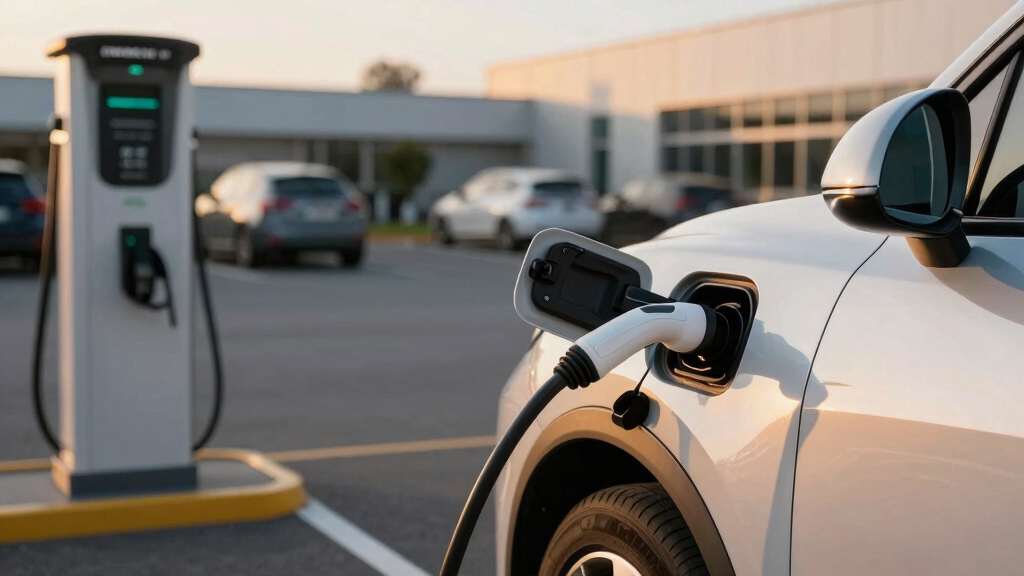

TL;DR
Prime for Young Adults — start your free trial
Fast free delivery, streaming and member deals for eligible 18–24 year olds.
As an affiliate, we earn on qualifying purchases.
US automakers, including Ford, are increasingly focusing on battery energy storage systems instead of EVs. This shift is driven by market opportunities, federal incentives, and recent financial struggles in EV programs. The move could reshape the auto industry’s future and its role in energy markets.
Ford has officially announced the creation of Ford Energy, a subsidiary dedicated to manufacturing battery energy storage systems for utilities, data centers, and industrial clients, marking a significant shift in US automakers’ strategy away from electric vehicles.
Ford’s move involves repurposing unused EV battery production lines in Kentucky, with plans to deliver initial storage systems by late 2027. This initiative follows Ford’s $19.5 billion EV program write-down last year and a strategic emphasis on hybrids and energy storage, which CEO Jim Farley describes as high-margin opportunities.
Other automakers are following suit: General Motors is collaborating with Redwood Materials and LG Energy Solution to produce energy storage batteries, while Stellantis is shifting some battery production to energy storage applications. Tesla’s energy division continues to expand, with new facilities planned for larger Megapack systems. Overall, BloombergNEF reports that eight of 11 retooled battery plants in the US are now focused on energy storage manufacturing.
Why It Matters
This industry pivot could reshape the auto sector’s role in the energy economy, especially as battery storage becomes critical for grid stability, data center operations, and renewable energy integration. It also reflects a strategic response to policy shifts, such as reduced federal support for EV incentives, and investor interest in high-margin energy assets. The move may influence the future competitiveness of US automakers in both transportation and energy markets.
battery energy storage systems for utilities
As an affiliate, we earn on qualifying purchases.
As an affiliate, we earn on qualifying purchases.
Background
Over the past year, US automakers have scaled back aggressive EV targets amid financial losses and changing policy landscapes. Ford’s recent announcement follows a pattern of re-evaluating EV investments, with some firms like Stellantis considering exiting joint ventures. Meanwhile, the growth of AI and data centers has increased demand for reliable, scalable energy storage solutions, prompting automakers to reposition their manufacturing capabilities.
“Battery energy storage is one of our high-margin opportunities and a strategic focus for the future.”
— Ford CEO Jim Farley
“Batteries are a great fit for data centers, helping to power and stabilize energy needs while reducing costs.”
— Shan Tomouk, Benchmark Mineral Intelligence
“If automakers aren’t making money from EVs or storage, they prefer not to compete with their own gas car production.”
— Gil Tal, UC Davis EV Research Center
industrial energy storage batteries
As an affiliate, we earn on qualifying purchases.
As an affiliate, we earn on qualifying purchases.
What Remains Unclear
It remains unclear how successful the transition to energy storage will be for automakers, and whether this shift will offset losses from EV programs. The long-term profitability and market share in energy markets are still uncertain, as are potential regulatory changes and technological developments.
large scale energy storage solutions
As an affiliate, we earn on qualifying purchases.
As an affiliate, we earn on qualifying purchases.
What’s Next
Automakers will continue retooling manufacturing lines and forming strategic partnerships to expand energy storage capabilities. Market responses, government policies, and technological advancements over the next 12-24 months will determine the sector’s trajectory and the ultimate success of this pivot.
data center energy storage systems
As an affiliate, we earn on qualifying purchases.
As an affiliate, we earn on qualifying purchases.
Key Questions
Why are automakers shifting from EVs to energy storage?
Automakers see higher profit margins and better incentives in battery energy storage systems, especially amid financial struggles with EV programs and policy shifts reducing EV incentives.
Will this shift impact the availability of electric vehicles?
It is unclear; some automakers may reduce their EV investments, but the overall transition to electric vehicles continues, albeit at a slower pace for some companies.
How significant is the market for battery energy storage?
The market is growing rapidly, driven by demand from data centers, renewable energy integration, and grid stabilization needs, with eight US plants now focused on storage production.
What are the risks of automakers focusing on energy storage?
The main risks include technological challenges, market volatility, and uncertain regulatory support, which could affect profitability and industry stability.
Fall yard work Picks
leaf blowers
As an affiliate, we earn on qualifying purchases.