
TL;DR

Get the latest gadgets delivered free with Prime
- Fast, free delivery on millions of items
- Prime Video, Amazon Music and more included
- Member-only deals all year
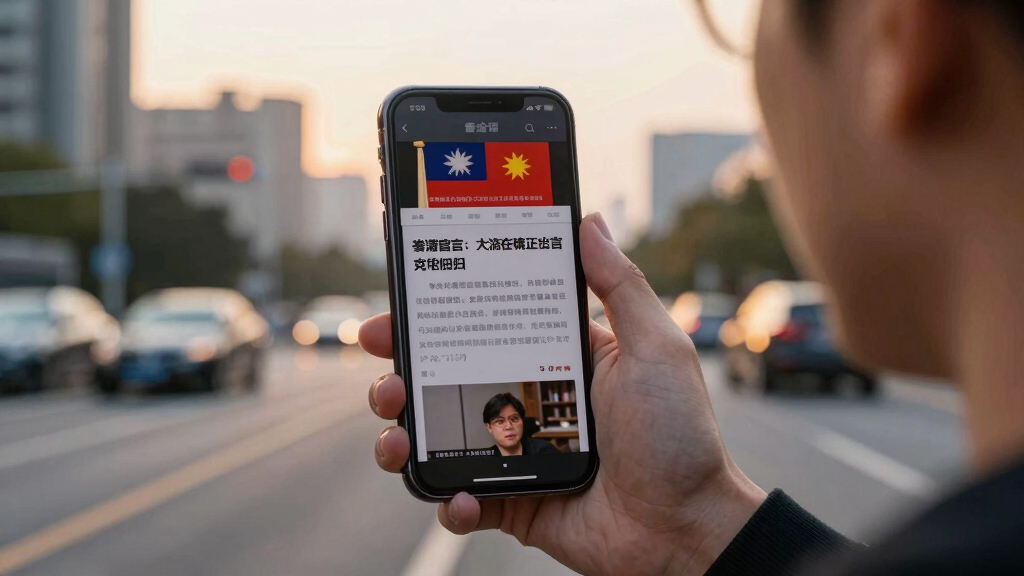
Taiwan’s foreign ministry declared the island a sovereign, independent nation following recent comments by Trump questioning US support. The move escalates regional tensions amid conflicting US messages.
Taiwan’s foreign ministry declared the island a “sovereign and independent democratic nation” on Saturday, explicitly stating it is “not subordinate to the People’s Republic of China.” The statement follows recent comments by former President Donald Trump, who questioned US support for Taiwan and its pursuit of formal independence, intensifying regional tensions.
In a formal statement, Taiwan’s foreign ministry emphasized its status as a sovereign nation, asserting independence and democratic governance. This declaration came hours after Trump, during his visit to Beijing, told Fox News he opposes Taiwan pursuing formal independence and described a pending $14 billion US arms package to Taiwan as a “very good negotiating chip.” Trump also reiterated claims that Taiwan “stole” the US semiconductor industry and expressed a desire for 40-50% of global chip production to be on American soil by the end of his term.
Meanwhile, U.S. officials such as Secretary of State Marco Rubio maintained that U.S. policy remains unchanged, warning against Chinese military action and warning of global repercussions if China uses force against Taiwan. The Taiwan Presidential Office highlighted that both Trump and Rubio reaffirmed U.S. support under the Taiwan Relations Act, while Taiwan’s foreign ministry described arms sales as a form of joint regional deterrence.
Why It Matters
This development marks a significant escalation in Taiwan’s assertion of independence amid rising regional tensions. The formal declaration by Taiwan’s foreign ministry challenges the longstanding ambiguity of U.S. policy, which has historically supported Taiwan’s democratic status without explicit recognition of sovereignty. The conflicting messages from U.S. officials and Trump’s recent statements could impact regional stability and U.S.-China relations, especially given China’s stance that Taiwan is a part of its territory.
Taiwan flag and sovereignty flags
As an affiliate, we earn on qualifying purchases.
As an affiliate, we earn on qualifying purchases.
Background
In recent weeks, tensions over Taiwan have increased, with China warning of possible clashes if Taiwan moves toward formal independence. Former President Trump’s comments during his Beijing visit, combined with ongoing U.S. military support through arms sales, have added complexity. The Taiwan Relations Act underpins U.S. support for Taiwan’s defense, but the island’s declaration of sovereignty signals a potential shift in its diplomatic stance, which could influence future U.S.-China-Taiwan interactions.
“Taiwan is a sovereign and independent democratic nation, not subordinate to the People’s Republic of China.”
— Taiwan Foreign Ministry
“We look forward to continued cooperation under the firm commitments of the Taiwan Relations Act.”
— Taiwan Presidential Office spokesperson Karen Kuo
“Our policy remains unchanged. It would be a terrible mistake for China to use force, and there will be repercussions.”
— U.S. Secretary of State Marco Rubio
U.S. military communication devices
As an affiliate, we earn on qualifying purchases.
As an affiliate, we earn on qualifying purchases.
What Remains Unclear
It remains unclear how China will respond to Taiwan’s declaration of sovereignty and whether the U.S. will clarify or modify its policy. The precise impact of Trump’s recent statements on future U.S.-China-Taiwan relations is still developing, and regional stability remains uncertain as diplomatic and military tensions persist.
semiconductor industry equipment
As an affiliate, we earn on qualifying purchases.
As an affiliate, we earn on qualifying purchases.
What’s Next
Next steps include monitoring China’s diplomatic and military responses, potential U.S. clarification or reaffirmation of policy, and Taiwan’s diplomatic positioning. Further statements from U.S. officials and regional actors are expected in the coming days.
regional security surveillance cameras
As an affiliate, we earn on qualifying purchases.
As an affiliate, we earn on qualifying purchases.
Key Questions
What does Taiwan’s declaration of sovereignty mean?
It affirms Taiwan’s status as a sovereign, independent nation, challenging China’s claim and potentially shifting its diplomatic stance amid rising tensions.
How might China respond to this declaration?
China could increase diplomatic pressure, military demonstrations, or other measures to assert its claim over Taiwan, but specific actions remain uncertain.
Will the U.S. change its support for Taiwan?
U.S. officials have stated their policy remains unchanged, but the recent comments and Taiwan’s declaration could influence future diplomatic and military support strategies.
What are the implications for regional stability?
The declaration heightens tensions and could increase the risk of miscalculation or conflict, depending on regional responses and China’s actions.
Is this a formal change in U.S. policy?
No, U.S. policy officially remains as per the Taiwan Relations Act, but the declaration by Taiwan signals a potential shift in diplomatic posture that could influence future policy decisions.
Halloween Picks
halloween
As an affiliate, we earn on qualifying purchases.