
🔍 Read the full analysis: A New Way To Frame AI-Powered NLC Watching With A Twilight Dial on ThorstenMeyerAI.com

Get the latest gadgets delivered free with Prime
- Fast, free delivery on millions of items
- Prime Video, Amazon Music and more included
- Member-only deals all year
TL;DR
ThorstenMeyerAI.com describes “Noctilucent — NLC Watch at 83 km,” an AI-built exhibition website centered on an interactive twilight dial. The project is fictional, not a live observing service, while the noctilucent clouds it depicts are real; the site uses the dial to connect visual effects and explanations to solar depression.
ThorstenMeyerAI.com has described “Noctilucent — NLC Watch at 83 km,” an AI-built exhibition website detailed in the original analysis that uses an interactive solar-depression dial to change the simulated twilight across the page. The site presents itself as a fictional field journal, not a real observing project or scientific service, and uses the dial to explain how noctilucent clouds can remain illuminated after the ground is dark.
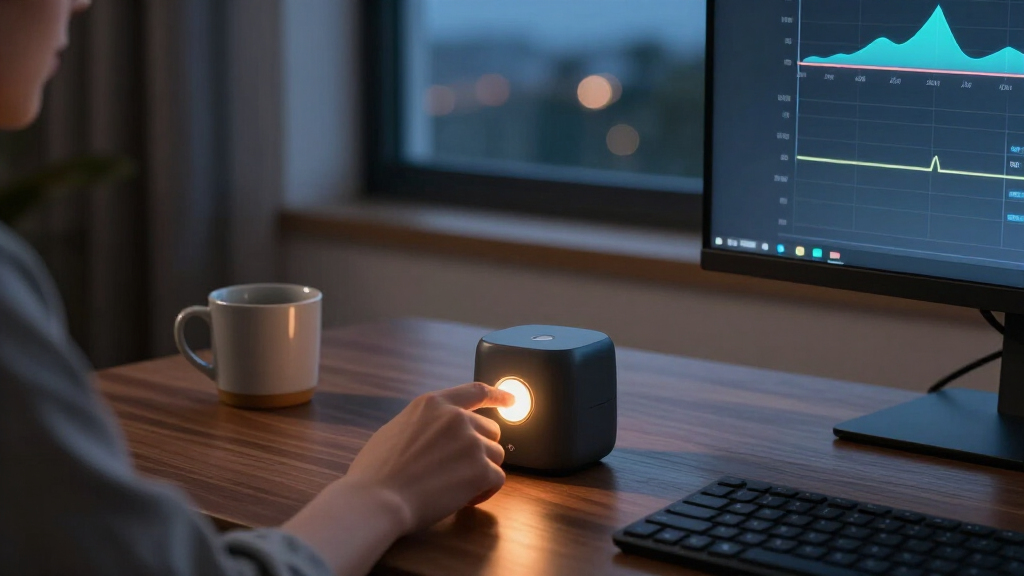
The dial spans a simulated sun position from six to 16 degrees below the horizon, with the experience’s most expressive lighting near 11 degrees, according to the project description. Moving it adjusts several visual elements together, including sky brightness, shadow depth, cloud glow, ambient color, grain and horizon flare. Supporting diagrams and copy also follow the selected state, making the control part of the explanation rather than a standalone visual effect.
The page depicts clouds at about 83 kilometres altitude and guides visitors through the horizon, cloud forms, ice crystals, seasonal observing and a fictional field log. An adaptation exercise asks visitors to hold a control as simulated ground-level haze recedes and the higher cloud band becomes clearer; releasing early lets the sighting fade. The source says the interaction supports pointer, keyboard and touch-like input.
The visuals are generated in the browser, using Canvas for the sky and cloud forms and inline SVG for diagrams and altitude illustrations. The project account says there are no image assets. It also describes animation that pauses when the browser tab is hidden, stops repainting offscreen scenes and offers a reduced-motion still state. These are design claims in the supplied account, not independently tested performance findings.
A Dial Links Light to the Science
The project’s main design proposition is that one changing variable can explain a phenomenon across an entire page. The solar-depression dial affects the sky artwork, cloud appearance, diagrams and accompanying text, giving visitors a visual way to explore why clouds high above a darkened observer may still catch sunlight. That can make the geometry easier to follow than a static illustration alone.
The distinction between the real atmospheric phenomenon and the fictional service matters. The site may resemble a field journal for an observing network, but its station names and project framing are invented. Readers should treat it as an educational design piece, not as a source of current sightings, forecasts or research data.
interactive sky simulation software
As an affiliate, we earn on qualifying purchases.
As an affiliate, we earn on qualifying purchases.
From Noctilucent Clouds to Interface
Noctilucent clouds are high-altitude ice clouds that can appear luminous after sunset because sunlight still reaches them while the lower atmosphere and ground are in darkness. The project places them at 83 kilometres and frames its visual story around that contrast. Its brief also refers to ice formation on meteor dust and seasonal observing, but the supplied material does not provide research citations or present those sections as new scientific findings.
The source identifies the work as room 162 of 175 in a larger exhibition series and describes a three-pass creation process: build the working page, review it for clarity and interaction, then carry out an art-director review. An accompanying design guide is said to discuss the lighting model, procedural graphics and animation behavior. The account does not name a scientific institution or claim that researchers validated the exhibit.
““Noctilucent — NLC Watch at 83 km” is an AI-built exhibition piece: a fictional field journal for a fictional observing project, not a real company or live scientific service.”
— ThorstenMeyerAI.com project description
As an affiliate, we earn on qualifying purchases.
Limits of the Project Account
The supplied account does not give a publication date, link to independent technical testing or evidence that the page’s scientific explanations were reviewed by specialists. It also does not provide visitor numbers, accessibility audit results or measured frame-rate data. Statements about browser behavior and input support should therefore be understood as the project’s own descriptions, not verified test results.
Although the brief mentions seasonal observation around the solstice and latitudes of 55 to 65 degrees, it does not establish that the exhibit provides forecasts or practical observing advice. No current sightings, operational data or real station reports are described.
As an affiliate, we earn on qualifying purchases.
The Design Guide and Live Page
The project account points readers to a live browser version and a separate design guide covering its construction. The supplied material does not state when either was published or describe a planned update schedule. Further evaluation would require inspecting the page directly and checking its accessibility, scientific references and performance across devices.
As an affiliate, we earn on qualifying purchases.
Key Questions
Is NLC Watch a real cloud-observing service?
No. The source describes it as a fictional field journal and exhibition piece, not a live scientific service or real observing project.
What does the twilight dial change?
According to the project description, it changes simulated sky light, shadows, cloud glow, ambient color, grain and horizon flare, along with related diagrams and copy.
Are noctilucent clouds real?
Yes. The source describes them as real high-altitude ice clouds that can remain sunlit when the ground below is dark. The fictional element is the exhibit’s observing project, not the clouds themselves.
Has the site’s science or technical performance been independently checked?
The supplied account does not cite independent scientific review or performance testing. Its descriptions of the interface and rendering behavior remain project claims unless verified separately.
Source: ThorstenMeyerAI.com
Fall Picks
fall essentials
As an affiliate, we earn on qualifying purchases.