Before buying a VR headset, consider the types available—tethered for high performance, standalone for convenience, or AR for mixed reality. Think about key features like resolution, field of view, and comfort, especially for long sessions. Check device compatibility with your existing hardware and platforms like SteamVR or PlayStation. Budget options range from entry-level to premium. For a smooth, immersive experience tailored to your needs, continue exploring the details ahead.
Key Takeaways
- Determine the type of VR headset (tethered, standalone, AR) that suits your mobility needs and budget.
- Check device compatibility and system requirements to ensure seamless integration with your existing hardware.
- Prioritize comfort features like ergonomic design, adjustable straps, and padding for extended use.
- Understand key features such as resolution, field of view, haptic feedback, and eye tracking to enhance immersion.
- Stay informed about future trends like wireless connectivity and higher resolutions to future-proof your purchase.

Syntech Link Cable 16FT for PCVR Compatible with Oculus/Quest 3/Meta Quest 3S, Quest2/Pro/Pico 4/Ultra Accessories and PC/SteamVR, High Speed PC Data Transfer, USB 3.0 to USB C Cable for VR Headset
Compatible with Meta Quest & Pico Headsets: The VR link cable is compatible with Meta Quest 3S /…
As an affiliate, we earn on qualifying purchases.
As an affiliate, we earn on qualifying purchases.
Types of VR Headsets and Their Differences
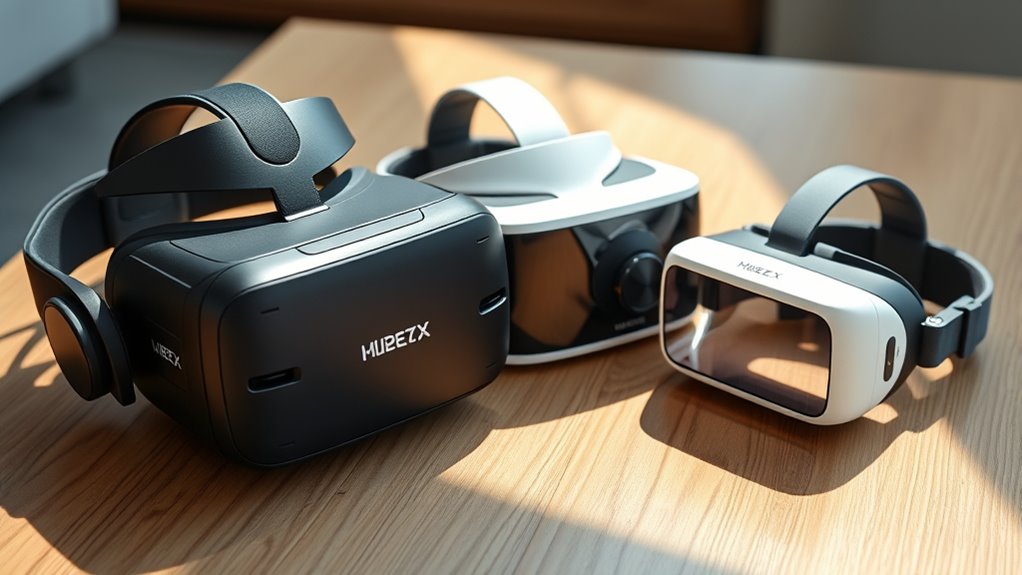
When choosing a VR headset, understanding the main types and how they differ can help you find the best fit for your needs. There are three primary types: tethered, standalone, and augmented reality (AR) headsets. Tethered headsets connect to a PC or console, offering high-quality visuals and precise motion controllers but limiting mobility. Standalone headsets operate independently, providing convenience and decent experiences without external devices. AR headsets blend virtual elements with your real environment, superimposing digital images over what you see. They often include specialized sensors and cameras. Motion controllers are essential across all types, allowing you to interact naturally within virtual worlds. Knowing these differences helps you choose a headset that matches your preferred experience, whether you want immersive gaming, AR applications, or portable use. Additionally, understanding the battery technologies behind these devices can inform you about their operational duration and charging needs. Recognizing the importance of power management can help ensure you select a headset with reliable performance during extended use. Being aware of digital literacy considerations and safety features can further enhance your VR experience and ensure responsible use. Furthermore, being knowledgeable about device compatibility can help you avoid technical issues when setting up your VR system. Being aware of regional resources and tools can also assist in finding local support or repair options if needed.

Meta Quest 3 512GB | VR Headset — Thirty Percent Sharper Resolution — 2X Graphical Processing Power — Virtual Reality Without Wires — Access to 40+ Games with a 3-Month Trial of Meta Horizon+ Included
NEARLY 30% LEAP IN RESOLUTION — Experience every thrill in breathtaking detail with sharp graphics and stunning 4K…
As an affiliate, we earn on qualifying purchases.
As an affiliate, we earn on qualifying purchases.
Key Features to Consider for Your VR Experience
Choosing the right VR headset depends on several key features that directly impact your overall experience. One vital aspect is haptic feedback, which adds tactile sensations to immerse you fully, making interactions feel more real. Eye tracking is another advanced feature that enhances realism and allows for more intuitive controls. When evaluating headsets, consider these features:
| Feature | Benefit |
|---|---|
| Haptic Feedback | Adds tactile sensations for a more immersive experience |
| Eye Tracking | Improves realism and enables precise interaction |
| Resolution | Ensures clear, sharp visuals |
| Field of View | Provides a wider, more immersive view |
Additionally, understanding the AI vulnerabilities of certain features can help you choose more secure and reliable devices. Prioritizing these features helps you find a headset that elevates your VR adventures.

HTC VIVE Facial Tracker for Focus Series Virtual Reality Headsets
Designed for VIVE Focus Vision and VIVE Focus 3
As an affiliate, we earn on qualifying purchases.
As an affiliate, we earn on qualifying purchases.
Compatibility With Devices and Platforms
Before choosing a VR headset, you need to verify if it functions with your devices and platforms. Make sure your computer, console, or smartphone meets the compatibility requirements. Also, consider the platform ecosystem support to ensure you can access the content and apps you want. Additionally, be aware of how emerging automation technologies in various industries might influence the availability of new VR applications and features. Being aware of device compatibility can help prevent costly mismatches and ensure a smoother experience. Furthermore, understanding how software integration varies across devices can improve your overall VR setup and usability, especially as software updates and platform-specific features evolve. Recognizing the importance of performance tuning can also ensure your VR hardware operates optimally for an improved experience.
Device Compatibility Requirements
To verify your VR headset works seamlessly with your existing devices and platforms, you need to check their compatibility requirements. Start by reviewing the software requirements, ensuring your operating system supports the headset’s platform. Some headsets require specific versions of Windows, macOS, or Android. Additionally, verify the hardware specifications, including processor speed, RAM, and graphics card capabilities, to handle VR experiences smoothly. For example, high-resolution headsets demand powerful GPUs and sufficient USB or HDMI ports. Failing to meet these requirements can lead to performance issues or incompatibility. Always consult the manufacturer’s guidelines to confirm your device’s specs align with the headset’s needs, preventing surprises and ensuring a seamless setup. System requirements are also important when confirming compatibility, as they ensure your hardware can support the VR experience effectively. Incorporating appliance testing and compatibility insights can help identify potential issues with device integration and ensure a smoother setup process. Additionally, checking the Beauty Hours Today List can inform you about optimal times for visiting stores if you need in-person assistance with setup or troubleshooting. Moreover, understanding the compatibility standards can aid in selecting a headset that aligns with your existing tech ecosystem for a more integrated experience.
Platform Ecosystem Support
Ensuring your VR headset integrates smoothly with your existing devices and platforms is essential for a seamless experience. Compatibility affects everything from multiplayer gaming to app selection. Check if your headset supports popular ecosystems like Oculus, SteamVR, or PlayStation VR. Compatibility with handheld controllers ensures intuitive navigation, while spatial audio enhances immersion. Consider if the platform offers features you want, such as cross-platform play or exclusive titles. Also, verify whether your devices, like PCs, consoles, or smartphones, are compatible with the headset. If you rely on specific apps or accessories, ensure they work within the ecosystem. This support can make all the difference in how seamlessly your VR setup functions day to day. Additionally, ensuring the platform ecosystem support aligns with your existing hardware can prevent potential technical issues and improve overall satisfaction. Being aware of software compatibility can help you avoid frustration and maximize your enjoyment of VR content. Understanding the hardware ecosystem and its integration capabilities can help you plan a more cohesive and reliable VR experience. Moreover, checking for firmware updates and ongoing developer support can ensure your device remains compatible with future software releases. Staying informed about compatibility standards can further safeguard your investment and enhance your VR experience. Ultimately, choosing a compatible platform guarantees you won’t hit walls or miss out on key experiences.

AMVR GA1 31.5 Inch VR Haptic Feedback Golf Club Attachment Compatible with Meta/Oculus Quest 3S/Quest 3, Carbon Fibre Long VR Golf Handle Grip for Golf + (31.5 Inch Haptic Feedback Golf Club)
Extended and Weighted Design:Compatible with Meta/Oculus Quest 3/Quest 3S,the new VR golf club features a professional-grade lengthened and…
As an affiliate, we earn on qualifying purchases.
As an affiliate, we earn on qualifying purchases.
Budget and Pricing Options

Your budget plays a key role in choosing the right VR headset, with options spanning from affordable entry-level models to premium devices. Entry-level headsets offer basic features at lower prices, while mid-tier options provide a balance of performance and cost. If you’re looking for top-tier experiences, premium VR headsets deliver advanced features but come with a higher price tag. Additionally, consider forsale 100 to find the best deals and discounts on various VR headsets. When selecting a headset, also keep in mind the durability and wear and tear of components, especially if you plan to use it frequently or for extended periods.
Entry-Level Price Range
Entry-level VR headsets typically fall within the $200 to $400 price range, making them accessible for most new users. With this budget, you can explore virtual reality art and try out basic augmented reality integration features. These headsets often provide a solid introduction to VR gaming and experiences without breaking the bank. You’ll find options that are easy to set up and lightweight enough for extended use. Keep in mind that at this price point, the focus is on core functionality, so don’t expect high-end graphics or advanced tracking. This range is perfect for testing the waters and seeing if VR suits your interests before investing in more expensive options.
- Affordable entry point for beginners
- Good for exploring virtual reality art
- Basic augmented reality features included
- Lightweight and easy to set up
- Ideal for testing the VR waters
Mid-Tier Features & Cost
Mid-tier VR headsets typically range from about $400 to $700, offering a noticeable upgrade in features and performance without reaching premium prices. At this level, you’ll experience better resolution, improved tracking, and more comfort, enhancing your immersion in VR content. These headsets support a wider variety of VR social platforms, allowing you to connect with friends and communities more easily. You’ll also find richer experiences, including more detailed graphics and smoother performance, making your VR sessions more engaging. While not as advanced as high-end options, mid-tier headsets strike a good balance between cost and capability, making them ideal if you want quality without overspending. They’re perfect for exploring diverse VR content and social interactions without the premium investment.
Premium VR Headsets
Premium VR headsets offer top-tier features and performance but come at a higher price point, typically ranging from $700 to over $1,000. Investing in these headsets means you’ll enjoy superior VR accessories, better display quality, and advanced tracking capabilities. They often come with robust VR software compatibility, ensuring a seamless experience across various platforms. When choosing a premium headset, consider:
- Compatibility with your existing hardware
- Access to exclusive VR software and experiences
- Quality of VR accessories included or available separately
- Ease of setup and use
- Future-proof features like improved refresh rates and resolution
While the cost is higher, the immersive experience, enhanced visuals, and extensive support make these headsets ideal for serious enthusiasts or those seeking the best VR experience available.
Setup and Comfort for Extended Use

Ensuring your VR headset is set up correctly and remains comfortable during extended sessions is essential for an enjoyable experience. Focus on the ergonomic design, which helps distribute weight evenly and reduces pressure points, preventing fatigue. Adjust the straps carefully so the headset fits snugly but not too tight, avoiding discomfort or slipping. Proper positioning of the display also enhances comfort and visual clarity, reducing eye strain. Take time to customize the fit before starting your session, especially if you plan to wear the headset for long periods. Lightweight models with well-designed padding make a big difference, so prioritize comfort features when choosing your headset. With the right setup, you’ll enjoy immersive experiences without unnecessary discomfort or distractions.
Future Trends and Upgrades in VR Technology
As VR technology continues to evolve rapidly, future upgrades are poised to transform your immersive experiences. Expect enhanced haptic feedback that makes interactions feel even more real, from feeling textures to simulating impact. Wireless connectivity will become more reliable and seamless, freeing you from tangled cables and increasing mobility. You’ll see faster refresh rates and improved resolution for sharper visuals, reducing motion sickness. Eye tracking and facial expression sensors will add a new layer of realism to avatars. Additionally, battery life will extend, allowing longer sessions without interruptions. Here’s what to look forward to:
- More realistic haptic feedback systems
- Better wireless connectivity with minimal latency
- Higher resolution displays
- Advanced eye and facial tracking
- Longer-lasting batteries
Frequently Asked Questions
How Long Do VR Headsets Typically Last Before Needing Replacement?
You can expect your VR headset to last around 2 to 3 years before needing replacement, depending on headset durability and usage. Regular use, handling, and updates can impact its lifespan. Heavy wear or accidental damage may shorten this timeline, so keep it well-maintained. If you notice performance issues or hardware wear, it’s a good idea to contemplate a replacement to guarantee the best VR experience.
Are There Any Health Risks Associated With Prolonged VR Use?
Prolonged VR use can pose health risks like eye strain and motion sickness, much like overexerting muscles can cause fatigue. I once experienced intense eye discomfort after a long gaming session, which reminded me to take breaks. Studies show extended use can lead to discomfort or dizziness, so it’s important to limit sessions and adjust settings. Always listen to your body and take regular breaks to enjoy VR safely.
Can VR Headsets Be Used for Professional or Educational Purposes?
Yes, VR headsets are widely used for professional and educational purposes. You can engage in virtual training sessions that enhance learning experiences or participate in remote collaboration with colleagues worldwide. These headsets make it easier to visualize complex concepts, practice skills, and work together in a virtual environment. As a result, VR technology boosts productivity, improves understanding, and connects people across distances, making it valuable for various industries and educational settings.
What Are the Maintenance and Cleaning Requirements for VR Headsets?
You should regularly clean your VR headset to maintain lens hygiene and guarantee headset sanitation. Gently wipe the lenses with a microfiber cloth to prevent scratches, and use a disinfectant wipe or a cloth dampened with alcohol-based cleaner for the headset exterior. Avoid harsh chemicals, and clean your device after each use, especially if sharing, to prevent germs and keep your VR experience safe and clear.
How Do VR Headsets Impact Eye Health Over Time?
Think of your eyes as delicate gardens that need care. Over time, VR headsets can cause visual strain and eye fatigue if used excessively. You might notice blurred vision or discomfort after long sessions. To protect your eye health, take regular breaks, follow the 20-20-20 rule, and limit continuous use. Staying mindful of these habits helps keep your vision sharp and your eyes healthy in the long run.
Conclusion
Now that you’ve got the essentials, choosing the right VR headset is like finding the perfect pair of shoes—you want comfort, fit, and style that match your journey. With so many options, you’re ready to step into a new world of immersive experiences. Remember, the right headset isn’t just a gadget; it’s your portal to adventures waiting just beyond your fingertips. Happy exploring, and may your virtual journeys be as vivid as your imagination!