
📊 Full opportunity report: Coldcard Security Flaw And AI: Is There A Hidden Link? on ThorstenMeyerAI.com — validation score, market gap, and execution plan.
TL;DR
A flaw in Coldcard hardware wallets led to the theft of over 1,800 BTC. While some claim AI tools identified the vulnerability, evidence is inconclusive. The incident highlights risks in offline cold storage security.
Security researchers have confirmed that a hardware flaw in Coldcard wallets was exploited to drain over 1,800 BTC, approximately $116 million, from affected devices. The incident has sparked debate over whether artificial intelligence played a role in discovering the vulnerability, but no definitive evidence has been presented.
In July 2023, a series of coordinated attacks drained Bitcoin from Coldcard wallets, which are designed for offline, cold storage. The root cause was identified as a firmware update from March 2021 that compromised the device’s seed generation process. This change reduced the entropy of generated seeds from 128 bits to roughly 40 bits, making the private keys vulnerable to brute-force attacks.
Security analysis from Block, a firm associated with Jack Dorsey’s payments company, revealed that affected Coldcard Mk3 devices, which normally generate highly unpredictable random seeds, shifted to a predictable pattern. This flaw allowed attackers to regenerate private keys on their own computers by searching through the reduced key space, enabling the thefts without physically compromising the devices.
On 30 July, the attackers used automated methods to drain over 1,800 BTC from hundreds of wallets in multiple waves. The pattern of rapid, large-scale withdrawals from unrelated addresses indicates the use of precomputed keys rather than victims manually transferring funds. The total loss is estimated at around $70 million in one major wave alone.
Offline hardware wallets were emptied without an attacker touching a single device. The keys weren’t stolen — they were regenerated, because a firmware flaw had quietly shrunk the space of possible keys to something a machine could search.
▲ AI attribution unproven · Kimi K3 claim is a community theoryA hardware wallet’s security rests entirely on one moment: the randomness used to generate its recovery seed. A 2021 firmware change quietly broke that randomness on affected Coldcard Mk3 devices.
The signature — hundreds of unrelated wallets emptied against a prepared list — points to an automated operation working from precomputed keys, per Galaxy Research on-chain analysis.
A viral post framed this as “the AI reckoning” and named Moonshot’s new open-weight model. The timing is suggestive. The evidence is not conclusive.
- K3 weights dropped 27 Jul; first draining ~29–30 Jul — two days apart
- Public firmware is exactly what an AI code agent can read
- Widely shared, emotionally resonant, and entirely uncorroborated
- UK–US AISI eval: K3’s exploit ability reaches only ~40% of frontier US models
- Independent researchers reproduced it after the flaw was public — not cold
- A 40-bit search needs no LLM; specialised hardware brute-forces it
Strip out the attribution entirely and the important finding survives.
The real shift isn’t that AI broke cryptography — the mathematics held; the software around it did not. It’s that frontier models are collapsing the window between when a vulnerability is created, discovered, and exploited. A flaw sat dormant for four years. That dormancy is becoming the exception.
and the window from dormant bug to drained wallet just got much shorter for everyone shipping code.
Potential Role of AI in Vulnerability Discovery
This incident raises questions about the security of offline hardware wallets and the potential for AI tools to identify vulnerabilities in firmware. While some sources speculate that AI, specifically models like Kimi K3, may have helped discover the flaw, there is no confirmed link. The event underscores the importance of rigorous security reviews and the limitations of current AI in security-critical tasks.
Moreover, the fact that Coinkite conducted an AI review of its firmware weeks before the attack but did not detect the flaw suggests that AI-based security assessments are not infallible. The broader implication is that reliance on AI for security audits should be tempered with traditional testing and manual review.

Vilo Cryptocurrency Steel Wallet, 24 seed phrase storage, Stainless Steel Crypto Cold Storage Seed Backup, Compatible with All BIP39 Wallets, Ledger Nano, Trezor, KeepKey, Coldcard,
- Made in the USA: Affordable security for your crypto investments
- Simple Design: Check our store for more options
- Durable Material: Stainless steel 304, fire and water resistant
As an affiliate, we earn on qualifying purchases.
As an affiliate, we earn on qualifying purchases.
Background on Coldcard and the Firmware Flaw
Coldcard is a popular hardware wallet designed for secure, offline storage of Bitcoin private keys. Its security depends heavily on the quality of the seed generation process during initialization. In March 2021, a firmware update was rolled out that inadvertently reduced the seed’s entropy, making the keys more predictable. This flaw was not publicly known until the recent attacks surfaced, revealing a long-standing vulnerability.
Prior to this, Coldcard was regarded as one of the safest options for cold storage, with its security rooted in the randomness of seed generation. The incident marks a significant breach of that trust, exposing the risks of firmware updates and the importance of thorough security validation.
"We have no evidence linking the attack to AI tools. Our current assumption is that an attacker exploited the firmware flaw through computational means."
— Coinkite spokesperson
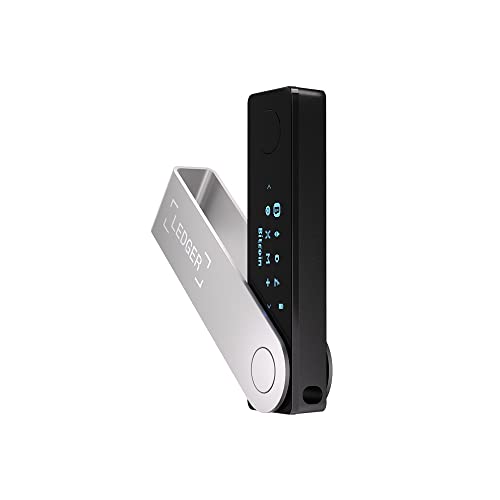
Ledger Nano X - Classic Crypto Wallet with Bluetooth
- All-in-One Crypto Management: Buy, sell, swap, stake, and more
- Supports 15,000+ Coins & Tokens: Manage multiple cryptocurrencies easily
- Market Monitoring & Alerts: Track performance and get updates
As an affiliate, we earn on qualifying purchases.
As an affiliate, we earn on qualifying purchases.
Unconfirmed Links Between AI and the Attack
There is no verified evidence that artificial intelligence, including models like Kimi K3, directly contributed to discovering or exploiting the Coldcard firmware flaw. The timing of AI model releases and the attack remains coincidental, and experts caution against overinterpreting these connections. The actual method of flaw discovery remains unconfirmed, with current analysis favoring brute-force techniques over AI-driven vulnerability hunting.
Sexyppl Wallet Replacement Screws + Screwdriver+ Metal Clip, For Metal Wallet Repair Screw Kit,Elastic Cash Strap Replacement for Wallet (Standard Set - Black) (5)
- Premium Material: Made of high-quality materials for durability
- Multiple Choices: Includes screwdrivers, screws, belts, and clips
- Easy to Replace: Simplifies wallet repairs and belt replacements
As an affiliate, we earn on qualifying purchases.
As an affiliate, we earn on qualifying purchases.
Ongoing Investigations and Security Improvements
Security researchers and Coldcard manufacturer Coinkite are expected to continue investigating the breach to determine how the firmware flaw was exploited. Future steps include reviewing firmware development processes, enhancing security testing protocols, and possibly issuing firmware updates to address the vulnerability. Additionally, the community will monitor AI’s role in security assessments and its limitations.
Further disclosures about the attack vector and potential mitigation strategies are anticipated in the coming weeks as authorities and security experts analyze the incident more thoroughly.

TANGEM Crypto Wallet Pack of 2 – Trusted Cold Storage Hardware Wallet
- Proven Security: Military-grade EAL6+ security with no known hacks
- Easy Blockchain Access: Manage 90 blockchains with one tap
- Wide Cryptocurrency Support: Access 14,100+ coins, tokens, NFTs, DeFi
As an affiliate, we earn on qualifying purchases.
As an affiliate, we earn on qualifying purchases.
Key Questions
Could AI have helped discover the Coldcard vulnerability?
While AI tools can assist in analyzing code, there is no confirmed evidence that AI models like Kimi K3 independently discovered the flaw. The attack appears to have been carried out using brute-force methods based on the reduced entropy in seed generation.
What is the significance of the firmware change in 2021?
The firmware update in March 2021 reduced the entropy of seed generation from 128 bits to about 40 bits, making private keys predictable and vulnerable to brute-force attacks, which led to the recent thefts.
Is Coldcard still secure for cold storage?
Security experts recommend updating firmware and reviewing security practices. The incident underscores the importance of thorough testing and validation of firmware updates to prevent similar vulnerabilities.
Has the attacker been identified?
No, the attacker has not been identified, and current evidence suggests the attack was automated and computational, not linked to a specific individual or AI model.
What measures are being taken to prevent future breaches?
Coldcard’s manufacturer is expected to review its firmware development process, improve security testing, and possibly release patches. The community is also encouraged to stay informed about firmware updates and best security practices.
Source: ThorstenMeyerAI.com