TL;DR
Researchers from China have uncovered the primary mechanisms behind the long-term degradation of low-silver electrodes in heterojunction solar cells. Their findings highlight how interdiffusion and defect formation lead to electrical performance decline, providing guidance for more durable designs.
Chinese researchers have identified that interdiffusion between silver and copper layers significantly degrades the electrical performance of low-silver heterojunction solar cell electrodes over time, impacting long-term module reliability.
The study, conducted by scientists from the East China University of Science and Technology, investigated the thermal aging behavior of silver-coated copper electrodes used in heterojunction (HJT) solar cells. They found that interdiffusion between silver (Ag) and copper (Cu) layers causes a marked increase in contact resistance, which correlates with a decline in electrical performance. Using accelerated aging tests, the team observed that both the line resistance (Rline) and contact resistivity (ρc) increased with aging time and temperature, with contact resistivity being notably more sensitive to temperature changes, indicating interfacial degradation as the dominant failure mechanism.
Advanced characterization techniques such as energy-dispersive X-ray spectroscopy (EDS), focused ion beam-scanning electron microscopy (FIB-SEM), and X-ray diffraction (XRD) confirmed that Ag–Cu interdiffusion and defect formation drive the degradation process. The microstructural evolution transitions from a conductive, sintered network to a fragmented, poorly connected structure, which hampers electron flow and accelerates electrical failure.
The researchers concluded that the degradation results from a competition between initial sintering, which temporarily improves contact, and long-term interdiffusion and defect accumulation, which ultimately cause network breakdown. They emphasized that enhancing interfacial stability is crucial for improving the durability of low-silver electrodes in commercial HJT modules.
Implications for Long-Term Solar Module Reliability
This research provides critical insights into the degradation mechanisms affecting low-silver electrodes in heterojunction solar cells, which are increasingly used for cost reduction. Understanding how interdiffusion and defect formation compromise long-term electrical performance can guide the development of more stable metallization strategies, ultimately improving the durability and efficiency of photovoltaic modules. As the industry seeks to balance material cost savings with reliability, these findings highlight the importance of optimizing interfacial stability to prevent early failure and extend module lifespan.

Callsun N-Type 16BB 400W Bifacial Solar Panel, 2Pcs 200 Watt Solar Panel 12V, 25% High Efficiency, Dual-Module Parallel Anti-Shade Design, for RV Van Marine Home Rooftop Off-Grid Systems
【N-Type 16BB High-Efficiency Solar Cells】The Callsun 200 watt solar panel is built with advanced N-type solar cells and…
As an affiliate, we earn on qualifying purchases.
As an affiliate, we earn on qualifying purchases.
Background on Silver-Coated Copper Electrodes in HJT Cells
Heterojunction (HJT) solar cells are a promising technology for high-efficiency photovoltaic modules. To reduce costs, manufacturers have increasingly adopted low-silver electrodes, which use thinner silver shells on copper cores. However, the thermal aging behavior of these thin Ag shells has not been fully understood, especially under real-world operating conditions. Previous studies have suggested that interdiffusion at metal interfaces can impair electrical contact, but detailed mechanisms remained unclear. This research addresses this gap by systematically analyzing microstructural changes and their impact on electrical properties during accelerated aging tests, providing new insights into long-term reliability issues.
“Interdiffusion between silver and copper layers significantly increases contact resistance, leading to electrical degradation over time.”
— an anonymous researcher

Solar Pool Supply Universal Repair Kit for Solar Pool Heaters to Fix Leaky Solar Panel Pool Heaters in Minutes — Original Plugs, 0.25" Diameter
PROVEN RELIABILITY. Have a leaking solar pool heater that needs repair? No contractors are required with this easy-to-use…
As an affiliate, we earn on qualifying purchases.
As an affiliate, we earn on qualifying purchases.
Remaining Questions on Degradation Dynamics
While the study confirms that interdiffusion and defect formation are key degradation pathways, the precise kinetics of these processes under real-world operating conditions remain uncertain. It is also unclear how different material compositions or processing techniques might influence the stability of low-silver electrodes over extended periods.

Sunnytech 0.5w 5v 100ma Mini Small Solar Panel Module DIY Polysilicon Solar Epoxy Cell Charger B016
DIY YOUR OWN SMART MODEL—-Build your own powered models, solar toys, solar lights, solar displays, charging small DC…
As an affiliate, we earn on qualifying purchases.
As an affiliate, we earn on qualifying purchases.
Next Steps Toward More Durable Electrode Designs
Further research is expected to focus on developing and testing interfacial stabilization techniques, such as barrier layers or optimized alloy compositions, to inhibit interdiffusion. Long-term field testing will also be necessary to validate laboratory findings and ensure that improved electrode structures can withstand actual operating environments. Industry efforts will likely aim to balance cost savings with enhanced reliability based on these insights.
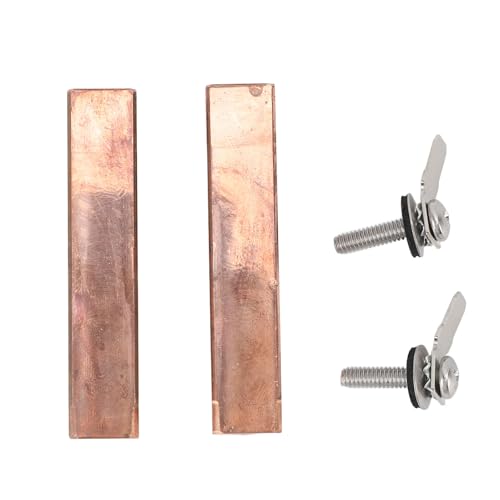
ZYLARUM Pool Ionizer Copper Electrodes | 2 Sets Low Electricity Consumption Electrodes for Clear Water/Spa/Hot Tub | Compatible Replacement Parts for Ionizer Chamber
Excellent Copper Construction – These swimming pool electrodes are made of sturdy copper material, ensuring long-term stability and…
As an affiliate, we earn on qualifying purchases.
As an affiliate, we earn on qualifying purchases.
Key Questions
What causes degradation in low-silver heterojunction electrodes?
The primary cause is interdiffusion between silver and copper layers, which increases contact resistance and leads to microstructural damage over time.
How does this research impact the future of solar module manufacturing?
It highlights the need for improved interfacial stability strategies to ensure long-term reliability when using low-silver electrodes, potentially influencing material choices and processing techniques.
Are there ways to prevent or slow down this degradation?
Potential methods include introducing barrier layers to inhibit interdiffusion or optimizing material compositions to enhance interfacial stability, though further testing is needed.
Will these findings affect the cost of manufacturing solar modules?
Implementing stabilization techniques may initially increase costs, but could ultimately reduce long-term failure rates, improving overall cost-effectiveness.
What is the significance of this research for consumers?
Improved understanding of degradation pathways can lead to longer-lasting solar panels, providing better value and reliability for consumers over the lifespan of the modules.
Source: PV Magazine