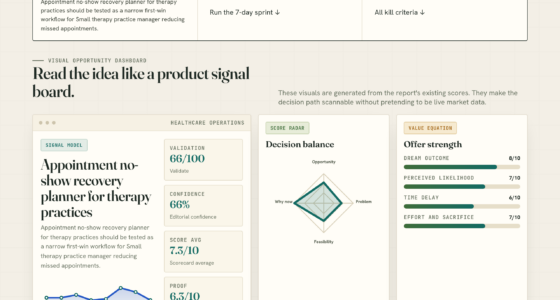

📊 Full opportunity report: Vertigo relief app on IdeaNavigator AI — validation score, market gap, and execution plan.

Get the latest gadgets delivered free with Prime
- Fast, free delivery on millions of items
- Prime Video, Amazon Music and more included
- Member-only deals all year
TL;DR
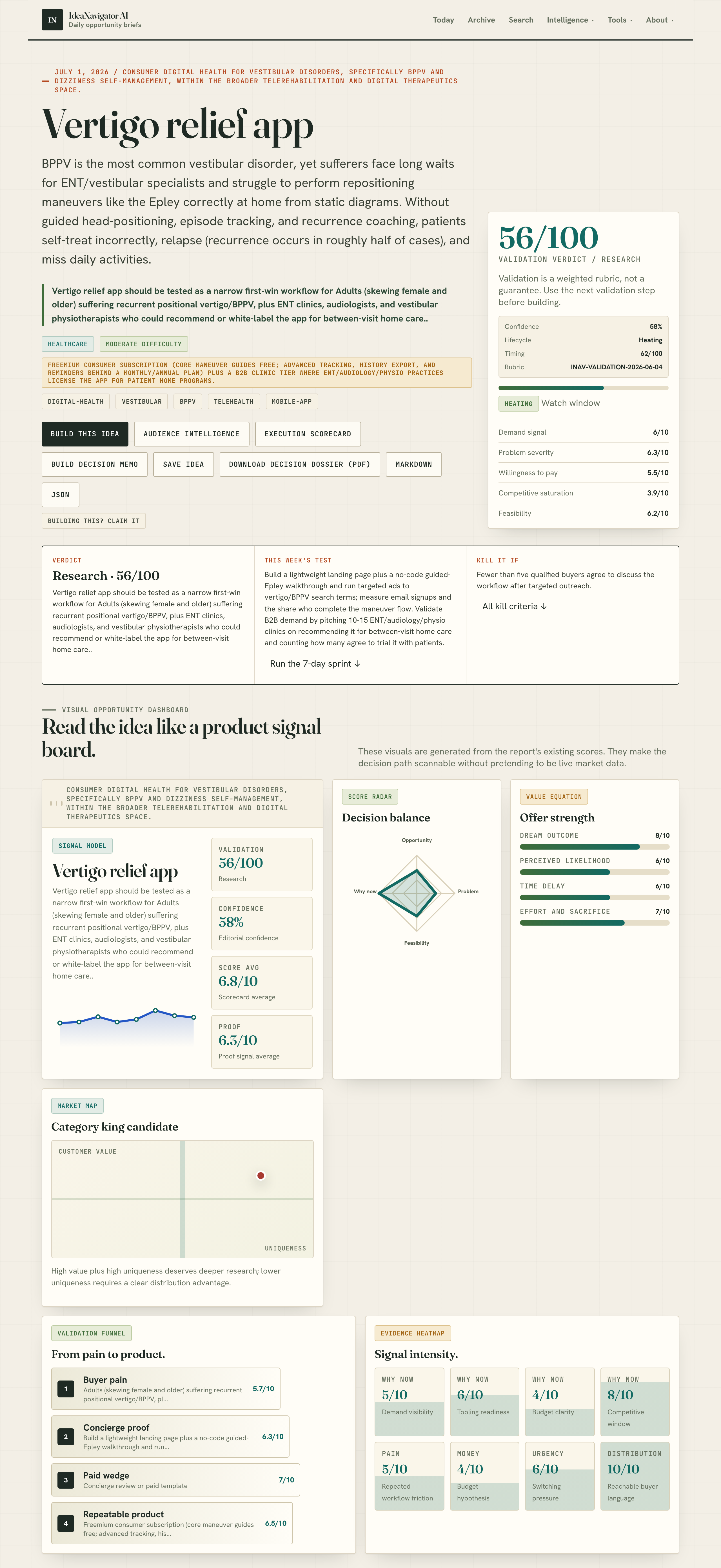
A new vertigo relief app is being developed to assist adults with benign paroxysmal positional vertigo (BPPV). It offers guided repositioning maneuvers, episode logging, and gyroscope-based head tracking. The app targets both consumers and clinics, with validation underway.
A new vertigo relief app is in development to support adults suffering from recurrent BPPV, offering guided repositioning exercises, symptom tracking, and real-time head position feedback. The app aims to address the long wait times for specialist care and the difficulty many patients face performing maneuvers correctly at home, with potential integration into clinical practice.
The app is designed for iOS and Android devices and will include a screening tool for BPPV candidacy, step-by-step animated guides for maneuvers like the Epley and Brandt-Daroff, and audio cues to assist users. It will leverage smartphone gyroscope sensors to provide real-time head-angle feedback, helping users perform maneuvers accurately. Additionally, it will log episodes, triggers, and symptom severity over time, providing data for both patients and clinicians.
Developers plan to offer a freemium model, with basic maneuver guidance free and advanced features such as detailed tracking, history exports, and reminders available through subscriptions. There is also a B2B component, where clinics can license the app to recommend to patients for between-visit management. Validation efforts include targeted advertising to measure sign-ups and maneuver completion rates, as well as outreach to ENT and physiotherapy clinics to gauge interest in clinical adoption.
Potential Impact on Vertigo Self-Management and Clinical Care
This app could significantly improve self-treatment accuracy for BPPV, reducing relapse rates and enabling more timely symptom management. Its integration into clinical workflows could streamline patient care, reduce appointment burdens, and support remote rehabilitation, especially as telehealth becomes more prevalent. The market growth for digital vestibular therapeutics indicates strong demand and acceptance among both consumers and healthcare providers.
BPPV vertigo repositioning maneuvers app
As an affiliate, we earn on qualifying purchases.
As an affiliate, we earn on qualifying purchases.
Rise of Digital Solutions for Vestibular Disorders
Benign paroxysmal positional vertigo (BPPV) is the most common vestibular disorder, yet many patients face delays in diagnosis and treatment. Traditional management involves in-clinic maneuvers performed by specialists, but COVID-19 accelerated the shift toward telehealth and home-based care. Smartphone sensors now enable accurate motion tracking, creating opportunities for digital therapeutics. The market for digital vestibular rehab was estimated near USD 498 million in 2024, with a projected CAGR of approximately 13.5% through 2033, reflecting growing acceptance and technological feasibility.
“Utilizing smartphone gyroscopes for real-time head tracking could empower patients to perform maneuvers more accurately at home, potentially reducing recurrence.”
— an anonymous researcher
As an affiliate, we earn on qualifying purchases.
Unconfirmed Aspects of App Validation and Adoption
It is not yet clear how effectively the app will perform in real-world settings or how quickly clinics and patients will adopt it. Validation studies are still in planning, and clinical efficacy data remains to be gathered. Additionally, regulatory considerations and reimbursement pathways are still evolving, which could impact deployment timelines.
head tracking gyroscope smartphone
As an affiliate, we earn on qualifying purchases.
As an affiliate, we earn on qualifying purchases.
Next Steps for Development and Market Testing
Developers plan to launch a lightweight landing page with a guided Epley maneuver simulation to measure interest and usability. They will run targeted ads to vertigo-related search terms, track sign-up and completion rates, and conduct pilot trials with ENT and physiotherapy clinics to assess clinical integration. Further validation studies and regulatory assessments are expected before broader rollout.
vestibular disorder symptom tracker
As an affiliate, we earn on qualifying purchases.
As an affiliate, we earn on qualifying purchases.
Key Questions
How accurate is the head-tracking feature in the app?
The app will leverage smartphone gyroscopes, which are capable of measuring head tilt angles with reasonable precision, but real-world accuracy will be validated during pilot testing and user feedback phases.
Can this app replace in-clinic treatment?
No, the app is designed as a supplementary tool for home management and self-treatment guidance, not a substitute for professional medical advice or in-person therapy.
Will clinics be able to recommend or license the app?
Yes, the plan includes a B2B licensing model allowing ENT, audiology, and physiotherapy clinics to integrate the app into their patient care programs.
What are the main benefits for patients using this app?
Patients could perform maneuvers more accurately, track their symptoms over time, and potentially reduce the frequency and severity of vertigo episodes, leading to improved daily functioning.
When will the app be available to the public?
The development and validation phases are ongoing, with a broader market release expected after successful pilot testing and regulatory review, likely within the next 12-18 months.
Source: IdeaNavigator AI
Halloween Picks
halloween
As an affiliate, we earn on qualifying purchases.