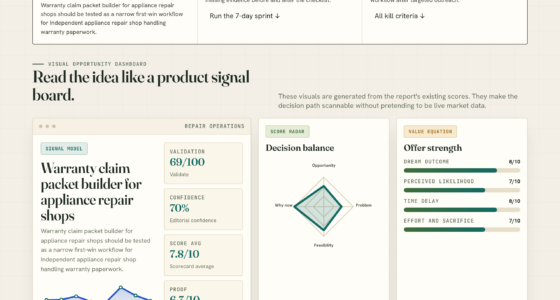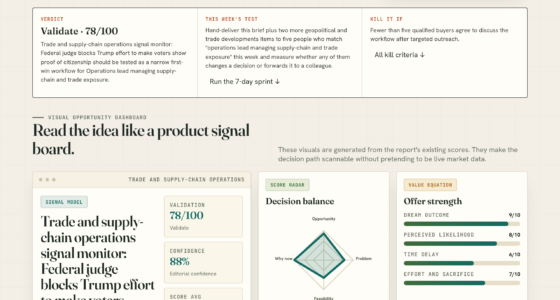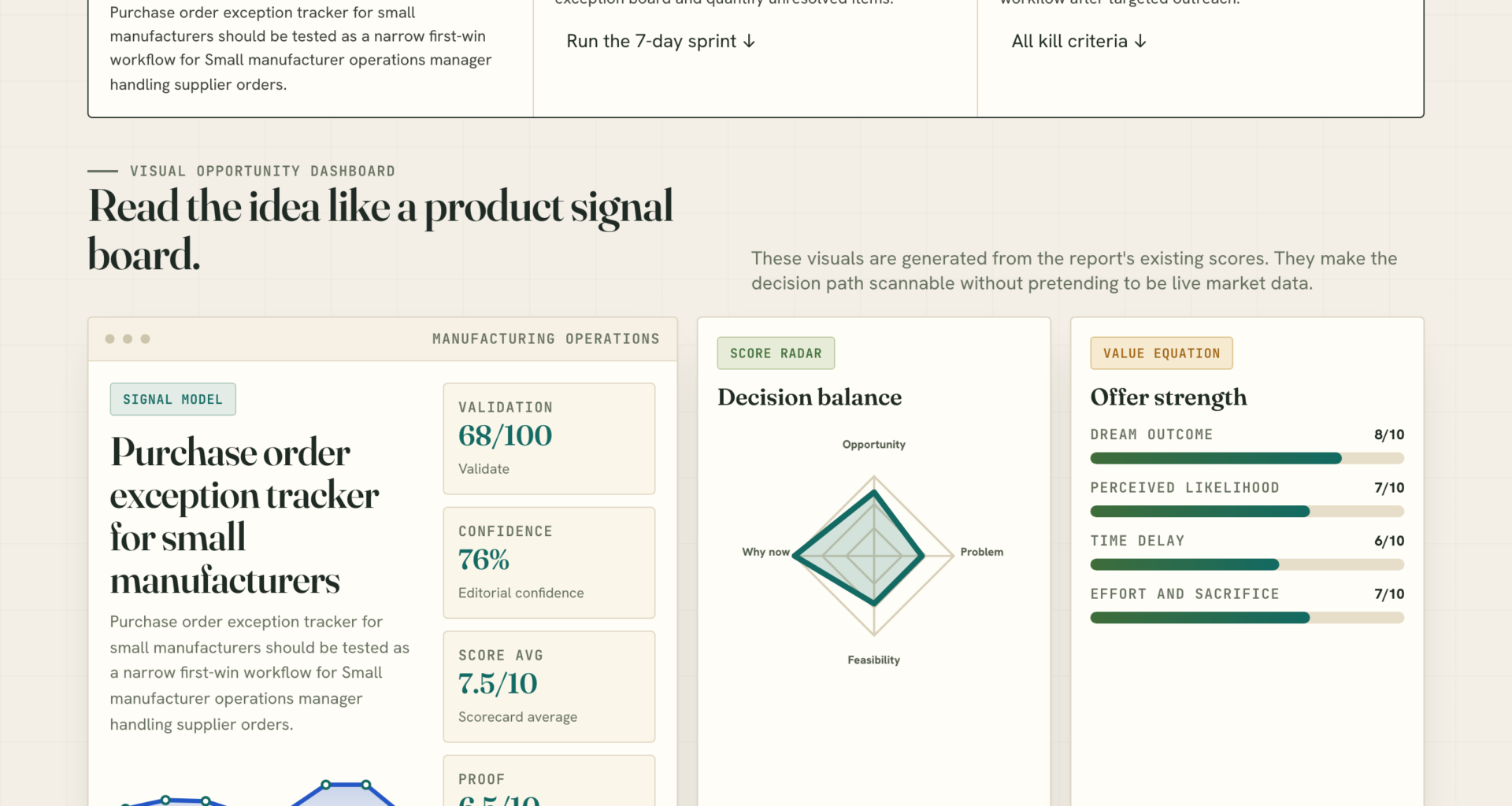

📊 Full opportunity report: Purchase order exception tracker for small manufacturers on IdeaNavigator AI — validation score, market gap, and execution plan.

Get the latest gadgets delivered free with Prime
- Fast, free delivery on millions of items
- Prime Video, Amazon Music and more included
- Member-only deals all year
TL;DR
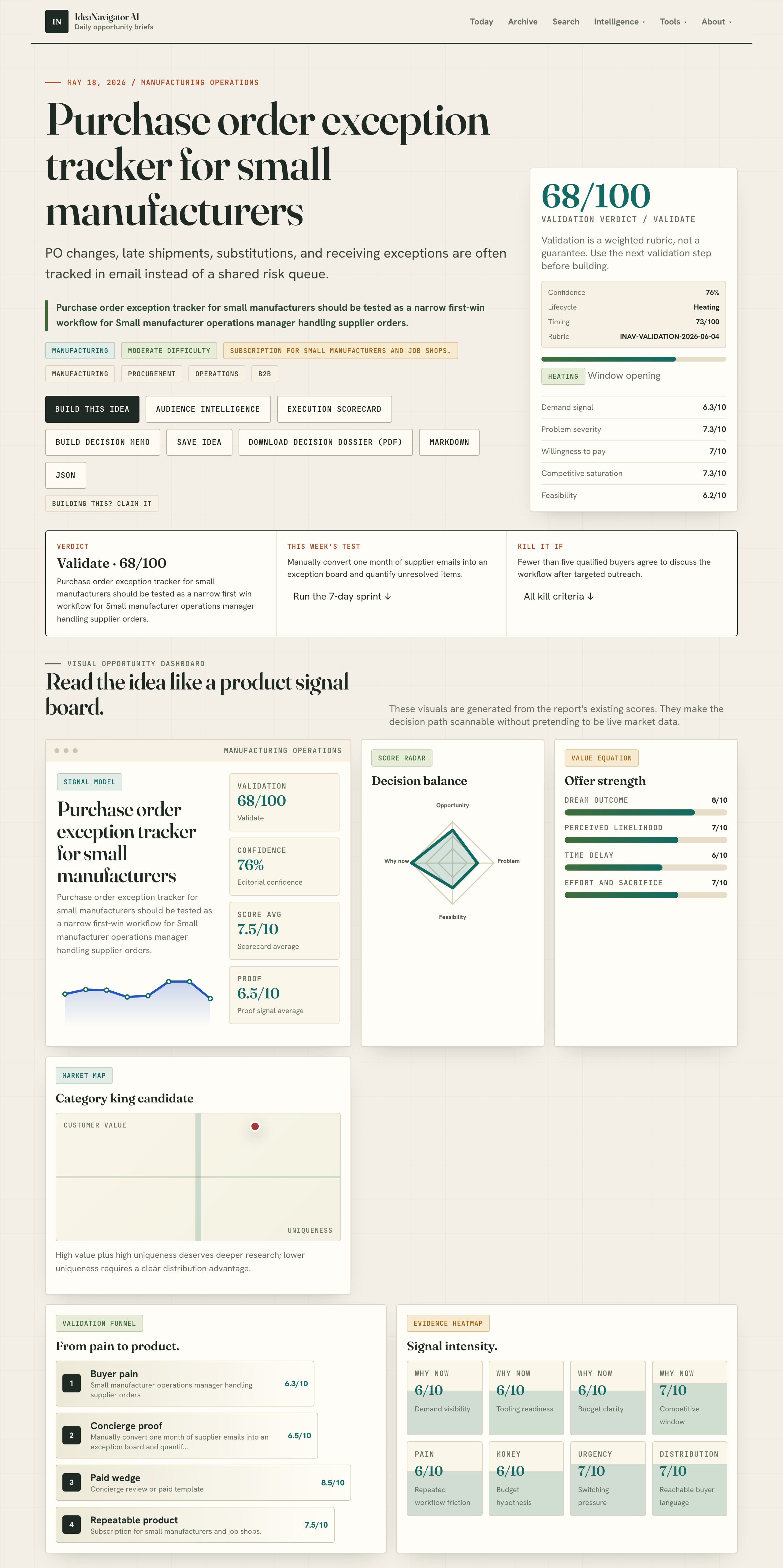
A prototype purchase order exception tracker is being tested for small manufacturers to streamline exception handling. The tool aims to reduce email tracking and improve operational efficiency during supply disruptions.
A purchase order exception tracker designed specifically for small manufacturers is set to be tested as a first step toward improving how these businesses handle supplier issues such as late shipments, substitutions, and order changes.
The proposed tool, developed by IdeaNavigator AI, aims to provide a shared, digital exception board that records supplier, purchase order details, issue type, owner, next action, and customer-impact notes. This approach seeks to replace the current reliance on email-based tracking, which can be inefficient and prone to oversight.
The initial testing will involve manually converting a month’s worth of supplier emails into the exception board to measure unresolved issues and evaluate the tool’s effectiveness. The target users are operations managers at small manufacturing firms, especially job shops, facing increased supply chain volatility.
Funding for the project is expected through a subscription model, with small manufacturers paying for access to the platform once it is validated through testing. The project is still in the early stages, and no commercial rollout date has been announced.
Why Streamlining PO Exception Handling Matters
Small manufacturers often operate with limited staff and resources, making efficient exception handling critical during supply disruptions. Relying on email for tracking issues can lead to delays, overlooked problems, and increased operational costs. Implementing a dedicated exception tracker could reduce these inefficiencies, lower costs, and improve responsiveness, especially in times of supply chain volatility.
By testing this tool, the initiative aims to demonstrate that a simple, shared digital workflow can significantly improve exception management for small manufacturing operations, potentially setting a new standard for small-scale supply chain coordination.
Products Worth Considering

LG UltraGear 34-Inch Curved QHD Gaming Monitor, 160Hz, FreeSync Premium

Bose TV Speaker Compact Soundbar with Bluetooth and HDMI-ARC, Black

DJI Mini 3 Drone with DJI RC Controller
As an affiliate, we earn on qualifying purchases.
Supply Chain Challenges Drive Need for Better Exception Management
Small manufacturers have historically managed purchase order issues through email correspondence, which becomes increasingly problematic during periods of supply chain volatility. As disruptions grow more frequent and complex, the need for a streamlined, shared tracking system has become more urgent.
Previous efforts to digitize supply chain workflows have often focused on larger enterprises, leaving small manufacturers behind. The current project by IdeaNavigator AI represents an effort to address this gap with a lightweight, easy-to-implement solution tailored for small operations.
“This exception tracker could significantly reduce the time and effort small manufacturers spend on tracking supplier issues.”
— an anonymous researcher
Uncertainties About Implementation and Effectiveness
It is not yet clear how well the manual conversion process will scale or whether the exception tracker will significantly reduce unresolved issues in practice. The success of the initial test depends on user adoption and the accuracy of data entry, which remain to be validated.
Further, the long-term impact on operational costs and supply chain resilience is still uncertain at this stage.
Next Steps in Validation and Potential Rollout
The next step involves conducting the initial manual conversion test, during which the team will measure unresolved exception items and gather user feedback. If the results are positive, the project could move toward developing an automated or semi-automated version of the tracker.
Further milestones include refining the platform based on early user input, expanding testing to more small manufacturers, and eventually launching a commercial subscription service. The timeline for broader deployment remains to be announced.
Key Questions
How will the exception tracker improve current processes?
The tracker aims to replace email-based tracking with a shared, digital platform that records all supplier issues, making it easier to prioritize and resolve exceptions quickly.
Who is the target user for this tool?
The primary users are operations managers at small manufacturing firms and job shops handling multiple supplier orders and facing frequent supply disruptions.
When will the tool be available for wider use?
It is still in the testing phase, with no specific rollout date announced. Success of initial tests will determine the timeline for broader deployment.
What are the main challenges in implementing this solution?
Key challenges include ensuring user adoption, maintaining data accuracy during manual input, and demonstrating measurable improvements in issue resolution.
How will the subscription model work?
Small manufacturers will pay a recurring fee to access the platform once it is validated, with pricing likely based on the number of users or volume of orders managed.
Source: IdeaNavigator AI