
TL;DR
Thorsten Meyer AI has published a 2026 roundup that evaluates local AI GPUs by VRAM tier, sustained heat and acoustic behavior rather than raw speed alone. The report says power limits and cooler design can change whether a high-end card is usable beside a desk, but noise results will vary by board partner, case airflow and workload.
Thorsten Meyer AI has published a 2026 roundup for local AI builders that shifts the GPU buying question from tokens per second alone to VRAM, heat output, cooler design and sustained noise, a change aimed at users running large language models on workstations they sit near for long sessions.
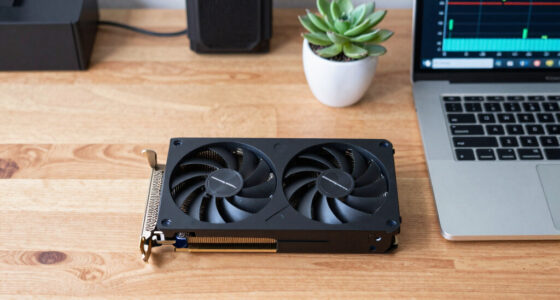
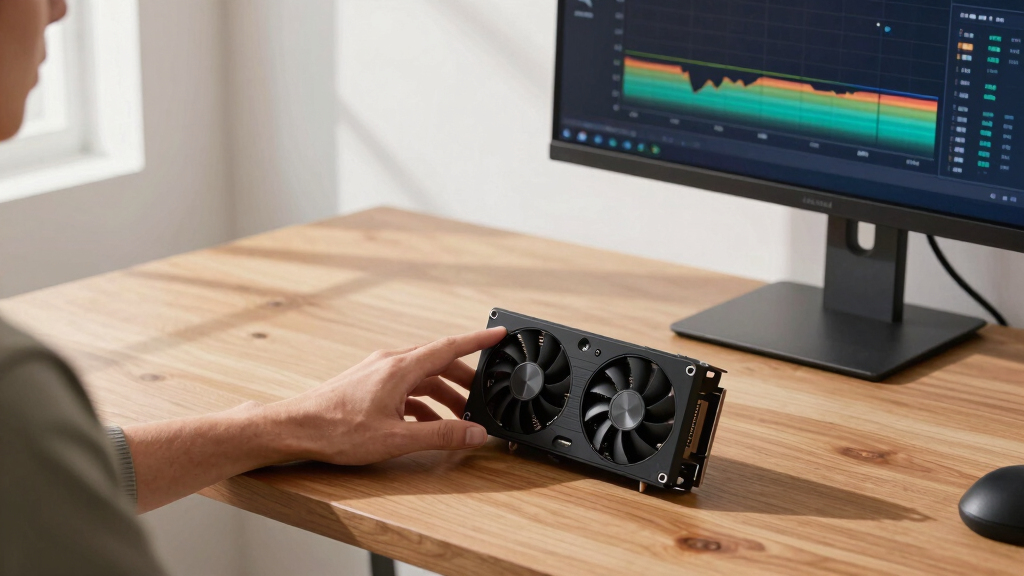
The roundup says VRAM remains the first constraint for local inference: if a model does not fit in GPU memory, performance can drop sharply through offloading or fail outright. It groups common 2026 choices into 16GB, 24GB, 32GB and 96GB tiers, with 16GB positioned for 7B to 13B models and some 34B models at Q4 quantization, 24GB as an enthusiast baseline, 32GB as a higher-end tier for 70B-class Q4 use, and 96GB as workstation territory for larger models.
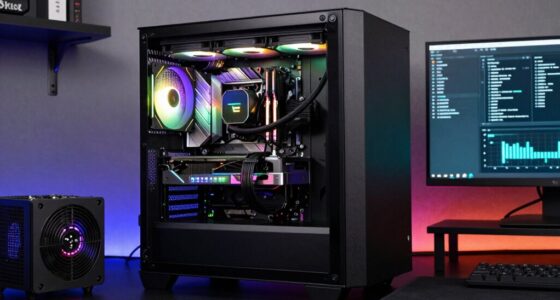
The guide identifies the GPU as the main heat and noise source in many AI workstations, estimating that it can produce 70% or more of total heat under inference. That figure is presented by Thorsten Meyer AI as a workload-based rule of thumb rather than a universal measurement, since total system heat depends on the CPU, case airflow, number of GPUs, power limits and model workload.
Official product data confirms two of the memory anchors used in the roundup: Nvidia lists the GeForce RTX 5090 with 32GB of GDDR7 memory, while Nvidia lists the RTX PRO 6000 Blackwell Workstation Edition with 96GB of GPU memory. The roundup also cites cards such as the RTX 5080, RTX 4090, used RTX 3090 and RTX 4060 Ti as options in lower or mid VRAM bands, depending on budget and model size.
Why It Matters
The report matters because local AI hardware decisions are no longer only about peak benchmark numbers. Many users now run inference for hours at a time in homes, studios and offices, where fan noise, heat buildup and electrical load can make a fast GPU unpleasant or impractical.
The main buying message is that the quietest useful system is the one that matches the model’s VRAM requirement first, then reduces heat through power limits and cooler choice. For readers, that means a lower-power 16GB card may be the better fit for small models, while a 32GB or 96GB card may be justified only when larger models, longer context windows or multi-model workflows require the memory.

Apple 2026 MacBook Pro Laptop with Apple M5 Pro chip with 15-core CPU and 16-core GPU: Built for AI, 14.2-inch Liquid Retina XDR Display, 24GB Unified Memory, 1TB SSD, Wi-Fi 7; Space Black
FAST RUNS IN THE FAMILY — The 14-inch MacBook Pro with the M5 Pro or M5 Max chip…
As an affiliate, we earn on qualifying purchases.
As an affiliate, we earn on qualifying purchases.
Background
Most consumer GPU guides have ranked cards by gaming performance, synthetic compute scores or raw AI throughput. This roundup narrows the lens to local LLM inference, where memory capacity, memory bandwidth and sustained thermal behavior can matter more than short benchmark bursts.
The guide also reflects a shift in workstation planning after the arrival of Blackwell-generation cards. Nvidia says the RTX 5090 uses the Blackwell architecture and includes 32GB of GDDR7 memory. Nvidia’s RTX PRO 6000 Blackwell materials list 96GB of GDDR7 memory and target professional AI, data science and graphics workloads.
Thorsten Meyer AI ties the GPU roundup to a broader workstation heat and noise guide and discloses that the article contains affiliate links. The site says prices and availability change often and tells readers to confirm current pricing and VRAM before buying.
“VRAM is the hard limit”
— Thorsten Meyer AI roundup
“The chip doesn’t decide how loud your card is”
— Thorsten Meyer AI roundup
“32 GB of super-fast GDDR7 memory”
— Nvidia RTX 5090 product page
“96GB of GPU memory”
— Nvidia RTX PRO 6000 Blackwell materials

Adfaga Dual PWM Fan VRAM Heatsink High Performance Aluminum Alloy GPU Backplate Cooler with Adjustable Speed for RTX 3080 3070 Graphics Card Cooling System (0.5mm Pad 600)
[PREMIUM ALUMINUM ALLOY CONSTRUCTION] This high-quality VRAM heatsink is crafted from durable aluminum alloy for exceptional heat dissipation…
As an affiliate, we earn on qualifying purchases.
As an affiliate, we earn on qualifying purchases.
What Remains Unclear
Several points remain variable. The roundup’s acoustic guidance depends on partner-card cooler design, case airflow, ambient temperature, fan curves, workload length and whether the user applies a power limit or undervolt. The claim that a 70% to 80% power cap causes little inference loss is workload-dependent and should be tested on the specific model, runtime and quantization method in use.
Pricing and availability are also unsettled. The source material warns readers to confirm live prices and VRAM before buying, and board-partner designs can change the heat and noise profile even when the GPU chip is the same.

maxsun GEFORCE GT 710 2GB Low Profile Ready Small Form Factor Video Graphics Card GPU Support DirectX12 OpenGL4.5, Low Consumption, VGA, DVI-D, HDMI, HDCP, Fanless Cooling
Chipset: NVIDIA Geforce GT 710, Passive 0dB efficient cooling, huge heat sink radiator covers the area of GPU…
As an affiliate, we earn on qualifying purchases.
As an affiliate, we earn on qualifying purchases.
What’s Next
The next step for buyers is to pick the largest model they expect to run, map it to a VRAM tier, then compare specific board-partner coolers rather than only GPU names. Readers building multi-GPU systems should also watch for separate testing on blower versus open-air coolers, since the roundup says the best cooler choice changes when cards are stacked closely together.
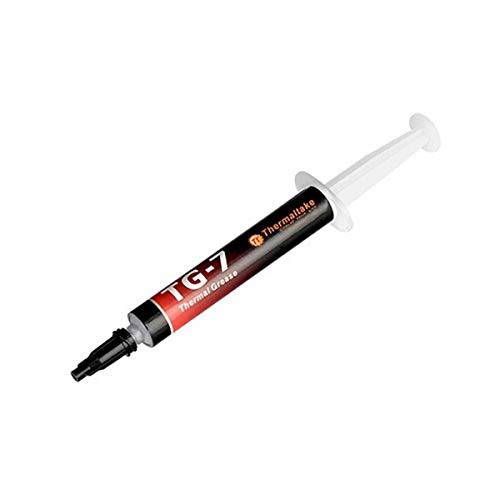
Thermaltake TG-7 Extreme Performance CPU GPU Heatsink Cooling Thermal Grease CL-O004-GROSGM-A, Gray
Designed for Extreme Performance
As an affiliate, we earn on qualifying purchases.
As an affiliate, we earn on qualifying purchases.
Key Questions
What is the main news in this roundup?
Thorsten Meyer AI has released a 2026 guide that ranks GPUs for local AI by VRAM, heat and noise behavior, not only inference speed.
Why does VRAM come before noise in the guide?
The guide says model fit is the hard limit. If the model does not fit in VRAM, speed and usability can fall sharply, even if the GPU is otherwise powerful.
Which GPU tier does the roundup favor for 70B-class local models?
The source places 32GB cards, including the RTX 5090, as the tier that can open up 70B models at Q4 quantization without offloading, while 96GB workstation cards target larger or less-compressed workloads.
Can any GPU be made quiet?
The roundup says power limits and cooler design can greatly reduce noise, but it does not claim every card will be quiet in every build. Results depend on the exact card, case, workload and settings.
What should readers check before buying?
Readers should verify current VRAM, price, cooler type, case clearance, power supply capacity and recent acoustic tests for the exact board model they plan to buy.
Source: Thorsten Meyer AI