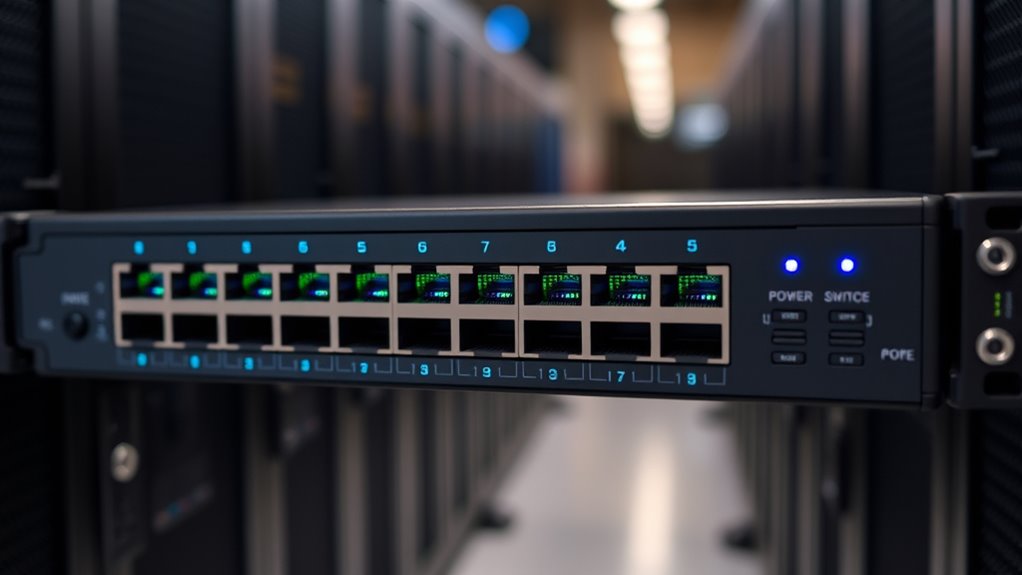
When searching for PoE Ethernet switches, the key considerations are power capacity, port count, manageability, and build quality. The NETGEAR GS108PP stands out as the best overall pick, offering reliable unmanaged performance at a competitive price. The TP-Link TL-SG108PE V3 offers more advanced management features, making it ideal for small offices. Meanwhile, the UGREEN Ethernet Switch provides a cost-effective, straightforward solution for users who need basic PoE support. Buyers face tradeoffs between port quantity, manageability, and budget. Continue reading for a detailed breakdown of these options and how to choose the best switch for your needs.

Get the latest gadgets delivered free with Prime
- Fast, free delivery on millions of items
- Prime Video, Amazon Music and more included
- Member-only deals all year
Complete the kit



Key Takeaways
- Managed switches provide greater control and security, but come at a higher price compared to unmanaged options.
- Power budget (Wattage) is critical for supporting multiple PoE devices simultaneously, especially high-power devices like PTZ cameras.
- Port count varies widely; choose a switch that balances expansion needs with space constraints.
- Fanless designs help reduce noise and improve longevity, ideal for quiet environments.
- Build quality and shielding can impact durability and network stability, especially in harsh environments.


More Details on Our Top Picks
5-Port Ethernet PoE Switch with Extend Function, Managed, Fanless, VLAN, QoS, Wall/Mountable
This switch stands out for its managed capabilities in a compact, fanless design, making it ideal for those who want to control network traffic and prioritize devices. Compared with the unmanaged NETGEAR GS305P, it offers advanced features like VLAN and QoS, but at the cost of a lower data transfer rate of only 100 Mbps, which could bottleneck bandwidth-heavy applications. Its lightning protection and durable metal housing add reliability for long-term use. This model is better suited to environments where management and silent operation outweigh raw speed or high data throughput.
Pros:- Easy managed PoE ports with cloud management interface
- Silent, fanless operation for quiet environments
- Durable metal housing with lightning protection
Cons:- Limited to 100 Mbps data transfer rate, which may bottleneck speed for some users
- Requires compatible PoE devices for power delivery
Best for: Small office or home network users needing managed features and silent operation
Not ideal for: Users with high-speed data needs or gigabit applications, as it supports only 100 Mbps speeds
- Number of Ports:5
- PoE Ports:4
- Uplink Port:1
- PoE Standard:IEEE802.3af/at
- Max Power per Port:30W
- Data Transfer Rate:100 Mbps
- Protection:Lightning protection 4KV
- Mounting Options:Desktop/Wall Mount
Our verdict“This switch is best for users prioritizing management and silent operation over high-speed data transfer.”
NETGEAR 5-Port PoE Gigabit Ethernet Unmanaged Switch (GS305P)
The NETGEAR GS305P offers gigabit speeds and a straightforward plug-and-play experience, making it an excellent choice for users who need reliable, high-speed network connections without extra management. Unlike the managed B099PKV69M, this switch lacks advanced features like VLAN or QoS but compensates with faster data transfer rates suitable for bandwidth-intensive tasks. Its compact, sturdy metal case allows flexible placement, whether on a desk or wall. This switch makes the most sense for small setups where simplicity and speed are priorities, though the limited power budget of 63W might restrict some high-power PoE devices.
Pros:- Compact, sturdy metal design suitable for multiple mounting options
- Plug-and-play setup with no configuration needed
- Gigabit speeds support high-bandwidth applications
Cons:- Limited to unmanaged switch functionality, lacking advanced controls
- Power budget of 63W may be insufficient for some high-power PoE devices
Best for: Small businesses or home users needing gigabit speeds with PoE+ and easy setup
Not ideal for: Environments requiring managed features, network segmentation, or higher PoE power budgets
- Number of Ports:5
- PoE Ports:4 x 1G PoE+
- Total Power Budget:63W
- Data Transfer Rate:1000 Mbps
- Switch Type:Unmanaged
- Color:Black
- Case Material:Metal
- Dimensions:9.5″L x 6.7″W x 3.4″H
Our verdict“Ideal for users seeking simple, high-speed PoE connections with minimal fuss and management.”
TP-Link TL-SF1005P 5-Port Fast Ethernet PoE Switch
This model makes the most sense for those on a tight budget who still want PoE support, especially since it offers a decent 67W total power budget and supports up to 30W per port. Compared to the gigabit options, it provides only 10/100 Mbps speeds, which limits high-bandwidth tasks but keeps costs low. Its extend mode allows for longer cable runs up to 250 meters, adding flexibility for larger or more dispersed setups. Despite its simplicity, the fanless design keeps it quiet, but the slower speeds and lack of management features make it less suitable for demanding or complex networks.
Pros:- Supports high power PoE for multiple devices
- Easy plug-and-play setup with extend mode for long-distance transmission
- Quiet, fanless operation with durable metal case
Cons:- Limited to 10/100 Mbps speeds, unsuitable for high-bandwidth applications
- Extend mode reduces speed to 10 Mbps, affecting performance
Best for: Home users or small offices with basic PoE needs and lower speed requirements
Not ideal for: Environments demanding gigabit speeds or advanced network management
- Number of Ports:5
- PoE Ports:4
- PoE Power per Port:30W
- Total PoE Power Budget:67W
- Port Speed:10/100 Mbps
- Extend Mode Range:250 meters
- Case Material:Metal
- Warranty:3 years
Our verdict“Best suited for basic PoE deployments where speed is less critical than cost and ease of use.”
TP-Link TL-SG108PE V3 8-Port Gigabit PoE Switch with Managed Features
This switch offers gigabit speeds with managed features like VLAN, QoS, and IGMP snooping, making it suitable for more complex network environments. Compared with the unmanaged NETGEAR GS305P, it provides more control over traffic and segmentation, but with a lower total PoE power budget of 64W spread over four PoE+ ports. Its sturdy metal design and fanless operation support reliable, silent performance, but the absence of advanced Layer 3 features limits its use in larger or highly segmented networks. It’s a clear choice for users who want network control without the need for expensive enterprise hardware.
Pros:- Easy to set up with plug-and-play design
- Supports smart management, VLAN, and QoS for traffic control
- Sturdy metal construction with fanless silent operation
Cons:- Limited PoE power budget of 57W, restricting high-power devices
- No built-in software management interface, relies on web tools
Best for: Small business or advanced home networks requiring gigabit speeds and basic management
Not ideal for: Large networks or environments needing extensive Layer 3 routing features
- Number of Ports:8
- PoE Ports:4 PoE+
- PoE Power:64W
- Management:Smart managed
- Port Speed:Gigabit
- Warranty:Limited lifetime
- Material:Sturdy metal
- Fanless:Yes
Our verdict“Best for users seeking gigabit speeds combined with manageable network segmentation and traffic control.”
NETGEAR 5-Port Gigabit Ethernet Easy Smart Managed Network Switch (GS305E)
The NETGEAR GS305E balances ease of use with smart management features such as VLAN, QoS, and port monitoring, making it an excellent pick for small businesses wanting control without complexity. Unlike the more feature-rich TL-SG108PE, it offers a similar gigabit speed but with a simplified web-based management interface that’s accessible for users with minimal networking experience. Its compact, fanless metal design supports flexible placement and silent operation. However, its five ports and 5W power budget render it less suitable for larger or high-powered network setups, limiting scalability.
Pros:- Easy to configure with intuitive management interface
- Silent operation with fanless design
- Supports VLAN, QoS, and port management features
Cons:- Limited to 5 ports, not scalable for bigger networks
- PoE power budget of only 57W may restrict high-power device support
Best for: Small business owners or tech-savvy home users needing manageable gigabit switches
Not ideal for: Larger networks or setups requiring high PoE power or more ports
- Ports:5 x 1.0Gbps
- Management:Easy Smart Managed
- VLAN & QoS:Supported
- Design:Compact metal, fanless
- PoE Power:57W
- Region Compatibility:U.S. & CA
- Lifetime Warranty:Yes
Our verdict“Great for small business environments seeking manageable gigabit switching with simple controls.”
TP-Link TL-SG1005P 5-Port Gigabit PoE Switch, 4 PoE+ Ports, Desktop, Fanless, Shielded Ports
This unmanaged switch offers a straightforward, reliable solution for powering a few PoE devices without the complexity of management features. Its 4 PoE+ ports support up to 30W each, making it suitable for basic surveillance cameras or access points. Compared with the TP-Link LS108GP, it provides fewer ports and a smaller power budget, but its fanless, metal case makes it ideal for noise-sensitive spaces. The tradeoff is that it lacks advanced management options, limiting customization and control. Its small size and durable build make it perfect for desktop use or tight spaces where simplicity matters. However, if you require network configuration or higher PoE capacity, this model may fall short.
Pros:- Plug-and-play setup simplifies installation
- Fanless, metal case ensures silent operation
- Supports high-power PoE+ on four ports
Cons:- Limited to unmanaged switch features
- PoE power budget may be insufficient for multiple high-power devices
Best for: Small office or home setups needing easy PoE power for a handful of devices
Not ideal for: Large deployments or environments requiring managed switches with VLAN and advanced controls
- Number of Ports:5
- PoE Ports:4 PoE+
- PoE Power Budget:65W
- Port Speed:Gigabit
- Power Supply:48V
- Switch Type:Unmanaged
Our verdict“Great for simple, quiet PoE needs in small environments without complex management requirements.”
TP-Link TL-SG116P, 16 Port Gigabit PoE Switch
The TL-SG116P stands out for its substantial port count and enhanced features like priority, isolation modes, and extend mode, making it well-suited for expanding network needs such as surveillance or office systems. Compared with the TP-Link LS108GP, it offers more ports, higher total PoE power (120W), and modes to manage traffic and device prioritization. The main tradeoff is that its speed can downgrade to 10 Mbps in Extend Mode, which may impact performance for certain applications. This model is better suited for users who need more ports and some management features but can accept the complexity and potential speed reduction. For simple setups or small-scale deployments, the LS108GP remains more straightforward.
Pros:- Supports high-power PoE devices on all ports
- Extended range up to 250 meters
- Includes priority and isolation modes for traffic control
- Automatic PoE device recovery
Cons:- Speed may drop to 10 Mbps in Extend Mode
- Requires configuration for optimal PoE auto recovery
Best for: Growing small to medium networks requiring more ports and some management features
Not ideal for: Small environments needing a simple, unmanaged switch without configuration complexity
- Number of Ports:16
- PoE Standard:802.3at/af
- PoE Power per Port:30W
- Total PoE Power Budget:120W
- Extend Mode Range:250 meters
- Warranty:3 years
Our verdict“Ideal for expanding networks that need more ports and basic traffic management, accepting some speed tradeoffs.”
TP-Link LS108GP 8-Port PoE Gigabit Ethernet Switch
The LS108GP offers a compact, unmanaged design with 8 PoE+ ports, making it a solid choice for small surveillance setups or office extensions. Its extend mode supports long-distance PoE transmission, comparable to the YuanLey 5 Port Gigabit PoE Switch, but with built-in auto recovery features for dropped devices. Its fanless, metal case keeps noise levels minimal, ideal for quiet environments. The main tradeoff is its limited management capabilities, which restrict fine-tuning or VLAN support. Compared to larger managed switches, this model sacrifices control for simplicity and silence, making it perfect for users who prioritize plug-and-play operation over detailed network management.
Pros:- Supports 8 PoE+ ports with high power output
- Fanless, durable metal case for silent operation
- Extend mode allows long-distance PoE transmission
Cons:- Limited to unmanaged features
- PoE budget may be insufficient for large device counts
Best for: Small-scale surveillance or network expansion in noise-sensitive environments
Not ideal for: Large or complex networks requiring VLAN, QoS, or remote management
- Number of Ports:8
- PoE Power Budget:62W
- PoE Support:PoE+ (802.3at/af)
- Extend Mode:Long-distance
- Switch Type:Unmanaged
- Mounting Options:Desktop/Wall mount
Our verdict“Best suited for small, silent deployments where simple PoE power and long-distance transmission are priorities.”
8 Port Gigabit PoE Switch with 2 Gigabit Uplink, 1000Mbps, 802.3af/at, 120W Built-in Power, VLAN, Unmanaged, Metal, Plug and Play
This unmanaged switch combines a strong 120W power budget with VLAN features, making it a good fit for surveillance or IP camera networks that need segmentation and reliable power. Its 8 PoE ports and 2 uplinks match the capabilities of larger switches like the TP-Link TL-SG116P, but it offers a more streamlined, plug-and-play experience. The main limitation is the lack of remote management—users must physically access the switch for configuration or troubleshooting. Its silence and ease of use make it attractive for small to medium deployments, but advanced users or larger enterprise setups might find it restrictive.
Pros:- Supports 802.3af/at PoE with 120W power
- VLAN support enhances network security
- Fanless design ensures silent operation
- Built-in power supply simplifies setup
Cons:- No remote or advanced management capabilities
- Limited to standard PoE devices without additional features
Best for: Small surveillance setups or IP camera networks requiring VLAN segmentation
Not ideal for: Large, managed enterprise networks needing remote configuration and detailed controls
- Number of Ports:8
- PoE Power:120W
- Uplink Ports:2
- VLAN Support:Yes
- Switch Type:Unmanaged
- Warranty:1 Year
Our verdict“Suitable for small surveillance projects needing VLAN segmentation and reliable PoE power without management complexity.”
YuanLey 5 Port Gigabit PoE Switch with 4 Port PoE+ 1000Mbps, 802.3af/at 78W Built-in Power, Fanless Metal Unmanaged Plug & Play
The YuanLey 5-port switch offers a solid balance of power and simplicity, with 4 PoE+ ports supporting up to 78W total and speeds up to 1000Mbps. Its fanless, metal design ensures quiet operation, similar to the TP-Link TL-SG1005P, but with a higher power budget suitable for multiple cameras or access points. Unlike managed switches, it lacks advanced features such as VLAN or traffic prioritization, which may limit its use in more complex setups. Its plug-and-play approach makes it accessible for small business or home users who want reliable PoE without added complexity.
Pros:- Supports high PoE power up to 78W total
- Plug-and-play with no configuration needed
- Durable, fanless metal construction
Cons:- No advanced management features
- Limited to unmanaged switch capabilities
Best for: Small business or home networks needing high-power PoE without management complexity
Not ideal for: Large, managed network environments requiring VLAN and detailed control
- Number of Ports:5
- PoE Power:78W
- Speed:1000Mbps
- PoE Ports:4 PoE+
- Design:Fanless metal
- VLAN Support:Yes
Our verdict“Best for straightforward, high-power PoE applications in small networks without management needs.”
NETGEAR 8-Port PoE Gigabit Ethernet Unmanaged Network Switch (GS108PP)
This model stands out for its straightforward, plug-and-play setup, making it ideal for small networks without the need for advanced management. Its PoE+ support with a robust 123W power budget makes it suitable for powering multiple devices like cameras and phones simultaneously. Compared to the NETGEAR GS308PP, the GS108PP offers a higher total power budget, but both share a fanless, silent operation that suits quiet environments. The lack of management features means it’s best for users who want simplicity, but this also limits customization and advanced control. The fanless, metal design adds durability, and flexible mounting options allow versatile deployment. However, its unmanaged nature could be limiting for larger, more complex networks, and it does not include a power supply, which could add to setup costs.
Pros:- Easy plug-and-play setup with no configuration needed
- Supports PoE+ for powering multiple devices simultaneously
- Silent, fanless operation for quiet environments
- Flexible mounting options for various setups
Cons:- Limited to unmanaged switch functionality, restricting control
- No included power supply, adding to initial setup cost
- No wireless or Wi-Fi capabilities for integrated networking
Best for: Small business or home users seeking reliable, high-capacity PoE for cameras and VoIP without complexity
Not ideal for: Network administrators needing advanced management features and detailed control over traffic prioritization
- Number of Ports:8
- Ethernet Speed:Gigabit (1.0Gbps)
- PoE+ Support:Yes
- PoE Power Budget:123W
- Mounting Options:Desktop, wall-mount, rack-mount
- Design:Fanless, metal
Our verdict“Ideal for small-scale deployments where simplicity and PoE power are priorities over management features.”
NETGEAR 16-Port PoE Gigabit Ethernet Unmanaged Network Switch (GS316P)
The GS316P makes a compelling case for users needing more ports without sacrificing simplicity; it supports 16 PoE+ ports with a total power budget of 115W. Compared to the 8-port GS108PP, this switch expands capacity for larger setups, such as multiple cameras or phones, in a straightforward plug-and-play package. Its unmanaged design keeps setup simple, but this means no advanced traffic management or VLAN support, which could be a downside for more complex networks. Its compact design and energy-efficient operation make it well-suited for desktop or wall mounting, though some might find the compact size a challenge for rack setups. The absence of an external power adapter can be inconvenient, requiring users to ensure they have compatible power sources.
Pros:- Supports 16 PoE+ ports with a high total power budget
- Plug-and-play setup with no configuration required
- Energy-efficient and silent operation
- Compact size suitable for desktop or wall mounting
Cons:- Limited to unmanaged features, no traffic prioritization
- No included external power supply
- Design may be too small for some rack environments
Best for: Small to medium-sized businesses wanting a higher port count with minimal management complexity
Not ideal for: Network teams seeking detailed control or VLAN configuration for segmented networks
- Number of Ports:16
- Port Type:PoE+
- Power Budget:115W
- Data Transfer Rate:1000 Mbps
- Switch Type:Unmanaged
- Dimensions:11.3″L x 4″W x 1.1″H
Our verdict“Best suited for expanding networks that prioritize ease of use and port density over advanced features.”
NETGEAR 8-Port PoE Gigabit Ethernet Unmanaged Network Switch (GS308PP)
The GS308PP offers essential PoE+ capabilities in a small, fanless form factor, making it suitable for environments where noise is a concern. It supports 8 PoE+ ports with an 83W power budget, which is enough for typical PoE devices like IP cameras and phones, but less than the GS108PP’s 123W, limiting high-power device support. Compared to the GS316P, it’s more compact and silent, but with fewer ports and less total power. Its unmanaged setup simplifies deployment, yet it lacks management features for traffic control or VLANs. The fanless, metal construction ensures durability and quiet operation, ideal for small offices or home use where minimal noise is essential. The power budget may restrict larger or high-power device deployment.
Pros:- Fanless, silent operation for quiet environments
- Supports PoE+ for powering IP cameras and VoIP phones
- Compact, durable metal design
- Flexible mounting options
Cons:- Limited to unmanaged switch features, no traffic management
- Lower total power budget compared to larger switches
- No included power supply
Best for: Small business or residential users prioritizing silent operation and compact size for PoE device deployment
Not ideal for: Networks requiring management features or high-power PoE support for demanding devices
- Number of Ports:8
- PoE+ Support:Yes
- Total Power Budget:83W
- Design:Fanless, metal
- Mounting Options:Desktop, wall-mount
Our verdict“Perfect for small setups needing silent, space-efficient PoE switching without management complexity.”
8 Port Gigabit PoE Switch with 2 Gigabit Uplink, 120W Built-in Power, Managed, Fanless, Metal, Plug and Play
This switch combines high-power PoE+ support with advanced management features, making it suitable for more complex or growing networks. Its 120W PoE budget supports demanding devices, while the 2 gigabit uplinks ensure high-speed data transfer. Compared to the unmanaged NETGEAR options, this switch provides VLAN, QoS, and remote management, which is critical for network segmentation and prioritization. Its fanless, metal construction guarantees durability and silent operation. However, the need for some network knowledge can be a barrier for less experienced users, and it’s geared towards small to medium-sized networks rather than large enterprise environments. The inclusion of management features adds complexity but offers valuable control for expanding networks.
Pros:- Supports high-power PoE+ devices with 120W budget
- Managed features including VLAN and QoS for traffic control
- Fanless, durable metal design for silent, reliable operation
- Flexible deployment with web, app, and software management
Cons:- Requires some network expertise to utilize management features
- Limited to small or medium-sized networks, not enterprise-scale
- No included mounting hardware
Best for: Small business or advanced home users needing reliable PoE+ and network management capabilities
Not ideal for: Home users or small setups that prefer plug-and-play simplicity without configuration
- Ports:8 Gigabit PoE ports
- Uplink:2 Gigabit
- PoE Power:120W
- Operation Mode:Managed
- Design:Fanless, metal
Our verdict“Ideal for small networks that need robust PoE+ power combined with management and segmentation features.”
UGREEN Ethernet Switch, 10-Port PoE Switch, 8 PoE+ @ 60W + 2 Gigabit Uplink
The UGREEN 10-port switch offers flexibility with 8 PoE+ ports supporting 60W total, plus 2 gigabit uplinks, making it suitable for small to medium setups that need long-distance PoE extension. Its multiple operation modes, including VLAN and extend mode, provide versatility for different network scenarios, such as security camera networks or office environments. Compared to the NETGEAR options, this switch’s support for VLAN and extend mode offers more control over traffic and distance, but its lower power budget limits the support for high-power devices. Its durable metal case and plug-and-play simplicity make it accessible for users with some technical knowledge who want more control than unmanaged switches provide.
Pros:- Supports 8 PoE+ ports with a 60W total budget
- Multiple modes including VLAN and extend for long-distance PoE
- High-speed 1Gbps connectivity with low latency
- Durable metal case and easy setup
Cons:- Limited power budget restricts high-power device support
- Managed features require some technical knowledge
- No integrated Wi-Fi or wireless capabilities
Best for: Small to medium-sized networks requiring PoE extension and traffic management features
Not ideal for: High-power PoE device deployment or users seeking a simple, unmanaged plug-and-play device
- Number of Ports:10
- PoE+ Ports:8
- PoE Power:60W
- Uplink:2 Gigabit
- Operation Mode:Managed
- Case Material:Metal
Our verdict“Best for users needing flexible PoE extension with traffic segmentation in small to medium networks.”
How We Picked
These PoE switches were evaluated based on a combination of performance, build quality, usability, and value. Priority was given to models that support sufficient power budgets for common deployments, such as security cameras and VoIP phones. Manageability features were considered for office or enterprise setups, while ease of use and plug-and-play capability were key for home users. The ranking reflects a balance of affordability, reliability, and flexibility, with a focus on models that suit a range of user needs. Units with proven durability and positive user feedback earned higher positions, ensuring each pick delivers real value.Factors to Consider When Choosing Poe Ethernet Switches
Choosing the right PoE Ethernet switch involves understanding several key factors that affect performance, scalability, and cost. Beyond basic features, it’s important to consider your specific network needs and future expansion plans. The following sections highlight critical criteria to help you make an informed decision and avoid common pitfalls.Power Budget and PoE Standards
The total wattage a switch can deliver determines how many high-power devices it can support simultaneously. For example, PoE+ (802.3at) provides up to 30W per port, suitable for PTZ cameras and access points, whereas standard PoE (802.3af) supplies up to 15.4W. Choosing a switch with an insufficient power budget can limit your device deployment or require additional hardware. Always calculate your total power needs before buying to avoid underpowered setups.
Number of Ports and Expandability
Port count directly influences your network’s scalability. Small setups may only need 5 or 8 ports, while larger installations require 16 or more. Consider future growth—buying a slightly larger switch can save money and hassle later. Additionally, look at uplink options, such as 2.5G or 10G ports, for high-speed backbone connections, especially in busy networks or enterprise environments.
Manageability and Features
Managed switches offer advanced features like VLANs, QoS, and remote administration, which are valuable in business networks. Unmanaged switches are simpler and more affordable but lack these capabilities. Think about your technical expertise and network complexity—if you need fine control and security, a managed model justifies the extra investment. For basic setups, unmanaged switches can be sufficient and more straightforward.
Build Quality and Environmental Suitability
Durability matters, especially in industrial or outdoor settings. Metal housings and shielding improve longevity and network stability. Fanless designs reduce noise, ideal for office or home environments. Assess where the switch will be installed and choose accordingly—ruggedized models suit harsh environments, while sleek, fanless units are better for quiet, indoor spaces.
Price and Total Cost of Ownership
While budget models are tempting, they may lack sufficient power or durability. Investing in a higher-quality switch often pays off through better reliability and longer lifespan. Also, consider future costs—expanding your network later might require additional switches or upgrades. Balance upfront investment with the anticipated growth and complexity of your network to ensure long-term value.
Frequently Asked Questions
Can I use a PoE switch with non-PoE devices?
Yes, you can connect non-PoE devices to a PoE switch, but those ports won’t receive power. The switch will supply data connectivity as usual, but devices like IP cameras or VoIP phones will only draw power if connected to PoE-enabled ports. To prevent confusion, label or organize your ports accordingly, and consider a switch with dedicated PoE and non-PoE ports if you have mixed devices.
How do I know if a PoE switch supports my devices’ power needs?
Check the switch’s total power budget (Wattage) and per-port PoE standards. For high-power devices like PTZ cameras or Wi-Fi access points, ensure the port supports PoE+ (802.3at) or higher, supplying up to 30W per port. Compare your device’s power requirements with the switch’s specifications to avoid underpowering, which can lead to device malfunctions or shutdowns.
Is a managed PoE switch worth the extra cost for home use?
For most home applications, unmanaged switches are sufficient and simpler to operate. Managed switches are more beneficial in environments where network segmentation, security, or remote management are priorities. If you plan to expand your smart home or set up multiple VLANs, a managed switch offers greater control. Otherwise, a basic unmanaged model can save money and complexity.
What is the advantage of fanless PoE switches?
Fanless switches operate silently and generate less heat, making them ideal for quiet office environments or home setups. They tend to have fewer moving parts, which can translate into longer durability. However, they may also have slightly lower maximum power budgets or be less suitable for high-heat environments. Choose fanless if noise and aesthetics are important for your space.
When should I consider a 16-port PoE switch instead of an 8-port model?
If your network requires connecting multiple high-power devices or you anticipate significant future expansion, a 16-port switch offers more flexibility. Larger port counts reduce the need for additional switches later, simplifying management. However, they tend to be more expensive and bulkier, so assess your current and future needs carefully to avoid overspending on unnecessary capacity.
Conclusion
For small home networks or users with limited device needs, an unmanaged 5- or 8-port switch like the NETGEAR GS108PP provides reliable, plug-and-play performance. Business users or those with growing networks should consider a managed switch such as the TP-Link TL-SG108PE V3 for advanced control. For budget-conscious buyers, the UGREEN Ethernet Switch balances cost with essential PoE support. Power users and professional setups will benefit from models with higher wattage budgets and port counts, like the 16-port options. Ultimately, your choice should align with your current requirements and future expansion plans—prioritize manageability for complex networks, and focus on power capacity and build quality for demanding environments.
Halloween Picks
halloween
As an affiliate, we earn on qualifying purchases.