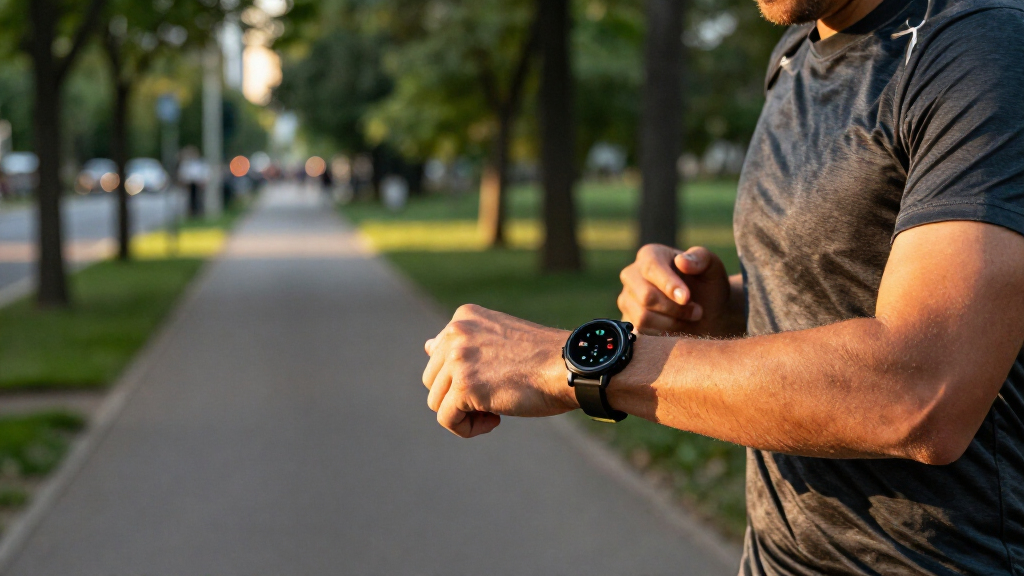

The best fitness smartwatches balance useful workout tracking with comfortable everyday wear, and my best overall pick is the Garmin Forerunner 165 for runners who want dedicated training tools and built-in GPS. The Garmin vívoactive 6 is a stronger fit for broader health and activity tracking, while the Amazfit Bip 6 offers a large AMOLED screen and GPS for shoppers seeking a more accessible feature mix. The main tradeoffs are tracking depth, phone and app compatibility, battery expectations, and how much you want to rely on health readings. Budget-oriented watches may list many sport modes, but that count alone does not tell you how useful the data or companion app will be. Read on for my comparison of all 15 picks and guidance on matching a watch to your training and daily routine.

Get the latest gadgets delivered free with Prime
- Fast, free delivery on millions of items
- Prime Video, Amazon Music and more included
- Member-only deals all year
Complete the kit



Key Takeaways
- Running-focused tools distinguish the Forerunner 165: It is the clearest match for buyers who prioritize structured run tracking over a general-purpose smartwatch experience.
- The vívoactive 6 and vívoactive 5 serve broader fitness routines: They sit closer to everyday health and activity tracking than the Forerunner, so runners should decide whether they need dedicated running emphasis.
- GPS and screen size are not interchangeable benefits: The Amazfit Bip 6 combines GPS with a large AMOLED display, while a bigger screen does not by itself mean deeper training analysis.
- Feature lists vary sharply in usefulness: Several generic models advertise more than 100 sport modes, but buyers should check app support, sensor details, and phone compatibility before treating that count as a measure of fitness capability.
- Samsung and Fitbit picks make sense for different ecosystems: The Galaxy Watch 8 is the Android-centered smartwatch option here, while Versa 4 and Sense 2 bring Fitbit’s health and activity approach; compatibility and the features you actually use should guide the choice.


| fitness smartwatch | Water resistance | Display | Battery life | Compatibility |
|---|---|---|---|---|
| Garmin Forerunner 165 Running | Listed as IPX7 and 50 meters | AMOLED touchscreen | Up to 11 days in smartwatch mode; up to 19 hours in GPS mode | Android and iPhone |
| Garmin vívoactive® 6 | 50 meters | AMOLED | Up to 11 days | — |
| Garmin vívoactive 5 | — | AMOLED | Up to 11 days | — |
| Smart Watch for Men | IP67; listed depth of 1 meter | 1.83-inch HD IPS | 5–7 days active use; up to 30 days standby | iOS 9.0+ and Android 5.0+ |
| Smart Watch with Alexa Built-i | IP68; swimming and hot showers are not recommended in the supplied details | 1.83-inch HD | 5–7 days | Android 5.0+ and iOS 9.0+ |
| Amazfit Bip 6 Smart Watch | 50 meters | 1.97-inch AMOLED | Up to 14 days | Android 7.0+ and iOS 14.0+ |
| Google Fitbit Versa 4 Fitness | 50 meters | — | 6+ days | — |
| Smart Watches for Men Android | IP68 | 1.8-inch TFT-LCD color screen | Up to 7 days typical use; 30 days standby | iOS and Android |
| Samsung Galaxy Watch 8 | — | — | — | Android smartphones |
| Amazfit Active Max Smart Watch | 50 meters | 1.5-inch AMOLED | Up to 25 days | Android and iOS |
| Smart Watch for Men and Women | IP68 | 1.83-inch HD color screen | — | Android 5.0+ and iOS 9.0+ |
| Fitbit Sense 2 Health and Fitn | 50 meters | — | 6+ days | iPhone and Android via the Fitbit app |
| aeac Smart Watch for Women | 3ATM; listed to 30 meters | 1.32-inch AMOLED touchscreen | Up to 10 days | iOS 9.0+ and Android 6.0+ |
| Smart Watch for Women | IP67 | 1.83-inch HD touchscreen | Up to 10 days | iOS and Android |
| Smart Watch for Men with 1.39" | IP67 | 1.39-inch HD IPS touchscreen | — | iOS 9.0+ and Android 5.0+ |
More Details on Our Top Picks
Garmin Forerunner 165 Running Smartwatch, 43mm, Black
The Forerunner 165 is the strongest fit here for runners who want training tools and built-in GPS rather than a broad smartwatch feature set. Its AMOLED touchscreen makes stats easy to read, while up to 11 days of smartwatch battery life means less frequent charging between sessions. Compared with the Garmin vívoactive 6, this model puts a clearer emphasis on running and personalized workout plans; the vívoactive 6 covers a wider mix of activities and health features. The Forerunner also includes incident detection and assistance, though some safety functions depend on a connected phone. Its listed water resistance is inconsistent: the data gives both IPX7 and 50 meters, so I would verify the intended water use before relying on it for swimming. It also lacks music storage.
Pros:- Built-in GPS supports outdoor run tracking without relying on a phone
- AMOLED touchscreen makes workout information easier to read
- Up to 11 days of smartwatch battery life reduces charging interruptions
- Personalized workout plans and incident detection add training and safety features
Cons:- No music storage or playback capability
- Water-resistance details conflict between IPX7 and 50 meters in the supplied specifications
- Some safety features and notifications require a connected smartphone
Best for: Runners who want built-in GPS, guided training plans, and a bright display without daily charging
Not ideal for: Swimmers who need unambiguous swim-ready water specifications, or runners who want music stored on the watch
- Case size:43 mm
- Display:AMOLED touchscreen
- Battery life:Up to 11 days in smartwatch mode; up to 19 hours in GPS mode
- GPS:Built-in
- Water resistance:Listed as IPX7 and 50 meters
- Connectivity:Bluetooth, Wi-Fi, USB
- Compatibility:Android and iPhone
- Memory:4 GB
Our verdict“Choose the Forerunner 165 if running plans and built-in GPS matter more to you than on-watch music or a broad, general-purpose activity focus.”
Garmin vívoactive® 6, Health & Fitness GPS Smartwatch, 42mm, Slate
The Garmin vívoactive 6 makes the most sense for people who want fitness tracking to cover daily wellbeing as well as workouts. Body Battery, sleep coaching, heart-rate tracking, and more than 80 sports apps give it a broader health-and-activity role than the running-focused Forerunner 165. Its 42mm AMOLED display and up to 11 days of battery life suit wearers who want to keep tracking across the day and night without charging every evening. Compared with the vívoactive 5, the vívoactive 6 is described with more sports apps and sleep coaching, while the vívoactive 5 explicitly lists music storage and contactless payments. The supplied details do not confirm music storage for this model, and some health measurements are estimates, not definitive medical readings.
Pros:- Body Battery and sleep coaching add context to daily activity and recovery
- More than 80 sports apps support varied exercise routines
- AMOLED display and up to 11 days of battery life suit all-day wear
- 50-meter water resistance supports swimming and other water-based activity
Cons:- Supplied product details do not confirm music storage
- Some health metrics are estimates and may not be fully precise
- The listed supported language is Turkish, which may not suit every buyer
Best for: Active people who want sleep coaching, daily energy insights, and a wide selection of workout profiles in one watch
Not ideal for: Buyers who prioritize confirmed onboard music storage or who need health measurements treated as medical-grade readings
- Case size:42 mm
- Display:AMOLED
- Battery life:Up to 11 days
- Water resistance:50 meters
- Operating system:Garmin OS
- Navigation:GPS
- Connectivity:Bluetooth
- Band material:Silicone
Our verdict“Pick the vívoactive 6 if health insights and varied sports tracking matter more than the Forerunner 165’s clearer running emphasis or the vívoactive 5’s stated music storage.”
Garmin vívoactive 5, Health & Fitness GPS Smartwatch, 42mm, Black
The Garmin vívoactive 5 is a compelling middle ground for buyers who want everyday health tracking plus music storage and contactless payments. Its built-in GPS and AMOLED display cover the core smartwatch fitness needs, while up to 11 days of battery life means it can stay on your wrist for sleep tracking without constant charging. Compared with the vívoactive 6, the supplied details for this model explicitly confirm music storage and payments, while the newer sibling is described with more than 80 sports apps and sleep coaching. The Forerunner 165 is the more running-centered choice, especially for personalized workout plans, but it does not offer music playback. One product-data oddity lists a C battery as a drawback even though the watch is otherwise described with rechargeable-style battery-life claims; buyers should verify charging details before purchase.
Pros:- Music storage lets users take audio along without relying on phone playback
- Contactless payments support convenient everyday use
- Built-in GPS supports outdoor activity tracking
- AMOLED screen and up to 11 days of battery life suit regular daily wear
Cons:- Supplied battery information is inconsistent, including an unusual C-battery claim
- Some health measurements are estimates rather than fully precise readings
- The product details provide limited information about its full sports-app selection
Best for: Fitness-watch buyers who want built-in GPS, everyday health tracking, and music stored on the watch
Not ideal for: Runners seeking the Forerunner 165’s specific training-plan focus, or shoppers who need clear, consistent battery and charging specifications
- Case size:42 mm
- Display:AMOLED
- Display resolution:390 × 390
- Battery life:Up to 11 days
- Weight:1.31 ounces
- GPS:Built-in
- Connectivity:Bluetooth, USB, Wi-Fi
- Features:Music storage and contactless payments
Our verdict“Choose the vívoactive 5 if on-watch music and contactless payments are priorities, and confirm the charging arrangement before buying.”
Smart Watch for Men, 120 Sports Modes, 1.83″ HD Display, Alexa Built-in, Heart Rate & Sleep Monitor, IP67 Waterproof, Bluetooth Call & Music Control, Fitness Tracker for iPhone/Android
This watch prioritizes large-screen convenience and phone-linked features over the more training-focused approach of Garmin’s watches. Its 1.83-inch display, Bluetooth calling, music controls, and built-in Alexa make it a practical pick for someone who wants quick access to notifications and basic activity tracking. The stated 120 sports modes offer plenty of activity labels, but that number alone does not establish the depth of GPS or workout analysis found on the Forerunner 165, which has built-in GPS and personalized plans. Battery life is listed as five to seven days with active use, shorter than the Garmin models’ stated up-to-11-day smartwatch endurance. Although the listing calls it IP67 waterproof, it also specifies a one-meter depth, so I would not treat it as a watch for serious swimming or diving.
Pros:- Large 1.83-inch display gives notifications and controls room to be readable
- Bluetooth calling and music controls extend phone features to the wrist
- Alexa provides voice access to supported functions
- 120 sports modes cover a broad range of activity types
Cons:- No built-in GPS is listed, unlike the Garmin Forerunner 165
- Five-to-seven-day active-use battery life is shorter than the Garmin options in this roundup
- IP67 and one-meter water details do not establish suitability for serious swimming
Best for: People who want a large display, Bluetooth calls, Alexa, and basic workout tracking paired with a smartphone
Not ideal for: GPS-focused runners, buyers seeking longer battery life, or swimmers who need clearly specified water performance
- Display:1.83-inch HD IPS
- Resolution:240 × 284
- Sports modes:120
- Battery capacity:350 mAh
- Battery life:5–7 days active use; up to 30 days standby
- Water resistance:IP67; listed depth of 1 meter
- Compatibility:iOS 9.0+ and Android 5.0+
- Case material:Plastic
Our verdict“Choose this model for calls, Alexa, and a large screen, not for standalone GPS training or dependable swim tracking.”
Smart Watch with Alexa Built-in, 1.83″ HD Bluetooth Calling Fitness Tracker
This smartwatch bundles Alexa, Bluetooth calling, and 120-plus sport modes into a straightforward phone companion. Its listed 320 × 385 resolution is higher than the other 1.83-inch watch in this batch, which may make text and watch faces look sharper, while Bluetooth 5.3 is specified for the connection. Compared with the Garmin vívoactive 5, it offers calling and voice-assistant features but does not list built-in GPS, music storage, or contactless payments. The manufacturer claims IP68 water resistance, yet the product details also caution against swimming and hot showers; I would follow that restriction rather than infer swim suitability from the rating alone. Battery life is given as five to seven days, so it needs charging more often than the Garmin choices.
Pros:- Alexa and Bluetooth calling provide convenient voice and communication features
- 1.83-inch display has a stated 320 × 385 resolution
- More than 120 sport modes accommodate varied activity labels
- Bluetooth 5.3 and compatibility with Android and iOS support broad phone pairing
Cons:- No built-in GPS is listed, unlike the Garmin Forerunner 165 and vívoactive models
- Five-to-seven-day battery life is shorter than the Garmin watches’ stated endurance
- Despite the IP68 listing, the supplied guidance says it is not suitable for swimming or hot showers
Best for: Smartphone users who want Alexa, wrist-based calls, a sharp large display, and basic tracking across many activity types
Not ideal for: Runners who need built-in GPS, swimmers, or people who want longer battery life and verified onboard training features
- Display:1.83-inch HD
- Resolution:320 × 385
- Battery:300 mAh
- Battery life:5–7 days
- Water resistance:IP68; swimming and hot showers are not recommended in the supplied details
- Sport modes:120+
- Connectivity:Bluetooth 5.3
- Compatibility:Android 5.0+ and iOS 9.0+
Our verdict“Pick this watch for Alexa, calling, and a detailed display, but skip it if you need GPS workouts or water use beyond the stated limits.”
Amazfit Bip 6 Smart Watch, 1.97″ AMOLED Display, GPS, Compatible with iOS and Android
The Amazfit Bip 6 is a strong fit for shoppers who want a large, readable screen and built-in GPS without charging every night. Its 1.97-inch AMOLED display gives workout stats plenty of room, while battery life of up to 14 days is a practical advantage over the Fitbit Versa 4, listed for 6+ days. With 140+ workout modes and heart-rate, blood-oxygen, sleep, and stress tracking, it covers a broad range of everyday training. The tradeoff is a less developed app picture: the provided details do not mention third-party app support, and weight is unspecified, making fit harder to judge. Battery life can also fall with heavier use. I’d choose it over the Versa 4 for screen size and charging interval, not for a richer connected-app experience.
Pros:- Large AMOLED display is designed for clear, glanceable workout information.
- Up to 14 days of stated battery life reduces charging frequency.
- Built-in GPS supports outdoor activity tracking without relying solely on a phone.
- 140+ workout modes and several health-monitoring measures cover varied routines.
Cons:- Third-party app support is not specified in the provided product details.
- Weight is not specified, so comfort and bulk are harder to evaluate.
- Actual battery life may vary with GPS and other features in use.
Best for: Android and iPhone users who want built-in GPS, a large display, varied workout tracking, and fewer charging stops.
Not ideal for: Buyers who rely on third-party smartwatch apps or need detailed weight and fit information before choosing a watch.
- Display:1.97-inch AMOLED
- Battery life:Up to 14 days
- GPS:Built-in with multiple satellite support
- Water resistance:50 meters
- Workout modes:140+
- Health monitoring:Heart rate, blood oxygen, sleep, and stress
- Compatibility:Android 7.0+ and iOS 14.0+
- Operating system:Zepp OS
Our verdict“Choose the Bip 6 if a big AMOLED screen and longer battery life matter more than a clearly documented third-party app ecosystem.”
Google Fitbit Versa 4 Fitness Smartwatch, 24/7 Heart Rate, Black/Graphite
The Fitbit Versa 4 makes the most sense for buyers who want fitness and everyday health tracking in a familiar Fitbit package. It combines built-in GPS, 24/7 heart-rate tracking, sleep and activity features, smart notifications, and included small and large bands. Its stated battery life of 6+ days is respectable, though the Amazfit Bip 6 goes further with up to 14 days and a larger AMOLED screen. The Versa 4’s key compromise is feature access: the product details say a Fitbit Premium membership is needed for full features, which can make its health insights less straightforward than the headline tracking list suggests. SpO2 and some health metrics also vary by region, and continuous GPS can shorten battery life. I’d pick it over the Bip 6 when Fitbit’s tracking experience matters more than longer battery intervals.
Pros:- Tracks heart rate, sleep, and activity for routine fitness monitoring.
- Built-in GPS supports outdoor workouts.
- Includes small and large bands to accommodate a wider range of wrists.
- Offers smart notifications and customizable watch faces.
Cons:- A Fitbit Premium membership is required for full features, according to the provided details.
- SpO2 and other health metrics are not available in all regions.
- Continuous GPS use can reduce the stated 6+ day battery life.
Best for: People who want Fitbit activity, sleep, and heart-rate tracking with built-in GPS and a choice of band sizes.
Not ideal for: Buyers seeking full access to health insights without a membership, or those who prioritize the longest battery life in this group.
- Battery life:6+ days
- Water resistance:50 meters
- Sensors:Heart rate, SpO2, accelerometer, gyroscope, GPS, temperature, and ambient light
- Connectivity:Bluetooth
- GPS:Built-in
- Included bands:Small and large
- Small band wrist size:5.1–7 inches
- Large band wrist size:6.5–8.6 inches
Our verdict“Pick the Versa 4 if Fitbit’s health-tracking experience is your priority and you are comfortable with membership-dependent features.”
Smart Watches for Men Android & iPhone, 1.8″ HD Alexa Built-in Fitness Tracker, Waterproof, Heart Rate & Sleep Monitor, 110 Sport Modes – Black
This smartwatch stands apart from the Amazfit Bip 6 by pairing fitness basics with built-in Alexa and Bluetooth calling. That combination suits people who want voice commands and phone calls from the wrist, alongside heart-rate, SpO2, sleep, and stress monitoring. It offers 110+ sports modes and up to seven days of typical battery life, but its TFT-LCD display is a step down from the Bip 6’s AMOLED screen if vividness and outdoor readability are high priorities. The available details also do not list built-in GPS, so runners who want watch-based route tracking should look at the Bip 6 or Fitbit Versa 4 instead. Message features have limits: notifications are supported, but replying or sending messages is not. This is a more compelling everyday calling companion than a GPS-first training watch.
Pros:- Built-in Alexa supports voice commands and smart-home control.
- Bluetooth calling adds a phone-call option from the wrist.
- Tracks heart rate, SpO2, sleep, and stress.
- 110+ sports modes cover a range of common activities.
Cons:- Built-in GPS is not listed in the provided specifications.
- Message notifications do not include the ability to send or reply to messages.
- The TFT-LCD screen lacks the AMOLED display offered by the Amazfit Bip 6.
Best for: Smartphone users who want Alexa, wrist-based Bluetooth calls, and basic workout and health tracking in one device.
Not ideal for: Runners and cyclists who need documented built-in GPS, or users who want to reply to messages from their watch.
- Display:1.8-inch TFT-LCD color screen
- Water resistance:IP68
- Connectivity:Bluetooth 5.3 with Bluetooth calling
- Health monitoring:Heart rate, SpO2, sleep, stress, and menstrual cycle
- Sports modes:110+
- Battery life:Up to 7 days typical use; 30 days standby
- Compatibility:iOS and Android
- Additional features:Alexa, notifications, music and camera control, customizable watch faces
Our verdict“Choose this model for Alexa and wrist-based calls, but choose the Bip 6 or Versa 4 if built-in GPS is central to your workouts.”
Samsung Galaxy Watch 8 (2025), Graphite, 40mm, Bluetooth Smartwatch
The Samsung Galaxy Watch 8 is the most health-focused premium Android pick here, with advanced sleep and health tracking, fitness coaching, and a personal AI assistant. Its 40mm lightweight design is a better match for buyers who want a smaller-feeling watch than the 46mm Amazfit Bip 6, while Samsung integration is the draw for Android users already within that ecosystem. Blood-pressure monitoring is available, but it requires calibration with a separate cuff, so it is not a standalone replacement for that equipment. There is another compatibility caveat: some features need a Samsung Galaxy phone and apps, whereas the Bip 6 lists support for both Android and iOS. The product data does not give a specific battery-life figure, so buyers cannot compare its endurance precisely with the Amazfit Active Max’s stated up-to-25-day run time.
Pros:- Advanced health and sleep tracking with fitness coaching.
- Compact 40mm size and lightweight design suit buyers avoiding larger watches.
- Android integration and a personal AI assistant add connected features.
- Blood-pressure monitoring is included, subject to cuff calibration.
Cons:- Some features require compatible Samsung Galaxy phones and apps.
- Blood-pressure monitoring needs calibration with a separate cuff.
- The provided details do not specify a battery-life duration.
Best for: Android users, especially Samsung Galaxy phone owners, who want advanced health and sleep features in a compact 40mm watch.
Not ideal for: iPhone users, people who do not own a compatible Samsung phone for restricted features, or buyers who need a stated battery-life figure.
- Model:Galaxy Watch 8 (2025)
- Case size:40mm
- Color:Graphite
- Connectivity:Bluetooth
- Compatibility:Android smartphones
- Health features:Health and sleep tracking, blood-pressure monitoring, fitness coaching
- Assistant:Personal AI assistant
- Blood-pressure monitoring requirement:Calibration with a separate cuff
Our verdict“Choose the Galaxy Watch 8 if you use Android—particularly a Samsung Galaxy phone—and want advanced health features in a smaller watch.”
Amazfit Active Max Smart Watch, 1.5″ AMOLED Display, GPS, iOS/Android
The Amazfit Active Max is the battery-endurance choice for people who want to use GPS and workout tracking regularly without frequent charging. It lists up to 25 days of battery life, built-in GPS with multiple satellite systems, offline maps, and more than 170 workout modes. That makes it a more navigation-oriented option than the Fitbit Versa 4, whose product details list built-in GPS but no offline maps. Its 1.5-inch AMOLED display is smaller than the Bip 6’s 1.97-inch screen, so the Bip 6 may suit buyers who value larger on-wrist stats. The Active Max also supports Bluetooth calling, though some functions require a Bluetooth connection, and the listing cautions that its design may feel bulky. At 50-meter water resistance, it is built for water exposure, but the specs do not establish that every water activity is suitable.
Pros:- Up to 25 days of stated battery life stands out among these options.
- Built-in GPS with multiple satellite systems supports outdoor tracking.
- Offline maps add navigation support beyond basic workout recording.
- More than 170 workout modes and health tracking cover varied routines.
Cons:- Some features require a Bluetooth connection to a phone.
- The design may feel bulky to buyers who prefer a smaller watch.
- The 1.5-inch screen is smaller than the Amazfit Bip 6’s 1.97-inch display.
Best for: Frequent outdoor exercisers who want built-in GPS, offline maps, broad workout tracking, and long intervals between charges.
Not ideal for: Buyers who want the largest display in this lineup, a compact-feeling watch, or features that work without a phone connection.
- Display:1.5-inch AMOLED
- Battery life:Up to 25 days
- Storage:4GB
- Memory:64MB RAM
- GPS:Built-in with multiple satellite systems
- Navigation:Offline maps
- Water resistance:50 meters
- Compatibility:Android and iOS
- Operating system:Zepp OS
Our verdict“Pick the Active Max for long battery life and offline-map support, and choose the Bip 6 if a larger display matters more.”
Smart Watch for Men and Women – 1.83″ HD Touchscreen Fitness Tracker with Bluetooth Calling, 130+ Sports Modes, Heart Rate, Sleep & Step Monitor, IP68 Waterproof, Compatible with iPhone & Android
This model makes the most sense for buyers who want a large display, wrist-based calling, and a wide menu of workout profiles without focusing on advanced training analytics. Its 130+ sports modes give it more listed activity options than the Fitbit Sense 2, while IP68 water resistance suits sweat, rain, and swimming. That breadth is useful for varied everyday workouts, but GPS relies on a paired phone, so it is less self-contained for outdoor routes than the Sense 2 with built-in GPS. The 1.83-inch screen is easy to read at a glance, though the square case may overwhelm smaller wrists. Battery life is not provided, making it harder to judge for frequent callers or long workouts. I’d choose it for accessible basics, not detailed health insights.
Pros:- 130+ sports modes cover a broad range of activities.
- Bluetooth calling lets users handle calls from the wrist.
- IP68 rating is suited to swimming, rain, and sweaty workouts.
- Large 1.83-inch HD display is easy to read.
Cons:- GPS depends on a connected smartphone.
- Battery life is not specified.
- The large square design may feel bulky on smaller wrists.
Best for: Shoppers who want many workout modes, a large screen, and Bluetooth calling for everyday exercise and phone-connected outdoor activity.
Not ideal for: Runners who want phone-free GPS, buyers seeking detailed health analysis, or people with smaller wrists who prefer a compact watch.
- Display:1.83-inch HD color screen
- Sports modes:130+
- GPS:Via smartphone
- Water resistance:IP68
- Compatibility:Android 5.0+ and iOS 9.0+
- Connectivity:Bluetooth and USB
- Band:Silicone, 22 mm wide
Our verdict“Choose this if activity-mode variety and a large calling-friendly display matter more than built-in GPS or advanced health tools.”
Fitbit Sense 2 Health and Fitness Smartwatch – Shadow Grey/Graphite
The Fitbit Sense 2 is the health-focused pick here: built-in GPS, ECG, SpO2, stress detection, and sleep analysis make it more suited to people tracking wellness patterns than the more workout-menu-oriented 130+ sports mode watch. Its six-plus-day battery life supports regular all-day wear, although continuous GPS use can shorten it. The 50-meter water-resistance rating also makes it a more credible swim companion than the IP67 call-focused option in this lineup. The tradeoff is that some features require Fitbit Premium, and ECG or SpO2 availability varies by region. I’d pick it for connected health tracking and outdoor exercise without carrying a phone for GPS; buyers who mainly want basic activity counts and calls may find its added health emphasis unnecessary.
Pros:- Built-in GPS records outdoor activity without a phone.
- ECG, SpO2, stress detection, and sleep analysis add health-focused tracking.
- Battery life is listed at more than six days.
- Water resistance is rated to 50 meters.
Cons:- Some features require a Fitbit Premium subscription.
- ECG and SpO2 availability depends on region.
- Frequent GPS use can reduce battery life.
Best for: People who want built-in GPS alongside health and sleep tracking, especially those who plan to wear a smartwatch throughout the day.
Not ideal for: Buyers who want every health feature without subscription considerations, or those who only need basic steps, workout modes, and calls.
- GPS:Built-in
- Battery life:6+ days
- Water resistance:50 meters
- Exercise modes:40+
- Health features:ECG app, SpO2, stress detection, heart rate, and sleep tracking
- Connectivity and calls:Smart notifications and Bluetooth calls
- Compatibility:iPhone and Android via the Fitbit app
Our verdict“Choose the Sense 2 for built-in GPS and a broader health-tracking focus, provided its subscription-dependent features suit your needs.”
aeac Smart Watch for Women, AMOLED Screen, Heart Rate/Sleep/SpO2 Monitor, 110+ Sport Modes, Waterproof, Rose Gold
The aeac pairs a 1.32-inch AMOLED display and rose-gold metal band with practical fitness basics, making it the style-led alternative to the larger, more utilitarian 1.83-inch HD calling watch. Its 110+ sport modes, heart-rate and sleep tracking, blood oxygen readings, and stress monitoring cover more than simple step counting. The listed up-to-10-day battery life can reduce charging interruptions, though actual runtime varies with use. GPS is handled through a smartphone, so it does not match the phone-free route tracking of the Fitbit Sense 2. Its 3ATM rating is listed as suitable for swimming, but it is not a reason to treat the watch as a specialist swim tracker. The metal band and 43 mm size may also feel less comfortable during workouts or on smaller wrists.
Pros:- AMOLED touchscreen offers a vivid display in a compact 1.32-inch format.
- 110+ sport modes pair with heart-rate, sleep, blood oxygen, and stress tracking.
- Battery life is listed at up to 10 days.
- Rose-gold metal band gives it a dressier look than sport-focused alternatives.
Cons:- GPS requires a paired smartphone.
- Metal band and 43 mm size may be uncomfortable for some during exercise.
- Battery life varies with usage, and storage is limited to 256 MB.
Best for: Style-conscious buyers who want a rose-gold watch with an AMOLED screen, broad activity tracking, and smartphone-connected GPS.
Not ideal for: People who need built-in GPS, prefer a lightweight sport band, or want compact hardware for smaller wrists.
- Display:1.32-inch AMOLED touchscreen
- Sports modes:110+
- Battery life:Up to 10 days
- Water resistance:3ATM; listed to 30 meters
- Health monitoring:Heart rate, sleep, blood oxygen, and stress
- GPS:Via smartphone
- Compatibility:iOS 9.0+ and Android 6.0+
- Case and band:43 mm size with rose-gold metal band
Our verdict“Pick the aeac if a dressier rose-gold design and AMOLED screen matter as much as everyday fitness tracking.”
Smart Watch for Women, Bluetooth Answer/Make Calls, 1.83″ HD Screen, 2 Bands
With two interchangeable bands, a customizable 1.83-inch screen, and Bluetooth calling, this is the flexible everyday choice among the less specialized watches in this group. Its listed up-to-10-day battery life is longer than the Sense 2’s stated six-plus days, though the Sense 2 offers built-in GPS and a more advanced health feature set. This watch tracks heart rate, blood oxygen, stress, sleep, and fitness activity, but GPS functionality is limited and full features require a smartphone connection. Its IP67 rating makes it suitable for routine splashes and sweat, not swimming or hot showers; the Sense 2 is the better fit for regular water workouts. I’d consider it for a caller-friendly daily watch that can change appearance, rather than for serious outdoor training.
Pros:- Two interchangeable bands offer more day-to-day styling flexibility.
- Bluetooth calling supports making and answering calls.
- Health tracking includes heart rate, blood oxygen, stress, and sleep.
- Battery life is listed at up to 10 days.
Cons:- IP67 water resistance is not suited to swimming or hot showers.
- GPS functionality is limited and the watch depends on a phone for full features.
- No detailed workout or health analytics are specified.
Best for: Buyers who want wrist-based calls, a large customizable display, and two bands to suit different outfits or routines.
Not ideal for: Swimmers, phone-free outdoor exercisers, or buyers who prioritize advanced health analysis over everyday convenience.
- Display:1.83-inch HD touchscreen
- Battery life:Up to 10 days
- Water resistance:IP67
- Health monitoring:Heart rate, blood oxygen, stress, and sleep
- Connectivity:Bluetooth
- Calls:Make and answer calls
- Compatibility:iOS and Android
- Bands:Two interchangeable bands
Our verdict“Choose this for everyday calling and a changeable look, but opt for the Fitbit Sense 2 if built-in GPS or swimming suitability matters more.”
Smart Watch for Men with 1.39″ HD Touchscreen, 120 Sports Modes, AI Voice Assistant, Heart Rate & Sleep Monitoring, Bluetooth Call & Music Control, Waterproof
This watch balances a moderate-sized 1.39-inch display with 120 sports modes, Bluetooth calls, and music control, making it a practical general-purpose fitness companion. Compared with the 1.83-inch model in this batch, it should take up less visual space on the wrist, while still offering a wide activity menu. Its stated five-to-seven-day active-use battery life gives buyers a clearer expectation than watches whose battery figures are unspecified, but it falls short of the aeac’s listed maximum of 10 days. IP67 water resistance handles everyday exposure, not the same swimming-oriented use claimed for the IP68 watch. Health tracking covers heart rate and sleep, but the data provided does not suggest the deeper health toolkit of the Fitbit Sense 2. The step count also updates after 20 steps, so it is less immediate for short bursts of movement.
Pros:- 120 sports modes support a wide range of workouts.
- 1.39-inch screen is smaller than the 1.83-inch alternatives.
- Bluetooth calling and music control add phone-connected convenience.
- Battery is listed for five to seven days of active use.
Cons:- IP67 rating is less suited to swimming than the IP68-rated option in this batch.
- Step counts display only after 20 steps.
- Health tracking is limited compared with the Fitbit Sense 2, and built-in GPS is not listed.
Best for: Users who want a mid-sized screen, broad workout selection, Bluetooth calls, and music controls for daily exercise.
Not ideal for: Swimmers, people who need built-in GPS or advanced health metrics, and anyone who wants step counts to update with every few steps.
- Display:1.39-inch HD IPS touchscreen
- Sports modes:120
- Battery:350 mAh lithium-ion; 5–7 days of active use
- Water resistance:IP67
- Health monitoring:Heart rate and sleep
- Connectivity and controls:Bluetooth calls, music control, and notifications
- Compatibility:iOS 9.0+ and Android 5.0+
- Weight:40 g
Our verdict“Choose this for everyday workouts and wrist-based call and music controls, but skip it if swimming support or richer health insights are priorities.”

How We Picked
I compared these watches as fitness tools first, looking at the practical value of GPS, exercise tracking, health monitoring, display readability, phone compatibility, and their stated water resistance. I gave more weight to clearly defined fitness use cases than to large sport-mode counts or broad feature claims. Build and usability also matter: a watch should suit its intended wear, show workout information clearly, and fit into the buyer’s phone and app setup.
The order reflects how confidently each model serves a distinct fitness need, not a claim that every watch has identical sensors or has been independently tested. The Garmin Forerunner 165 leads for its focused running proposition; Garmin’s vívoactive models and Amazfit’s GPS-equipped options offer broader activity appeal. Samsung and Fitbit stand out for buyers who value their platform and health-tracking approach, while the less-documented generic models rank lower because their feature lists alone provide less basis for judging tracking depth, app quality, or long-term support. Every pick has a tradeoff, so I would choose by routine and phone compatibility rather than headline counts.
| fitness smartwatch | GPS | Connectivity |
|---|---|---|
| Garmin Forerunner 165 Running | Built-in | Bluetooth, Wi-Fi, USB |
| Garmin vívoactive® 6 | — | Bluetooth |
| Garmin vívoactive 5 | Built-in | Bluetooth, USB, Wi-Fi |
| Smart Watch for Men | — | — |
| Smart Watch with Alexa Built-i | — | Bluetooth 5.3 |
| Amazfit Bip 6 Smart Watch | Built-in with multiple satellite support | — |
| Google Fitbit Versa 4 Fitness | Built-in | Bluetooth |
| Smart Watches for Men Android | — | Bluetooth 5.3 with Bluetooth calling |
| Samsung Galaxy Watch 8 | — | Bluetooth |
| Amazfit Active Max Smart Watch | Built-in with multiple satellite systems | — |
| Smart Watch for Men and Women | Via smartphone | Bluetooth and USB |
| Fitbit Sense 2 Health and Fitn | Built-in | — |
| aeac Smart Watch for Women | Via smartphone | — |
| Smart Watch for Women | — | Bluetooth |
| Smart Watch for Men with 1.39" | — | — |
Factors to Consider When Choosing Best Fitness Smartwatches
Before choosing among these watches, I would work backward from the decisions you want the watch to help you make. A device for following running progress has different demands from one for checking daily movement, receiving calls, or monitoring sleep. These broader checks can prevent a feature-heavy watch from being a poor fit once it is on your wrist.
Match GPS to How You Train
Built-in GPS is useful when you want outdoor route and distance data without carrying a phone, but it is not a guarantee of advanced coaching or precise results in every setting. If you mainly exercise indoors or walk familiar routes with your phone, GPS may matter less than clear workout controls and reliable app syncing. Runners should check whether a watch supports the training views and session structure they actually use, rather than assuming any GPS model offers the same depth. Routes among tall buildings, tree cover, and poor satellite conditions can affect tracking across brands. A useful buying question is whether you need a record of where and how far you went, or guidance that shapes the next workout. Pay for deeper training tools only when you expect to use them regularly.
Treat Health Readings as Trends, Not Diagnoses
Heart-rate, sleep, and blood-oxygen features can help you notice patterns, but wrist readings are not a substitute for medical equipment or professional advice. Fit matters: a loose watch can make readings less useful, especially during exercise or overnight wear. Before buying, check which measurements are provided, how they appear in the companion app, and whether any features depend on a paid service or phone platform. Avoid choosing based only on the number of health metrics named on the box; interpretation and useful history matter more than a long list. If a reading raises a health concern, confirm it through an appropriate medical source. A watch is most helpful when it supports consistent habits rather than causing anxiety over isolated fluctuations.
Check Phone and App Compatibility Before You Buy
Compatibility affects more than initial setup: notifications, calls, data syncing, and some watch features may work differently on iPhone and Android. A product described as compatible with both systems may still have feature limits on one platform, so verify the exact functions you need. Also consider whether you are comfortable using the maker’s app as your main record of workouts and health trends. Switching ecosystems later may make historical data harder to keep in one place. For a watch with Alexa, Bluetooth calling, or voice features, check how these rely on your phone and connection. A good match is the one that fits the devices and apps you already use, not simply the one with the longest feature list.
Choose a Display and Fit You Will Wear
A large screen can make workout figures easier to read at a glance, but it may feel bulky on a smaller wrist or catch on sleeves. A compact case can be more comfortable for sleep and daily wear, even if its display shows less information at once. AMOLED screens often prioritize vivid color and contrast, while screen size and brightness also affect readability outdoors. Try to judge comfort across a full day, including exercise and sleep, rather than by case size alone. Check band options, closure style, and whether replacements are easy to find. A watch left on a nightstand because it feels awkward cannot contribute much to daily tracking.
Look Beyond Sport-Mode Counts
A list of 110 or 130 sports can sound broad, but many modes may differ only in how an activity is labeled or summarized. Focus on the activities you do and check whether the watch captures the data that makes those sessions meaningful. For example, a mode name matters less than whether you can see duration, heart rate, distance where relevant, and a useful record afterward. App clarity, syncing, and the ability to review progress over time can matter more than adding another activity profile. Generic product listings may leave sensor details or support timelines unclear, so research those points before relying on a device for regular training. I would favor a smaller set of well-supported features over an impressive count with little explanation.
Set Expectations for Battery and Water Resistance
Battery life can change with GPS use, screen settings, notifications, calls, and continuous health monitoring, so headline estimates may not reflect your routine. Think about whether you are willing to charge after long GPS sessions or prefer a simpler schedule that supports overnight wear. Water-resistance labels also have limits and do not all mean the same thing for swimming, showers, or water sports. Check the maker’s guidance for your intended activity instead of relying on the word waterproof in a listing. Frequent charging can interrupt sleep tracking, while unsuitable water exposure can damage a device. The best balance depends on how often you train and whether continuous wear matters to you.
Frequently Asked Questions
Which watch in this group makes the most sense for a runner?
I would start with the Garmin Forerunner 165 if running is your main reason for buying a smartwatch, because its role is more specifically training-focused than the general fitness watches here. The vívoactive models are better candidates if your week includes a wider mix of activity and everyday health tracking. Before choosing, list the run data you actually review and check that the watch and its app support it. If you run mostly indoors or always carry your phone, built-in GPS may be less decisive. A running label alone does not replace checking fit, controls, and your preferred training workflow.
Do I need a watch with built-in GPS if I carry my phone?
Not necessarily. If your phone is always with you and your chosen watch can use phone-connected GPS for your workouts, built-in GPS may not be worth prioritizing. A watch with its own GPS is more convenient when you prefer to run or walk without carrying a phone, but it can use more battery during outdoor sessions. Check the exact GPS arrangement in the product details, since listings do not always make the distinction clear. For mostly indoor workouts, comfort, controls, and app records may matter more than location tracking.
Are the watches advertising 100 or more sports modes better for fitness?
A high mode count does not automatically mean better fitness tracking. It may indicate that the watch offers more activity labels, but it does not tell you whether its sensors, workout summaries, or app history are more useful. Start with your regular activities and ask what information you need from each session. Then check whether the watch records and presents that information clearly. A model with fewer modes but a better fit for your routine may be a more practical choice than one with a large feature list.
Can I use these watches with either an iPhone or an Android phone?
Several listings describe compatibility with both iOS and Android, but that does not promise identical features on each system. Calls, notifications, voice assistants, and health-data syncing can depend on the phone and app. The Samsung Galaxy Watch 8 is an Android-centered choice, so iPhone owners should confirm support before considering it. For any model, check whether the specific functions you plan to use work with your phone, not just whether setup is supported. App requirements and account setup can also affect how easy it is to review your data.
Should I pay more for a premium health smartwatch if I mainly want step and sleep tracking?
If your main goals are basic activity and sleep awareness, a premium model may offer more than you need. First check whether its extra tools address a real need, such as the way you review health trends, manage workouts, or use smartwatch features. The Fitbit Sense 2 and Samsung Galaxy Watch 8 may appeal to buyers who value their broader platform experience, but a simpler watch can be easier to live with if you only want routine tracking. Consider comfort and whether you will wear the watch overnight, since that affects the usefulness of sleep records. Spend more for features you expect to use, not for a longer specification list.
Conclusion
For most fitness-focused buyers, I recommend the Garmin Forerunner 165 as the best overall pick here, particularly if running is central to your routine. My best-value direction is the Amazfit Bip 6 for shoppers who want GPS and a large AMOLED display in a broad everyday package, while the Garmin vívoactive 6 is a strong alternative for mixed activity and health tracking. For a premium, platform-led experience, compare the Samsung Galaxy Watch 8 and Fitbit Sense 2 against your phone and app preferences before deciding. Beginners who want a focused route into regular activity tracking may find the Fitbit Versa 4 easier to approach than a more training-oriented watch. For specific needs, choose the Forerunner for running, a vívoactive for varied fitness, or a smaller, simpler model if comfort and everyday wear come first; I would treat generic high-mode-count watches as options to verify carefully before relying on them for training.
Fall Picks
fall essentials
As an affiliate, we earn on qualifying purchases.