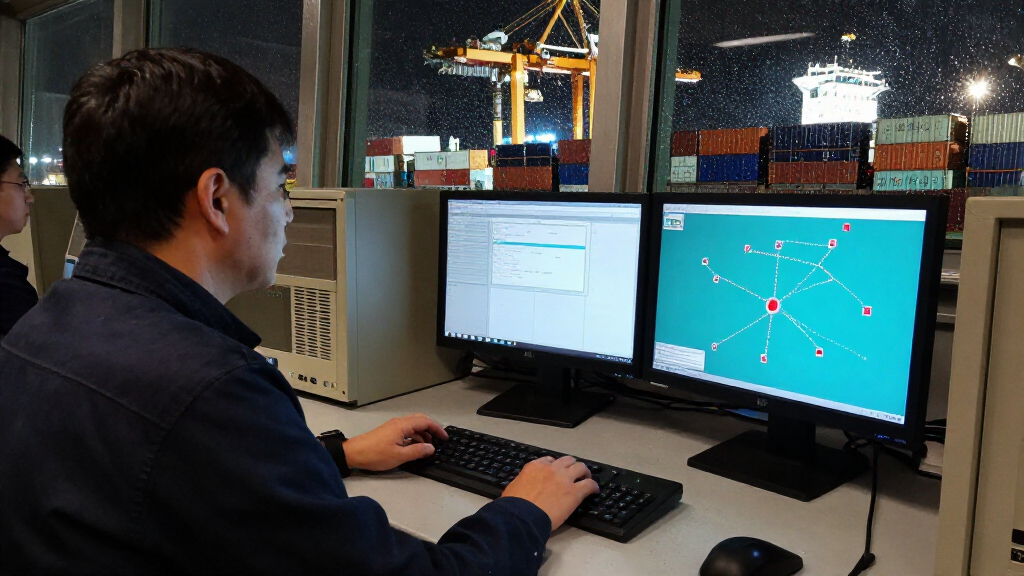

🔍 Read the full analysis: Could Maersk’s Legacy System Be Linked To The Data Theft? on ThorstenMeyerAI.com

Get the latest gadgets delivered free with Prime
- Fast, free delivery on millions of items
- Prime Video, Amazon Music and more included
- Member-only deals all year
TL;DR
Maersk confirmed unauthorised access to and data extraction from a local legacy system inherited through a previous acquisition. The company says its investigation so far strongly suggests no sensitive data has been disclosed and reports no sign of wider system or operational impact. A ransomware group’s claims about the amount of data and a ransom demand have not been confirmed by Maersk.
A.P. Moller–Maersk said it is investigating unauthorised access and data extraction from a local legacy system associated with a previous acquisition, but reported no indication so far of effects on other Maersk systems, customer integrations or operations. The disclosure, posted November 11, came alongside separate claims reported by BleepingComputer that a ransomware group called WhiteArmor had listed Maersk and demanded payment; Maersk has not confirmed those claims.
Maersk said its cybersecurity team launched a full investigation after discovering the issue and took steps to secure the affected system. The company described the system as a local legacy system from a previous acquisition, without identifying the acquisition, platform or date of the intrusion. Its investigation remains ongoing.
The company said its findings so far strongly suggest no sensitive data has been disclosed. It also reported no indication that other Maersk systems or customer and partner systems connected through APIs and electronic data interchange (EDI) were affected. Maersk said it did not anticipate disruption to customer operations and that customers could continue to use its platforms to book and manage shipments.
BleepingComputer reported that WhiteArmor claimed to hold about 100 gigabytes of data and sought a $5 million ransom, reportedly giving Maersk 30 days to pay in bitcoin. Those details come from the group’s claims as reported by the publication, not from Maersk. Maersk’s advisory did not name WhiteArmor, mention a ransom or confirm the group’s account.
Maersk legacy system breach what is confirmed
Maersk confirmed data extraction from a local legacy system inherited through a previous acquisition. Its investigation is ongoing, and the reported ransom claims remain unconfirmed.
What Maersk confirmed
The company confirmed unauthorised access and data extraction from one local legacy system.
Maersk launched an investigation and secured the affected system.
The investigation is ongoing; the system, access method and data taken have not been identified.
Maersk says it will update customers and notify impacted parties if needed.
Confirmed facts and reported claims
The ransomware group’s account has not been confirmed by Maersk.
| Detail | Status |
|---|---|
| Data extracted from a local legacy system | ✓ Confirmed |
| No sign of wider system or operational impact so far | ✓ Maersk reports |
| WhiteArmor, 100 gigabytes and $5 million demand | ~ Unverified claims |
| Link to LF Logistics or its OCF platform | ✗ Unconfirmed |
What this means for shippers
Maersk says customers can continue booking and managing shipments.
- No disruption anticipated for customer operations.
- No indication so far of impact on API or EDI connections.
- Treat unexpected incident-related messages with caution.
- Verify them through your usual Maersk contact.
Acquisition link remains open
Maersk has not named the acquisition behind the affected system. Its 2022 LF Logistics acquisition is not confirmed as connected to this incident.
What Shippers Should Do Now
For customers arranging shipments, Maersk’s stated position is that booking and shipment-management services remain available, with no anticipated operational disruption. Its report of no sign of impact on API and EDI connections is also relevant to businesses that rely on automated data exchange with the carrier. Those are findings available at this stage, not a final assessment: the investigation is still underway.
Maersk’s direct customer guidance is to treat unexpected communications about the incident with caution and verify them through a usual Maersk contact. That matters because a public security incident can be used to make fraudulent messages seem credible. Customers should not treat an unsolicited request as genuine simply because it refers to the reported breach; the company’s specified verification route is their established contact.
For businesses, the incident also highlights a practical issue in managing acquired technology: older systems may remain in use even after a company’s ownership changes. The available facts do not establish how the access occurred or whether the system was poorly protected. They do show why organizations need to track inherited systems and assess what data and business processes depend on them.
Products Worth Considering

Apple Watch Series 12 GPS 42mm Smartwatch

Bose QuietComfort Wireless Noise-Cancelling Over-Ear Headphones, Twilight Blue

Logitech MX Keys S Combo Wireless Keyboard and Mouse, Graphite
As an affiliate, we earn on qualifying purchases.
The Acquisition Link Remains Unconfirmed
Maersk’s November 11 advisory identifies the affected environment only as a local legacy system from a previous acquisition. It does not say that the system belonged to LF Logistics or identify any other acquired business. That distinction matters because the ransomware group’s reported reference to an OCF/LF Logistics platform is an allegation, not confirmation from Maersk.
Maersk completed its acquisition of LF Logistics in 2022. At the time, the company described LF Logistics as a Hong Kong-based contract logistics business focused on areas including omnichannel fulfilment, e-commerce and inland transport in Asia-Pacific. Maersk said the deal added 223 warehouses, bringing its reported global facility total to 549, and that LF Logistics employed 10,000 people. This establishes the scale of that acquisition, but does not link it to the current incident.
The incident therefore has two accounts with a limited point of overlap: Maersk confirms data was extracted from one system, while the group, according to BleepingComputer, claims responsibility and specifies a platform, data volume and ransom. The company’s statement supports the first point only. The remaining details have not been independently established in the supplied reporting.
““unauthorised access and data extraction from one of our local legacy systems from a previous acquisition””
— A.P. Moller–Maersk
Key Breach Details Are Still Unknown
Maersk has not disclosed which system or acquisition was involved, when the unauthorised access occurred, what kinds of information were taken, or how much data was extracted. Its description that findings so far strongly suggest no sensitive data has been disclosed is not a statement that no data left the system: Maersk separately confirmed data extraction. The company has not explained what it means by “sensitive” or “disclosed.”
It is also unclear whether the attackers’ claims are accurate. The reported 100-gigabyte figure, $5 million demand, 30-day deadline and platform name have been attributed to WhiteArmor by BleepingComputer, and Maersk’s advisory does not confirm them. The supplied account says BleepingComputer had sought further details from Maersk but had not received a response by publication. No conclusion about the attacker’s identity, access method or the data’s publication can be drawn from Maersk’s statement.
Maersk’s Investigation Sets the Next Milestone
Maersk said its investigation is continuing and that it will update customers as more relevant information becomes available. It also said it would inform impacted parties if it finds that notification is needed. Those updates may clarify the affected system, the data involved and whether any customers or partners require direct notice.
For now, Maersk says customers can keep using its platforms and should check unexpected incident-related messages through their usual contact. The next substantiated account will depend on further findings from the company or independently verified reporting; the ransomware group’s reported claims should remain separate from confirmed facts unless they are corroborated.
Key Questions
What did Maersk confirm?
Maersk confirmed unauthorised access and data extraction from a local legacy system linked to a previous acquisition. It said its investigation is ongoing and that it has found no indication so far of effects on other Maersk systems or connected customer and partner systems.
Did Maersk confirm WhiteArmor’s ransom demand?
No. BleepingComputer reported WhiteArmor’s claims about a data volume and ransom demand. Maersk’s advisory did not name the group or confirm its demands or other claims.
Were customer shipments disrupted?
Maersk said it did not anticipate disruption and that customers could continue to use its platforms to book and manage shipments. It also reported no indication of impact on API and EDI connections at the time of its advisory.
Was LF Logistics the acquired business involved?
That has not been confirmed. Maersk did not identify the acquisition or system. The reported link to an OCF/LF Logistics platform comes from the ransomware group’s claim, as reported by BleepingComputer.
What should Maersk customers do?
Maersk advises customers to treat unexpected communications about the incident cautiously and verify them through their usual Maersk contact. The company says its investigation continues and that it will provide updates as relevant information becomes available.
Source: ThorstenMeyerAI.com