
TL;DR
Prime for Young Adults — start your free trial
Fast free delivery, streaming and member deals for eligible 18–24 year olds.
As an affiliate, we earn on qualifying purchases.
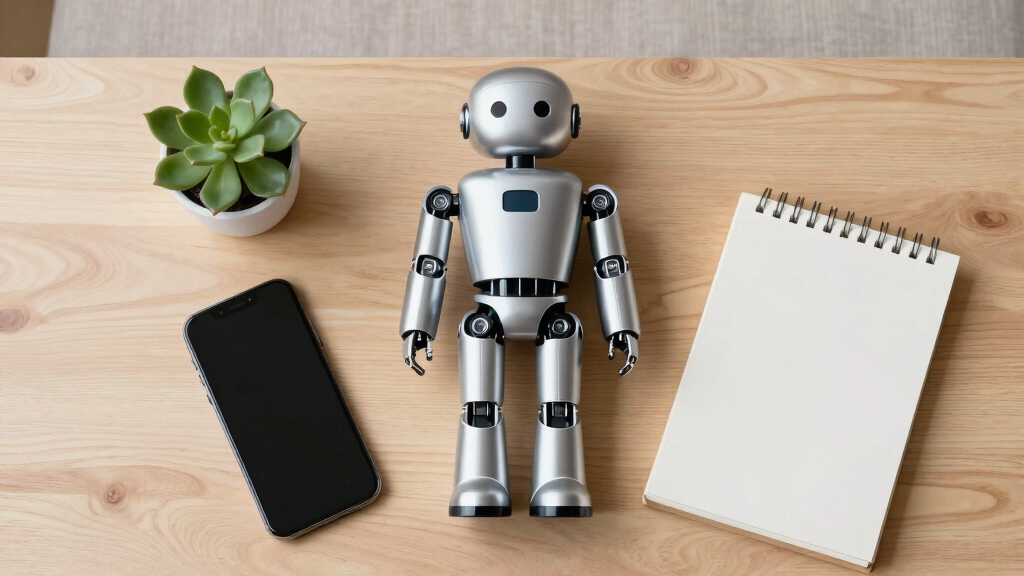
Humanoid robots are gaining attention through high-profile demonstrations and investments, but experts caution that their capabilities remain limited. The hype may outpace current technological realities, raising questions about their true potential.
Humanoid robots are being widely showcased and invested in, but experts warn that their current capabilities do not match the hype surrounding them. While companies and media promote them as versatile workers and companions, technical limitations mean they are far from fully replacing human labor or performing complex tasks reliably.
James Vincent, a technology journalist, recently met with robots from companies like Apptronik and Agility Robotics, observing their movements and testing their responses. Despite their human-like appearance and uncanny movements, these robots are still limited in their functionality and require careful handling. The industry is driven by investments from major tech firms like Tesla, Meta, and Google, fueled by advances in AI and deep learning. These companies aim to develop robots capable of performing a wide range of tasks, from warehouse work to household chores. However, experts like Vincent emphasize that current robots often lack the dexterity, adaptability, and reliability needed for widespread deployment, and much of the hype is based on optimistic projections rather than proven capabilities.
Why It Matters
This matters because the widespread promotion of humanoid robots influences public expectations, investment decisions, and policy discussions about automation and employment. If the technology remains limited, overhyped claims could lead to disillusionment or misguided resource allocation. Understanding the actual state of robotics helps set realistic goals and policies for integrating these machines into society.
As an affiliate, we earn on qualifying purchases.
Background
The current surge in humanoid robot development is driven by recent technological breakthroughs in AI, particularly large language models like ChatGPT, which have inspired hopes of creating machines that can learn and adapt autonomously. Historically, robots required manual programming, but new AI approaches aim to enable self-learning capabilities. Major tech companies have entered the space, investing billions and showcasing prototypes, but practical deployment at scale remains elusive. Previous efforts in robotics have often overpromised, leading to skepticism about current claims.
“While these robots look and move like humans, their actual functional capabilities are still quite limited. The hype often outpaces what the technology can reliably do today.”
— James Vincent
“Investors and companies are betting heavily on AI-driven robotics, but we are still in the early stages of understanding how to make these machines truly versatile and reliable.”
— Unspecified industry expert
As an affiliate, we earn on qualifying purchases.
What Remains Unclear
It remains unclear how quickly humanoid robots will overcome current technical limitations and whether they will fulfill the broad promises made by industry leaders. The timeline for reliable, autonomous deployment at scale is still uncertain, and some experts question whether the current hype is justified by actual progress.
As an affiliate, we earn on qualifying purchases.
What’s Next
Next steps include continued development and testing of humanoid prototypes, more transparent reporting of their capabilities and limitations, and cautious assessment of their deployment potential. Watch for upcoming demonstrations, pilot programs, and possibly regulatory discussions as the technology matures.
As an affiliate, we earn on qualifying purchases.
Key Questions
Are humanoid robots ready to replace human workers?
Currently, humanoid robots are not capable of replacing human workers across most tasks. They are still limited in dexterity, adaptability, and reliability, and are mostly used for specific, controlled applications.
What are the main technological challenges facing humanoid robots?
Key challenges include improving physical dexterity, perception, decision-making, and safe interaction with unpredictable environments. AI advancements help, but full autonomy remains a work in progress.
Why is there so much hype around humanoid robots now?
The hype is driven by recent AI breakthroughs, large investments from major tech companies, and high-profile demonstrations. These factors create an optimistic narrative that may overstate current capabilities.
When might humanoid robots become widely practical?
Experts suggest that widespread practical use may still be years away, depending on technological breakthroughs, safety regulations, and cost reductions. Precise timelines are uncertain.
Fall yard work Picks
leaf blowers
As an affiliate, we earn on qualifying purchases.