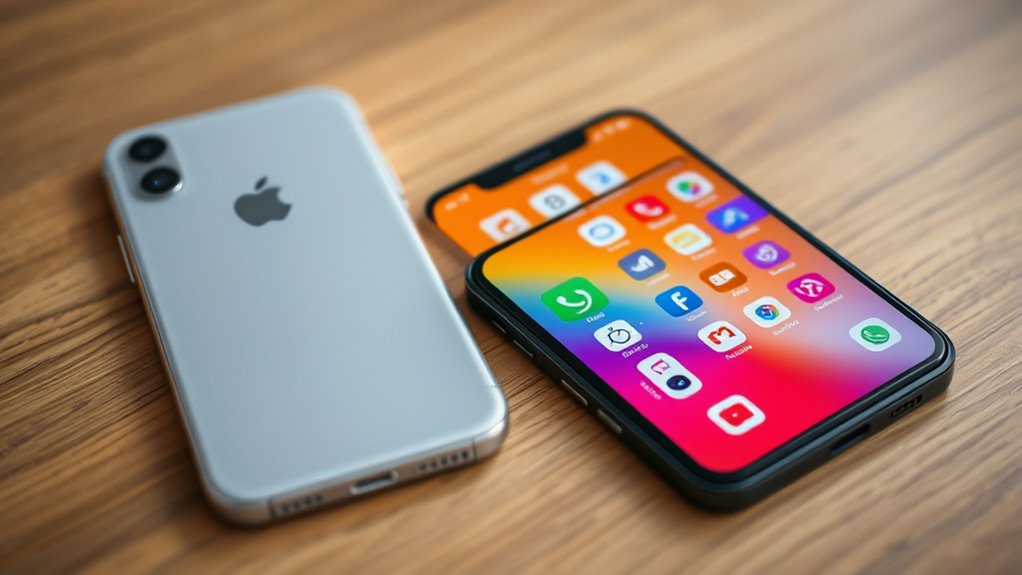

A SIM locked phone is tied to a specific carrier, meaning you can only use SIM cards from that provider until it’s freed. An unlocked phone, on the other hand, works with SIM cards from any compatible network, giving you more flexibility and better international options. If you want to switch carriers easily or travel without restrictions, understanding the difference is essential. Keep exploring to learn how freeing can benefit you even more.

Get the latest gadgets delivered free with Prime
- Fast, free delivery on millions of items
- Prime Video, Amazon Music and more included
- Member-only deals all year
Key Takeaways
- SIM locked phones are restricted to a specific carrier, while unlocked phones accept SIM cards from any provider.
- Locking is usually tied to carrier contracts or installment plans, and unlocking may require meeting certain conditions.
- Unlocked phones offer greater flexibility for switching carriers and using international or local SIM cards.
- Locked phones often limit network compatibility and may prevent using different network bands outside the original carrier.
- Unlocked devices generally support more network standards, providing better global compatibility and service reliability.
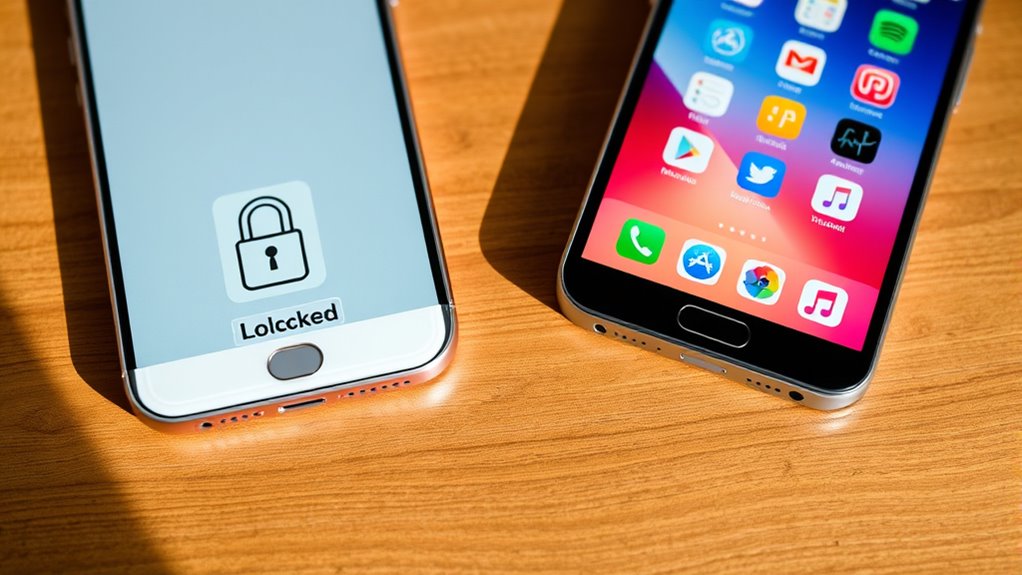
When choosing a new phone, understanding the difference between SIM locked and unlocked devices is essential. A SIM locked phone is restricted to work only with a specific carrier’s SIM card, meaning you can’t switch providers easily. Carriers typically lock phones to guarantee customers stay with their network until the contract or installment plan ends. This restriction can limit your flexibility, especially if you’re traveling internationally or want to switch carriers without buying a new device. On the other hand, an unlocked phone isn’t tied to any carrier. It can accept SIM cards from any compatible provider, giving you more freedom to choose or change networks whenever you want. This flexibility makes unlocked phones particularly appealing if you frequently travel abroad or prefer to shop around for better plans.
Carrier restrictions on SIM locked phones can be frustrating. If you buy a phone from a carrier, it’s often locked for a certain period, usually until you’ve fulfilled your contract or paid off the device. This lock prevents you from inserting a different carrier’s SIM card, which can be a problem if you move to a different provider or want to use a local SIM when traveling internationally. In contrast, unlocked phones are designed to work with various carriers worldwide, making them a better choice if you need international compatibility. They support different network bands and frequencies, allowing you to use local SIM cards in foreign countries, often resulting in cheaper roaming and better coverage. Additionally, high-quality network compatibility ensures that unlocked phones can connect to the latest and most widely used network standards globally, providing more reliable service.
Products Worth Considering

LG UltraGear 27-Inch QHD OLED Gaming Monitor, 240Hz, 0.03ms, G-SYNC Compatible, FreeSync Premium Pro, HDMI 2.1

Amazon Kindle Paperwhite Signature Edition (12th Generation, 2024), 32 GB, Metallic Black

Bose SoundLink Flex Bluetooth Speaker (2nd Gen), Portable Waterproof Speaker, Black
As an affiliate, we earn on qualifying purchases.
Frequently Asked Questions
Can I Switch Carriers With a Locked Phone?
Yes, you can switch carriers with a locked phone, but it depends on carrier compatibility and network restrictions. If your phone is locked, it’s tied to your current carrier, so you’ll need to get it freed first. Once freed, you can choose a new carrier that supports your device. Keep in mind, some phones may have restrictions or specific compatibility issues, so check with your new carrier before making the switch.
Are Unlocked Phones More Expensive Than Locked Ones?
Unblocked phones tend to be more expensive upfront because they offer better carrier compatibility and flexibility to switch carriers easily. While locked phones are usually cheaper initially, they might limit your options and could decrease resale value later. If you value the ability to choose or change carriers without restrictions, investing in an unblocked phone might be worth the extra cost. Plus, it can boost resale value if you decide to upgrade.
How Do I Unlock My Phone Legally?
To open your phone legally, contact your carrier directly and request an unlock. Make sure your contract is fulfilled, and payments are up to date, as carrier restrictions may prevent unlocking otherwise. Keep in mind, unlocking might affect your warranty, so check your warranty implications beforehand. Follow their official process, which often involves providing your phone’s IMEI number and waiting for approval. This way, you unlock your device legally and safely.
Do Unlocked Phones Work Internationally Without Issues?
Yes, unbarred phones work internationally without issues, offering better international compatibility. You can easily switch SIM cards for different countries, making network roaming seamless. Just guarantee your phone supports the local network bands of the country you’re visiting. This flexibility prevents connectivity problems and often results in better rates. So, if you’re planning to travel, an unbarred phone provides the convenience and reliability needed for smooth communication abroad.
What Are the Security Differences Between Locked and Unlocked Phones?
You’ll find that locked phones can have limited network security because carriers may restrict firmware updates, leaving vulnerabilities unpatched. Unlocked phones typically receive regular updates directly from manufacturers, enhancing security. With unlocked devices, you’re also less vulnerable to malicious software from network providers. Overall, unlocked phones offer better control over your network security and firmware updates, making them safer and more adaptable to your needs.
Conclusion
Whether you choose a SIM-locked or free-to-use phone, understanding the difference helps you make smarter decisions. Know what suits your needs, whether it’s saving money, switching carriers easily, or avoiding restrictions. Consider your options carefully, compare your priorities, and choose confidently. Because the right choice empowers your connectivity, enhances your freedom, and simplifies your mobile experience. So, weigh your options wisely, decide confidently, and enjoy the freedom of a phone that truly fits your lifestyle.