📊 Full opportunity report: The Forecast Is the Plan. on ThorstenMeyerAI.com — validation score, market gap, and execution plan.

Get the latest gadgets delivered free — and shop member deals
- Fast, free delivery on millions of items
- Access to Prime Big Deal Days deals on October 6–7
- Prime Video, Amazon Music and more included
TL;DR
Leading AI companies have publicly committed to automating key aspects of AI research by September 2026. These commitments indicate a strategic plan rather than mere goals, with significant implications for the future of AI development.
Multiple leading AI organizations have publicly committed to automating core AI research functions by September 2026, transforming strategic goals into concrete plans. These commitments signal a decisive move toward fully automated AI research and development, with broad implications for the industry and its future capabilities.
OpenAI has explicitly targeted the deployment of an ‘automated AI research intern’ by September 2026, aiming to automate entry-level research tasks such as experiment execution and literature review. This specific milestone is a calendar target, not just an aspirational goal, indicating a strategic plan for automating a fundamental aspect of AI R&D.
Anthropic has publicly detailed its ‘Automated Alignment Researchers’ program, demonstrating operational progress in developing AI systems that can perform alignment research tasks on other AI systems. This signals a move toward recursive automation in safety research.
DeepMind has adopted a cautious stance, stating that ‘automation of alignment research should be done when feasible,’ signaling intent but emphasizing capability thresholds before full deployment. This reflects a strategic, timing-sensitive approach aligned with industry pressures.
Additionally, Recursive Superintelligence has raised $500 million for a dedicated lab focused on automating AI R&D, representing significant institutional capital backing for this strategic shift. Mirendil also announced its mission to build systems that excel at AI R&D, further emphasizing the industry-wide move toward automation.
The forecast
is the plan.
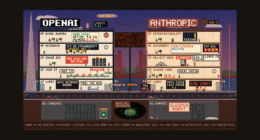
Five labs. Hundreds of billions of capital. Calendar targets within 32 months. The labs are building what they say they’re building.
Jack Clark’s closing section catalogs the explicit, public, on-the-record corporate commitments to automating AI R&D. OpenAI: “automated AI research intern by September 2026.” Anthropic: Automated Alignment Researchers. DeepMind: “automation of alignment research should be done when feasible.” Plus neolabs Recursive Superintelligence ($500M) and Mirendil. The headline finding: Clark’s 60%/2028 forecast is structurally a corporate plan, not a probability estimate.
Five labs. One stated goal.
Clark catalogs five distinct public commitments to automating AI R&D. Each individually is significant; the pattern across them is more so. When the industry uniformly commits and capital flows to support, the probability of execution rises substantially — not by magic but because thousands of researchers and engineers are deliberately working to produce the outcome.
TARGET
PROGRAM
FEASIBLE”
SERIES A
STATEMENT
Hundreds of billions. Itemized.
Clark mentions “hundreds of billions” without itemizing. The verifiable scale from public sources. When capital concentrates around five-to-seven specific organizations with a stated objective, those organizations become the structural lever for whether the objective is achieved.
AI accelerates cognitive work. It does not accelerate everything.
Clark introduces a structural observation worth developing. Amdahl’s Law from computer architecture, applied to the economy. As AI accelerates the cognitive-work layer, queues form at non-cognitive layers. The economic disruption from AI is concentrated rather than distributed.
- Software engineering
- Financial analysis
- Marketing & copy
- Legal research
- Customer service
- Code review & documentation
30-50%+ productivity gains
- Drug trials (clinical trials, FDA)
- Infrastructure construction
- Legislative cycles
- Biological/chemical processes
- Trust-building & B2B sales
- Regulated industries broadly
Queues at the slow part
Who gets the AI productivity multiplier?
Clark: “demand for AI continues to outstrip compute supply” and “market incentives don’t guarantee best societal upside from limited AI compute.” The compute allocation question is who captures the multiplier.
“Figuring out how to allocate the acceleratory capabilities conferred by AI R&D will be a politically charged problem.“
Five dimensions Clark gestures at but leaves underdeveloped.
Clark’s closing section is rigorous on the corporate commitment evidence. Five strategic dimensions matter for the institutional response that the synthesis-level read argues is structurally inadequate.
FAILURE
CONSEQUENCES
RACE
INFRA GAP
Use corporate commitments as the input.
The corporate commitments are more concrete than the published forecasts. Plan to calendar markers, not to probability distributions.
POLICYMAKERS
INVESTORS
COGNITIVE WORKERS
RESEARCHERS
EVERYONE ELSE
The labs are building what they say they’re building. The forecast is the plan. The institutional response window is the only variable that remains unfixed.
Implications of Public Commitments to Automate AI R&D
The public commitments from major AI labs suggest that automating AI research is no longer a future goal but an active, strategic plan. If achieved, this could dramatically accelerate AI development, reduce reliance on human researchers for routine tasks, and reshape the economic and safety landscape of AI capabilities. Investors and policymakers must consider the potential for rapid capability gains and the associated safety and governance challenges.
As an affiliate, we earn on qualifying purchases.
Industry Shift Toward Automation-Driven AI Research
Over the past year, the AI industry has increasingly framed automation of R&D as a primary objective, with companies like OpenAI, Anthropic, and DeepMind making explicit public commitments. OpenAI’s target of September 2026 for an automated research intern is a key milestone that signals a shift from aspirational goals to concrete planning. The broader context includes massive capital flows into AI automation, with over $500 million invested into Recursive Superintelligence alone, and multiple firms establishing ‘neolabs’ dedicated to automated AI R&D.
This trend reflects a strategic consensus that automation is essential for scaling capabilities rapidly and safely. The commitments also serve as signaling devices, indicating readiness to leverage automation for competitive advantage and safety improvements.
“Our Automated Alignment Researchers program is designed to scale alignment efforts by automating key research tasks.”
— Daniela Amodei, Anthropic CEO
As an affiliate, we earn on qualifying purchases.
Uncertainties About Automation Capabilities and Timelines
While commitments are explicit, the actual technical feasibility and timeline for achieving full automation remain uncertain. DeepMind’s cautious language suggests that the industry recognizes capability thresholds yet to be crossed. Additionally, the broader implications for safety, governance, and economic impact depend on how quickly and effectively these automation systems are developed and deployed, which is still developing.
As an affiliate, we earn on qualifying purchases.
Next Steps in Industry Automation Milestones
The immediate next step is for OpenAI to attempt to meet its September 2026 target, providing a real-world test of the automation plan. Concurrently, Anthropic and DeepMind will continue advancing their research programs, with progress likely to influence industry standards and regulatory considerations. Investors and regulators will monitor these developments closely, assessing the impact on safety, competition, and policy frameworks.
As an affiliate, we earn on qualifying purchases.
Key Questions
What does automating an AI research intern mean?
It refers to developing AI systems capable of performing basic research tasks such as running experiments, reading papers, summarizing results, and implementing models—tasks traditionally done by human researchers.
Why is the September 2026 target significant?
This specific calendar milestone indicates a concrete plan to deploy automation at a fundamental level in AI research, potentially transforming the research process and accelerating capability development.
Are these commitments legally binding?
No, these are public strategic commitments and targets, not legally binding obligations. They serve as indicators of industry direction and intent.
What are the risks of automating AI research?
Potential risks include safety concerns related to rapid capability scaling, loss of human oversight, and unforeseen safety challenges. These issues are actively discussed within the industry and among regulators.
How might this affect AI safety and regulation?
If automation accelerates AI development significantly, it could prompt new safety protocols and regulatory frameworks to manage the risks associated with rapid capability gains.
Source: ThorstenMeyerAI.com
Fall Picks
fall essentials
As an affiliate, we earn on qualifying purchases.