
TL;DR

Get the latest gadgets delivered free — and shop member deals
- Fast, free delivery on millions of items
- Access to Prime Big Deal Days deals on October 6–7
- Prime Video, Amazon Music and more included
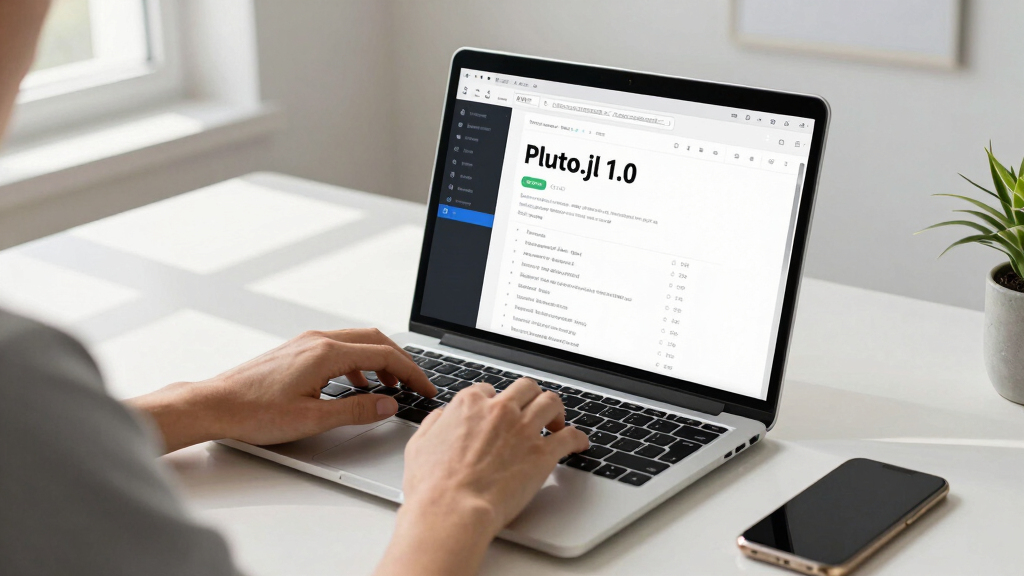
The Julia environment Pluto has released version 1.0 after six years of development. The update emphasizes reliability, reproducibility, and interactivity, making it a key tool for scientific computing and education. The release signals Pluto’s readiness for broader adoption and integration into workflows.
Pluto.jl has officially released version 1.0, marking a significant milestone after six years of development. The new release emphasizes enhanced reliability, reproducibility, and interactivity, positioning Pluto as a mature tool for scientific computing, education, and collaborative work in Julia.
Developed as an open-source, reactive notebook environment for Julia, Pluto 1.0 incorporates improvements in package management, reproducibility, and user experience. The release features automatic package environment management, with each notebook maintaining isolated environments that ensure consistent package versions across different users and sessions. Additionally, Pluto now offers export options to HTML, PDF, and Julia code, with self-contained HTML files that include all assets and package information, facilitating easy sharing and offline use.
The update enhances reactivity and interactivity with features like cell disabling, long-runtime confirmation prompts, and expanded widget support through PlutoUI.jl. These widgets include sliders, switches, buttons, and custom components, enabling more dynamic and interactive educational content and research workflows. The API for custom widget development has also been expanded, allowing users to create tailored interactive elements.
Why It Matters
This release matters because it solidifies Pluto’s position as a reliable, accessible platform for scientific computing, education, and collaborative research. Its emphasis on reproducibility and sharing aligns with broader trends in open science and reproducible research, making Julia more attractive for data science and computational education. The new features lower barriers for newcomers and enhance the productivity of experienced users, potentially increasing adoption across academia and industry.
As an affiliate, we earn on qualifying purchases.
Background
Since its initial release, Pluto has gained popularity for its reactive programming model and ease of use. It has been used in online courses, workshops, and research projects worldwide. The 1.0 release follows years of incremental improvements, bug fixes, and community engagement. Notably, Pluto has been the most starred Julia package on GitHub since 2021, reflecting its growing influence. The development team emphasizes stability and user feedback, aiming to make Pluto suitable for large classes and complex projects.
“Releasing 1.0 is a celebration of how far Pluto has come, and a declaration that it’s ready for prime time in research, education, and collaboration.”
— Anke Kutschera, Pluto developer
“The 1.0 release focuses on stability, reproducibility, and expanding interactivity, making Pluto a comprehensive environment for Julia users.”
— Pluto GitHub repository
reproducible scientific computing software
As an affiliate, we earn on qualifying purchases.
As an affiliate, we earn on qualifying purchases.
What Remains Unclear
It is not yet clear how widely adopted the new features will be in the short term or how quickly the community will integrate Pluto 1.0 into existing workflows. Further user feedback and real-world testing are ongoing to evaluate stability and usability in diverse environments.
Julia programming education tools
As an affiliate, we earn on qualifying purchases.
As an affiliate, we earn on qualifying purchases.
What’s Next
Next steps include ongoing community engagement, development of additional widgets and tools, and integration with educational platforms. The Pluto team plans to monitor user feedback to refine features and expand the ecosystem, with future updates likely focusing on performance and collaborative features.
As an affiliate, we earn on qualifying purchases.
Key Questions
What are the main advantages of Pluto 1.0 over previous versions?
Pluto 1.0 offers improved reliability, reproducibility through automatic package management, enhanced export options, and expanded interactivity with new widgets and APIs, making it more suitable for research and teaching.
Can I upgrade my existing Pluto notebooks to version 1.0?
Yes, existing notebooks can be upgraded, and the new version maintains compatibility with previous notebooks, while offering new features that enhance functionality and sharing.
Is Pluto 1.0 suitable for large-scale educational courses?
Yes, the stability improvements and new interactivity features make Pluto well-suited for large classes and interactive teaching environments.
What are the requirements to run Pluto 1.0?
Pluto 1.0 requires Julia 1.6 or later and can be installed easily via Julia’s package manager. It is compatible across platforms, including Windows, macOS, and Linux.
What is the future roadmap for Pluto?
The development team plans to enhance collaborative features, improve performance, and expand the ecosystem with more widgets and integrations, based on user feedback and evolving needs.
Source: Hacker News
Fall Picks
fall essentials
As an affiliate, we earn on qualifying purchases.