
🔍 Read the full analysis: Exploring Held Light In “OORT — Comet Vigil For P/2043 K1 Vesper” on ThorstenMeyerAI.com

Get the latest gadgets delivered free with Prime
- Fast, free delivery on millions of items
- Prime Video, Amazon Music and more included
- Member-only deals all year
TL;DR
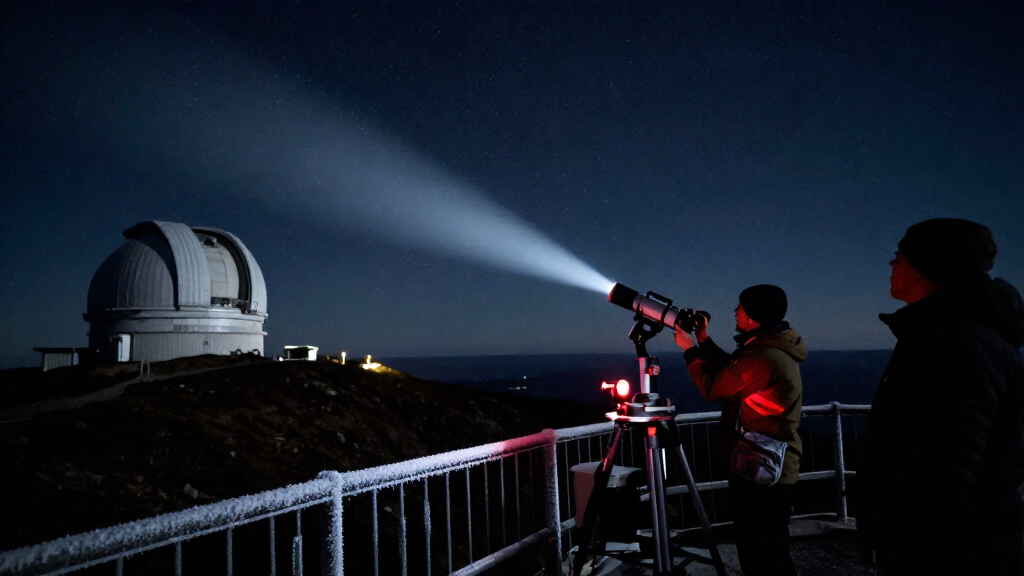
OORT — Comet Vigil for P/2043 K1 Vesper is an AI-built exhibition centered on an imaginary observatory watching an imaginary comet. Its website uses time spent on the page, scrolling and a simulated shutter control to make waiting visible; the comet and its history are fictional.
OORT — Comet Vigil for P/2043 K1 Vesper, an AI-built web exhibition, makes waiting the main event: its star trails lengthen as a visitor stays, while scrolling moves a fictional comet through an illustrated orbit, as explored in the original analysis. The observatory, comet and decades-long watch are invented; the work’s subject is how an interactive website can make elapsed time feel like part of an artwork.
The exhibition presents itself as an observatory keeping watch on P/2043 K1 Vesper. Its signature feature, described as “held light,” is a canvas of seeded stars that trace curved paths as time passes. The same local sky can resume when a visitor returns, with elapsed time saved in local storage, according to the source description. The effect treats a visit not just as time spent reading a page, but as an exposure that leaves a visual record.
A second instrument links scrolling to an inline SVG illustration of the comet’s passage. The two displayed tails move with the same progress value: the ion tail points away from the sun, while the dust tail curves along the imagined orbit. A range control adjusts a defocus view and an associated brightness estimate. The page also includes a brief hold-to-open shutter interaction that records a timestamp, but does not pretend the visitor has actually seen or discovered a comet.
The design uses a dark observatory palette, with cyan for the ion tail and readings, red-orange for instructions and controls, and pale dust-toned text for longer passages. Display lettering and monospaced coordinates reinforce the logbook conceit. The source says the animation stops when the page is hidden and presents a still version for people who have enabled reduced motion.
A field guide to an imagined sky · FABLE/175 · Room 170
Exploring Held Light in OORT — Comet Vigil for P/2043 K1 Vesper
An AI-built web exhibition turns a fictional observatory’s long wait into an artwork. Star trails accumulate as visitors stay; scrolling moves an imagined comet through its orbit.
“A room where waiting leaves a trace.”Exhibition description
01 / The interaction
How the Page Makes Time Visible
OORT treats duration as part of the artwork rather than invisible time spent browsing. The page changes with a visitor’s presence, while its saved local state can preserve the resulting sky on that device.
Held light
A seeded star field draws curved trails as time passes. The description says the same local sky can resume when a visitor returns.
Comet in motion
Scrolling moves an inline illustration through an imagined passage. Ion and dust tails respond to the same progress value.
Simulated shutter
A brief hold-to-open control records a timestamp. It marks attention, not a sighting or discovery of an astronomical object.
02 / Reading the illustration
Two Tails, One Imagined Path
The exhibition borrows the visual language of astronomy. These cues describe its artwork, not live comet data or a verified ephemeris.
Ion tail
Shown pointing away from the sun, with cyan used for the tail and associated readings.
Dust tail
Shown curving along the imagined orbit, using a warmer accent in the exhibition’s visual system.
03 / Visitor sequence
From Presence to Trace
The page’s controls connect a visitor’s actions to changes in its fictional observatory.
Enter the observatory and encounter its seeded local sky.
Time spent on the page lengthens the star trails.
Scroll to move the comet through its illustrated orbit.
Try the shutter: it timestamps attention, not a real observation.
04 / The fictional frame
A Fictional Observatory in FABLE/175
Source material lists OORT as room 170 of the 175-room FABLE/175 collection. It attributes the art-direction brief to “Claude Fable 5” and says the room was executed by the FABLE/175 pipeline.
The brief calls for a fictional comet, a long-exposure effect, invented amateur log entries and an ephemeris-like presentation. References to a 40-year wait and a comet “last seen 1608” belong to that fictional setup; they do not establish a real observation history.
The supplied build brief describes a single-page site made with HTML, CSS and JavaScript, without frameworks, build steps, external requests or image assets. It also calls for responsive layouts, keyboard focus styles, reduced-motion support and pausing animation when a tab is hidden.
05 / Evidence boundary
What the Description Does Not Verify
The supplied account describes the concept and interactions, but does not independently test the live implementation.
Site behavior
Accessibility, performance, responsive behavior and storage across return visits are not independently verified in the source material.
Stored data
It is unclear what happens to elapsed time after the browser closes, or whether the shutter timestamp is stored only on the device.
Brightness estimate
The page offers a defocus control and associated brightness estimate, but the supplied description does not explain its calculation.
06 / Key questions
Quick Answers
Is P/2043 K1 Vesper a real comet?
No. The source describes the comet, observatory and decades-long vigil as fictional.
What does “held light” mean?
It refers to the seeded star field whose curved trails lengthen as time passes.
Does the shutter record a real sighting?
No. It records a timestamp as a mark of attention; the comet remains unseen and in transit.
Where is the design brief?
The source says a Prompt link in the room’s footer exposes the art-direction brief, with a separate design guide describing the approach.
How the Page Makes Time Visible
OORT’s central idea is to make duration an input, rather than leave it as an invisible part of browsing. The accumulating trails connect a visitor’s presence to a change on screen, while the stored local state lets that change persist on the device. Scrolling, meanwhile, controls the comet’s illustrated movement. Together, those choices make the website’s interface part of the artwork rather than a neutral frame around it.
The shutter interaction sets a limit on what the work claims. It records attention, not an observation of a real astronomical object. That distinction matters because the fictional setup borrows the language and visual conventions of astronomy, including coordinates, brightness estimates and orbital diagrams. The source explicitly identifies the comet and observatory as fictional, so the site should be read as a creative work, not as an astronomical report or source of real ephemeris data.
For readers interested in AI-generated creative work, the project also offers a concrete example of an AI-built exhibition organized around a specific interaction and art direction. The supplied description says the page’s prompt is exposed through a footer link and that a design guide documents the approach. Those materials make the work’s stated production process part of the presentation, although the source does not independently document how each stage was carried out.
As an affiliate, we earn on qualifying purchases.
A Fictional Observatory in FABLE/175
The project is listed as room 170 of 175 in the FABLE/175 collection, according to the source material. It identifies the original art-direction brief as coming from “Claude Fable 5” and says the room was executed by the FABLE/175 pipeline. The brief calls for a fictional comet, a long-exposure visual effect, invented amateur log entries and an ephemeris-like presentation. These are creative instructions and fictional details, not evidence of a real comet or observation program.
The supplied build brief also specifies a single-page site made with HTML, CSS and JavaScript, with no frameworks, build step, external requests or image assets. It calls for responsive layouts, keyboard focus styles, readable contrast, reduced-motion support and animation that pauses when a browser tab is hidden. The source describes some corresponding behaviors in the finished room, including the persistent seeded sky and the hidden-tab pause, but does not provide independent performance tests or implementation files for verification.
“A room where waiting leaves a trace.”
— The exhibition description
smart light strips for astronomy display
As an affiliate, we earn on qualifying purchases.
As an affiliate, we earn on qualifying purchases.
What the Description Does Not Verify
The source identifies the work’s premise and describes its interactions, but does not provide independent testing of the live site’s accessibility, performance, responsive behavior or storage across return visits. It is also not clear from the supplied material how the site handles elapsed time after a browser is closed, whether the timestamp from the shutter is stored only locally, or how the brightness estimate is calculated.
The reference to a 40-year wait and a comet “last seen 1608” appears in the art-direction brief as material to include in the fictional experience. It does not establish a real observation history. The source gives no evidence that P/2043 K1 Vesper is an actual comet, and explicitly calls it fictional.
LED light strips for space-themed decor
As an affiliate, we earn on qualifying purchases.
As an affiliate, we earn on qualifying purchases.
Explore the Room and Its Guide
The source invites readers to open the live OORT room and browse the wider 175-room collection. It also points to a design guide and a prompt link in the room’s footer, where visitors can inspect the stated art direction and technical concept. No further release, update or exhibition schedule is specified in the supplied material.
Readers visiting the page can watch how the sky changes during a session, use the scrolling instrument to follow the illustrated orbit, and try the simulated shutter. These interactions remain part of a fictional artwork; they do not provide live comet tracking or a real observation record.
As an affiliate, we earn on qualifying purchases.
Key Questions
Is P/2043 K1 Vesper a real comet?
No. The source describes P/2043 K1 Vesper as fictional, as are the observatory and its decades-long vigil.
What does “held light” mean in OORT?
It refers to the page’s seeded star field, whose curved trails lengthen as time passes. The description says the local sky can resume when a visitor returns.
Does the shutter interaction record a real sighting?
No. The simulated shutter records a timestamp as a record of attention. The exhibition says the comet remains unseen and in transit.
How does scrolling change the comet illustration?
Scrolling advances an inline SVG illustration through an imagined orbit. The ion tail points away from the sun, while the dust tail curves along the orbit; both respond to the same progress value.
Where can readers find the exhibition’s design brief?
The source says a Prompt link in the room’s footer exposes the art-direction brief, and that a separate design guide describes the work’s visual and technical approach.
Source: ThorstenMeyerAI.com
Halloween Picks
halloween
As an affiliate, we earn on qualifying purchases.