
📊 Full opportunity report: Is Artificial Intelligence The Key To Accurate Extreme Weather Forecasts? on ThorstenMeyerAI.com — validation score, market gap, and execution plan.

Get the latest gadgets delivered free with Prime
- Fast, free delivery on millions of items
- Prime Video, Amazon Music and more included
- Member-only deals all year
TL;DR
A report attributed to Huawei Pangu suggests AI is revolutionizing weather forecasting amid rising extreme weather events. However, lacking technical details and validation, the actual improvement remains unconfirmed.
A report attributed to Huawei Pangu states that artificial intelligence is transforming extreme weather forecasting by enabling faster predictions. While this claim highlights AI’s potential to support early warning systems, it lacks technical details, validation, or independent benchmarking, leaving the actual impact unconfirmed.
The report, attributed to Huawei Pangu, suggests that AI-based weather forecasting could help communities better prepare for rising extreme weather events. It emphasizes faster processing times that might allow meteorological agencies to identify dangerous conditions sooner. However, the report does not specify the AI model version, forecast horizon, geographic coverage, or provide any benchmark results or accuracy scores.
Currently, there is no published evidence comparing AI-driven forecasts with established numerical weather prediction models. The claim remains an attribution rather than a verified scientific breakthrough. Experts warn that faster predictions alone do not guarantee more accurate forecasts, especially for rare or localized extreme events, which require validated models and rigorous testing.
Potential Impact of AI on Weather Prediction Accuracy
If validated, AI could enhance weather forecasting by providing quicker alerts, potentially saving lives and reducing damage during extreme weather events. Faster warnings could give emergency responders more time to act, but only if the forecasts are accurate and communicate uncertainty effectively. Without proven improvements in accuracy, the true benefit of AI in this context remains uncertain.
As an affiliate, we earn on qualifying purchases.
Current State of AI in Weather Forecasting
AI models are increasingly being integrated into meteorology, often learning from historical atmospheric data to complement traditional physics-based systems. While some systems demonstrate promising results in specific regions, widespread operational deployment requires extensive testing, validation, and comparison with established models. The Huawei Pangu report does not specify whether its AI system is new, experimental, or commercially available, nor does it provide independent performance evaluations.
“The claim that AI can significantly improve forecast accuracy needs rigorous validation through benchmarks and independent testing.”
— an anonymous researcher
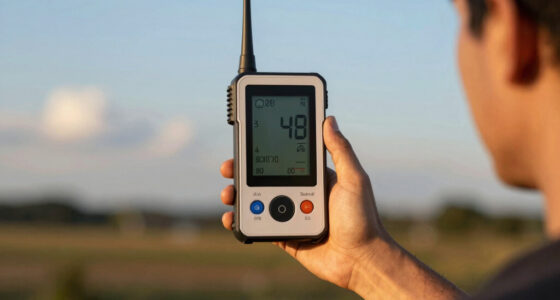
extreme weather prediction devices
As an affiliate, we earn on qualifying purchases.
As an affiliate, we earn on qualifying purchases.
Unverified Claims and Lack of Technical Data
The report offers no technical details, model benchmarks, or independent evaluations to substantiate its claims. It is unclear whether the AI system has been tested against existing models or whether it has demonstrated improved accuracy in predicting extreme weather events. The absence of published data means the reported advancements are unverified and should be interpreted with caution.
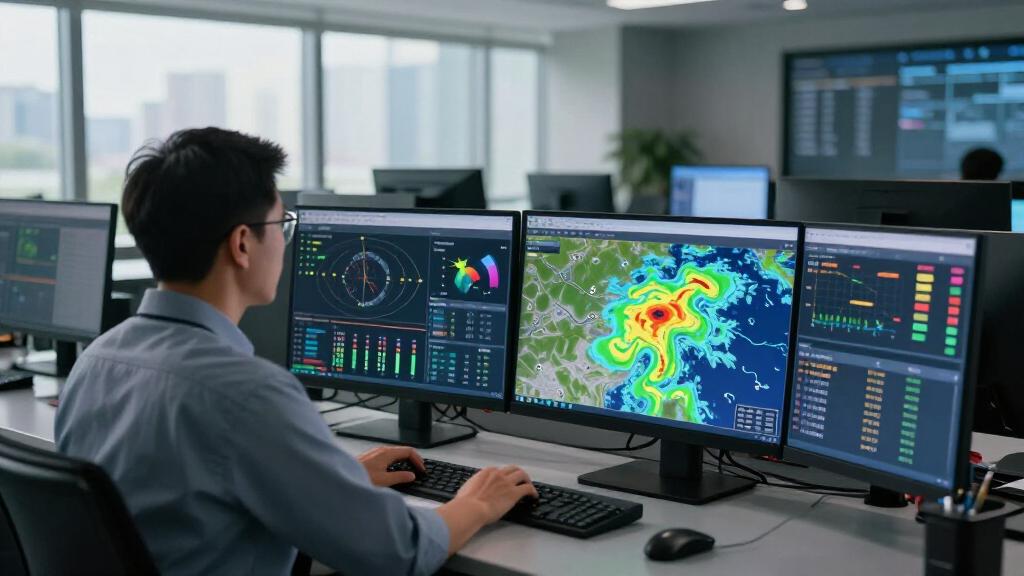
meteorological data analysis software
As an affiliate, we earn on qualifying purchases.
As an affiliate, we earn on qualifying purchases.
Need for Transparent Validation and Benchmarking
To assess AI’s true potential in weather forecasting, detailed model documentation, benchmark results, and independent testing are essential. Future developments should include regional performance evaluations, especially for high-impact extreme events, and clear communication of forecast uncertainty. Official validation would determine whether AI can reliably complement or replace current systems.
As an affiliate, we earn on qualifying purchases.
Key Questions
Does the report prove that AI improves weather forecast accuracy?
No. The report does not include accuracy metrics, validation studies, or direct comparisons with existing models, so it cannot confirm improved forecast accuracy.
How could faster weather forecasts benefit communities?
Faster forecasts could provide more lead time for emergency responses, evacuation planning, and resource allocation, potentially reducing harm during extreme weather events.
What information is needed to verify AI’s impact on weather prediction?
Published model details, benchmark results, independent validation studies, and operational testing data across different regions and event types are needed to confirm AI’s effectiveness.
Is AI currently used in operational weather forecasting?
AI is being integrated into some forecasting processes, but widespread operational use requires rigorous validation. The Huawei Pangu report does not specify if its AI system is in operational deployment.
What are the risks of relying on unverified AI forecasts?
Unverified forecasts could lead to false alarms or missed extreme events, potentially causing unnecessary disruptions or insufficient warnings, which could harm public safety.
Source: ThorstenMeyerAI.com
Columbus Day / Indigenous Peoples' Day Picks
long weekend sales
As an affiliate, we earn on qualifying purchases.