
TL;DR

Get the latest gadgets delivered free with Prime
- Fast, free delivery on millions of items
- Prime Video, Amazon Music and more included
- Member-only deals all year
Prediction markets are increasingly used beyond betting, impacting individual lifestyle choices and societal trends. Their role in forecasting and decision-making is evolving amid regulatory scrutiny.
Prediction markets, platforms where users bet on the outcomes of real-world events, are increasingly influencing individual lifestyle choices and societal trends, according to recent industry analysis. These platforms, once confined to niche betting circles, now operate at a mainstream level with trading volumes exceeding hundreds of billions of dollars this year. Their expanding role in forecasting and decision-making is raising questions about their potential to shape personal behaviors and societal norms, as well as the regulatory environment surrounding them.
Over the past few years, prediction markets like Kalshi and Polymarket have become ubiquitous, appearing at major sporting events, on cable news, and at awards shows. They position themselves as digital oracles—tools that harness crowd wisdom to predict future events—rather than gambling platforms, a distinction that allows them to operate in states where sports betting is banned. With trading volumes surpassing $200 billion on Kalshi and $100 billion on Polymarket this year, their influence on public perception and decision-making is undeniable.
Recently, these platforms have faced increased scrutiny over insider trading and regulatory compliance. Notably, Kalshi and Polymarket have taken steps to enforce stricter rules, including banning insider trading practices and referring nearly 100 cases to law enforcement. These measures aim to maintain fairness and regulatory approval, especially as they expand into areas like political betting and personal decision forecasts. For example, a prediction market wager on Donald Trump’s speech words resulted in a $172,000 settlement, illustrating how these markets now intersect with high-profile political events.
Experts see prediction markets as tools that could influence individual lifestyle choices—such as health, finance, and career decisions—by providing insights into probable outcomes. However, the extent to which they shape behavior remains uncertain, especially given the ongoing regulatory debates and the potential for misuse or manipulation.
The Role of Prediction Markets in Transforming Lifestyle Choices
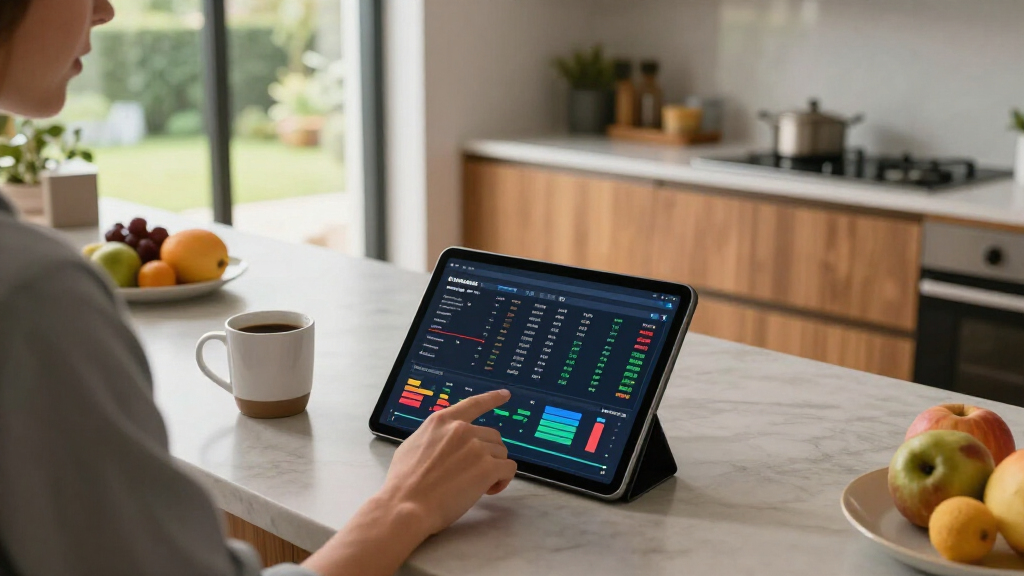
Prediction markets are moving beyond event betting. By turning collective expectations into live probabilities, they may influence decisions about health, money, careers, and public life—while exposing users to uncertainty, manipulation, and evolving regulation.
Probabilities become behavioral signals
When a market price is interpreted as a forecast, it can reduce uncertainty—or create a powerful psychological anchor. The strongest influence is likely where choices are complex, emotional, and time-sensitive.
Planning around risk
Forecasts could help people assess treatment uptake, disease trends, insurance needs, or the likely success of a wellness goal.
Timing major choices
Market probabilities may shape investment allocation, home purchases, savings decisions, or preparation for economic change.
Choosing a path
People may use crowd forecasts to compare industries, relocation prospects, labor demand, or the durability of emerging skills.
From private information to public behavior
A prediction market does more than publish an answer. It creates a feedback loop in which information, incentives, media attention, and human choices continually affect one another.
Participants trade
People commit money based on research, beliefs, incentives, or privileged knowledge.
A price emerges
The market converts competing expectations into a visible probability-like signal.
The signal spreads
News programs, social platforms, and public events amplify the forecast.
Choices adapt
Individuals and institutions may change plans, reinforcing or disrupting the forecast.
“I just don’t really know what this has to do with gambling.”
Tarek Mansour / CEO of Kalshi
Useful forecast, risky dependency
The value of a market depends on liquidity, participant diversity, information quality, contract clarity, and protection against manipulation. No single probability should replace personal judgment.
| Decision factor | Potential benefit | Primary risk | Practical verdict |
|---|---|---|---|
| Real-time updates | New information can be reflected rapidly. | Short-term noise may look more meaningful than it is. | ✓ Useful signal |
| Crowd aggregation | Many judgments can outperform a single opinion. | The crowd may be narrow, biased, or poorly informed. | ~ Check the crowd |
| Financial incentives | Participants have a reason to reveal information. | Insiders may exploit knowledge unavailable to others. | ~ Needs oversight |
| Personal planning | Probabilities can clarify scenarios and tradeoffs. | Users may overvalue confidence and underweight consequences. | ✓ Use as input |
| Unregulated access | Blockchain platforms may expand participation. | Consumer protection and enforcement can be inconsistent. | ✗ Elevated risk |
Credibility is the decisive market
Mainstream influence depends on whether platforms can demonstrate fair access, clear rules, reliable settlement, and meaningful enforcement across fragmented jurisdictions.
Four tests for legitimacy
Regulators and users are asking whether these platforms operate as forecasting infrastructure, gambling products, financial markets, or some combination of all three.
What must connect for a responsible decision
Prediction markets may become valuable planning tools, but their lifestyle impact will be determined by forecast quality, responsible interpretation, and regulation—not trading volume alone.
Impacts of Prediction Markets on Personal and Societal Decisions
The rise of prediction markets signifies a shift toward crowd-based forecasting influencing personal choices and societal trends. As these platforms become more integrated into daily life, they could alter how individuals make decisions about health, investments, and careers by providing real-time, crowd-sourced predictions. Their potential to serve as decision aids or even behavioral nudges makes them a noteworthy development in the landscape of digital influence.
However, the impact depends heavily on regulatory developments and the accuracy of the forecasts. If prediction markets are perceived as reliable, they could become essential tools for personal planning. Conversely, concerns about insider trading, manipulation, and regulatory crackdowns pose risks to their credibility and utility, which could limit their influence or lead to stricter controls.
As an affiliate, we earn on qualifying purchases.
Growth and Regulation of Prediction Markets in Recent Years
Prediction markets originated as niche platforms for betting on political and economic events but have grown significantly in scope and scale. Major companies like Kalshi and Polymarket have expanded their offerings, claiming to provide crowd-sourced forecasts that can inform personal and societal decisions. Their popularity surged amid increasing interest in data-driven decision-making and the rise of digital platforms that avoid traditional gambling classifications.
Despite their growth, regulation remains fragmented. The U.S. has seen a patchwork of legal battles over whether prediction markets should be treated like online sportsbooks. While some states challenge their legality, federal agencies like the Commodity Futures Trading Commission (CFTC) have taken steps to regulate insider trading and enforce fairness. Internationally, some platforms operate on blockchain, avoiding U.S. regulations altogether. The balance between innovation and regulation continues to evolve, shaping the future of these markets.
“I just don’t really know what this has to do with gambling.”
— Tarek Mansour, CEO of Kalshi
personal decision forecasting tools
As an affiliate, we earn on qualifying purchases.
As an affiliate, we earn on qualifying purchases.
Unresolved Questions About Market Influence and Regulation
It remains unclear how significantly prediction markets will influence individual lifestyle choices in the long term, given the current regulatory uncertainties and potential for market manipulation. The extent to which they can reliably predict outcomes that shape behavior is still under investigation, and legal frameworks are evolving rapidly, creating an uncertain environment for their future development.
As an affiliate, we earn on qualifying purchases.
Future Regulatory Developments and Market Expansion
Expect ongoing legal battles at the state and federal levels over the classification and regulation of prediction markets. As regulators seek to balance innovation with consumer protection, new rules may emerge that either limit or legitimize their role in influencing personal and societal decisions. Additionally, technological advancements, such as blockchain integration, could further expand their reach beyond traditional jurisdictions.
career decision prediction service
As an affiliate, we earn on qualifying purchases.
As an affiliate, we earn on qualifying purchases.
Key Questions
How do prediction markets influence personal lifestyle choices?
They provide crowd-sourced forecasts that individuals may use to inform decisions about health, finance, careers, and more, potentially acting as behavioral nudges.
Are prediction markets legally regulated in the US?
Regulation varies by state; some courts challenge their legality, while federal agencies like the CFTC are developing rules to oversee insider trading and fairness.
Can prediction markets be manipulated or misused?
Yes, insider trading and market manipulation are concerns, prompting companies to enforce rules and refer cases to law enforcement, but enforcement remains inconsistent.
What are the risks of relying on prediction markets for decision-making?
Risks include inaccurate forecasts, manipulation, regulatory crackdowns, and overreliance on crowd wisdom that may not reflect actual outcomes.
Source: The Atlantic
Fall Picks
fall essentials
As an affiliate, we earn on qualifying purchases.