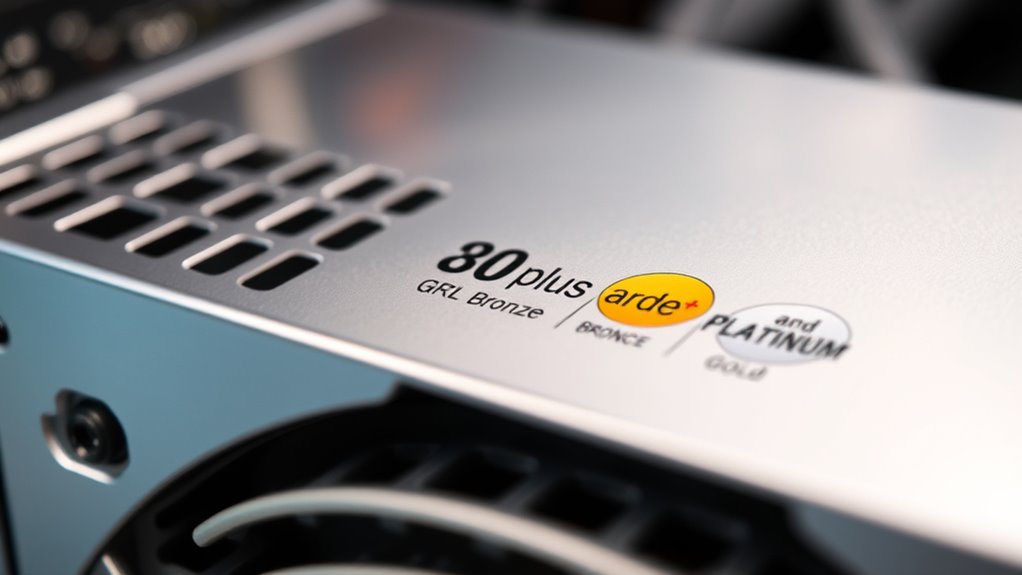

80 Plus Bronze, Gold, and Platinum ratings show how efficiently your power supply converts AC to DC power, saving energy and reducing heat. Bronze is the entry-level, while Gold and Platinum offer higher efficiency, meaning less wasted power and lower electricity bills. These certifications are verified through rigorous tests at multiple loads, ensuring reliable performance. To understand what each level means and how it can benefit your system, keep exploring the details below.
Key Takeaways
- 80 Plus ratings (Bronze, Gold, Platinum) indicate the efficiency of a power supply at various load levels.
- Higher ratings (Gold, Platinum) meet stricter efficiency thresholds, reducing energy waste and heat.
- Certification involves independent testing at 20%, 50%, and 100% loads to ensure consistent performance.
- Better efficiency ratings save energy, lower electricity costs, and improve thermal performance over time.
- Choosing higher-rated power supplies offers long-term savings, reliability, and environmental benefits.
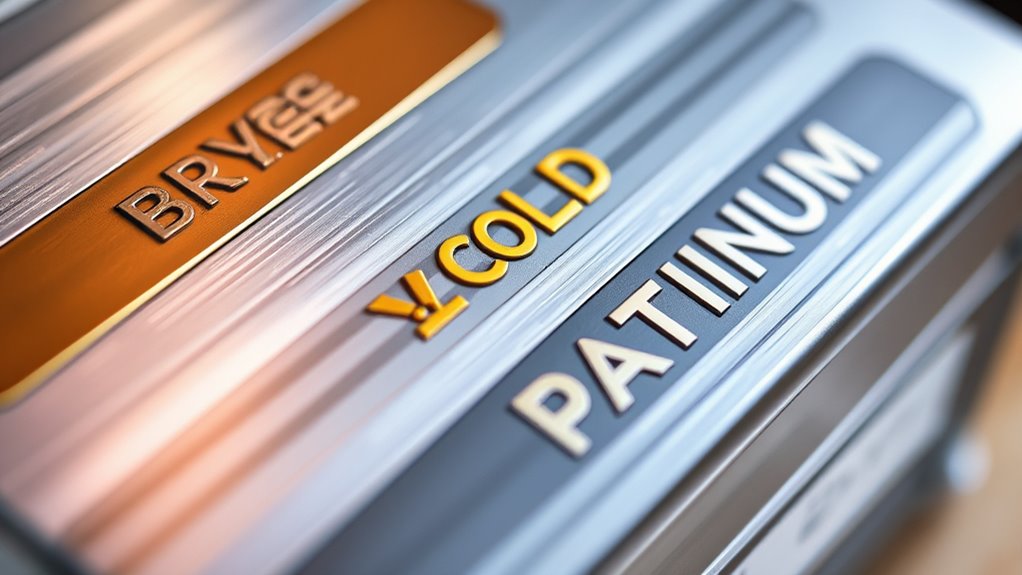
Ever wondered what those numbers and labels on a power supply really mean? When you see terms like 80 Plus Bronze, Gold, or Platinum, they’re more than just marketing buzzwords. They represent a standardized way to measure how efficiently a power supply converts AC power from your wall into usable DC power for your components. These ratings are part of a broader set of efficiency standards designed to help you choose components that waste less energy, produce less heat, and save you money over time. But understanding what these labels really signify requires knowing about the certification processes behind them.
Efficiency ratings like 80 Plus Gold or Platinum indicate how well a power supply converts AC to DC power reliably.
The 80 Plus certification program is the most recognized way to evaluate a power supply’s efficiency. It’s a rigorous testing and certification process that ensures a power supply meets specific efficiency thresholds at various load levels—typically 20%, 50%, and 100%. Each certification level, from Bronze to Platinum, corresponds to different minimum efficiency percentages. For instance, an 80 Plus Bronze power supply must be at least 82% efficient at 20% and 100% loads and 85% at 50%. As you move up to Gold, Platinum, and even Titanium, these efficiency requirements become more stringent. This means that a Gold-rated power supply, for example, will waste less energy converting power, which translates into less heat and potentially lower electricity bills.
The certification process involves independent testing by approved laboratories. These labs scrutinize the power supply under controlled conditions to verify it meets or exceeds the efficiency standards set for each rating. It’s not just about passing a single test; a power supply must consistently meet these efficiency benchmarks across a range of loads. This rigorous process guarantees that the ratings are reliable indicators of real-world performance. When you opt for an 80 Plus Gold or Platinum supply, you’re investing in a product that’s been verified to operate efficiently, which is especially important if your system runs for long hours or if energy savings matter to you.
Understanding these efficiency standards helps you make smarter choices. Higher-rated supplies, though often more expensive upfront, can save you money over time through lower energy consumption and less heat generation. Plus, they tend to have better build quality and longer lifespans, which means fewer replacements and less waste. The certification process’s transparency ensures you’re not just paying for a label but for a tested, reliable product that meets strict efficiency standards. Researching power supply ratings can further help you understand which models offer the best value and performance for your needs. So next time you’re shopping for a power supply, look beyond the wattage and pay attention to these ratings—they’re your guarantee of quality, efficiency, and better value in the long run.
As an affiliate, we earn on qualifying purchases.
Frequently Asked Questions
How Do Power Supply Ratings Affect Overall System Efficiency?
Power supply ratings directly impact your system’s efficiency, leading to energy savings and lower electricity bills. Higher-rated power supplies, like Gold or Platinum, convert more electricity into usable power, meaning less waste and reduced heat. This efficiency not only cuts costs over time but also extends your system’s lifespan by reducing strain on components. Choosing a higher-rated power supply is a smart investment that benefits both your wallet and the environment.
Are Higher Ratings Always Better for Gaming Builds?
Don’t judge a book by its cover, but higher power supply ratings do matter for gaming builds. They often offer better power efficiency, which means less energy waste and lower electricity bills. However, consider cost considerations; a top-tier rating isn’t always necessary if your system isn’t demanding. For high-end gaming, higher ratings boost stability and longevity, making them a worthwhile investment. For casual gaming, a mid-tier might suffice.
What Is the Environmental Impact of Different Power Supply Ratings?
Higher-rated power supplies, like Gold or Platinum, often have better efficiency, which reduces your carbon footprint by wasting less energy as heat. Using efficient power supplies supports renewable energy use because they maximize the energy you draw from greener sources. By choosing these ratings, you help lower overall environmental impact, conserving resources and reducing emissions associated with electricity generation. Your choice can make a small but meaningful difference for the planet.
How Do Ratings Influence Power Supply Lifespan and Durability?
Your power supply’s ratings directly influence its lifespan and durability considerations. Higher-rated units, like Gold or Platinum, operate more efficiently, generating less heat and wear over time. This reduces stress on components, extending power supply longevity. By choosing a higher-rated power supply, you guarantee better durability, fewer failures, and a longer-lasting unit, which ultimately saves you money on replacements and repairs.
Can a Lower-Rated Power Supply Be Upgraded Later?
Yes, you can upgrade a lower-rated power supply later, but it’s like replacing a tiny engine in a sports car—you’ll want a better one for maximum performance. Look for a unit with a modular design for easier upgrades and lower noise levels for quieter operation. Upgrading guarantees your system runs smoothly, improves efficiency, and prepares you for future hardware demands, making your setup more reliable and long-lasting.
As an affiliate, we earn on qualifying purchases.
Conclusion
Understanding power supply ratings helps you choose the right unit for your needs. Did you know that Gold-rated PSUs are about 15% more efficient than Bronze ones? This means less wasted energy and lower electricity bills over time. By selecting a higher rating, you not only make certain of better performance but also contribute to a greener environment. So, investing in a reputable power supply with the right certification pays off in both reliability and savings.
As an affiliate, we earn on qualifying purchases.
As an affiliate, we earn on qualifying purchases.