
TL;DR

Get the latest gadgets delivered free with Prime
- Fast, free delivery on millions of items
- Prime Video, Amazon Music and more included
- Member-only deals all year
Cerebras Systems almost went bankrupt in 2019 after spending nearly $200 million trying to develop a revolutionary large-scale AI chip. The company survived a critical technical and packaging challenge, leading to its current valuation of $60 billion following a successful IPO.
Cerebras Systems, now valued at approximately $60 billion following its IPO, nearly failed in 2019 after burning nearly $200 million trying to develop a revolutionary AI chip. The company’s founders faced a critical technical challenge that threatened its survival, but ultimately overcame it.
Founded in 2015, Cerebras aimed to create a single, massive AI chip by turning an entire silicon wafer into one processor, a feat no other company had attempted. By 2019, the company had invested roughly $200 million and was spending about $8 million per month on research and development. The primary obstacle was the chip’s packaging — a complex process involving cooling, power delivery, and data movement, which had stymied industry experts for decades.
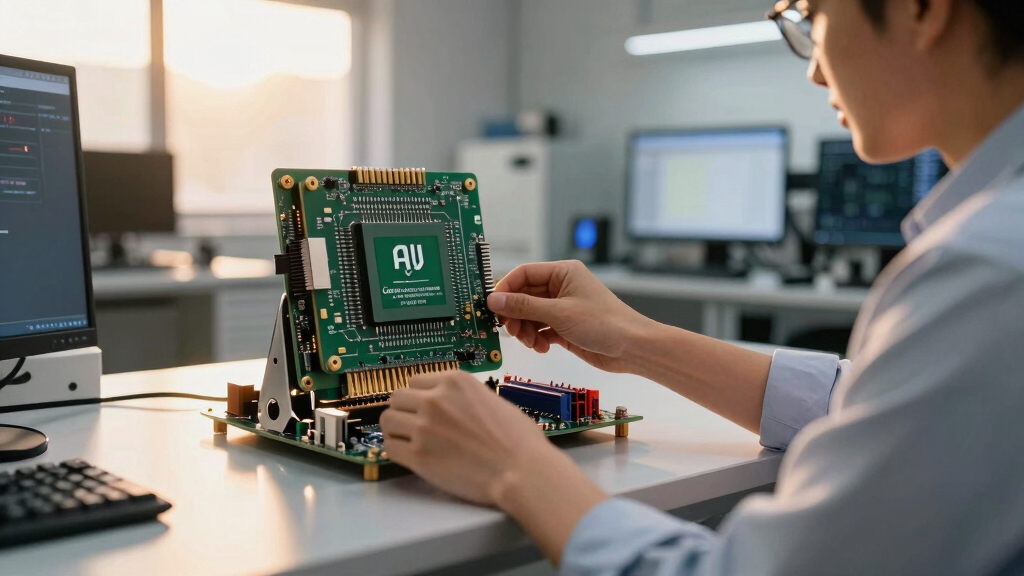
According to CEO Andrew Feldman, the team encountered repeated failures, destroying numerous chips in the process. They had to invent new solutions, including a custom machine to bolt the wafer without cracking it. In July 2019, after years of trial and error, the team succeeded in manufacturing and installing the first fully packaged, functional mega chip, marking a pivotal moment for the company.
Why It Matters
This development is significant because it illustrates how a high-risk, innovative approach nearly led to the company’s failure but ultimately resulted in a breakthrough that contributed to its current valuation. The success of Cerebras’ mega chip has positioned it as a key supplier for AI giants like OpenAI and AWS, impacting the AI hardware landscape and setting a precedent for large-scale chip manufacturing.
high-performance AI server cooling solutions
As an affiliate, we earn on qualifying purchases.
As an affiliate, we earn on qualifying purchases.
Background
In 2019, Cerebras was still a relatively young company, attempting a pioneering approach that diverged sharply from traditional microprocessor design, which focused on increasing transistor density. The breakthrough in packaging and cooling was essential for scaling their design. Prior to this, industry leaders had repeatedly failed to produce such large, dense chips due to technical challenges. The company’s survival and subsequent growth have been closely linked to solving these engineering problems.
“We were spending about $8 million a month. At this point, we had incinerated nearly $200 million trying to solve one technical problem.”
— Andrew Feldman, CEO of Cerebras
“Watching a computer run is about as exciting as watching paint dry. But there we were watching lights flashing on the computer, stunned that we’d solved this.”
— Andrew Feldman, CEO of Cerebras
large-scale silicon wafer processing equipment
As an affiliate, we earn on qualifying purchases.
As an affiliate, we earn on qualifying purchases.
What Remains Unclear
It is not yet clear how much of the company’s current success is directly attributable to the 2019 breakthrough, or what specific technical challenges remain. Details about future manufacturing plans or potential new technical hurdles are still emerging.
As an affiliate, we earn on qualifying purchases.
What’s Next
Cerebras is expected to continue expanding its product offerings and customer base, leveraging its recent IPO success. The company may also pursue further innovations in chip design and packaging, while managing supply chain and competitive challenges in the AI hardware market.
As an affiliate, we earn on qualifying purchases.
Key Questions
How close was Cerebras to failure in 2019?
According to CEO Andrew Feldman, the company nearly went bankrupt after spending around $200 million and burning $8 million monthly on developing its mega chip, facing insurmountable packaging and cooling issues.
What was the main technical challenge Cerebras faced?
The primary obstacle was the packaging process, including cooling, power delivery, and data movement, which had previously stymied industry efforts to build such large, dense chips.
How did Cerebras overcome its technical challenges?
The team invented new solutions, including a custom machine to bolt the wafer without cracking it, and solved cooling and data transfer issues, leading to the successful production of its first functional mega chip in July 2019.
What is the current status of Cerebras?
Today, Cerebras is a public company valued at about $60 billion, with major AI companies as clients, including OpenAI and AWS, following its successful IPO and strategic partnerships.
Fall Picks
fall essentials
As an affiliate, we earn on qualifying purchases.