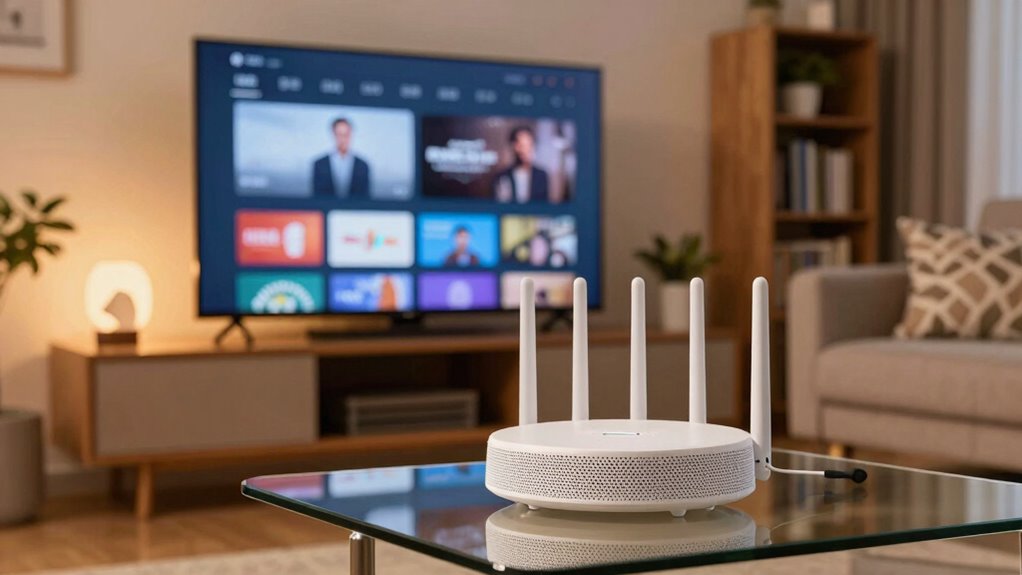

Mesh Wi-Fi systems fix coverage gaps and make setup simple, giving you reliable Wi-Fi throughout your home, even in hard-to-reach areas. They also help manage your smart devices easily and reduce the need for multiple apps. However, they won’t boost your internet speed or fix fundamental connection issues caused by your broadband or interference. External factors like thick walls still affect performance. If you’d like to discover more about what mesh Wi-Fi can and can’t do, keep exploring further.

Get the latest gadgets delivered free — and shop member deals
- Fast, free delivery on millions of items
- Access to Prime Big Deal Days deals on October 6–7
- Prime Video, Amazon Music and more included
Key Takeaways
- Mesh Wi-Fi fixes dead zones and provides seamless coverage across large or multi-room spaces.
- It simplifies network setup with fewer nodes compared to traditional routers.
- Mesh systems do not inherently increase internet speed; performance depends on your broadband connection.
- They do not eliminate interference from thick walls or external wireless devices that can degrade performance.
- Mesh systems enhance coverage but require proactive security management and regular updates.

Mesh Wi-Fi systems have become popular for expanding internet coverage, but they aren’t without their flaws. One of the main benefits they offer is seamless coverage across your home, allowing you to move freely without experiencing dead zones. They’re designed to simplify your network setup, often requiring just a few nodes that work together to blanket your space with reliable Wi-Fi. Plus, many mesh systems now focus heavily on Smart Home Integration, making it easier to connect and manage compatible devices like smart thermostats, security cameras, and voice assistants through a unified app. This integration streamlines your smart home experience, reducing the need for multiple apps and complex configurations.
However, mesh Wi-Fi systems don’t automatically solve all your networking problems. While they do improve coverage, they don’t inherently increase your internet speed, especially if your broadband connection is slow or inconsistent. They are also not foolproof in handling network security. Although most mesh systems come with built-in security features like automatic firmware updates, firewalls, and guest networks, they still require proactive management. If you neglect securing your network or use weak passwords, your entire smart home ecosystem could become vulnerable to hacking. Network security remains a shared responsibility; mesh systems can help, but they aren’t a complete security solution on their own. Additionally, the effectiveness of mesh Wi-Fi can be impacted by interference from other wireless devices, which can still cause performance issues despite multiple nodes. External factors like radio frequency interference** can further limit performance, even with multiple nodes. In some cases, interference from other wireless devices or thick walls can still impede performance, despite the presence of multiple nodes. Furthermore, network congestion caused by multiple connected devices can also degrade overall performance if not properly managed. Proper node placement is crucial for optimal performance, and poor placement can reduce the system’s effectiveness. Additionally, mesh Wi-Fi systems tend to be more expensive than standard routers, which could be a barrier if you’re on a tight budget. While they generally improve coverage and simplify management, they don’t eliminate the need for good network habits**, such as updating firmware regularly or securing your network with strong passwords.
mesh Wi-Fi system for large homes
As an affiliate, we earn on qualifying purchases.
As an affiliate, we earn on qualifying purchases.
Frequently Asked Questions
Can Mesh Wi-Fi Improve Internet Speed for All Devices Equally?
Mesh Wi-Fi can improve internet speed for all devices, but it doesn’t do so equally. Your devices’ bandwidth throttling and compatibility play a big role. If your device supports the latest Wi-Fi standards, you’ll see better speeds. However, older or incompatible devices may still experience slower connections. While mesh networks reduce dead zones and improve coverage, they can’t fully eliminate speed disparities caused by device limitations or bandwidth management.
Is Mesh Wi-Fi Suitable for Large or Multi-Story Homes?
Yes, mesh Wi-Fi is suitable for large or multi-story homes. It enhances signal consistency across different levels and large areas, ensuring your devices stay connected without dead zones. Plus, modern mesh systems are sleek and unobtrusive, so they blend into your home aesthetics seamlessly. You’ll enjoy improved coverage and reliable internet throughout your home, making it a smart choice for multi-story or expansive spaces.
Do Mesh Systems Work With All Internet Service Providers?
Your mesh system is likely to work with most ISPs, but it’s not a universal magic wand. Compatibility depends on your ISP’s connection type and equipment. Check ISP compatibility before buying, and stay on top of firmware updates, which enhance performance and fix bugs. Some providers may require specific settings or equipment, so contacting your ISP or checking their support resources can save you a lot of hassle.
How Difficult Is It to Set up a Mesh Wi-Fi Network?
Setting up a mesh Wi-Fi network is usually straightforward, especially with user-friendly devices. You’ll find device compatibility is generally broad, and most systems come with step-by-step instructions. The setup complexity is low; you connect the primary unit to your modem, then place satellite units around your home. With a bit of patience, you’ll have a seamless Wi-Fi experience, often completed within 30 minutes.
Will Mesh Wi-Fi Eliminate All Wi-Fi Dead Zones Completely?
Think of your Wi-Fi as a lighthouse guiding ships through fog. Mesh Wi-Fi reduces dead zones but doesn’t eliminate all, especially if interference mitigation isn’t perfect or if device compatibility issues exist. It’s like smoothing the lighthouse beam, but some ships might still struggle in tricky waters. To get the best coverage, make certain your devices are compatible and your network minimizes interference, giving you the clearest signal possible.
As an affiliate, we earn on qualifying purchases.
Conclusion
Certainly! Here’s the modified text with alternative words replacing “In summary”:
Ultimately, mesh Wi-Fi can be a game-changer, transforming your sluggish, dead-zone plagued network into a seamless, lightning-fast connection. It fixes dead spots, simplifies setup, and expands coverage like nothing else. But remember, it’s not a magic wand—complex issues like internet speed or provider problems still need addressing elsewhere. So, while mesh Wi-Fi can revolutionize your home network, don’t expect it to solve every tech hiccup overnight; it’s a powerful tool, not a miracle cure.
best mesh Wi-Fi router with security features
As an affiliate, we earn on qualifying purchases.
As an affiliate, we earn on qualifying purchases.
Wi-Fi mesh nodes for multi-room coverage
As an affiliate, we earn on qualifying purchases.
As an affiliate, we earn on qualifying purchases.
Halloween Picks
halloween
As an affiliate, we earn on qualifying purchases.