
TL;DR

Get the latest gadgets delivered free — and shop member deals
- Fast, free delivery on millions of items
- Access to Prime Big Deal Days deals on October 6–7
- Prime Video, Amazon Music and more included
This article traces the history of ThinkPad from its 1992 origins under IBM to its current state under Lenovo, emphasizing its durability, design continuity, and recent shift towards AI workstations. The development highlights the brand’s long-standing significance in enterprise computing.
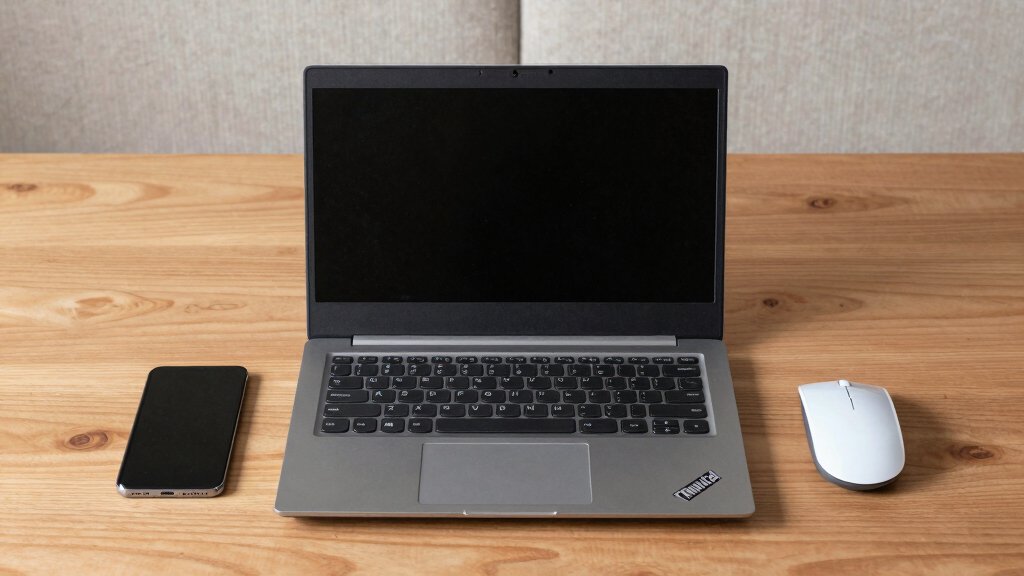
Lenovo has announced new AI-optimized ThinkPad models in 2024-2026, marking the latest chapter in a history that began with IBM’s original 1992 designs and has persisted through decades of technological change.
ThinkPad has been in continuous production since October 1992, initially launched by IBM and later acquired by Lenovo in 2005. The brand is notable for its consistent design language, including the matte-black chassis and TrackPoint, which have remained visually recognizable across generations. Over the years, ThinkPads evolved from basic business laptops to include high-performance workstations and now AI-optimized models. The recent models, such as the P14s Gen 6 and T14 Gen 7, incorporate advanced AI workloads, NPU integration, and large memory capacities, reflecting Lenovo’s focus on enterprise and AI markets. Despite technological shifts, the core design elements and engineering philosophy have remained remarkably stable, contributing to the brand’s reputation for durability and reliability.
Why It Matters
Understanding the history of ThinkPad highlights its importance as a durable, consistent brand in enterprise computing. Its evolution into AI-ready workstations demonstrates how legacy design and engineering principles continue to adapt to current technological demands, making it relevant for professionals and organizations investing in future-proof hardware.
As an affiliate, we earn on qualifying purchases.
Background
Originally launched by IBM in 1992, the ThinkPad line gained a reputation for durability, innovative design, and enterprise features. The 2005 transition to Lenovo preserved its core identity, allowing it to grow into a broad product family including the X-series, T-series, and now AI-optimized models. The recent focus on AI workloads and NPU integration reflects broader industry trends toward AI and machine learning in business hardware.
“Our new AI-optimized ThinkPads build on decades of engineering excellence, combining legacy durability with cutting-edge AI capabilities.”
— Lenovo spokesperson
“ThinkPad’s visual and engineering continuity across decades is rare and contributes to its ongoing relevance in enterprise markets.”
— Industry analyst
As an affiliate, we earn on qualifying purchases.
What Remains Unclear
It is not yet clear how widespread adoption of AI-optimized ThinkPads will be in enterprise environments or how quickly legacy models will be phased out. Details about future model specifications and strategic plans from Lenovo remain under wraps.
As an affiliate, we earn on qualifying purchases.
What’s Next
Next steps include the rollout of new AI-enabled ThinkPad models in 2024-2026, with industry and enterprise adoption expected to grow. Lenovo may also continue refining AI integration, including more advanced NPU features and larger memory configurations, while maintaining the core design principles that have defined the brand for over 30 years.
As an affiliate, we earn on qualifying purchases.
Key Questions
How long has the ThinkPad brand been in continuous production?
Since October 1992, making it one of the longest-running commercial laptop lines in history.
What are the main design features that have persisted over the years?
The matte-black chassis, TrackPoint, 7-row keyboard, and overall form factor have remained consistent, creating a recognizable and durable design language.
What is the significance of the recent AI-focused models?
They represent Lenovo’s shift toward integrating AI workloads and neural processing units (NPUs), aiming to meet the demands of modern enterprise AI applications.
Will legacy ThinkPad models be replaced entirely by AI models?
It is not yet clear; transition plans are likely gradual, with legacy models remaining in use while new AI-optimized models are adopted in enterprise settings.
Why does the design continuity matter for the brand?
It fosters brand recognition, trust, and a sense of durability that has persisted through decades of technological change.
Fall Picks
fall essentials
As an affiliate, we earn on qualifying purchases.