

Leaving your laptop plugged in constantly isn’t ideal for its battery health, as it can cause gradual wear over time. Modern devices use smart charging to limit damage, but maintaining a full charge at high temperatures accelerates battery aging. To extend your battery’s lifespan, unplug once it reaches 100% or use settings to limit charging. Want to discover how to balance convenience with battery care? Keep exploring for helpful tips and tricks.
Key Takeaways
- Modern laptops have smart charging to prevent overcharging, but keeping at 100% may still slightly accelerate battery wear.
- Unplugging after full charge can help extend battery lifespan and reduce heat-related degradation.
- Periodic battery drain cycles to 20-30% support calibration and long-term health.
- Leaving your laptop plugged in continuously consumes energy unnecessarily and may increase electricity costs.
- Using manufacturer settings to limit maximum charge can balance convenience and battery longevity.
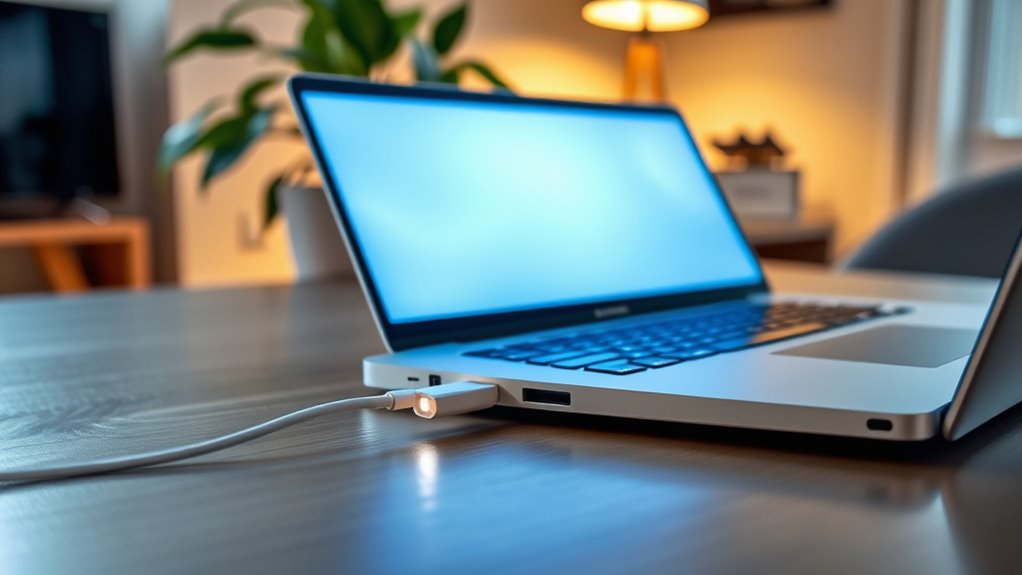
Many people wonder whether leaving their laptops plugged in all the time is safe and beneficial. The answer isn’t as straightforward as it might seem. On one hand, keeping your laptop plugged in can be convenient, ensuring your device is always ready to go. On the other hand, it raises questions about impacts on battery lifespan and energy efficiency. Understanding how your laptop’s battery behaves when constantly charged can help you make smarter decisions about its use and longevity.
When you leave your laptop plugged in frequently, it’s natural to worry about damaging the battery over time. Modern laptops are equipped with smart charging systems designed to prevent overcharging, which means they typically stop charging once they reach full capacity. However, consistently keeping your battery at 100% can still lead to slight wear and tear, gradually reducing its overall lifespan. That’s because batteries age faster when kept at high charge levels and high temperatures, which can occur if the device heats up during prolonged charging. To mitigate this, some manufacturers recommend unplugging your laptop once it’s fully charged or using settings that limit maximum charge levels, thereby extending the battery’s effective life. Additionally, understanding the battery chemistry involved can help you better grasp how charging habits affect lifespan.
Energy efficiency is another important consideration. When your laptop remains plugged in, it still consumes some power, even if it’s not actively in use. This standby or idle power usage, although relatively low, adds up over time and can lead to higher electricity bills and greater environmental impact. If you’re concerned about energy conservation, it’s better to unplug your device when it’s not needed for extended periods. Doing so not only saves energy but also reduces unnecessary strain on your laptop’s battery, helping it maintain its capacity longer.
You might also think about the convenience of keeping your laptop plugged in, especially if you use it for long work sessions or multimedia tasks. While that’s understandable, it’s still a good idea to occasionally let the battery drain to around 20-30% before recharging. This practice helps calibrate the battery and prevents it from becoming overly accustomed to a constant high charge. Additionally, avoid exposing your laptop to excessive heat while charging, as high temperatures accelerate battery degradation.
Frequently Asked Questions
Does Leaving My Laptop Plugged in Affect Battery Lifespan?
Leaving your laptop plugged in can accelerate battery degradation over time, especially if your charging habits keep the battery at 100% constantly. Lithium-ion batteries prefer partial charges and regular use to maintain health. To extend your battery lifespan, avoid keeping it plugged in nonstop, and try to keep the charge between 20% and 80%. This way, you’ll reduce unnecessary strain and prolong your battery’s overall lifespan.
Can Leaving My Laptop Plugged in Cause Overheating?
Yes, leaving your laptop plugged in can cause overheating if the battery temperature rises too high. When plugged in, your device’s cooling systems work harder to dissipate heat, especially during intensive tasks. Over time, sustained high temperatures may impact internal components and shorten overall lifespan. To prevent this, make certain your laptop has proper ventilation, avoid blocking cooling vents, and regularly clean dust from cooling systems, especially when using it for extended periods.
Is It Safe to Leave My Laptop Plugged in Overnight?
Leaving your laptop plugged in overnight is generally safe, but it can impact your battery health over time. Think of your battery like a muscle—you want to avoid overtraining. Modern laptops have smart charging habits that prevent overcharging, but consistently leaving it plugged in may cause slight wear. If you need your battery to last longer, consider unplugging once it reaches 80%. Keep an eye on your battery’s performance to maintain healthy charging habits.
How Do Different Laptop Brands Handle Constant Charging?
Different laptop brands handle constant charging differently to protect your battery health. Many brands, like Apple and Dell, use smart charging technology that stops charging once it hits 100%, reducing wear. Others may not have this feature, so your charging habits matter more. To maintain your battery health, avoid keeping your laptop plugged in constantly, and unplug it once fully charged. Regularly cycling your battery helps prolong its lifespan overall.
Should I Calibrate My Laptop Battery Regularly?
Calibrating your laptop battery periodically promotes precise power readings and protects its health. You should do it every few months, especially if you notice inconsistent charge levels or shortened battery life. By fully charging and discharging the battery, you help the system accurately gauge remaining power. This process resets the battery’s charge cycle count, ensuring it maintains ideal health and longevity over countless charging cycles.
Conclusion
If you leave your laptop plugged in all the time, you’re not alone—over 65% of users do the same. Modern batteries are designed to handle constant charging better than ever, reducing worries about damage. So, go ahead and keep your laptop plugged in if it’s more convenient. Just remember, occasional unplugging can help calibrate your battery. Ultimately, staying flexible with charging habits makes sure your device stays healthy and ready whenever you need it.