
To improve your aim in FPS games, focus on regular aim drills and practice to build muscle memory. Upgrade your hardware, like a high-quality gaming mouse, a smooth mouse pad, and a monitor with at least 144Hz refresh rate for better responsiveness. Experiment with sensitivity settings to find what feels best and maintain consistent habits. Good ergonomics also boost precision during long sessions. Keep practicing steadily, and you’ll start noticing faster reactions and sharper accuracy as you progress.
Key Takeaways
- Regularly practice with aim training software to develop muscle memory and improve precision.
- Upgrade to high-quality gaming hardware like responsive mice and high-refresh-rate monitors for smoother control.
- Adjust and maintain consistent sensitivity settings to build reliable muscle memory and control.
- Optimize your gaming workspace with ergonomic setup and good posture to reduce fatigue and enhance accuracy.
- Dedicate daily practice sessions, gradually increasing difficulty to develop faster reactions and better targeting skills.
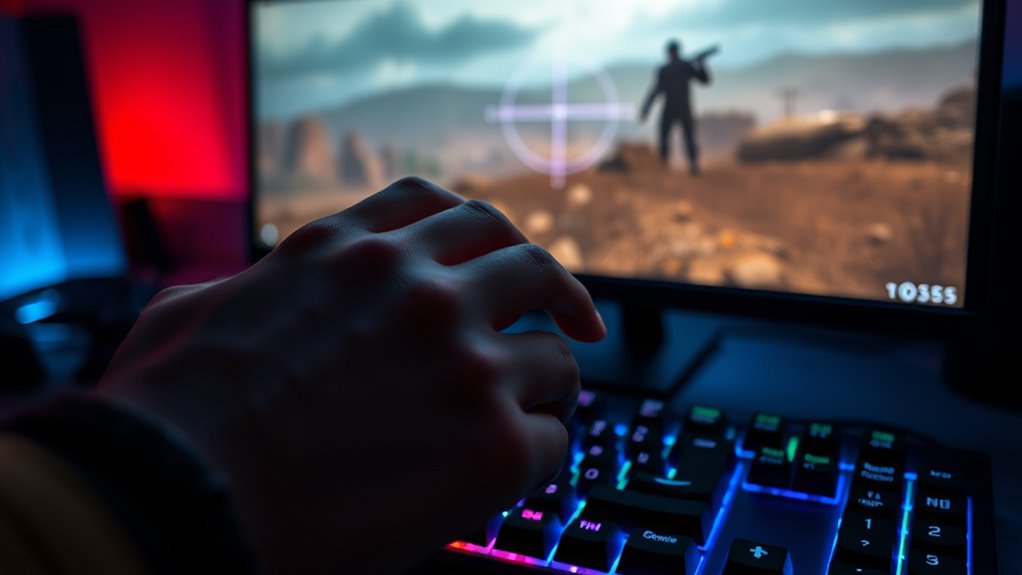
Whether you’re just starting out or looking to sharpen your skills, improving your aim in video games can greatly enhance your performance. One of the most effective ways to do this is through dedicated aim training. Regularly practicing specific drills or using aim training software helps develop muscle memory and refines your target tracking. These exercises challenge your reflexes and accuracy, making aiming feel more natural during intense gameplay moments. Aim training isn’t just about mindlessly clicking; it’s about building consistency and precision. Set aside time each day to focus on these drills, gradually increasing difficulty as your skills improve. Over time, this consistent effort pays off, resulting in faster reaction times and more precise shots.
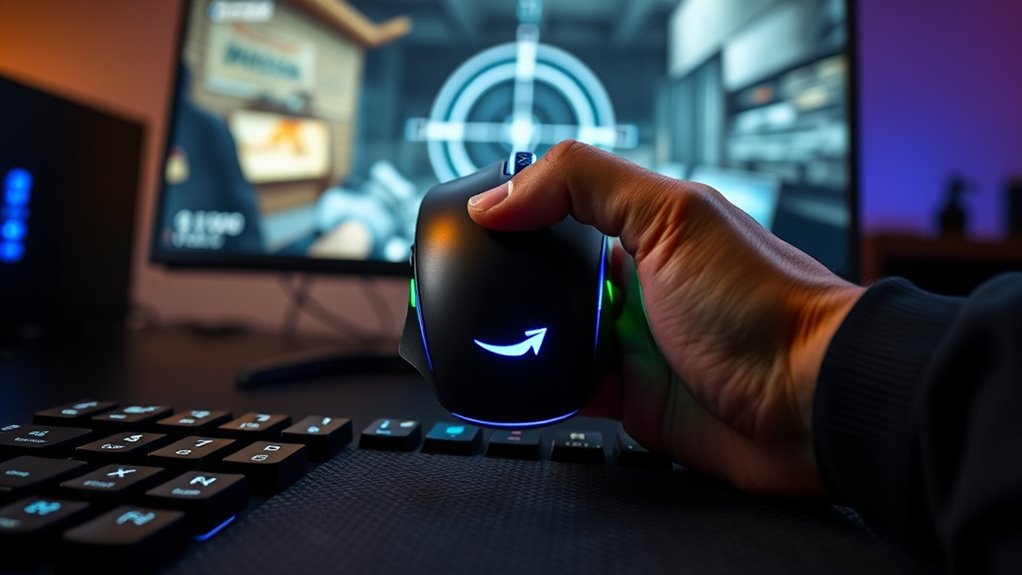
Alongside aim training, hardware upgrades can profoundly impact your aiming capabilities. Your mouse, in particular, plays an essential role in your accuracy. Investing in a high-quality gaming mouse with a responsive sensor and adjustable DPI settings allows you to tailor your sensitivity for ideal control. A mouse with a comfortable grip and low latency reduces hand fatigue and improves your ability to make precise movements. A good gaming mouse pad also contributes to smoother movements, giving you better control over your aim. Additionally, consider upgrading your monitor to a higher refresh rate display; a 144Hz or higher monitor can provide more fluid visuals, making it easier to track moving targets and react quickly. These hardware improvements complement your aim training efforts, ensuring that your hardware doesn’t hold back your progress. Improving color accuracy in your setup can also help you better distinguish targets and environmental cues, further enhancing your precision. These hardware improvements complement your aim training efforts, ensuring that your hardware doesn’t hold back your progress.
Another key aspect is setting the right sensitivity settings. Too high, and your aim becomes jittery; too low, and your movements feel sluggish. Experiment with different sensitivity levels to find the sweet spot that offers both control and speed. Remember, consistency is vital—once you find a setting that works well, stick with it to develop muscle memory. Proper ergonomics and posture also matter. Sit comfortably, with your mouse close enough to avoid overreaching, and keep your wrist relaxed. This reduces strain and allows for more precise, sustained movements during long gaming sessions.
Frequently Asked Questions
What Are the Best Sensitivity Settings for Aiming?
To find the best sensitivity settings, start with a low mouse DPI, around 400-800, for better control. Adjust your in-game sensitivity to balance precision and speed, ensuring your aim feels natural. If you use aim assist, set your sensitivity so it complements it without overrelying. Test different settings in practice modes, and fine-tune until your aim feels steady, accurate, and comfortable for quick target acquisition.
How Does Hardware Impact Aiming Accuracy?
Your aiming accuracy heavily depends on your hardware. With proper hardware optimization, your aiming hardware—like a gaming mouse, mouse pad, and high-quality monitor—becomes more responsive and precise. Upgrading your equipment reduces lag and jitter, making small movements more controllable. Ensuring your hardware is well-maintained and compatible with your setup allows you to aim more accurately, giving you a clear advantage in fast-paced FPS games.
Can Practicing Aim Improve Reflexes?
Sure, practicing your aim can boost your reflexes—just like training a cat to fetch. By repeatedly honing your reaction time and building muscle memory, you’ll respond faster and more accurately in-game. The more you practice, the more those quick reflexes become second nature, making you feel like a sharpshooter even when caught off guard. So, yes, in-game drills really do turn you into a lightning-fast, precision-striking machine.
What Are Common Mistakes Beginners Make With Aim?
You often make mistakes by neglecting proper crosshair placement, causing you to overshoot or miss targets. Rushing your shots and not trusting muscle memory also hampers your accuracy. Focus on keeping your crosshair at head level and where enemies are likely to appear. Practice regularly to develop muscle memory, so your aim becomes instinctive, reducing errors and improving your overall shot consistency during gameplay.
How Do Different Game Genres Affect Aiming Strategies?
Different game genres demand varied aiming strategies. For shooters, precise aiming is essential, so you should focus on controller differences and use aim training tools to sharpen your accuracy. In racing or sports games, quick targeting matters less, but timing and reflexes still count. Adjust your controls accordingly, and regularly practice with aim trainers to adapt to each genre’s unique demands, boosting your overall performance and enjoyment.
Conclusion
Now that you’re equipped with these tips, imagine your crosshair effortlessly tracking moving targets, each shot landing with precision like a well-tuned instrument. Feel the thrill of sharp, accurate shots cutting through the chaos of the game, turning you into a true marksman. With practice, your aim will sharpen like a blade, slicing through opponents with confidence. Keep honing those skills, and soon, every shot will feel as natural as breathing in your quest for victory.