
TL;DR

Get the latest gadgets delivered free — and shop member deals
- Fast, free delivery on millions of items
- Access to Prime Big Deal Days deals on October 6–7
- Prime Video, Amazon Music and more included
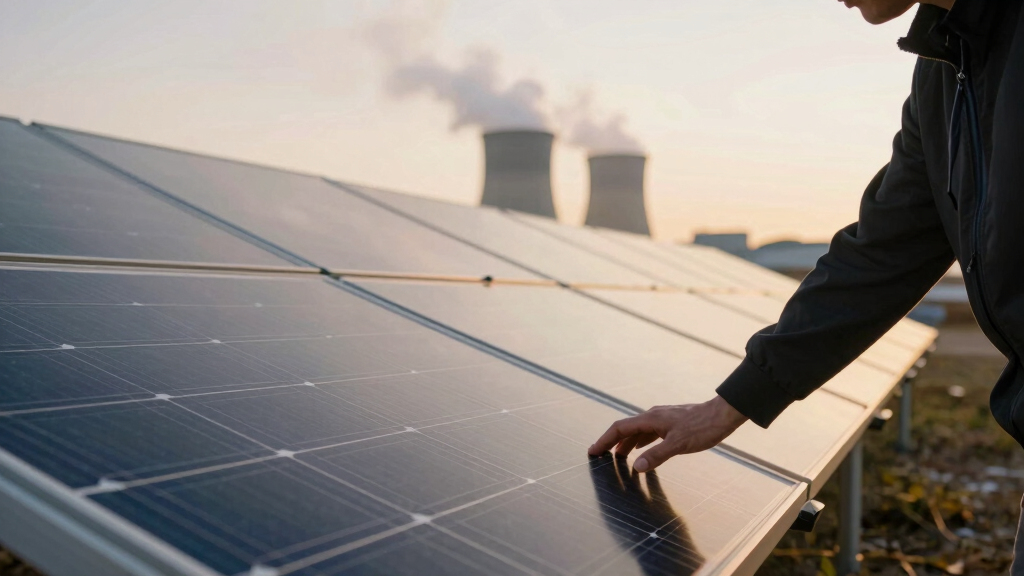
Research indicates that sulfur dioxide aerosols from coal burning are reducing solar power output globally, notably in China. This undercuts renewable energy growth and underscores the environmental impact of coal pollution.
Recent research confirms that aerosols generated by coal burning are reducing solar power production, with China experiencing a 7.7 percent overall decrease, directly impacting renewable energy growth and climate goals.
The study, published in Nature Sustainability, estimates that nearly half of the aerosols affecting solar power are sulfur dioxide particles from coal combustion, with an additional 18 percent stemming from other fossil fuel emissions. In China, aerosols reduce solar output by approximately 7.7 percent annually, offsetting a third to half of its solar capacity growth, according to the researchers.
In contrast, the United States experiences less impact, with annual solar losses around 3 percent, largely because solar installations are concentrated in the south and west, while coal plants are predominantly in the east and northeast. The data suggest that China’s efforts to modernize coal plants and reduce pollution have begun to mitigate some aerosol-related losses, with recent years showing improvements in solar productivity due to cleaner air.
Why It Matters
This development underscores the environmental and economic challenges posed by coal pollution, which not only harms air quality but also actively diminishes the efficiency of renewable energy sources like solar power. As coal remains a major contributor to aerosol pollution, these findings highlight the importance of accelerating the transition to cleaner energy sources to maximize solar energy potential and meet climate targets.
solar panel air pollution filter
As an affiliate, we earn on qualifying purchases.
As an affiliate, we earn on qualifying purchases.
Background
The research builds on prior understanding that aerosols from fossil fuels, especially sulfur dioxide from coal, contribute to atmospheric particles that interfere with solar radiation. While natural aerosols like dust are also present, coal-derived aerosols are a dominant factor in regions with heavy coal use, particularly China. The study illustrates how pollution patterns mirror coal plant distribution and how recent policy shifts in China have begun to reduce aerosol levels, improving solar output.
“Aerosols from coal burning are significantly reducing solar power output, especially in China, and this impact is actively counteracting renewable energy growth.”
— Lead researcher from the study
“Reducing coal-related aerosols can have a direct positive effect on solar power productivity, which is critical for meeting climate and energy goals.”
— Environmental scientist specializing in air pollution
As an affiliate, we earn on qualifying purchases.
What Remains Unclear
It remains unclear how future policies and technological advances will further influence aerosol levels and solar power efficiency, especially in rapidly developing regions like China and India. The exact long-term impact of recent pollution control measures on aerosol concentrations and solar output is still being studied.
high efficiency photovoltaic panels
As an affiliate, we earn on qualifying purchases.
As an affiliate, we earn on qualifying purchases.
What’s Next
Further research will monitor aerosol levels and solar productivity over the coming years to assess the effectiveness of pollution reduction policies. Additionally, policymakers may accelerate efforts to phase out coal in favor of cleaner energy sources, aiming to maximize solar potential and reduce atmospheric pollution.
solar panel anti-soiling coating
As an affiliate, we earn on qualifying purchases.
As an affiliate, we earn on qualifying purchases.
Key Questions
How do coal-related aerosols affect solar power production?
Coal-related aerosols, primarily sulfur dioxide particles, scatter and absorb sunlight, reducing the amount of solar radiation reaching photovoltaic panels and thus decreasing their efficiency.
Why is China more affected by coal pollution than the US?
China’s solar installations are mainly in regions with high coal plant density, and its reliance on coal for electricity generation results in higher aerosol emissions that directly impact solar energy output.
Can reducing coal pollution improve solar power efficiency?
Yes, decreasing aerosols from coal burning can increase solar radiation reaching panels, boosting solar productivity and helping meet renewable energy targets.
What measures are being taken to reduce coal pollution?
China has built high-efficiency coal plants and retired older, more polluting facilities, which has begun to lower aerosol levels and improve air quality, indirectly benefiting solar power.
Fall Picks
fall essentials
As an affiliate, we earn on qualifying purchases.